Health Checkup in China: How Long Is the Wait Really?
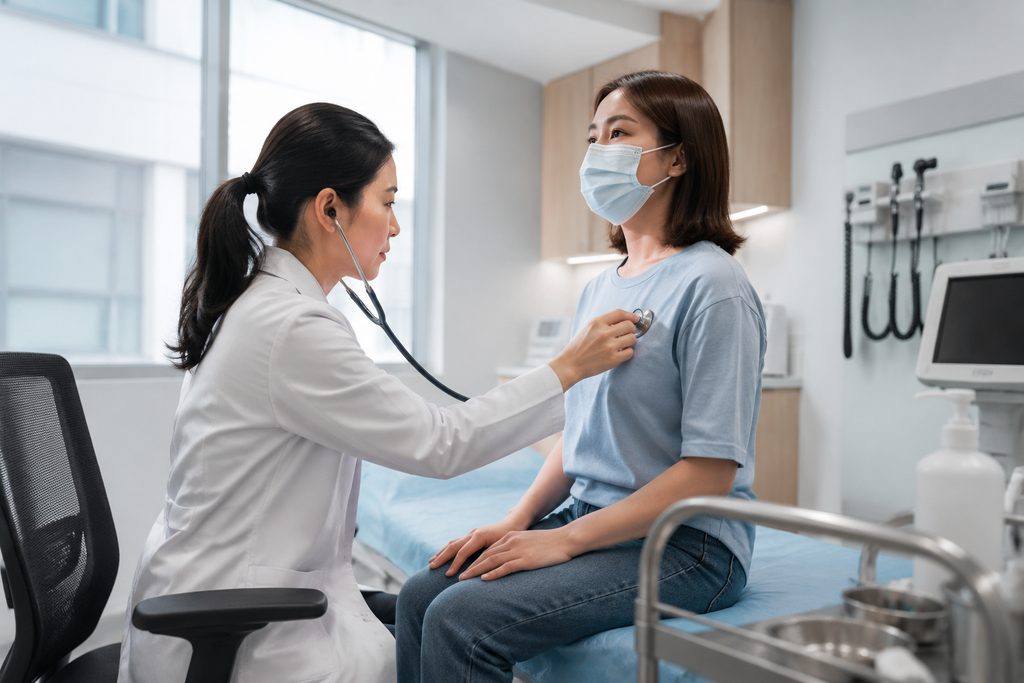
You’ve probably heard that getting anything medical done in China means endless queues and bureaucratic tangles. The reality for health screenings is almost the opposite. At a top-tier public hospital’s international department or a private clinic, you can often walk in Monday morning and finish a comprehensive physical by lunchtime. The wait for a standard health checkup in China typically ranges from same-day to three business days, depending on where you book and how thorough the package is. The real variable isn’t the queue. It’s whether you’re trying to navigate the public system alone or going through a structured channel.
What complicates the one-line answer is the sheer range of what “health checkup” means here. A basic blood panel at a community clinic might happen in an hour. A full executive screening with cardiac imaging, endoscopy, and specialist consults takes a full morning and requires advance scheduling. And the price difference between those two experiences can be tenfold. So let’s break down what actually determines your wait — and what you’ll pay for it.
Health Checkup Packages China Price: The Short Answer
A standard comprehensive health checkup package in China costs between $150 and $800 at public hospital international departments. Private international hospitals like United Family or Jiahui charge $400 to $1,500 for comparable executive screenings. Booking lead time is typically 24 to 72 hours. Same-day appointments are common at private clinics and increasingly available at public hospital VIP centers if you book through a coordinator who knows the scheduling patterns.
But here’s the caveat that matters. The fastest options are not the cheapest, and the cheapest options are not fast. If you walk into a standard public hospital outpatient department without Chinese language skills, you could spend an entire day just figuring out where to register, which window takes payment, and where the ultrasound queue actually starts. The wait time isn’t medical. It’s administrative.
Who This Is Right For — and Who It Isn’t
A health checkup in China makes sense for a specific profile of traveler. You’re in the country for business or family reasons and want to use the opportunity for screening. Or you’re actively considering China as a medical destination and want a low-stakes first step before committing to anything more involved.
Good candidates typically include:
- Business travelers with 2–3 free days in Beijing, Shanghai, or Guangzhou
- Expats already living in China who want a more affordable annual physical
- Patients considering surgery in China who want baseline imaging and labs first
- People frustrated by 6–8 week waits for executive screenings back home
Who should not pursue this? If you have an acute symptom — chest pain, unexplained weight loss, a lump — a checkup package is the wrong tool. You need a diagnostic consultation with a specialist, not a screening. Also, if your primary goal is a specific advanced scan like a PET-CT or cardiac MRI, those are usually booked separately from standard packages and may have their own scheduling constraints. And if you’re on a tight itinerary with no flexibility, the risk of a scheduling hiccup is real.
The Options, Compared
Not all checkup experiences in China are created equal. The table below compares the three main routes available to foreign patients.
| Option | Typical Wait | Package Cost (USD) | Language Support | Best For |
|---|---|---|---|---|
| Public hospital international department | 1–3 days | $150–$800 | English-speaking staff on site | Comprehensive screening at moderate cost |
| Private international hospital (United Family, Jiahui, Raffles) | Same day to 48 hours | $400–$1,500 | Full English environment, Western-style care | Convenience, comfort, insurance direct billing |
| Standard public hospital outpatient | Same day but hours of queuing | $50–$200 | Minimal to none | Budget travelers with Chinese language ability |
If you value time over money, the private international hospital route wins outright. If you want the most thorough screening at the best value, the public hospital international department is the sweet spot. The standard outpatient route is only worth considering if you speak Mandarin or have a bilingual companion with you.
Same Day Health Screening China for Foreigners: What Actually Happens
The single most common question we get from foreign patients is whether a same-day health screening in China is realistic. The answer is yes — with conditions. Private international hospitals in Shanghai and Beijing routinely accommodate walk-in executive physicals if you arrive before 9:00 AM. Public hospital VIP centers can often slot you in the same day if you call ahead and the package doesn’t include endoscopy.
But “same day” means something specific here. It means the blood draw, ultrasound, chest X-ray, ECG, and basic physician consult all happen in one morning. It does not mean you’ll get all results before you leave. Blood work typically comes back in 24–48 hours. Pathology from a Pap smear or biopsy takes 3–5 days. Imaging reports are usually available within hours, but the radiologist’s formal written report may take a day. So plan for the tests to be same-day and the results to be follow-up.
A typical same-day executive screening in Shanghai flows like this: registration and payment at 8:30, blood draw at 8:45, ultrasound at 9:15, chest X-ray at 9:40, ECG at 10:00, physician consult at 10:30, finish by 11:15. That pace is normal in the international departments. The same tests in a standard outpatient hall could take six hours of waiting between stations.
How Long for Full Body Checkup in Beijing: A Realistic Timeline
Beijing’s top hospitals — Peking Union Medical College Hospital, China-Japan Friendship Hospital, and the international wings of major teaching hospitals — run efficient screening centers. A full body checkup in Beijing, including abdominal ultrasound, cardiac assessment, and comprehensive labs, takes 3 to 4 hours on-site. Booking it takes 1 to 3 days.
The limiting factor in Beijing is often endoscopy. If your package includes gastroscopy or colonoscopy, expect to add a day. Many hospitals require a separate appointment for sedation assessment and the procedure itself. That’s not bureaucracy. It’s safety protocol. If you want endoscopy bundled into a single visit, private hospitals like Beijing United Family can sometimes arrange it, but you’ll pay a premium for the scheduling flexibility.
Winter and early spring are peak seasons for domestic health checkups in Beijing. Corporate groups book out entire mornings at major screening centers. If you’re traveling between January and March, add an extra day of lead time to be safe.
Executive Health Screening Shanghai Cost: What Drives the Price
Shanghai is China’s most expensive city for executive health screening, but the cost still undercuts comparable Western programs significantly. A mid-tier executive package at a Shanghai public hospital international department runs $300 to $600. The same package at Jiahui or Parkway Health runs $600 to $1,200. What pushes the price up?
- Tumor marker panels: adding 8–12 cancer markers adds $80–$150
- Cardiac imaging: echocardiogram or coronary calcium scoring adds $100–$250
- Endoscopy: gastroscopy with sedation adds $200–$400
- Specialist consults: cardiology or gynecology review adds $50–$150 per specialty
- Gender-specific add-ons: mammography, prostate ultrasound, HPV testing
None of these prices are fixed. They vary by hospital and case complexity. But the pattern holds: Shanghai costs about 20–30% more than Beijing or Guangzhou for equivalent packages. The trade-off is that Shanghai’s private international hospitals offer the most Westernized experience in mainland China, with English-speaking nurses, same-day scheduling, and direct insurance billing at many facilities.
Is Health Checkup in China Quick? The Honest Answer
Yes, the checkup itself is quick. The pre-booking and results follow-up take longer than most people expect. The actual screening — blood, imaging, physical exam — happens at a pace that surprises Western patients used to multi-week waits for even basic panels.
What’s not quick: getting your full written report translated into English if you went through a standard public channel. International departments provide English reports as standard. Standard outpatient departments do not. If you need your results in English for your home physician, factor in an extra day or two for translation, or book through a channel that includes it.
Another honest note: follow-up consultations are not included in most checkup packages. If your screening finds something abnormal — elevated liver enzymes, a thyroid nodule, high blood pressure — you’ll need to book a separate specialist visit. That’s where the wait can stretch to a week or more at top hospitals. The checkup is fast. Acting on the results is where patience gets tested.
Book Medical Checkup Package China: Practical Considerations
If you’re ready to book a medical checkup package in China, here’s what actually matters on the logistics side.
Documents. Bring your passport. That’s non-negotiable for registration at any hospital. If you have prior imaging or lab results from home, bring those too — they help the reviewing physician interpret your new results in context. No visa specifically for checkups exists; if you’re entering China for medical purposes including screening, the S2 visa is the applicable short-stay category. Business travelers on an M visa should note that M is for commercial and trade activities, not medical treatment. Check with the nearest Chinese embassy or consulate for current requirements.
Payment. Public hospital international departments typically require upfront payment by card or cash. Private international hospitals often accept international insurance directly. If you plan to claim reimbursement from your insurer later, ask for itemized receipts and an English-language report at the time of service. Getting these retroactively is painful.
Fasting. Most comprehensive packages require 8–12 hours of fasting before the blood draw. Book a morning slot. Evening slots for full checkups don’t really exist.
Language. International departments and private hospitals have English-speaking staff. The moment you step outside those zones, English disappears quickly. A bilingual companion can bridge the gap if you’re using a standard public channel.
Frequently Asked Questions
At private international hospitals, yes. At public hospital international departments, usually with a phone call ahead. At standard public outpatient departments, technically yes, but you’ll spend hours navigating registration, payment, and queues without Chinese language support. The medical test itself is fast. The administrative process is what slows things down.
Results from accredited Chinese hospitals are generally accepted, but your home physician may want to repeat certain tests. International departments and JCI-accredited private hospitals produce reports that meet international documentation standards. Ask for results in English and in digital format before you leave. If a finding requires follow-up, your home doctor will likely want the raw imaging files, not just the written report.
You’ll be referred for further testing or a specialist consult. That’s a separate appointment with its own wait time — anywhere from a few days to two weeks at top hospitals. This is where having a local coordinator helps. They can identify which specialist department handles your specific finding and arrange the follow-up efficiently. No one can promise instant access to a named specialist, but a structured referral beats navigating the system alone.
Sometimes, but not always. Public hospital international departments publish package prices that are the same whether you book directly or through a coordinator. Private hospitals occasionally offer direct-booking discounts. What a coordinator adds is scheduling efficiency, language support, and help with follow-up logistics — not a markup on the medical fee itself. The package price is the package price. What you’re paying for is the navigation.
Your Next Step
A health checkup in China is fast, affordable, and clinically thorough — if you book through the right channel. The wait is rarely the medical test. It’s the administrative layer around it.
We’re China Medical Services, a team that connects international patients with top-tier Chinese hospitals. We’re not a hospital, and we don’t diagnose or treat anything. What we do is handle the coordination: hospital matching, appointment booking, bilingual accompaniment, and follow-up logistics. If you’re considering a checkup as part of your time in China, a free consultation is the low-pressure way to figure out which package and hospital fit your schedule and budget.
You now know what the wait actually looks like. The next step is deciding whether a same-day screening in Shanghai or a comprehensive executive physical in Beijing fits your trip — and we can help you map that out.
For more medical information and treatment options in China, visit chinamedservices.com (China Medical Services).
