Hearing Aid Clinics in China: Options, Costs, and How to Choose
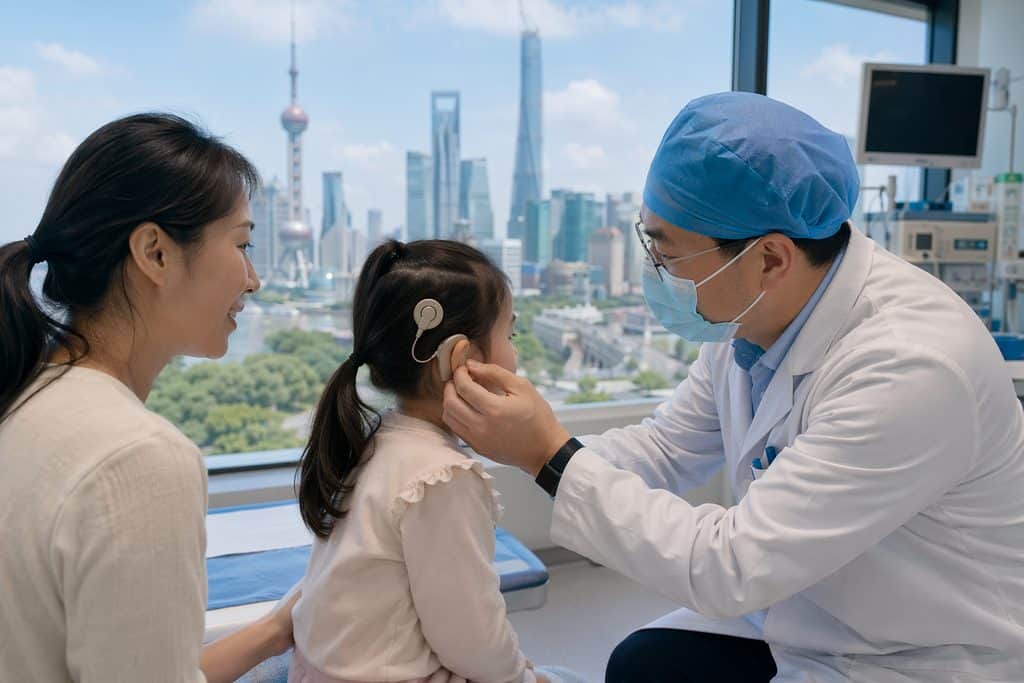
When 67-year-old Robert from Portland finally admitted his hearing loss was isolating him from his grandchildren, his first stop was a local audiologist. The quote came back at $4,800 for a pair of premium devices — not including the fitting appointments. He started searching for alternatives and found himself reading about hearing aid clinic China cost, wondering whether a trip to Beijing or Shanghai could genuinely solve his problem for a fraction of that price.
The short answer: yes, it often can. But the path is different from what you might expect, and the savings depend on choices you make before you ever board a plane. This guide walks through what international patients actually encounter when seeking hearing care in China — the real price ranges, the clinic types, the fitting process, and the questions worth asking before you commit.
Hearing Aid Clinic China Cost: The Short Answer
Digital hearing aids in China typically run $300 to $2,500 per device, depending on technology level, brand, and whether you choose a public hospital audiology department or a private international clinic. Compare that to U.S. prices of $1,500 to $6,000 per device, and the savings can reach 50 to 80 percent.
But here is the caveat that changes everything. The device is only half the equation. Fitting, programming, follow-up adjustments, and aftercare determine whether a hearing aid actually works for you. A cheap device poorly fitted will underperform an expensive one fitted correctly. And follow-up care across an ocean is genuinely difficult — this is not a problem you can fully solve in a single trip and forget.
Who This Is Right For — and Who It Isn’t
Not every patient with hearing loss should consider traveling to China for hearing aids. Being honest about this saves people time, money, and disappointment.
Good candidates typically include:
- Adults with stable, age-related hearing loss (presbycusis) who have recent audiograms and clear medical clearance
- Patients already traveling to China for other medical care who want to add a hearing evaluation
- People whose insurance does not cover hearing aids at home and who face out-of-pocket costs above $4,000
- Expats living in China or frequent business travelers who can return for adjustments
Who should reconsider:
- Anyone with sudden hearing loss, one-sided loss, or hearing loss accompanied by dizziness — these need urgent medical evaluation, not a hearing aid
- Patients who need ongoing, in-person fine-tuning every few weeks and cannot return to China
- Children with hearing loss, whose fitting requires specialized pediatric audiology and long-term developmental follow-up
- People with active ear infections, perforated eardrums, or unresolved middle-ear disease
If you fall into the second group, staying home and working with a local audiologist is genuinely the better decision. No cost saving justifies inadequate care for a medical condition that needs monitoring.
The Options, Compared
Hearing aid care in China falls into three broad settings, each with different pricing, language support, and service models. The table below compares them against the typical Western clinic experience.
| Clinic Type | Typical Cost Per Device (USD) | English Support | Fitting Quality | Best For |
|---|---|---|---|---|
| Public hospital audiology department (top-tier) | $300–$1,200 | Limited; interpreter often needed | High — audiologists are experienced, but appointments are rushed | Budget-conscious patients with interpreter support |
| Private international clinic (JCI-accredited) | $800–$2,500 | Full English service | High — unhurried, Western-style consultations | Foreigners wanting a smooth, English-language experience |
| Brand retail chain (e.g., major global brands) | $400–$2,000 | Varies by location | Moderate — sales-focused, less clinical assessment | Patients who already know their prescription |
| Typical U.S. clinic (for comparison) | $1,500–$6,000 | Full English | High | Patients prioritizing local follow-up |
Which column matters most? If English-language communication and unhurried assessment are priorities, the private international clinic route justifies its higher price. If you have a Mandarin-speaking companion or interpreter and want maximum savings, a top-tier public hospital audiology department delivers excellent clinical care at a fraction of the cost. Patients who already hold a recent prescription and simply want the device may find brand retail chains adequate — though the clinical assessment is thinner.
Best Hearing Aid Clinics in Beijing and Shanghai
Beijing and Shanghai concentrate the country’s strongest audiology resources. For foreigners, the practical choice usually comes down to hospital-affiliated audiology departments and private international clinics.
In Beijing, major tertiary hospitals with ear, nose, and throat (ENT) departments offer comprehensive audiological testing — pure-tone audiometry, speech recognition testing, tympanometry — followed by hearing aid fitting. These departments see high patient volumes, so appointments move quickly and English-speaking staff are not guaranteed. Private international clinics in the capital, by contrast, are built around foreign patients: English-speaking audiologists, unhurried consultations, and direct insurance billing in some cases. You can explore hospital options through our Beijing city page and filter by specialty.
Shanghai follows a similar pattern. The city’s top-tier hospitals have strong ENT and audiology services, and its private international hospitals cater heavily to the expatriate and medical-traveler population. For a broader view of what top-ranked facilities exist across the country, our directory of top-ranked Chinese hospitals groups them by city and ranking tier.
One practical note: the best-known hospitals are not always the best fit for hearing aid fitting specifically. A large ENT department may excel at surgery and complex diagnostics while a smaller, well-regarded audiology clinic provides more attentive fitting. Ask specifically about the audiologist’s experience with your type of hearing loss before booking.
How Much Do Hearing Aids Cost in Shanghai — and What Drives the Price
In Shanghai, expect $350 to $2,200 per device for most adult models. The variance comes from four factors.
Technology level. Basic digital devices amplify sound uniformly. Mid-tier devices add noise reduction and multiple listening programs. Premium devices include directional microphones, Bluetooth streaming, rechargeable batteries, and AI-based sound processing. Each step up adds cost.
Brand and channel. Global brands sold through Chinese retail channels may carry different pricing than the same brand at home. Some models are region-specific.
Clinic type. A public hospital audiology department charges less for the same device than a private international clinic, because the private clinic bundles English service, longer appointments, and concierge support into its fee.
Fitting and follow-up package. Some quotes include unlimited adjustments for a year; others charge per visit. Always ask what the quoted price covers.
Is It Safe to Buy Hearing Aids in China?
The devices themselves are generally safe when purchased from legitimate clinical sources. China regulates medical devices through its national regulatory framework, and major hospitals and international clinics source from established manufacturers. The real risks are not about device safety — they are about process.
The first risk is skipping proper audiological assessment. Buying a device without a current audiogram and speech testing is like buying glasses without an eye exam. You may get sound amplification, but not appropriate amplification for your specific loss pattern.
The second risk is counterfeit or grey-market devices sold outside clinical channels. If a price seems dramatically lower than every other quote, treat it with suspicion. Buy through hospitals, licensed audiology clinics, or authorized brand retailers.
The third risk is unplanned follow-up. Hearing aids require adjustment in the first weeks and periodic reprogramming afterward. If you cannot return to the fitting clinic, arrange in advance for a local audiologist at home to handle adjustments — and confirm they will service devices purchased abroad, because not all will.
Practical Considerations for Booking a Fitting Appointment
Booking a hearing aid fitting appointment in China as a foreigner involves several logistics that differ from a typical clinic visit at home.
Records. Bring a recent audiogram (within six months if possible), any ENT consultation notes, and a list of your current medications. If you do not have a recent audiogram, the Chinese clinic can perform one — but having prior results helps the audiologist track changes.
Appointments. Most public hospital audiology departments do not allow advance booking from overseas through standard channels. Walk-in registration is common, and waits can be long. Private international clinics generally accept advance appointments by email or through a coordination service. If you want certainty about timing, the private route is more predictable.
Visa. Medical travel to China uses the S2 visa, which covers short-stay visits for medical treatment and private affairs, subject to current embassy and consulate requirements and supporting hospital documents. Family members accompanying you apply under the same category. Note that the M visa is for commercial and trade activities and is not the correct category for medical treatment.
Payment. Public hospitals typically require prepayment, with insurance reimbursement handled afterward in your home country. Private international clinics often accept international credit cards and, in some cases, bill insurance directly. Confirm payment methods before your visit.
Language. This is where many foreign patients underestimate the challenge. China’s top hospitals handle enormous daily patient volumes, and English-speaking staff are not guaranteed outside international departments. A bilingual medical companion can manage registration, queueing, payment, wayfinding, and translation throughout your appointment. Our team can arrange this support as part of a coordinated visit; you can review the service structure on our consultation and companion services page.
Frequently Asked Questions
At private international clinics, usually yes — many accept advance bookings by email. At public hospital audiology departments, generally no; registration typically happens on the day of visit. If predictable scheduling matters to you, plan around a private clinic or work with a coordination service that can help manage the process.
Expect $350 to $2,200 per device in Shanghai versus $1,500 to $6,000 in the U.S. for comparable technology tiers. The savings are real, but they shrink if you add travel, accommodation, interpreter costs, and follow-up visits at home. Run the full numbers before deciding.
This is the most common regret. Arrange in advance for a local audiologist to handle adjustments, and confirm they will service a device purchased in China. Some will; some will not. If no local provider will support you, the savings may not be worth the inconvenience.
Purchasing from hospitals, licensed audiology clinics, or authorized brand retailers is generally safe. Avoid steeply discounted devices from unverified sellers. The bigger safety issue is ensuring proper assessment and fitting rather than the device origin itself.
Medical travel falls under the S2 visa category for short stays, subject to the latest embassy and consulate requirements and supporting hospital documentation. Accompanying family members apply under the same category. Approval is never guaranteed, so apply with complete documents and allow adequate processing time.
Your Next Step
Hearing aid care in China can deliver genuine savings and access to experienced audiologists — but only when the assessment, fitting, and follow-up plan are handled thoughtfully rather than rushed. The patients who do best are the ones who treat this as a medical decision, not a shopping trip.
We are China Medical Services, a coordination team that helps international patients navigate Chinese hospitals. We are not a hospital and we do not diagnose or prescribe. What we do is connect you with appropriate clinics, help arrange appointments, and provide bilingual support so language and logistics do not become barriers. If you would like to talk through your situation, start with a free consultation — no pressure, just a conversation about whether this path makes sense for you.
This article is for general information only and does not constitute medical advice. Hearing loss can indicate underlying conditions that require evaluation by a qualified physician. Always consult a licensed healthcare professional about your individual situation before making treatment decisions.
For more medical information and treatment options in China, visit chinamedservices.com (China Medical Services).
