Heart Checkup in China for Foreigners: Cost, Top Hospitals, and How It Works
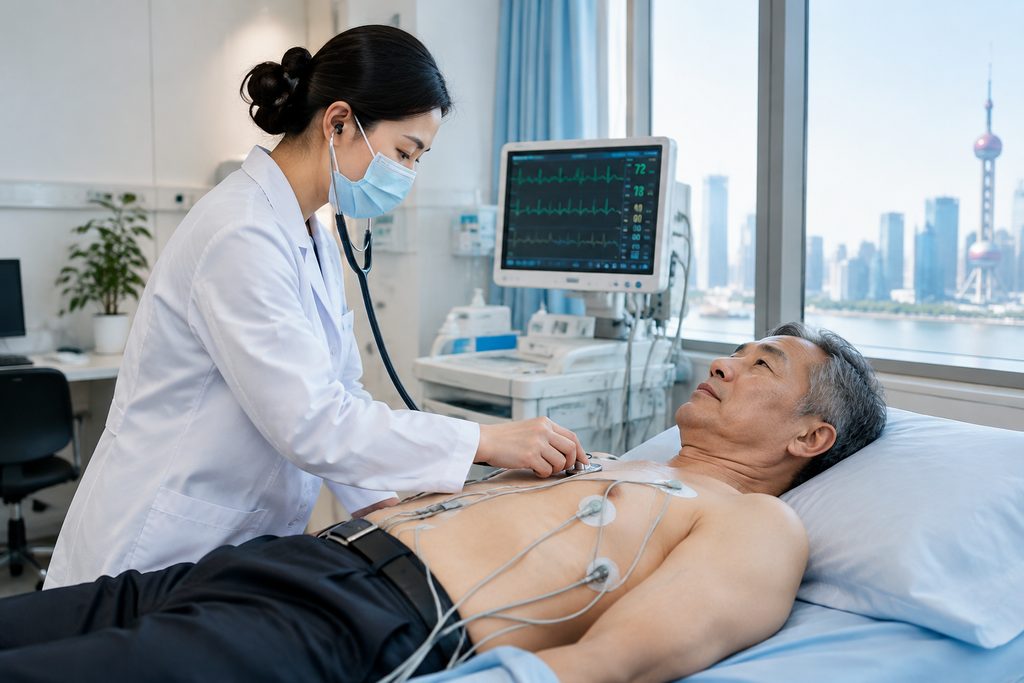
Heart Checkup in China for Foreigners: Cost, Top Hospitals, and How It Works
A heart checkup is simply a structured set of tests that shows how well your heart is working — an ultrasound, an ECG, a stress test, sometimes a CT scan of the coronary arteries. Nothing mysterious. What surprises most international patients is the price. A comprehensive cardiac screening in China typically runs $400 to $1,500 at a top-tier public hospital, and the heart checkup cost China hospitals quote to foreigners often lands 60–80% below what the same panel costs in the United States. That gap is real, and it is the reason searches for cardiac screening in China have climbed steadily among patients from Europe, the Middle East, and North America.
But cost is only half the story. The other half is logistics: which hospital, which visa, how to book, and what happens if the scan finds something that needs follow-up. This guide covers all of it.
Key Takeaways
- Cardiac screening packages at leading Chinese hospitals generally range from $400 to $1,500, versus $2,500 to $8,000 for comparable panels in the US — the single biggest driver of interest in a heart checkup in China for foreigners.
- China’s highest-volume cardiac centers, such as Fuwai Hospital in Beijing, perform more heart procedures annually than almost any facility in the world, which concentrates diagnostic expertise in a small number of hospitals.
- The hard part is not the medicine. It is the process: public hospital outpatient slots cannot be reserved from overseas in advance, most staff do not speak English, and payment is upfront with reimbursement handled later by your own insurer.
- Before booking anything, understand that a checkup is screening, not diagnosis. If your results need treatment, that becomes a separate clinical decision — and a separate conversation with a cardiologist.
The Problem: The Cost and Wait Times of Cardiac Screening at Home
In the United States, a full private cardiac workup — echocardiogram, stress test, coronary CT angiography, lipid panel, and a cardiologist consultation — commonly bills between $2,500 and $8,000 before insurance. Even with coverage, high-deductible plans can leave patients paying $1,500 or more out of pocket. In the UK, private cardiac screening through a London hospital frequently starts around £1,500 and climbs past £3,000 when imaging is included.
Wait times add a second layer of friction. Routine cardiology referrals in several Western systems stretch from six weeks to several months. For a patient with a family history of heart disease or an ambiguous symptom, that waiting period is not just inconvenient — it is stressful.
And there is a third group that rarely gets mentioned: people who simply want a baseline. A 52-year-old with well-controlled blood pressure and a father who had a heart attack at 60. No symptoms. No referral. Just a desire to know where they stand. In many systems, that person falls through the cracks entirely — not sick enough to be prioritized, not wealthy enough to pay private rates.
Why China Delivers Results for Cardiac Screening
Clinical Volume Concentrates Expertise
Fuwai Hospital in Beijing performs more than 14,000 cardiac surgeries a year. That figure is not a marketing claim — it reflects a system where a small number of national cardiac centers absorb an enormous share of the country’s heart cases. For a patient seeking a checkup, volume matters in a specific way: the sonographers, technicians, and radiologists reading your images do it hundreds of times a month, not dozens. Repetition builds pattern recognition.
This is why the question of the best heart hospital in Beijing for foreigners usually resolves to a handful of names — Fuwai, Peking Union Medical College Hospital, and a small set of international departments within them. The cardiac specialty rankings on our site list the top hospitals by department, drawn from the Fudan University hospital rankings, which evaluate specialist reputation across 45 clinical fields.
Equipment and Throughput
Top Chinese public hospitals run the same imaging platforms you would find at a Western academic medical center — 256-slice CT scanners, 3T MRI, modern echocardiography suites. The difference is scheduling density. A hospital that scans 300 patients a day does not make you wait three weeks for a coronary CT. Many international departments can complete a full cardiac panel within one to two days, with results reviewed before you fly home.
Cost Structure, Explained Honestly
Lower prices in China are not the result of cutting corners. They come from labor economics, purchasing power, and hospital throughput. A senior cardiologist in China earns a fraction of a US counterpart’s salary, and a hospital scanning hundreds of patients daily spreads equipment costs across far more procedures. Those structural factors — not inferior materials or unqualified staff — explain the price gap.
| Screening Component | Typical China Price (USD) | Typical US Price (USD) |
|---|---|---|
| Echocardiogram | $80–$200 | $500–$1,200 |
| ECG (resting) | $20–$60 | $100–$300 |
| Stress test (treadmill) | $100–$250 | $400–$1,000 |
| Coronary CT angiography | $250–$600 | $1,000–$3,500 |
| Cardiology consultation | $50–$150 | $300–$600 |
| Full package estimate | $400–$1,500 | $2,500–$8,000 |
Prices vary by hospital and case complexity. International departments charge roughly 1.5 to 2 times the standard rate in exchange for English-speaking staff and shorter waits — still well below Western pricing.
What a Cardiac Checkup in China Actually Involves, Step by Step
Here is the sequence, with realistic timing. It differs from Western practice in one important way: you generally cannot reserve a standard outpatient slot from abroad in advance.
Before you travel. You gather your existing records — prior ECGs, imaging, medication lists, family history — and have them translated. If you want a specialist to review your case before you commit to flying, a written second opinion or video consultation can be arranged through the hospital’s international department. This step is optional but useful for anyone with a known condition.
Day 1: Registration and first consultation. You arrive at the hospital’s international or VIP department, register, and see a cardiologist who reviews your history and orders the appropriate tests. This is the point where a bilingual companion earns their keep — registration queues, payment windows, and department wayfinding are genuinely difficult without Mandarin.
Day 1–2: Testing. Blood draws, ECG, and echocardiogram are usually same-day. Stress testing and coronary CT may be scheduled the following morning.
Day 2–3: Results and review. The cardiologist walks you through findings and gives you a written report, ideally in English. If everything is normal, you fly home with documentation. If something needs attention, you discuss next steps — which may mean a longer stay.
Is Heart Checkup in China Safe? What the Evidence Says
The question of whether a heart checkup in China is safe deserves a direct answer rather than reassurance. Diagnostic safety rests on three things: qualified personnel, calibrated equipment, and reliable reporting. China’s top-tier hospitals — the roughly 340 institutions in our database that sit in the top 5% of the country’s 35,000+ hospitals by Fudan and JCI rankings — meet all three. Many hold JCI accreditation, the same international standard used by hospitals in the US and Europe.
Where patients get into trouble is at the margins. A small clinic advertising cheap packages, a provider with no international patient office, a “screening center” that is not attached to a major hospital. The safeguard is straightforward: stick to accredited institutions with a formal international department. Our ranked hospital directory groups these by city, and the private international hospital list covers facilities with English-speaking staff and direct insurance billing.
One more honest point. A checkup is not treatment. If your screening uncovers a blockage or an arrhythmia, the follow-up is a clinical decision made by a cardiologist who has examined you — not something a screening package resolves. Anyone promising otherwise is overselling.
How Much Does a Cardiac Checkup Cost in Shanghai vs. Beijing?
Shanghai and Beijing price similarly, with Shanghai running marginally higher at private international hospitals and Beijing offering more choice among top-tier public cardiac centers. A basic panel in Shanghai — ECG, echo, blood work, consultation — typically falls in the $400 to $800 range at a public hospital’s international department. Adding coronary CT pushes it toward $1,000 to $1,500.
Beijing’s advantage is density. The city hosts more Fudan top-100 hospitals than any other in China — 21, compared with Shanghai’s 18 — and Fuwai alone anchors the country’s cardiac referral network. For a straightforward screening, either city works. For a complex case or a second opinion on existing imaging, Beijing’s concentration of cardiac specialists is hard to match. City-specific hospital lists are available for Beijing and Shanghai if you want to compare options side by side.
Other cities worth considering: Guangzhou, Chengdu, and Wuhan all have strong cardiac departments and shorter international patient queues, often at slightly lower prices.
Practical Considerations: Visa, Payment, and Language
Visa. Foreigners traveling to China for medical treatment typically use the S2 visa, which covers short-stay visits for medical treatment and private affairs. Stays exceeding 180 days generally require the S1 category. Accompanying family members apply under the same S2 category. Requirements are set by the relevant Chinese embassy or consulate and change periodically — confirm current documentation with your local mission before applying. Note that the M visa is for commercial and trade activity and is not the correct category for medical travel.
Payment. Public hospitals require upfront payment; you settle the bill at the time of service and seek reimbursement from your own insurer afterward. Private international hospitals often bill insurance directly. Bring a card that works internationally, and expect to pay in RMB.
Records and follow-up. Request your imaging on disc and your reports in English before discharge. Your home cardiologist will want both. If a follow-up scan is recommended in six or twelve months, that can be done at home — the baseline comparison is what matters.
Language. This is the practical barrier most patients underestimate. A major Chinese hospital may see 10,000 outpatients in a single day. Signage, registration systems, and most clinical staff operate in Mandarin. Bilingual medical interpretation is not a luxury in this environment; it is the difference between a smooth visit and a confusing one.
Note that our role is coordination, not medical care. We are not a hospital and we do not provide diagnoses. What we handle is the surrounding logistics — record translation, appointment coordination through official international departments, and bilingual accompaniment. Any clinical decision belongs to you and your treating physicians.
Frequently Asked Questions
Standard public hospital outpatient slots cannot be reserved from overseas — registration happens in person on the day. What can be arranged in advance is access through a hospital’s international or VIP department, which offers English-language service at roughly 1.5 to 2 times the standard fee. Written second opinions and video consultations with a specialist can also be set up before you travel, which helps you decide whether the trip is worthwhile.
The checkup itself typically runs $400 to $1,500 depending on which tests are included and whether you use a public or private international facility. Add flights, hotel, and ground transport. Many patients combine the trip with a short stay in the city, which changes the calculus — but the medical component is usually the smallest line item. Final pricing depends on the hospital and the complexity of your case.
You will be referred to a cardiologist for a proper evaluation, and treatment options will be discussed with you directly. Nothing is decided without your consent, and you are free to return home for treatment if you prefer. This is exactly why we recommend a staged approach — a written review or video consultation first, so you understand your situation before committing to travel or to any procedure.
The S2 visa is the applicable short-stay category for medical treatment, and accompanying family members apply under the same category. Requirements are set by the Chinese embassy or consulate handling your application and are subject to change, so verify the current checklist with your local mission. The M visa is for commercial and trade activities and is not the right category for medical travel.
At the top-tier hospitals — those ranked in the Fudan top 100 or holding JCI accreditation — the imaging platforms and reporting standards are comparable to Western academic centers. The variable is not equipment but which hospital you choose. Accredited institutions with formal international departments are the safe benchmark; smaller standalone screening centers are not.
Your Next Step
If you are considering a heart checkup in China, start with information rather than a booking. Request your existing records, decide whether a remote specialist review makes sense first, and only then plan travel. That sequence saves money and avoids unnecessary trips.
China Medical Services connects international patients with 340+ top-ranked hospitals across 37 cities, handling record translation, appointment coordination through official hospital channels, and bilingual accompaniment on the ground. We are not a hospital and do not provide medical diagnoses or treatment. When you are ready, a free consultation is the natural first conversation — no pressure, no commitment, just a clearer picture of what is possible.
This article is for general information only and does not constitute medical advice. Always consult a qualified physician about your individual health situation.
For more medical information and treatment options in China, visit chinamedservices.com (China Medical Services).
