Henan Provincial People’s Hospital Neurosurgery: A Review for International Patients
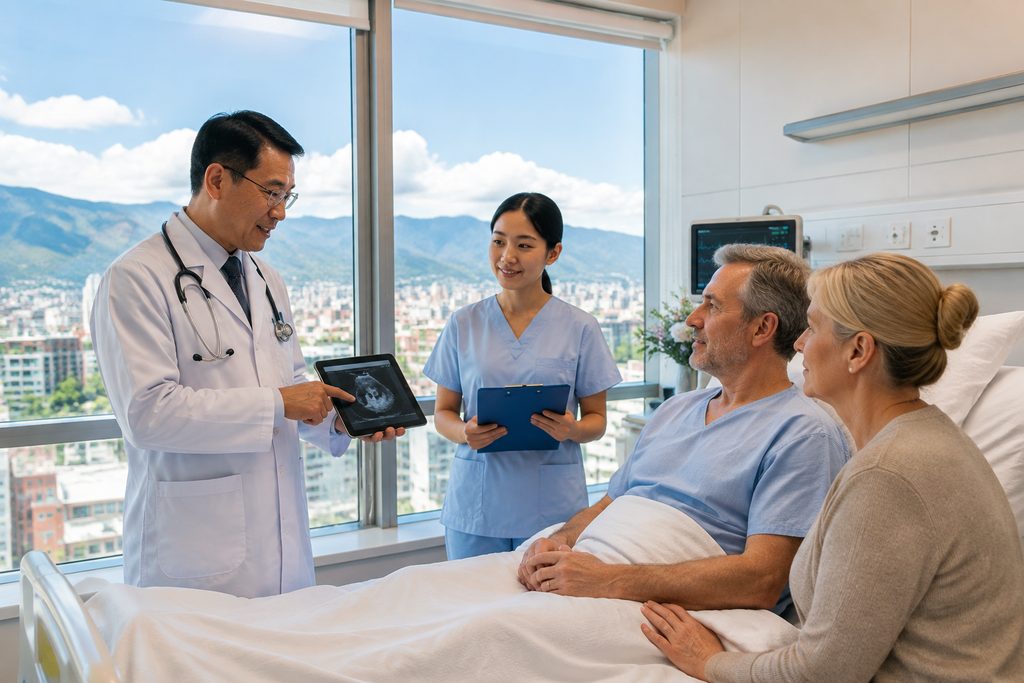
Have you ever wondered whether a hospital outside Beijing or Shanghai could handle complex brain or spine surgery at a level you would trust with your own life? The assumption that only China’s coastal megacities house world-class neurosurgery departments is outdated. A closer look at Henan Provincial People’s Hospital tells a different story. This Henan Provincial People’s Hospital neurosurgery review gives you the facts: what the department does well, what it costs, and what the process looks like if you are traveling from abroad.
The short version: this is a high-volume, technically capable neurosurgery center in Zhengzhou that handles everything from brain tumor resection to complex spinal instrumentation. It is not as famous internationally as Fuwai or Huashan, but for many procedures the clinical volume and outcomes are comparable at a significantly lower price. The catch is access — you cannot simply book a surgery date from overseas through the standard outpatient channel.
Henan Provincial People’s Hospital Neurosurgery: The Short Answer
Yes, the neurosurgery department at Henan Provincial People’s Hospital performs major cranial and spinal procedures at a standard that meets or exceeds what most Western patients would consider acceptable. The department handles roughly 3,000 neurosurgical procedures annually, including awake craniotomies for tumors in eloquent brain regions, endoscopic pituitary surgery, and minimally invasive spine fusion. For a patient weighing a medical tourism package neurosurgery China option, this hospital belongs on the shortlist — but not at the top of it for every diagnosis.
Here is the nuance. The public outpatient system is built for domestic patients. That means same-day queue-based registration, Mandarin-only paperwork, and no mechanism for an overseas patient to lock in a surgical slot before arriving. If you want a confirmed date with a named senior surgeon before you board a plane, you go through the hospital’s international or VIP channel — or you work with a coordinator who handles that for you. Both routes cost more. Neither is a guarantee of a specific outcome.
Who This Is Right For — and Who It Isn’t
Let’s be direct about fit. This is not a hospital for every international neurosurgery patient.
Good candidates typically include:
- Patients with a confirmed diagnosis and imaging (MRI, CT, angiography) who need a second opinion before committing to surgery
- Patients seeking elective spine procedures — discectomy, laminectomy, fusion — where cost savings are substantial
- Patients with benign or slow-growing brain tumors who can tolerate a 2–4 week evaluation-to-surgery timeline
- Patients from regions with limited neurosurgical capacity who are already considering medical travel to Asia
Who should think carefully before choosing this route:
- Patients requiring emergency neurosurgical intervention — acute subarachnoid hemorrhage, traumatic brain injury, malignant intracranial hypertension. Fly to the nearest capable center, not across an ocean.
- Patients with rare pediatric neurosurgical conditions requiring highly specialized multidisciplinary teams. A dedicated children’s hospital may serve better.
- Patients whose primary concern is having an English-speaking neurosurgeon in the operating room. The senior surgeons here are technically strong, but fluency in English is the exception, not the rule.
- Patients unwilling to pay for an international coordinator or VIP channel. Without that, the public queue experience is genuinely difficult for a non-Mandarin speaker.
The Options, Compared
If you are asking how safe is neurosurgery in China, the honest answer is that safety varies far more by hospital tier than by country. A top-tier Chinese neurosurgery department compares favorably with mid-tier centers in the US or Europe on infection rates and surgical volume. But the comparison that matters is between your realistic options.
| Factor | Henan Provincial People’s Hospital | Top-tier Beijing/Shanghai Public Hospital | Private International Hospital (e.g., United Family) | US Academic Center |
|---|---|---|---|---|
| Brain tumor resection cost | $8,000–$18,000 | $15,000–$30,000 | $30,000–$60,000 | $80,000–$200,000+ |
| Spine fusion (1–2 levels) | $9,000–$16,000 | $12,000–$22,000 | $25,000–$45,000 | $60,000–$120,000 |
| English-speaking staff | Limited; coordinator recommended | Moderate in international departments | Standard | Standard |
| Ability to pre-book surgery from abroad | Via VIP/international channel only | Via international department | Yes | Yes, after evaluation |
| Annual neurosurgery case volume | ~3,000 | 5,000–10,000+ | Lower; selective cases | 2,000–5,000 |
If your priority is the absolute lowest cost with acceptable quality, Henan wins. If you want the highest-volume center with the most internationally experienced coordination team, a Beijing or Shanghai flagship — see our department rankings across 45 specialties — may justify the higher price. If you want seamless English communication and Western-style billing, a private international hospital is the fit, at a premium.
Why Zhengzhou Instead of Beijing or Shanghai?
The case for Henan Provincial People’s Hospital comes down to three things: surgical volume, equipment, and price. The department operates dedicated neurosurgical suites with neuronavigation, intraoperative MRI, and electrophysiological monitoring — the same toolset you would find at a top US center. The surgeons perform enough complex cases annually that the team’s technical proficiency is not in question.
But the honest tradeoff is coordination. Beijing and Shanghai have mature international patient departments with staff whose job is to handle foreign patients. Zhengzhou is a major city — 12 million people, a provincial capital — but its international patient infrastructure is thinner. That is precisely where a bilingual coordinator earns their fee: translating records, confirming imaging requirements, scheduling the right surgeon, and being physically present on the day of consultation.
For a patient asking about brain tumor surgery cost in China, the savings from choosing Zhengzhou over Shanghai can reach $10,000 or more for the same procedure code. That is real money. But it only works if the logistics are handled properly.
What It Costs
Let’s put numbers on the table. These are out-of-pocket estimates for international patients paying in cash, based on typical billing for the procedures listed. They vary by hospital and case complexity — a tumor in the brainstem costs more than a convexity meningioma; a three-level fusion costs more than a single-level discectomy.
- Craniotomy for brain tumor: $8,000–$18,000 (surgeon fee, anesthesia, operating room, ICU stay, standard ward recovery)
- Endoscopic transsphenoidal pituitary surgery: $7,000–$14,000
- Spine discectomy/laminectomy: $6,000–$12,000
- Spine fusion with instrumentation: $9,000–$16,000 per level
- VP shunt placement: $5,000–$9,000
What is not included: international airfare, visa fees, accommodation for family members, post-discharge rehabilitation, and any complications requiring extended ICU care. Public hospitals in China require prepayment — typically a deposit covering the estimated full cost before admission. Insurance reimbursement is between you and your insurer; the hospital will provide itemized receipts and translated discharge summaries, but it does not bill international insurers directly. A few private international hospitals in China do offer direct billing, which we cover on our private international hospital pages.
If you are comparing against a medical tourism package neurosurgery China quote, ask what the package actually includes. Some facilitators bundle airfare, hotel, and a coordinator fee into a single number. Ours is a case management model — records translation, official hospital channel booking, and bilingual accompaniment — priced separately from hospital charges. A bilingual medical companion starts from $300 per day, and any remote consultation fee is credited in full toward on-the-ground coordination if you proceed within 90 days.
Practical Considerations: Records, Visa, and Follow-up
This is where international patients most often stumble. Get these pieces right before you book a flight.
Medical records. You need complete imaging — not just the report, but the actual DICOM files on a CD or cloud link. Chinese neurosurgeons will not operate on a foreign radiologist’s written summary alone. Bring or upload: recent MRI/CT with contrast, pathology slides if a biopsy was already done, and a detailed clinical summary with current medications. Have everything translated into Chinese by a medical translator before your first consultation. A poor translation wastes a consultation slot.
Visa. The applicable category for medical treatment in China is the S2 visa for short stays, with S1 for stays exceeding 180 days. You will need an invitation letter from the hospital confirming your appointment or admission arrangement. The M visa is for commercial and trade activities — it is not the correct category for medical travel, despite what some outdated guides claim. Family members accompanying you also apply for S2. Approval is at the discretion of the embassy or consulate; no one can guarantee issuance.
Payment. Bring a credit card that works in China (Visa and Mastercard are accepted at major hospital payment counters, but confirm in advance) plus a backup. Wire transfers to the hospital’s account are possible but slow. Cash in large amounts is impractical and inadvisable. Plan for the deposit amount before you leave home.
Follow-up after returning home. The hospital will provide a discharge summary in Chinese and, on request, a translated version. You will need a local neurosurgeon or neurologist back home who is willing to take over post-operative care. Arrange that relationship before you travel. Post-op imaging at 3, 6, and 12 months is standard for most cranial procedures — you can have those scans done locally and send them back for review, or return to Zhengzhou for follow-up.
Frequently Asked Questions
On measurable metrics — surgical volume, infection rates, availability of intraoperative imaging and neuromonitoring — the department operates at a standard comparable to many Western centers. The risk profile of any individual case depends on the tumor location, the patient’s baseline health, and the surgeon’s experience with that specific pathology. No hospital, anywhere, can promise a complication-free outcome. Ask for the department’s complication rate for your specific procedure, and compare it honestly against what your home hospital quotes.
Not through the standard public registration channel. Public hospital rules require an in-person consultation before any surgical booking. What you can do is arrange a remote video consultation with the department, have your imaging reviewed, and receive a written opinion on whether surgery is indicated and what approach is recommended. If you then travel to Zhengzhou, the in-person consultation converts into a surgical booking. A coordination service can handle the remote consultation, the appointment scheduling, and the in-person visit logistics — but the final decision to operate is always the hospital’s.
China’s medical liability system differs from Western jurisdictions. Pursuing a malpractice claim as a foreign patient is legally possible but practically difficult — language barriers, different evidentiary standards, and the need for local legal representation all complicate matters. This is not a reason to avoid treatment in China, but it is a reason to choose your hospital carefully, understand the specific risks of your procedure beforehand, and carry robust medical travel insurance that includes coverage for complications and medical evacuation. Read the policy’s fine print on neurosurgery exclusions.
The honest answer is that for most international patients, the best neurosurgery hospital in China for international patients is whichever top-tier center can actually coordinate your case smoothly. Beijing Tiantan Hospital and Shanghai’s Huashan Hospital have the highest neurosurgical volumes and the strongest international reputations. Henan Provincial People’s Hospital is a tier below in fame but not in technical capability for common procedures. If your case is complex — skull base tumors, cerebrovascular malformations, pediatric neurosurgery — a Tiantan or Huashan referral may be worth the higher cost and longer wait. For straightforward tumors and spine cases, Henan offers better value.
Your Next Step
Choosing a neurosurgery destination is not a decision to make from a single article. The right move is to get your imaging in front of the actual department and hear what they say. We are not a hospital and we do not diagnose or treat anything. What we do is handle the part that trips up most international patients: translating your records, arranging a remote consultation with the right department, booking the in-person visit through official channels, and putting a bilingual companion beside you on the day. If you are seriously weighing Henan Provincial People’s Hospital neurosurgery for your case, start with a conversation. It costs nothing to ask.
Send us your diagnosis and imaging list, and we will tell you honestly whether this hospital fits your case — or point you somewhere better. Request a free consultation here.
For more medical information and treatment options in China, visit chinamedservices.com (China Medical Services).
