HKU-Shenzhen Hospital Urology for International Patients: A Practical Guide
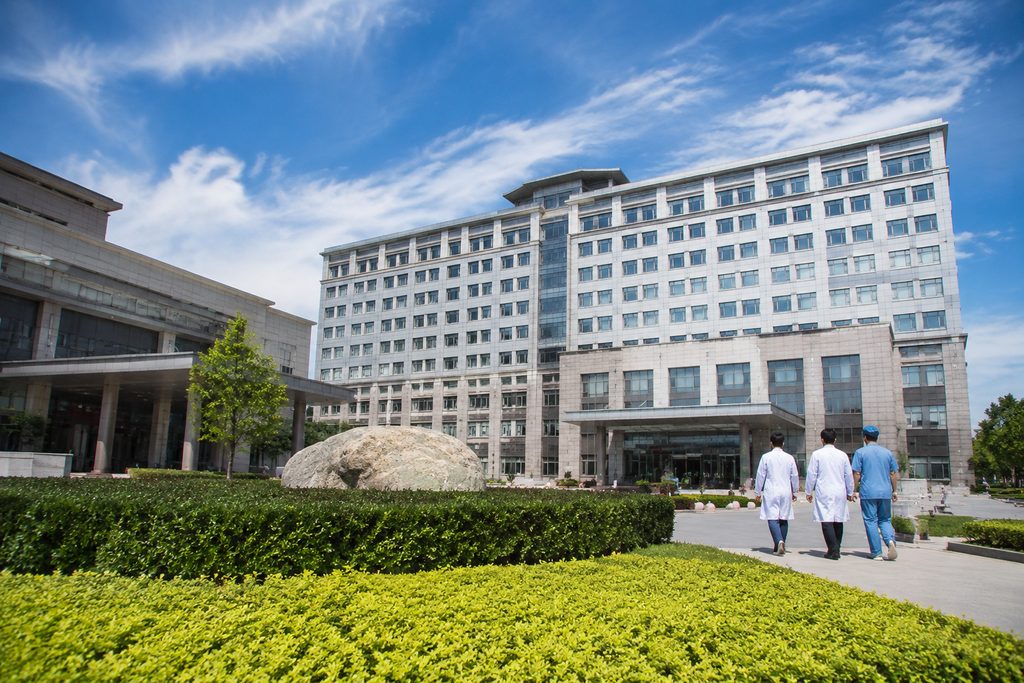
HKU-Shenzhen Hospital Urology for International Patients: What You Need to Know Before Booking
Have you ever tried to figure out whether a hospital halfway across the world can actually handle your urological condition — and what it would really cost? If you have searched for urology hospital Shenzhen cost and landed here, you are likely weighing a serious decision. The University of Hong Kong-Shenzhen Hospital (HKU-Shenzhen Hospital) is one of the few public hospitals in mainland China that operates with a distinctly international framework. But does that framework translate into a smooth experience for foreign patients seeking urology care?
The short answer is yes, with caveats. HKU-Shenzhen Hospital runs an International Medical Center (IMC) that accepts foreign patients, employs English-speaking staff, and follows protocols modeled on Hong Kong’s public hospital system. Urology services cover everything from kidney stone removal to prostate surgery. Yet the process of booking, paying, and following up is not identical to what you would find in London, Dubai, or Singapore. This guide walks through the real sequence — costs, timelines, failure points, and the practical steps that make the difference between a frustrating trip and a well-managed one.
Before going further, understand the broader landscape. Shenzhen sits inside Guangdong province, home to several hospitals on the Fudan rankings. You can explore the full list of ranked institutions on our top hospitals database or narrow your search by specialty through our department rankings.
How This Actually Works, Step by Step
The path to urological treatment at HKU-Shenzhen Hospital starts long before you board a plane. Here is the sequence we walk our clients through, based on how the hospital’s International Medical Center actually operates.
Step 1: You send us your existing records. That means ultrasound reports, CT scans, lab results, biopsy pathology if relevant, and a summary of your symptoms from your home urologist. If you have had prior surgeries, include operative notes. We translate these into Chinese.
Step 2: A urology specialist reviews the file. This happens through the hospital’s international department. The doctor assesses whether your case is appropriate for treatment in Shenzhen, what additional imaging might be needed, and what the likely treatment pathway looks like.
Step 3: You receive a written opinion or have a video consultation. For a written second opinion, expect to pay $300–500. A video consultation with a specialist runs $100–300. If you want a top-specialist video consultation, budget $500–800. These fees are credited in full toward on-the-ground coordination if you proceed within 90 days.
Step 4: You decide whether to travel. If yes, we coordinate the hospital appointment, your S2 visa documentation, and on-site support. You fly to Shenzhen, attend your outpatient consultation, complete any additional tests, and then the urologist schedules surgery or another intervention if needed.
Step 5: You return home with a discharge summary and follow-up plan. Many urological procedures — cystoscopy, ureteroscopy, TURP, some laparoscopic surgeries — allow discharge within 1–4 days. Your home urologist receives translated records.
This staged approach exists because Chinese public hospitals, including HKU-Shenzhen, generally cannot finalize a surgery date before the surgeon has seen you in person. Remote evaluation narrows the field, but the in-person consultation remains mandatory.
What Urology Services Does HKU-Shenzhen Hospital Actually Offer?
HKU-Shenzhen Hospital’s urology department covers the standard spectrum of adult urology. That includes minimally invasive kidney stone treatment, benign prostatic hyperplasia surgery, urological oncology, and reconstructive procedures. The hospital promotes itself as following Hong Kong-style clinical governance, which means more conservative use of antibiotics and a stronger emphasis on evidence-based pathways than some mainland institutions.
For international patients, the relevant question is not just what the department offers, but how the International Medical Center filters access. The IMC functions as a separate outpatient and inpatient channel. You register through the IMC, see IMC-affiliated urologists, and are admitted to IMC wards. This channel costs more than the standard public route — typically 1.5 to 2 times the standard fee — but it is the only realistic route for a foreigner with limited Mandarin.
So, is HKU-Shenzhen hospital good for foreigners? The honest answer: it is among the better public-hospital options in mainland China for English-speaking patients, because the IMC was designed with that population in mind. But it is not a Western private hospital. Expect shorter consultation times than you might be used to, less hand-holding between appointments, and a system where you must advocate for clarity. Our bilingual companions exist precisely because that gap remains real.
Urology Hospital Shenzhen Cost: A Realistic Breakdown
Let us talk numbers, because urology hospital Shenzhen cost is the search that brings most people here. Prices below are ranges based on IMC pricing patterns and standard Chinese public hospital fee schedules. They vary by hospital and case complexity.
| Procedure | HKU-Shenzhen IMC (USD, estimate) | United States (USD, typical) | United Kingdom private (USD, typical) |
|---|---|---|---|
| Ureteroscopy with laser lithotripsy (kidney stone) | $3,500–6,000 | $15,000–30,000 | $10,000–18,000 |
| Transurethral resection of prostate (TURP) | $4,000–7,500 | $20,000–40,000 | $12,000–22,000 |
| Radical prostatectomy (robotic or laparoscopic) | $12,000–20,000 | $45,000–120,000 | $30,000–60,000 |
| Cystoscopy (diagnostic, outpatient) | $300–800 | $1,500–4,000 | $1,000–2,500 |
| Percutaneous nephrolithotomy (PCNL) | $5,000–9,000 | $25,000–50,000 | $15,000–30,000 |
These figures reflect the IMC channel. The standard public channel would cost less, but it is not accessible to foreign patients without fluent Chinese and local insurance. Even within the IMC, final quotes depend on your specific anatomy, comorbidities, and whether the surgeon recommends robotic assistance.
For context on how Shenzhen compares to other Chinese cities, see our Shenzhen city page. Shenzhen’s medical infrastructure has grown rapidly, but it still trails Beijing and Shanghai in total number of Fudan-ranked hospitals. That does not make HKU-Shenzhen a weak choice — it makes it a specific one.
A Realistic Timeline
Patients routinely underestimate how long the pre-travel phase takes. Here is what we tell our clients, with ranges that reflect real-world delays.
| Stage | Duration | What happens |
|---|---|---|
| Document collection and translation | 3–7 days | You gather scans, reports, and pathology. We translate into Chinese. |
| Specialist file review | 3–10 days | The urology team reviews your records and issues a written opinion or schedules a video call. |
| Video consultation scheduling | 5–14 days | Top specialists have limited slots. Expect to wait. |
| S2 visa application | 7–21 days | You apply at a Chinese embassy or consulate with hospital invitation documents. |
| Outpatient appointment after arrival | 1–3 days | You see the urologist, complete any missing tests. |
| Surgery scheduling after consultation | 3–14 days | Depends on operating room availability and surgeon schedule. |
| Post-operative inpatient stay | 1–7 days | Varies by procedure. TURP: 2–4 days. Radical prostatectomy: 5–7 days. |
| Follow-up at home | Ongoing | Your home urologist receives translated discharge records. |
The waiting steps people forget are document translation and visa processing. Translation is fast. Visa processing is not — especially if your home country’s Chinese consulate has a backlog. Start the S2 application as soon as you have a hospital appointment confirmation.
What Can Go Wrong — and What Happens Then
Urological treatment abroad carries specific failure modes. We have seen all of them. Here is what actually happens.
Your records are incomplete. You arrive with a CT report but no actual DICOM files. The urologist cannot assess stone burden or tumor staging properly. What happens then: you repeat imaging in Shenzhen. That costs $200–600 and adds 1–2 days. Send everything — not just the summary.
The surgeon changes the plan after seeing you. A remote review suggested ureteroscopy, but in person the doctor finds a narrow ureter and recommends staged treatment. This is not malpractice. It is clinical reality. What happens then: you discuss the revised plan, costs, and timeline before consenting. You are never forced to proceed.
You need a procedure the IMC does not perform on foreigners. Rare, but possible for certain reconstructive or oncological cases. The hospital may refer you to a larger center in Guangzhou or Hong Kong. What happens then: we coordinate the transfer or help you evaluate alternatives.
Post-operative complications after you return home. You develop a urinary tract infection or bleeding two weeks after TURP. Your home urologist is now responsible. What happens then: you need a local provider who can read the translated discharge summary and manage the complication. We prepare those documents before you leave.
The honest takeaway: most failures are preventable through better pre-travel preparation. That is not a sales pitch. It is the pattern we observe repeatedly.
How to Evaluate a Urologist When You Cannot Meet Them First
Choosing a urologist from abroad is different from choosing one in your home city. You cannot visit the clinic, meet the staff, or get a feel for the doctor’s communication style. So you evaluate on proxies.
First, look at case volume. A urologist who performs 200 TURPs per year has a different complication profile than one who performs 30. Ask directly: how many of this specific procedure did you perform last year? Chinese public hospital urologists are generally comfortable answering this.
Second, look at the department’s equipment. Does the hospital have holmium laser for stone treatment, or only pneumatic lithotripsy? Does it offer robotic-assisted prostatectomy, or only open surgery? These details matter more than the doctor’s title.
Third, consider the IMC’s English capability. Some IMC urologists speak fluent English. Others rely on a translator. If you are discussing erectile function after prostatectomy or incontinence risk, you need clear communication. Ask before you book whether the specific urologist you will see speaks English directly.
Fourth, read kidney stone removal abroad reviews cautiously. Online reviews of Chinese hospitals are sparse and often filtered. Better sources: expat forums, Hong Kong-based patient groups, and direct questions to the IMC about complication rates. If a hospital refuses to share basic outcome data, that is information in itself.
Practical Considerations: Records, Visa, Payment, and Follow-Up
The prostate surgery price China figure typically covers the surgeon’s fee, operating room time, anesthesia, basic ward stay, and standard medications. It may not include pre-operative imaging, special catheters or stents, private room upgrades, or post-discharge medications. Always ask for an itemized estimate before consenting.
For clinical quality, yes — the urology department is solid and follows Hong Kong-style protocols. For service experience, private international hospitals in China offer more English-speaking staff and direct insurance billing. The trade-off is cost: private international hospitals charge significantly more for the same procedures.
We do not publish specific doctor names or rankings, because individual outcomes vary and the hospital rotates specialists through the IMC. The better question is which urologist has the highest case volume for your specific procedure. Ask that question during the remote evaluation phase.
Your home urologist manages the complication. Before you leave Shenzhen, request a translated discharge summary, operative note, medication list, and any relevant imaging. These documents allow your local doctor to continue care without guessing.
Your Next Step
Choosing to travel to Shenzhen for urological care is a decision that rewards preparation. The costs are significantly lower than in Western countries, the clinical quality at HKU-Shenzhen Hospital is legitimate, and the International Medical Center exists specifically for patients like you. But the process has friction points that are hard to see from abroad.
We are China Medical Services, and we help international patients navigate Chinese hospitals — from record translation to appointment coordination to bilingual on-site support. We do not practice medicine, and we do not guarantee specific doctors or outcomes. What we do is make the path clearer. If you want to understand whether HKU-Shenzhen Hospital is the right fit for your case, start with a free consultation through our patient services page.
Send us your records. Get a specialist’s view. Then decide.
Frequently Asked Questions
Yes. The hospitals used for international patients are JCI-accredited and follow the same international safety standards as top hospitals in the US and Europe. Surgical teams perform high volumes of procedures — often more than their Western counterparts — which studies show leads to better outcomes.
Costs vary by procedure and hospital, but international patients typically save 40-80% compared to US prices — even when factoring in travel and accommodation. A consultation with our team will give you an exact, all-inclusive quote with no hidden fees.
Send us your existing medical reports to get started. We handle everything from hospital selection and appointment scheduling to visa assistance and post-operative recovery planning. Your medical records are reviewed by the specialist before you even book a flight.
For more medical information and treatment options in China, visit chinamedservices.com (China Medical Services).
