Handle Home Country Bills While in China for Treatment: A Practical Financial Guide
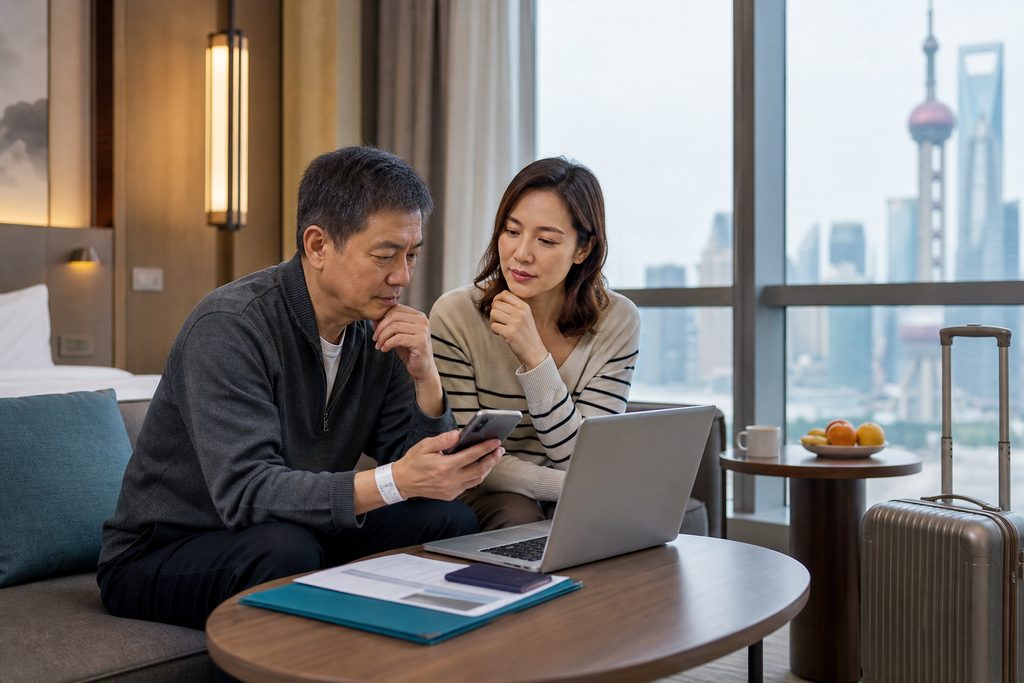
You’ve probably heard the horror stories. A patient travels abroad for a life-changing procedure, only to return home to a wrecked credit score, a stack of late fees, and a foreclosure notice. The fear isn’t just about the surgery. It’s about everything you leave behind. The reality is that handling your financial obligations from a hospital room in Shanghai or Beijing is not only possible—it’s a structured process that thousands of international patients navigate every year. Our team has seen this scenario unfold across 37 cities and 340+ top-ranked hospitals. The patients who succeed don’t have secret banking connections. They have a plan. And that plan starts before they ever board the plane.
How This Actually Works, Step by Step
The biggest mistake we see is assuming you can figure out the finances once you’re already in recovery. Jet lag, pain medication, and a foreign language environment are not your friends when a mortgage payment is due.
You start by auditing every recurring bill. List them. Mortgage, utilities, credit cards, insurance premiums, subscription services, storage units. Then you categorize them into three buckets: autopay, manual online payment, and physical checks. The physical check bucket is your problem to solve before departure. Most banks in the US, UK, and Australia let you schedule a check to be mailed, but you need to set this up weeks in advance.
Next, you designate a trusted contact at home. This is non-negotiable. Someone who can open your mail, deposit a stray refund check, or call your bank if a card gets frozen. Give them limited power of attorney for financial matters, not medical ones. Your hospital in China will have a notary service or can direct you to one if documents need signing.
Then you test your banking apps from a VPN. Many financial institutions geo-block foreign IP addresses. Log in while using a VPN set to your home country before you leave. If it fails, call the fraud department and place a travel notice on your account. Tell them exactly which countries and for how long. Some banks now ignore travel notices and rely on behavioral analytics—ask them directly if this is the case.
Finally, you fund a buffer account. Transfer two months of extra expenses into a checking account linked to your autopay bills. Medical stays can extend. A planned three-week trip can become six. Our team has coordinated extended stays for patients at hospitals like West China Hospital and Fuwai Hospital when recovery required more time. The buffer saves you from scrambling.
Can I Pay My US Credit Card from a Shanghai Hospital?
Short answer: yes. But not necessarily through the bank app you’re used to.
Most US credit card issuers accept online payments from any internet connection. The problem isn’t the payment portal. The problem is the funding source. If your money is sitting in a US checking account and you’re trying to move it to your credit card, that’s straightforward. Log into your bank, initiate the transfer, done.
The complication arises when you need to move money from China to your home country to fund that payment. Chinese hospitals do not function as banks. You cannot hand RMB cash to a hospital cashier and have them pay your Visa bill. You need an international money transfer service China for patients. Wise (formerly TransferWise), PayPal Xoom, and traditional banks like HSBC all operate between China and Western countries. But each has limits.
Wise typically offers the best exchange rates and lowest fees for amounts under $10,000. For larger transfers—say, covering a mortgage payment plus a credit card balance—a SWIFT wire from a Chinese bank account might be cheaper despite the upfront fee. The catch is that opening a Chinese bank account as a short-term visitor on an S2 visa is not guaranteed. Some branches will do it with a passport, a residential address in China, and a letter from the hospital confirming your treatment. Others will refuse. Our bilingual medical companions can help navigate this, but the outcome depends on the specific bank branch’s policy that day.
A Realistic Timeline
Patients often ask us, “How early should I sort this out?” The answer is earlier than you think. Here is a realistic timeline for getting your financial house in order before and during a medical stay in China.
| Timeframe | Action | What Can Go Wrong |
|---|---|---|
| 8–12 weeks before departure | Audit all recurring bills. Test VPN access to banking and credit card portals. Open a dedicated buffer checking account with 2+ months of expenses. | Bank flags your VPN test as fraud. You spend hours on the phone unlocking accounts. Do this early. |
| 6–8 weeks before departure | Set up autopay for every bill that allows it. For bills requiring manual payment, schedule reminders. Designate a financial power of attorney at home. | Some utilities require a physical signature to enable autopay. Get the form, sign it, mail it back before you leave. |
| 4–6 weeks before departure | Research and set up an international money transfer service China for patients. Fund the account with a test transfer. Confirm daily and monthly transfer limits. | Transfer services may require identity verification that takes 3–5 business days. A passport photo and proof of address are standard. |
| 2–4 weeks before departure | Place travel notices on all credit and debit cards. Download banking apps to your phone. Enable biometric login where possible. | Some banks have eliminated travel notices. Their fraud algorithm may still freeze your card when it sees a Shanghai charge. Have a backup card from a different issuer. |
| Week 1 in China | Test an ATM withdrawal with your debit card. Confirm you can log into all financial accounts. Locate a bank branch near the hospital that serves foreigners. | ATM networks in China primarily accept UnionPay. Your Visa or Mastercard debit card may only work at certain machines—usually those at major bank branches or international hotels. |
| Ongoing during stay | Monitor autopay transactions weekly. Keep receipts for any large transfers. Maintain a cushion of at least one extra month of expenses in the buffer account. | An autopay fails silently. You don’t get an alert. Your credit score takes a hit. Weekly manual checks prevent this. |
A three-week stay often means missing one mortgage payment cycle. A six-week stay means two. The timeline isn’t about the surgery dates. It’s about the billing cycles you’ll overlap with. Map those out before you book your flight.
What Can Go Wrong — and What Happens Then
The honest failure modes are not theoretical. We have seen each of these.
Your bank freezes your account despite the travel notice. This happens constantly. The bank’s algorithm sees a login from a Chinese IP address, a large wire transfer, and a series of international charges, and it decides you’re a fraudster. The fix is calling the fraud department. But calling a US 1-800 number from China is not always straightforward. Skype credits work. Google Voice works if set up before departure. Some banks allow you to verify transactions via their app without a phone call. Enable every alternative verification method available.
The autopay fails because your buffer account ran dry. Maybe the hospital stay extended. Maybe an unexpected expense hit your account. The payment bounces. Your first call should be to the creditor, not the bank. Explain you are hospitalized abroad. Many creditors have hardship programs that waive late fees for medical reasons. They will not proactively offer this. You must ask.
China’s internet blocks your banking app. The Great Firewall does not specifically target banking apps, but inconsistent connectivity can make two-factor authentication impossible. Some banking apps send SMS verification codes that never arrive on a Chinese SIM card. The workaround is to keep your home country SIM card active in a dual-SIM phone and use it exclusively for receiving banking texts. International roaming for SMS only—no data—is often affordable.
Your power of attorney document is rejected by the bank. This is a paper cut that bleeds. Banks have their own internal forms for financial power of attorney. A generic notarized letter may not be accepted. Before you leave, visit your bank in person and ask for their specific form. Have it signed, notarized, and filed with them. Do not assume a document drafted by your lawyer will work at the teller window.
How to Manage a Foreign Mortgage During Medical Treatment Abroad
A mortgage is not a credit card bill. The stakes are higher. The payment amounts are larger. And the consequences of missing a payment are severe.
If your mortgage is with a major servicer, you likely have an online portal. The question is less about making the payment and more about funding the account that makes the payment. For US mortgages, the servicer wants money drawn from a US bank account. They do not care where you are physically located when you initiate the transfer. So the problem reduces to keeping your US bank account funded.
This is where the best way to handle home expenses during long term medical stay China becomes a question of cash flow planning, not banking logistics. You need a runway. Before departure, calculate your total monthly home expenses—mortgage, insurance, taxes, utilities, minimum debt payments. Multiply by the number of months you expect to be away. Add a two-month buffer. That total is the amount you need accessible in your home country checking account before you leave.
What if your cash is tied up in paying for the medical treatment itself? This is a real tension. The cost of treatment at a top Chinese hospital is often 1/5 to 1/10 of what you’d pay in the US, but it’s still a significant outlay. Some patients use a home equity line of credit drawn before departure to create liquidity. Others liquidate investments. The least attractive option is trying to sell assets from a hospital bed in China. Time zone differences, document requirements, and authentication delays make this a nightmare.
Medical Tourism Packages with Bill Management Service China: What’s Real and What’s Not
A search for “medical tourism packages with bill management service China” returns a mix of legitimate facilitators and marketing fiction. Let’s separate them.
A legitimate service will help you understand your hospital bill, facilitate payment to the hospital, and provide documentation for insurance reimbursement. That’s bill management in the medical context. Some facilitators also offer concierge services that include coordinating with your home-country financial institutions—scanning and emailing documents, providing notary access, arranging courier services for signed paperwork.
What no legitimate service will do is pay your home country bills on your behalf from their own accounts. That would make them a money transmitter, a regulated activity requiring licenses in most jurisdictions. If a facilitator promises to pay your mortgage directly, walk away. They are either operating illegally or they are lying.
The real value of a medical tourism package with financial coordination is in the ground support. When you’re recovering from a procedure at a hospital like Ruijin Hospital or Peking Union Medical College Hospital, you don’t want to be hunting for a printer to scan a mortgage statement. A bilingual medical companion can help you locate business centers, communicate with bank staff, and ensure documents are transmitted correctly. That’s the practical, unglamorous reality of managing finances from abroad. It’s not about secret banking channels. It’s about having someone who speaks the language and knows where the scanner is.
Practical Considerations: Banking Infrastructure and Communication Barriers
China’s retail banking infrastructure is modern but different. Mobile payments dominate. WeChat Pay and Alipay are how Chinese citizens pay for everything from hospital meals to taxi rides. But as a foreigner, linking your international credit card to these platforms is a recent development and not always reliable. Cash is accepted but increasingly uncommon. The practical middle ground is a combination of your international Visa or Mastercard for large transactions and a Chinese UnionPay card if you can obtain one.
Communication with your home bank is the single biggest friction point. Calling a US or UK bank from China means navigating time zones. Beijing is 12 hours ahead of US Eastern Time. Your bank’s customer service closes at 9 PM EST. That’s 9 AM in Beijing. If you need to call during your hospital’s quiet hours, you might be trying to reach a US bank at 3 AM their time. Some banks offer 24/7 fraud lines. Identify those numbers before departure and save them to your phone.
Document translation is another hidden friction. If your bank requires proof of your situation—a hospital admission letter, for example—that document will be in Chinese. Your bank may not accept it without a certified translation. Translation services are available in major Chinese cities, but they take time and cost money. Factor this into your planning.
For patients considering treatment in China, the initial step is often a remote consultation. Our team coordinates written second opinions starting from $300–500 and video consultations from $100–300, connecting you with specialists at top-ranked hospitals. If you proceed to treatment in China, any consultation fee is credited in full toward the on-the-ground coordination service—a one-time credit applied to the coordination fee only, never to hospital treatment charges. This staged approach lets you build trust before committing to travel.
Frequently Asked Questions
Most US health insurance plans, including Medicare, provide no coverage for elective treatment abroad. Some international insurance plans and a small number of US employer-sponsored plans offer global coverage. You should verify this with your insurer directly before making any financial commitments. Chinese public hospitals generally require prepayment, and you would then seek reimbursement from your insurer if eligible. Private international hospitals like United Family and Jiahui handle direct billing with some international insurers, which can simplify the payment process significantly.
This is a real risk. Have at least two cards from different issuers—ideally from different banks. Keep one card stored separately from your wallet. If your primary card is blocked and you cannot resolve it immediately, the backup card keeps you functional. Some international hospitals in China accept payment through Wise or PayPal, which can serve as an emergency bridge. Our team can also assist with locating a bank branch that works with foreign customers and has English-speaking staff.
Yes, within limits. China permits individuals to convert and remit up to $50,000 USD equivalent per calendar year for qualified purposes, including personal expenses. You will need to provide documentation—passport, visa, and proof of the source of funds. The process must go through a licensed bank. There is no legal gray market shortcut that is safe or advisable. If someone offers to move money for you outside of the banking system, refuse. The legal consequences can include frozen funds and visa issues.
Mortgage servicers review escrow accounts annually and may adjust payments if property taxes or insurance premiums have increased. If a shortfall notice arrives while you are in China, you typically have the option to pay the shortfall in a lump sum or accept a higher monthly payment. Your designated financial contact at home can open this mail and notify you. You can then log into your mortgage portal and make the lump sum payment online. If the notice requires a mailed check, your contact can handle that with the limited power of attorney you established before departure.
Your Next Step
Managing home country finances during a medical stay in China is a solvable problem. It requires planning, redundancy, and a trusted contact at home. The banking technology exists. The friction points are knowable and avoidable.
Our organization does not provide financial advice or move money for patients. What we do is connect you with the medical expertise you need and the practical ground support that makes a long stay manageable. We work with patients across 340+ top-ranked hospitals, coordinating everything from the initial remote consultation to bilingual medical companionship during your recovery. If you are considering treatment in China and the financial logistics feel overwhelming, start with a conversation. A clear picture of your medical options makes the financial planning concrete. And concrete problems are easier to solve than abstract fears.
For more medical information and treatment options in China, visit chinamedservices.com (China Medical Services).
