Handle Payment During Hospital Stay China: A Step-by-Step Guide for International Patients
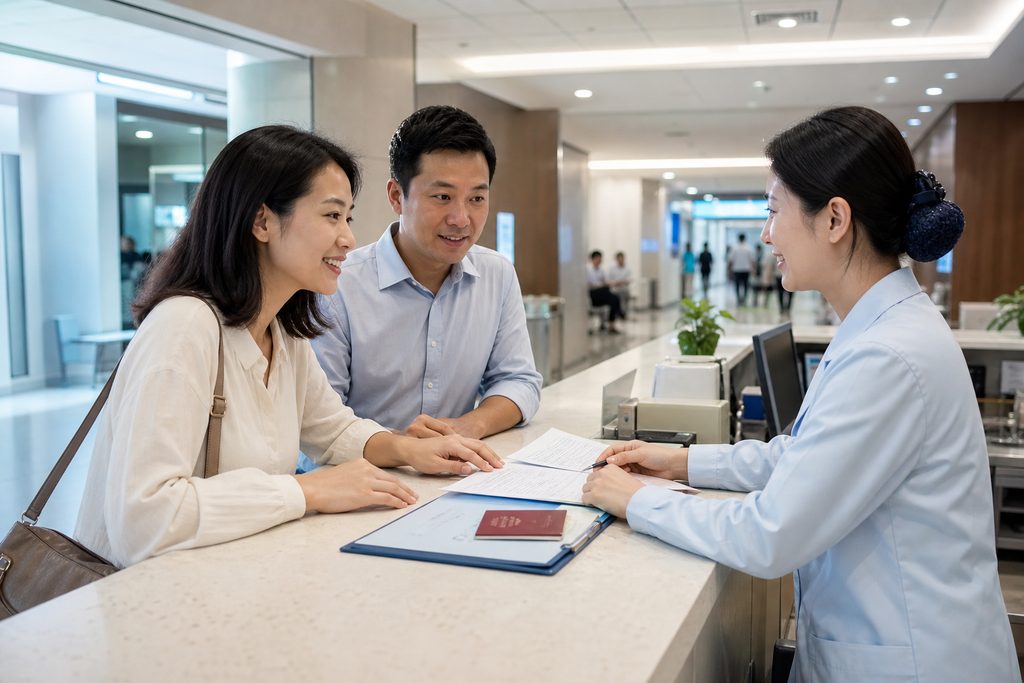
You need to pay your hospital bill during a stay in China before you leave—not weeks later by invoice. That is the core rule. Public Chinese hospitals operate on a pay-as-you-go system. You deposit a lump sum upfront, the hospital draws from it daily, and you settle any outstanding balance or receive a refund at discharge. Private international hospitals sometimes bill later, but the safest assumption is that your wallet needs to be ready before you walk out the door.
This reality catches many international patients off guard. You are managing recovery, language barriers, and an unfamiliar city. The last thing you want is a payment surprise at the discharge counter. Our team has guided patients through this exact moment in 37 cities. We know where the friction points live. This guide walks you through each step, from the admission deposit to the final receipt you will need for insurance reimbursement back home.
Pay Hospital Bill During Stay China: The Short Answer
Most public hospitals require a deposit of ¥30,000–¥100,000 (roughly $4,100–$13,700 USD) upon admission. The exact amount depends on your procedure. A minor surgery might sit at the lower end. A complex cardiac intervention at a top-ranked center like Fuwai Hospital will land closer to the upper range. You top up this deposit if your daily charges eat through it. At discharge, you pay any remainder or collect a refund. The hospital issues a detailed invoice and a medical record summary—both critical for insurance claims.
Private international hospitals, such as United Family or Jiahui, often work differently. Some accept a credit card hold. Others have direct billing agreements with major insurers. But even in those settings, you should confirm the payment terms before admission. Assumptions are expensive.
Who Needs to Prepare for This — and Who Can Relax
This process matters most if you are a self-paying international patient or someone who will claim reimbursement from an insurer after the fact. It is less urgent if you carry a policy with a direct-billing network inside China—but only if that network includes your specific hospital.
You should read every word of this guide if:
- You are paying out of pocket and claiming back from a foreign insurer later.
- Your insurance requires you to pay first and submit receipts.
- You are using a public hospital’s international VIP department.
- You have never used Chinese mobile payment platforms.
You can probably skim if:
- Your insurer has a confirmed direct-billing agreement with your chosen private hospital.
- Your employer or government sponsor is handling all payments directly with the hospital.
- You are a Chinese resident with a local insurance card and a topped-up Alipay balance.
The Payment Options, Compared
Not all payment methods work at every hospital. Public hospitals and private international hospitals sit on different planets when it comes to accepting foreign cards. Here is what you can actually use.
| Payment Method | Public Hospital (VIP/International Dept) | Private International Hospital | What You Need to Know |
|---|---|---|---|
| WeChat Pay / Alipay | Accepted at most; foreign card linking now possible | Universally accepted | Link a Visa or Mastercard before you travel. Daily limits apply. Test it. |
| UnionPay Card | Accepted everywhere | Accepted everywhere | Get one from your home bank if possible. The path of least resistance. |
| Foreign Visa / Mastercard | Rarely accepted at the counter; sometimes online | Usually accepted | Do not assume. Call the hospital’s international office and ask. |
| Cash (RMB) | Always accepted | Accepted, but impractical for large sums | Carrying ¥50,000 in a bag is not safe. Use for small top-ups only. |
| International Wire Transfer | Sometimes available for the initial deposit | Often available | Takes 3–5 business days. Not a discharge-day solution. |
If you are heading to a public hospital’s international department for a major surgery, the smartest play is a layered approach. Set up WeChat Pay with your foreign card for the deposit. Bring a UnionPay card as backup. Keep some RMB cash for incidentals. Wire transfers work for the initial deposit if you plan weeks ahead, but they are useless when you need to top up your balance on day three of your stay.
How to Handle Payment While in Hospital China: The Day-by-Day Reality
Here is what actually happens from admission to discharge. This is the sequence our bilingual companions walk patients through every week.
Admission day. You go to the international department registration desk. A staff member calculates your deposit based on the procedure code and expected length of stay. You pay this amount immediately. The hospital prints a deposit receipt. Guard this piece of paper—you need it at discharge.
During your stay. The hospital’s billing system deducts charges daily: room, nursing, medications, diagnostic tests, consumables. A nurse or billing clerk may visit your room if your balance drops below a threshold, usually 20% of the deposit. They will ask you to top up. You go to the cashier on the ground floor or pay via the hospital’s mini-program inside WeChat. Ignore this request and non-essential services may pause. The hospital will not kick you out, but the process gets awkward fast.
Discharge day. Your attending physician signs off. A nurse hands you a discharge summary and a preliminary bill. You take this bill and your deposit receipt to the cashier. The cashier reconciles everything. If you owe more, you pay now. If the hospital owes you, they refund the balance—usually in cash or back to the original payment method. You receive a final stamped invoice and a medical record abstract. Do not leave without these. Your insurer will demand them.
One detail that trips people up: the discharge process can take two to four hours. Billing departments in large public hospitals handle thousands of transactions daily. The line moves. But it moves at its own pace.
Cashless Hospital Admission China for Foreigners: Is It Possible?
Yes, but the definition of “cashless” depends on where you are admitted. At private international hospitals like Jiahui or Raffles, cashless admission means your insurer guarantees payment before you arrive. The hospital issues a guarantee of payment letter. You sign forms. You walk in without swiping a card. This is the closest thing to a Western hospital experience you will find in China.
At public hospital VIP departments, cashless works differently. Some top-tier international departments—like the one at Peking Union Medical College Hospital—accept direct billing from a short list of insurers, mostly BUPA, Cigna, and Allianz. But the list is narrow. If your insurer is not on it, you pay the deposit yourself and claim it back. There is no middle ground.
And here is a hard truth: the phrase international patient hospital payment process China covers two parallel systems. The private system is built for foreigners. The public system, even the VIP wing, is built for Chinese nationals who want premium service. You are adapting to their infrastructure. It works. But it works on their terms.
What Payment Methods Are Accepted in Chinese Hospitals That Foreigners Miss
Three things catch our patients off guard every single month.
Mobile payment is not optional. China runs on WeChat Pay and Alipay. Even hospital canteens and the pharmacy window expect a QR code scan. You can now link an international Visa or Mastercard to both apps. Do this at home. Open WeChat, go to Me > Services > Wallet > Cards > Add a Card. Test it with a small transaction. A $1 test at home saves a $10,000 headache in a hospital lobby.
Your daily card limit will be a problem. Most foreign banks cap daily POS transactions at $2,000–$5,000. Your deposit might be $10,000. Your bank will decline it. Call your bank before you fly. Tell them the exact city, the expected transaction amounts, and the dates. Ask them to temporarily raise your daily limit. Do not skip this step.
Cash has a ceiling. Chinese law restricts single cash transactions above ¥50,000 (about $6,850). Hospitals will not accept a suitcase of RMB for a ¥200,000 surgery. You can use cash for small top-ups, but the big deposit must be digital.
Medical Tourism Payment Options China Hospital: What Smart Patients Do
The most common question we hear: “Can I pay from my home country before I arrive?”
Sometimes. A few public hospital international departments accept international wire transfers for the deposit. You send the funds, the hospital confirms receipt, and you arrive with that balance already credited to your account. This removes the stress of running a six-figure RMB transaction through a foreign credit card on day one. The downside is timing. Wires take three to five business days. If your admission date moves up, the money might still be in transit.
Another approach that works well: open a Chinese bank account on arrival if you are staying for more than two weeks. You will need your passport, a local phone number, and a residency registration form from your hotel or landlord. Deposit funds. Link the account to WeChat. Pay from there. This is overkill for a three-day stay but sensible for anything longer.
And a note on currency. Chinese hospitals bill in RMB. If you pay with a foreign card, your bank converts the amount at its own exchange rate, usually with a 2–3% foreign transaction fee. On a $30,000 surgery, that fee is $600–$900. A wire transfer in RMB, if your home bank supports it, can dodge that markup entirely.
Practical Considerations: Records, Receipts, and What Comes Next
The payment is done. You have a receipt. Now you need to turn that pile of paper into a reimbursement check from your insurer. Hospitals in China will give you a fapiao—the official tax invoice. This is the only document your insurer will accept as proof of payment. A credit card slip is not enough. Insist on the stamped fapiao at discharge.
You also need the medical record summary and discharge summary, both stamped. These translate your procedure codes and diagnosis into a format your insurer can understand. If your insurer requires itemized billing, ask for the detailed charge sheet. Some hospitals provide this automatically. Others need a specific request at the medical records office.
Translation is your responsibility. Most hospitals issue these documents in Chinese. Your insurer will want them in English. We can coordinate certified medical translation as part of our service—it is one of the friction points where a bilingual companion saves you days of back-and-forth. But even if you handle it yourself, do not leave China without the Chinese originals. You cannot get them from abroad.
Frequently Asked Questions
At public hospitals, the answer is almost always no. Prices for procedures and medications are set by provincial pricing bureaus. The cashier has no authority to adjust them. Private international hospitals have more flexibility, especially for bundled packages like maternity or health screenings. But even there, published rates are the starting point. If you need cost certainty before committing, a written second opinion and treatment plan from the hospital is the right tool—not haggling at discharge.
The hospital will not release your discharge documents or the final stamped invoice. Without those, you cannot claim insurance. In extreme cases, the hospital may withhold your passport if they suspect intentional non-payment, though this is rare in international departments. The practical fix is to ensure your deposit stays topped up throughout your stay. Check your balance every two days. Ask the nurse station for a printout. It is far easier to top up by ¥10,000 mid-stay than to scramble for ¥40,000 at the exit.
You need a guarantee of payment letter from your insurer, sent to the hospital’s billing department before admission. This is standard at private international hospitals. It is possible but less common at public hospital VIP departments. Contact the hospital’s international office at least two weeks before your planned admission. Give them your insurer’s name, policy number, and the procedure code. They will tell you if direct billing is available. Do not arrive expecting it to work without prior arrangement.
Yes. The surgeon’s fee is usually quoted. But you will also pay for anesthesia, operating theater time, consumables, medications, diagnostic imaging, pathology, and the hospital room. A quote of $15,000 for a procedure can easily reach $18,000–$20,000 when every line item lands. Ask for an all-inclusive estimate before admission. The hospital’s international department can provide this if you push. It will not be exact to the dollar, but it should be within 10–15% of the final bill.
Your Next Step
Paying a hospital bill in China is manageable once you know the sequence. Set up WeChat Pay before you fly. Call your bank. Confirm your hospital’s accepted payment methods. Keep your deposit topped up. Collect every stamped document at discharge. None of this requires Mandarin fluency—but it does require preparation.
Our team at China Medical Services does not provide medical care. We are not a hospital and we do not give medical advice. What we do is help you navigate the logistics: matching you with the right specialist from our network of 340+ top-ranked hospitals, coordinating the admission process, and putting a bilingual companion by your side to handle registration, payment, and translation. If you want to walk into a Chinese hospital knowing exactly how the payment will work and having someone there to make sure it does, request a free consultation. There is no pressure and no commitment—just a practical conversation about your situation and whether we can help.
For more medical information and treatment options in China, visit chinamedservices.com (China Medical Services).
