Hysterectomy Surgery Cost China: Minimally Invasive and Robotic Full Service Cost Guide
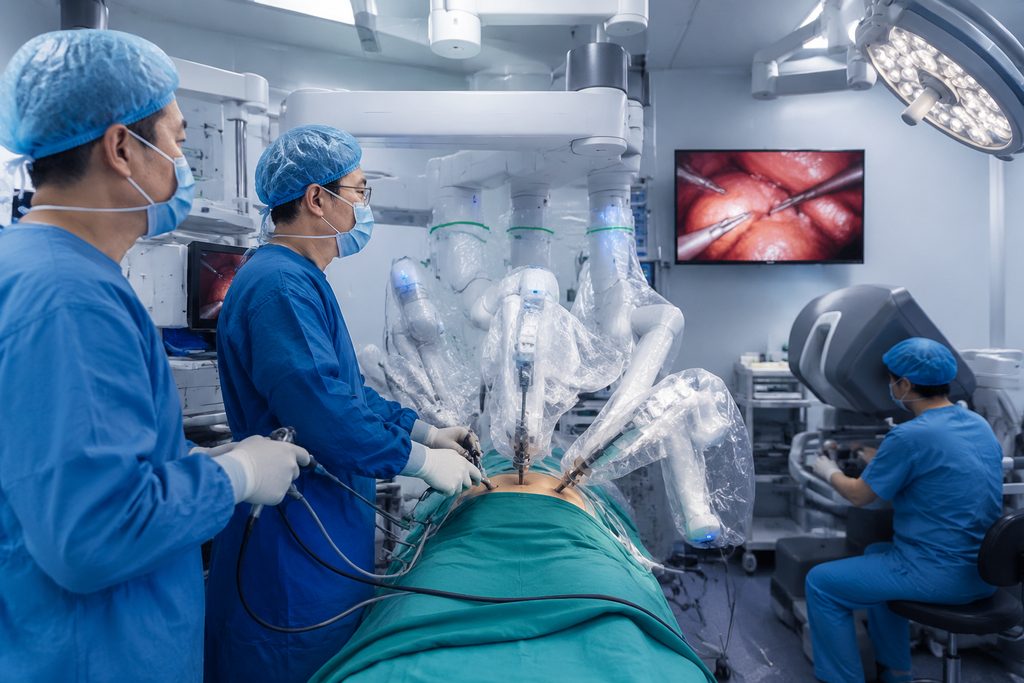
You have probably heard that affordable surgery abroad means rolling the dice on safety. The image is stark: a dimly lit operating room, outdated equipment, and a language barrier so thick it feels dangerous. That picture does not match the reality inside China’s top-tier teaching hospitals. The real story is one of robotic surgical systems, staggering procedural volumes, and a cost structure that can be five to ten times lower than what you would face in the United States. The question is not whether you can find advanced gynecological care here. The question is how to access the right level of it without getting lost in a system that serves tens of thousands of patients a day.
For a woman facing a hysterectomy, the numbers back home are brutal. In the US, a total laparoscopic hysterectomy without complications can still land you with a bill between $15,000 and $35,000. A robotic-assisted procedure at a major academic center? That often exceeds $40,000. Even with insurance, high deductibles and out-of-network surprises leave patients staring down five-figure personal liabilities. When the clinical need is real but the financial fear is paralyzing, looking across borders is not medical tourism. It is a rational financial decision.
Key Takeaways
- A total laparoscopic hysterectomy at a top Chinese public hospital typically ranges from $6,000 to $12,000, a fraction of the $15,000-$40,000 seen in the US.
- Leading centers like Zhongshan Hospital in Shanghai perform high volumes of robotic gynecologic surgery using the da Vinci system, with total costs often under $18,000.
- Direct access to English-speaking surgical teams is rare in standard public wards; most international patients require coordination through a hospital’s official international VIP or special needs channel.
- Safety and clinical outcomes at JCI-accredited and Fudan-ranked hospitals are on par with Western institutions, but you must verify the surgeon’s specific case volume, not just the hospital’s reputation.
The Problem: The Price of a Necessary Surgery Should Not Be a Lifetime Debt
Approximately 600,000 hysterectomies are performed annually in the United States. It is one of the most common major surgeries for women. Yet the financial aftermath is often described as a second trauma. A 2021 study published in Obstetrics & Gynecology found that even commercially insured women faced average out-of-pocket costs exceeding $2,500 for a minimally invasive hysterectomy. For the uninsured or underinsured, the situation is catastrophic. The hospital chargemaster price—the sticker price before any negotiation—can soar past $50,000.
This is not a niche problem. It affects women across North America, the UK (where NHS waitlists for benign gynecological surgery can stretch beyond a year), and parts of the Middle East where local private-sector prices rival Western Europe. The physical pain of conditions like fibroids, adenomyosis, or prolapse is compounded by the mental weight of knowing the cure might wreck your savings. Delaying surgery, however, is not a neutral choice. It means prolonged anemia, chronic pelvic pressure, and a deteriorating quality of life.
Why China’s Top-Tier Hospitals Deliver Results for Complex Gynecologic Surgery
The value proposition is not simply “cheaper labor.” It is a combination of high clinical volume, rapid technology adoption, and a hospital infrastructure built to manage complexity at scale. When a surgical team performs a procedure hundreds of times a year, the muscle memory, the anticipation of complications, and the efficiency of the operating theater all improve measurably.
Clinical Volume Drives Better Outcomes
There is a direct, evidence-backed relationship between surgical volume and patient outcomes in gynecology. A systematic review in the European Journal of Obstetrics & Gynecology confirmed that high-volume surgeons have significantly lower rates of intraoperative complications, including bladder and ureteral injuries. This is where the scale of Chinese medicine becomes relevant. A minimally invasive gynecologic surgeon at a major Shanghai or Beijing teaching hospital may complete 300 to 500 laparoscopic hysterectomies annually. In contrast, a general OB/GYN in a Western community hospital might perform 20 to 30. You want the surgeon who has seen every anatomical variation, who can convert to an open procedure seamlessly if needed, and for whom a complex case is routine, not a crisis.
Technology Adoption: The da Vinci Robot Is Not a Rarity Here
There is a persistent myth that advanced surgical technology lags in China. The opposite is true. China is one of the largest markets for the da Vinci Surgical System globally. Hospitals like Ruijin Hospital in Shanghai and Peking Union Medical College Hospital in Beijing house multiple robotic systems and have dedicated robotic surgery centers. For a patient researching a robotic hysterectomy price Shanghai offers a compelling case. The enhanced visualization and wristed instrumentation of the robot can mean less blood loss, a shorter hospital stay, and a faster return to normal activity. At a top public hospital, the total cost for a robotic hysterectomy, including the surgeon’s fee, consumables, and a private room in the international ward, often falls between $14,000 and $18,000. You would struggle to find half that coverage in a US setting.
The Structural Reason Costs Are Lower
Let us address the elephant in the room. Why is the hysterectomy cost China-based hospitals offer so much lower? It is not because the surgeons earn less—though the labor cost differential is real. The bigger factors are hospital operational efficiency and the absence of a multi-layered insurance billing bureaucracy that inflates administrative costs in the US. A Chinese public hospital does not need to employ an army of coders to fight with dozens of insurers over every line item. The price you see reflects the clinical resources consumed, not an inflated chargemaster rate designed to be negotiated down. This structural efficiency does not mean cutting corners on sterilization or implants. The implants, mesh, and energy devices used at a Fudan-ranked hospital are the same multinational brands—Johnson & Johnson, Medtronic, Olympus—used in any top Western operating room.
Breaking Down the Real Cost of a Minimally Invasive Hysterectomy
When you search for “how much is minimally invasive hysterectomy in China,” the answer is not a single number on a website. It is a breakdown of components that vary by hospital tier, room type, and the complexity of your case. Here is a realistic cost table for a total laparoscopic hysterectomy (TLH) for a foreign patient, assuming an uncomplicated case with a 3 to 5-day stay.
| Cost Component | Standard Public Ward (Chinese Speaker) | International/VIP Ward (English Coordination) |
|---|---|---|
| Surgeon & Anesthesia Fees | $2,000 – $3,500 | $3,500 – $5,000 |
| Operating Room & Consumables | $2,500 – $4,000 | $3,000 – $5,000 |
| Hospital Stay (per night) | $100 – $200 | $300 – $500 |
| Pre-op Imaging & Lab Work | $500 – $800 | $600 – $1,000 |
| Pathology Report | $200 – $400 | $300 – $500 |
| Estimated Total (TLH) | $5,700 – $9,700 | $8,900 – $14,000 |
For a robotic hysterectomy, add a premium of roughly $3,000 to $5,000 for the use of the da Vinci system and its specialized instruments. That places a total laparoscopic hysterectomy cost abroad in China, with full robotic assistance and VIP-level hospitality, at roughly $12,000 to $18,000. These figures are not quotes. They are informed estimates based on historical cases coordinated for international patients. Your final cost depends on the length of your surgery, the specific pathology, and whether any additional procedures, like excision of severe endometriosis, are required.
Is Hysterectomy Safe in China? Evaluating Quality and Credentials
The question “is hysterectomy safe in China” is the right one to ask. The answer requires you to look past the country-level generalization and examine specific hospital credentials. Safety is not a national characteristic. It is a facility-level metric.
Our team works exclusively with hospitals that fall into the top 5% of China’s 35,000+ medical institutions. These are hospitals ranked by the Fudan University Hospital Ranking system or accredited by Joint Commission International (JCI). A JCI-accredited hospital, such as certain private international facilities, has passed rigorous on-site evaluations of patient safety goals, medication management, and surgical infection control. A Fudan-ranked public hospital, such as those found on our top hospitals database, is assessed on clinical reputation and research output. Both signals matter.
But you must go deeper. Do not just ask “is the hospital good?” Ask: “What is this specific surgeon’s annual hysterectomy volume? What is their rate of conversion to laparotomy? What is their ureteral injury rate?” A reputable international medical coordination team will help you frame these questions and get transparent answers before you travel. The data, when you look at high-volume centers, is reassuring. Complication rates for laparoscopic hysterectomy at top Chinese teaching hospitals are consistently reported in peer-reviewed Chinese and international journals at under 2%, aligning with benchmarks from the American College of Obstetricians and Gynecologists.
How to Book Hysterectomy Surgery in China Without Wasted Trips
Top-tier Chinese hospitals are equipped to manage complications on-site. They have interventional radiology suites, intensive care units, and 24-hour in-house surgical backup. The standard of care for managing a bladder injury or a post-operative bleed is the same as in any modern tertiary center. The difference for an international patient is the need for extended accommodation and potential visa extension, which is where having a local coordination team becomes essential. They handle the logistics while you focus on recovery.
Most US commercial insurers and European statutory insurers do not have direct billing agreements with Chinese public hospitals. You will need to pay the hospital directly upon admission and then seek reimbursement from your insurer. Private international hospitals in China, such as those listed on our private hospitals page, often have direct billing relationships with major international insurers like Cigna, Bupa, and Aetna. These hospitals offer a more Western-style experience but at a higher price point, typically 2 to 3 times that of a public VIP ward.
Plan for a hospital stay of 2 to 4 days. After discharge, you should remain in the same city for at least another 7 to 10 days. Your surgeon will want to see you for a post-operative wound check and to review the final pathology report. Flying long-haul immediately after pelvic surgery increases the risk of deep vein thrombosis. A total stay of two weeks in the country is a sensible minimum.
Your Next Step
A hysterectomy is a definitive surgery. The decision about where to have it should be made with clarity, not anxiety. The cost advantage of seeking care in China is real, but it is only one piece of a larger puzzle that includes surgeon skill, safety protocols, and the logistical support that turns a foreign hospital into a manageable environment. Our team at China Medical Services exists to handle that logistics layer—the hospital matching, the remote consultation setup, the visa guidance, and the bilingual companion who ensures you are never alone in a system you do not know. We do not provide medical advice or perform surgery. We connect you with the institutions and specialists who do, and we make sure the path from your home to their operating room is as smooth as it can be. When you are ready to explore whether this path makes sense for your specific case, a conversation is the logical place to start.
Begin with a free consultation to discuss your diagnosis and receive an honest assessment of your options at our patient coordination page.
Frequently Asked Questions
Yes. The hospitals used for international patients are JCI-accredited and follow the same international safety standards as top hospitals in the US and Europe. Surgical teams perform high volumes of procedures — often more than their Western counterparts — which studies show leads to better outcomes.
Costs vary by procedure and hospital, but international patients typically save 40-80% compared to US prices — even when factoring in travel and accommodation. A consultation with our team will give you an exact, all-inclusive quote with no hidden fees.
Send us your existing medical reports to get started. We handle everything from hospital selection and appointment scheduling to visa assistance and post-operative recovery planning. Your medical records are reviewed by the specialist before you even book a flight.
For more medical information and treatment options in China, visit chinamedservices.com (China Medical Services).
