Image-Guided Biopsy in China: How to Arrange It and What It Costs
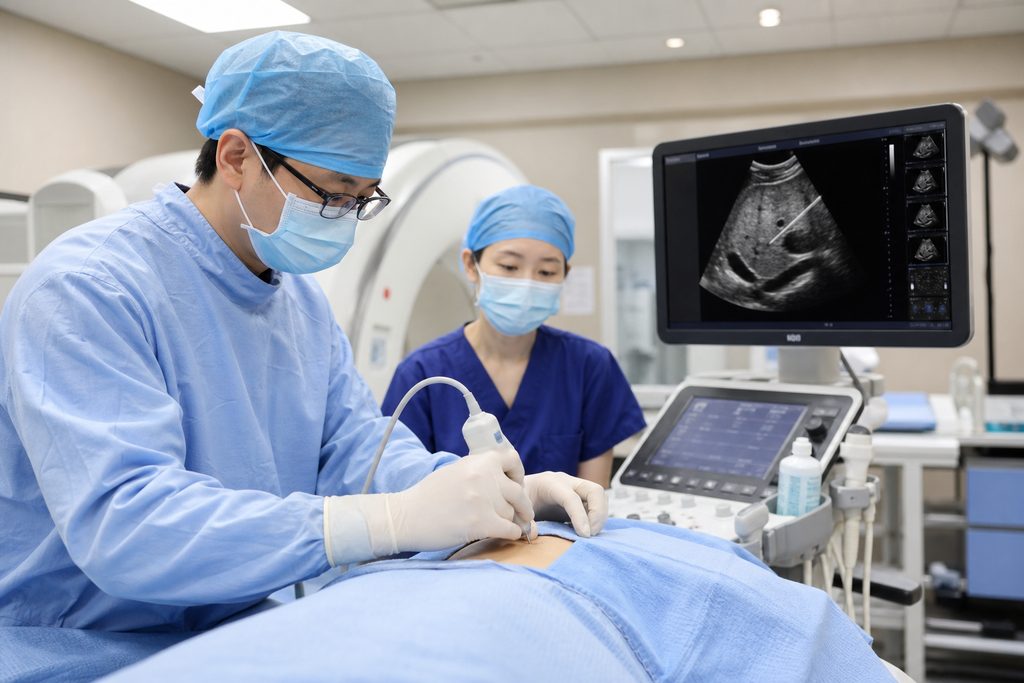
Image-Guided Biopsy in China: How to Arrange It and What It Costs
You’ve probably been told that arranging a medical procedure in China means gambling on quality, wading through bureaucracy, and hoping for the best. For an image-guided biopsy, that fear is understandable — this is the test that determines whether you have cancer, and getting it wrong has consequences. Here’s the reality that surprises most of our international patients: image-guided biopsy cost China is often one-fifth of what you’d pay in the United States, and the hospitals performing these procedures handle volumes that most Western centers simply don’t see. The catch isn’t quality. The catch is navigation.
This guide walks you through exactly how the process works, what it really costs, and where the friction points are.
How This Actually Works, Step by Step
A biopsy isn’t a walk-in service in China. You cannot book a needle biopsy directly from overseas the way you might schedule a dermatology appointment. Public hospitals require an in-person consultation before any procedure is scheduled — that’s a national rule, not a hospital preference. So the sequence matters enormously.
Here’s the realistic path, from your first email to the day you get results:
- You send your existing imaging. CT, MRI, PET-CT, ultrasound reports — whatever you already have. DICOM files or high-quality PDFs. If you’ve had prior biopsies, those pathology reports go too.
- A Chinese specialist reviews the file. Not a call center. An actual radiologist or interventional specialist at the hospital you’re targeting looks at your imaging and confirms whether a biopsy is indicated, what approach makes sense (CT-guided, ultrasound-guided, MRI-guided), and which department should handle it.
- You receive a written assessment. This tells you the recommended procedure, the hospital, an estimated timeline, and a cost range. This is where the free consultation becomes concrete rather than vague.
- You decide whether to travel. If yes, we coordinate the appointment through the hospital’s international department or VIP channel — the only reliable way to secure a specialist slot in advance.
- You arrive, consult in person, and the procedure is scheduled. Typically within 2–5 days of your face-to-face consultation, depending on the hospital and whether pre-procedure bloodwork is needed.
- Results come back. Pathology turnaround at major Chinese hospitals runs 3–7 working days. Rush options exist at some centers but aren’t guaranteed.
Notice what’s missing: no promise that you’ll see a specific named doctor on a specific date. That kind of guarantee isn’t how Chinese public hospitals operate, and anyone offering it is either lying or selling something else.
What Image-Guided Biopsy Costs in China — and Why
The honest answer is a range, because a lung biopsy and a thyroid biopsy are not the same procedure. Hospital tier, guidance modality, anesthesia, and whether you need hospitalization all shift the number.
| Procedure Type | Typical Cost in China (USD) | Typical Cost in the U.S. (USD) |
|---|---|---|
| Ultrasound-guided thyroid or breast biopsy | $400 – $900 | $1,500 – $4,000 |
| CT-guided lung biopsy | $1,200 – $2,500 | $4,000 – $12,000 |
| CT-guided liver or kidney biopsy | $1,000 – $2,200 | $3,500 – $10,000 |
| MRI-guided prostate biopsy | $1,500 – $3,000 | $5,000 – $15,000 |
| Pathology and lab work | $150 – $500 | $500 – $2,500 |
These figures cover the procedure itself, imaging guidance, local or light sedation, and basic pathology. They do not include hospital stay if you require one, nor travel and accommodation. Prices vary by hospital and case complexity — a straightforward thyroid nodule is not the same as a deep retroperitoneal lesion near major vessels.
Why is it cheaper? Volume, mostly. China’s top hospitals run enormous case loads. A single interventional radiology department at a major Shanghai or Beijing center may perform more image-guided biopsies in a year than a mid-sized American hospital does in five. High volume drives down per-unit cost without sacrificing technique.
A Realistic Timeline
People underestimate the administrative lead time. Here’s what a typical case looks like from first contact to final pathology report:
| Stage | Duration | What Happens |
|---|---|---|
| Records review | 2 – 5 days | You send imaging; specialist reviews and confirms indication |
| Hospital selection and appointment coordination | 3 – 10 days | International department slot secured; documents translated if needed |
| Visa processing (S2) | 5 – 15 days | Embassy or consulate processing; hospital invitation letter required |
| Travel and arrival | 1 – 2 days | Flight plus airport transfer and hotel check-in |
| In-person consultation | Day 1 after arrival | Face-to-face with the specialist; procedure formally scheduled |
| Biopsy procedure | Day 2 – 5 | Pre-op labs, then the procedure itself (usually 30–60 minutes) |
| Pathology results | 3 – 7 working days | Report issued; translated summary provided |
Total realistic window: 3 to 6 weeks from first contact to holding a pathology report. Anyone promising faster is either skipping the visa, skipping the consultation, or not being straight with you.
What Can Go Wrong — and What Happens Then
We’d rather you hear this now than discover it mid-process.
The hospital declines the case. This happens. Some lesions are technically difficult, some patients have coagulopathy that makes biopsy risky, and some hospitals simply don’t have the subspecialty capacity. If this occurs, we redirect to another center — but it costs time. Budget for it.
The visa is delayed. S2 processing times fluctuate by consulate and season. If your biopsy is urgent, a delay of two weeks can matter clinically. We flag this early and, where appropriate, discuss whether a video consultation with the specialist can bridge the gap while paperwork proceeds.
The procedure yields non-diagnostic tissue. This is a real limitation of any biopsy, anywhere in the world. Roughly 5–15% of image-guided biopsies come back inconclusive depending on site and technique. The recourse is a repeat biopsy or, in some cases, surgical excision for diagnosis. No hospital can promise a definitive result on the first pass.
Complications occur. Bleeding, pneumothorax (for lung biopsies), and infection are the main risks. Major Chinese hospitals handle these routinely — they see enough volume that complication management is well-established. But the risk doesn’t disappear because the hospital is good.
Choosing the Right Hospital: What Actually Matters
Not every hospital that offers biopsy offers it well. The difference between an adequate outcome and a difficult one often comes down to who’s holding the needle.
Three criteria matter most:
- Interventional radiology volume. You want a department that does this daily, not occasionally. Ask how many image-guided biopsies the department performs annually.
- Pathology depth. The biopsy is only half the equation. A hospital with a strong pathology department — particularly one with molecular testing capability — gives you more actionable information from the same tissue sample.
- International department infrastructure. This determines whether you get English-speaking coordination, translated reports, and a point of contact who answers emails. Without it, you’re navigating a hospital that sees 10,000+ outpatients daily with no linguistic support.
For lung and thoracic lesions, the major cancer-specialty centers in Beijing and Shanghai are the obvious starting point. For prostate biopsies, urology departments at comprehensive hospitals with MRI fusion capability. For thyroid, the volume leaders are often the head-and-neck surgery departments at large tertiary hospitals.
You can browse hospital options by city and specialty through our ranked hospital directory, which groups facilities by Fudan ranking tier and specialty reputation.
Practical Considerations: Records, Visa, Payment, Follow-Up
Records. Bring everything. Prior imaging on disc, pathology slides if you have them, medication lists, allergy history, and recent bloodwork including coagulation studies. Missing a coagulation panel can delay your procedure by days.
Visa. Medical travel to China uses the S2 visa with a notation for medical treatment. Stays exceeding 180 days require S1. Accompanying family members also apply under S2. The M visa is for commercial and trade activities — it is not a medical visa, and using it for treatment creates problems at entry. Requirements shift, so confirm current documentation with the relevant embassy or consulate before applying.
Payment. Public hospitals require prepayment. International insurance is typically reimbursed after the fact, not billed directly. Some private international hospitals offer direct billing with certain insurers — worth checking if that matters to you. Our private hospital listings note which facilities support direct insurance settlement.
Language. This is the single biggest practical barrier. A top Chinese hospital may see over 10,000 outpatients in a day. Signage, registration systems, and most staff operate in Chinese. A bilingual medical companion — from $300 per day — handles registration, queueing, payment, wayfinding, and translation so you’re not navigating blind.
Follow-up at home. Get your pathology slides and a translated report before you leave. Your oncologist or surgeon at home will need them, and requesting them remotely later is slow. Ask for both digital and physical copies.
Frequently Asked Questions
At major tertiary hospitals, complication rates for image-guided biopsy are comparable to Western centers — the technique is standardized and the equipment is current. Safety depends far more on the specific hospital and operator experience than on the country. The question isn’t “is China safe” but “is this hospital’s interventional radiology department experienced with my specific lesion type.”
You cannot book the procedure itself remotely — public hospitals require an in-person consultation first. What you can do is secure a specialist consultation appointment in advance through the hospital’s international department, so that your procedure can be scheduled immediately after that face-to-face visit. This is the practical meaning of “booking ahead” in the Chinese system.
Shanghai has several strong options, and the right one depends on your lesion site. For thoracic and lung lesions, the major cancer-focused centers lead. For prostate, urology departments with MRI fusion technology. For liver, the comprehensive tertiary hospitals with high hepatology volume. Rather than name a single “best,” we match based on your specific imaging findings — that’s a more useful answer than a generic ranking.
Be careful with “package” language. What we coordinate is case management: records translation, appointment coordination through the hospital’s official international channel, and bilingual accompaniment. Hospital procedure charges, medication, and any inpatient stay are billed separately by the hospital. We don’t bundle medical fees, and we don’t mark them up.
Standard turnaround at major Chinese hospitals is 3 to 7 working days. If immunohistochemistry or molecular testing is required, add another 5 to 10 days. Rush processing exists at some centers but isn’t universally available, so don’t plan your return flight around an assumption of speed.
Your Next Step
The core message is simple: an image-guided biopsy in China is technically excellent and financially reasonable, but it requires navigation — records review, hospital matching, visa timing, and on-the-ground language support. None of that is insurmountable. All of it is easier with someone who does it regularly.
We’re a medical concierge service, not a hospital and not a doctor. We don’t diagnose, we don’t perform procedures, and we don’t promise outcomes. What we do is translate your records, coordinate appointments through official hospital channels, and put a bilingual companion beside you from arrival to discharge.
If you have imaging in hand and want to know whether a biopsy in China makes sense for your situation, start with a free consultation. No pressure, no obligation — just a clear answer about what’s possible.
For more medical information and treatment options in China, visit chinamedservices.com (China Medical Services).
