Immunology Second Opinion in Shanghai: Steps, Cost, and How to Start
Immunology Second Opinion in Shanghai: The Steps
An immunology second opinion Shanghai cost typically runs from $300 to $500 for a written review at a top-tier hospital, or $500 to $800 for a live video consultation with a senior specialist. Those numbers matter because the same review in the United States often bills at $1,500 or more — and the wait for a subspecialist can stretch past three months. For anyone managing a complex autoimmune or immune-mediated condition, that gap between cost and delay is the real problem.
This guide walks through the actual steps: how reports travel, who reads them, what the written opinion contains, and where the process can stall. No hype, no promises about outcomes. Just the mechanics, because the mechanics are what most patients never get explained.
Key Takeaways
- A written immunology second opinion from a top Shanghai hospital generally costs $300–$500, and a video consultation with a senior specialist $500–$800 — a fraction of comparable Western pricing.
- Shanghai is home to 18 hospitals on the Fudan Top 100 list, the second-highest concentration in China after Beijing, giving international patients real depth in rheumatology and clinical immunology.
- You cannot book a standard public outpatient slot from overseas. Most public hospital visits require same-day registration in person, which is why the international department or VIP channel exists — and why it costs roughly 1.5 to 2 times the standard rate.
- Any consultation fee is credited in full toward on-the-ground coordination if you travel to China within 90 days — a one-time credit applied to the coordination fee only, never to hospital treatment charges.
The Problem: When Your Own Immune System Becomes the Mystery
Roughly 1 in 10 people worldwide lives with an autoimmune condition, according to estimates published in The Lancet — and for a large share of them, the diagnostic journey is measured in years, not weeks. A 2023 study in Frontiers in Immunology found that patients with systemic autoimmune diseases often wait an average of several years and see multiple specialists before receiving a definitive diagnosis. During that time, symptoms progress, organs can be affected, and treatment windows narrow.
Getting a second read on your immunology workup is not a sign of distrust in your doctor. It is a standard move in complex medicine. Rheumatology and clinical immunology sit at the intersection of dozens of overlapping conditions — lupus, vasculitis, IgG4-related disease, autoimmune encephalitis, primary immunodeficiencies — and the difference between two of them can change your entire treatment plan.
So why Shanghai? Because the volume of cases seen at China’s top hospitals is enormous, and volume builds pattern recognition. A specialist who reviews several hundred autoimmune cases a year notices things a generalist sees once a decade. The question is how to reach that specialist from another country. That is where the steps below matter.
Why Shanghai Delivers Results for Immunology Reviews
Case Volume and Subspecialty Depth
China’s 35,000-plus hospitals include a top 5% that carry the Fudan ranking or JCI accreditation. Shanghai alone contributes 18 hospitals to the Fudan Top 100 — a density that means a patient with a rare immune condition is not a novelty. Departments at institutions like Ruijin Hospital and Zhongshan Hospital, Fudan University, handle rheumatology and immunology referrals from across the region, and their teams routinely work alongside pathology, nephrology, and hematology in multidisciplinary settings.
That multidisciplinary habit matters. Immunology diagnoses frequently depend on combining lab panels, imaging, biopsy results, and clinical history — a puzzle that benefits from several specialists looking at the same file.
Diagnostics and Turnaround at Scale
Top Chinese hospitals run their own high-throughput laboratories. Autoantibody panels, complement studies, lymphocyte subset analysis, and genetic testing for primary immunodeficiency are typically available in-house rather than sent to outside reference labs. For a second opinion, this means a reviewing specialist can order confirmatory tests without the multi-week lag that plagues fragmented systems.
Operationally, the workflow is different from what Western patients expect. Public hospitals handle tens of thousands of outpatient visits per day, and standard appointments are registered on the day of the visit. International departments operate on a separate track with English-speaking staff and scheduled slots — a distinction we explain in more detail on our guide to China’s top-ranked hospitals by city.
Cost Structure Without the Quality Trade-Off
The lower price is not a discount on expertise. It reflects labor economics, hospital efficiency, and sheer volume. Physician salaries in China’s public system are a fraction of US levels, and hospitals amortize equipment and lab costs across far more patients. The clinical training at Fudan-affiliated institutions is rigorous, and many senior specialists have trained or collaborated internationally.
For a patient weighing the immunology second opinion Shanghai cost against a US or UK equivalent, the comparison usually looks like this:
| Service | Shanghai (USD) | Typical US Range (USD) |
|---|---|---|
| Written second opinion (senior specialist) | $300–$500 | $800–$2,000+ |
| Video consultation (top specialist) | $500–$800 | $500–$1,500 |
| Multidisciplinary team (MDT) review | $1,500–$2,000 | $2,000–$5,000+ |
| In-person specialist consultation coordination | $800–$1,200 | Varies; often insurance-gated |
All figures are reference ranges and vary by hospital and case complexity. Final quotes are confirmed only after your records are reviewed.
How to Get an Immunology Second Opinion in China: The Six Steps
This is the sequence we walk patients through. Each step has a failure point, and knowing them in advance saves weeks.
Step 1 — Assemble your records in a usable form. You need recent lab panels with dates and reference ranges, imaging reports (not just images), biopsy and pathology reports, a medication history, and a short clinical summary. Scanned PDFs are fine. Handwritten notes are not. Missing dates are the single most common reason a review gets delayed.
Step 2 — Translate the critical documents. Chinese specialists read English, but official hospital review requires a Chinese version for the medical record. Professional medical translation of the core documents — lab results, pathology, discharge summaries — is standard. Imaging films usually do not need translation.
Step 3 — Route the file to the right department. Immunology cases split across rheumatology, clinical immunology, nephrology, and hematology depending on presentation. A lupus nephritis case belongs with rheumatology plus nephrology. An IgG4-related disease case may sit with gastroenterology. Choosing the wrong department is the most expensive mistake in the process.
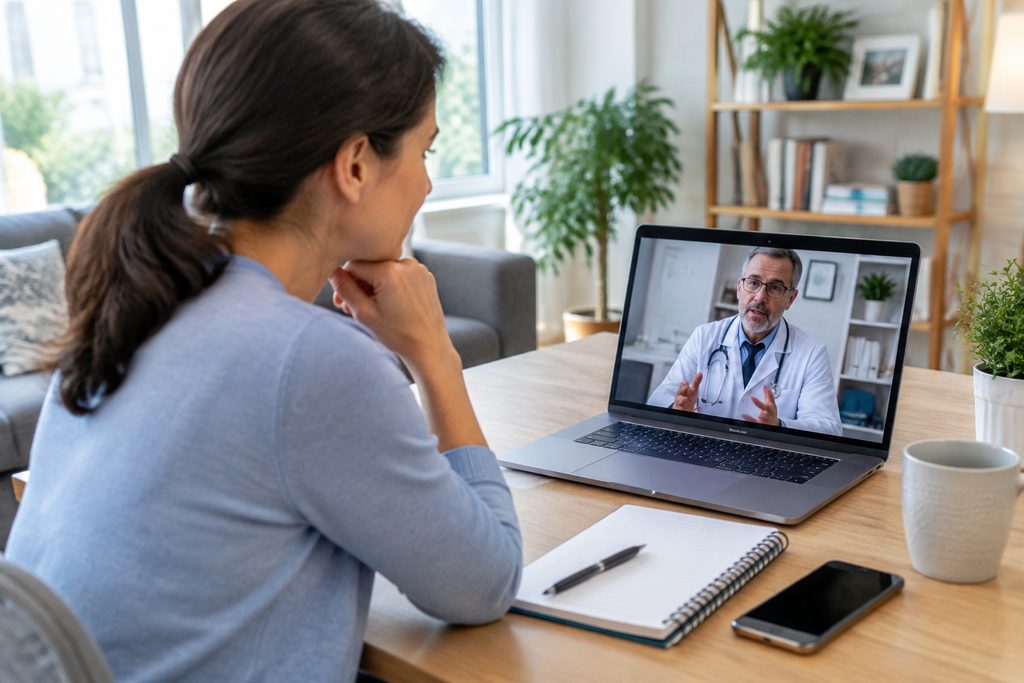
Step 4 — Choose written review or live video. A written second opinion returns a document: analysis of your existing reports, treatment suggestions, and direction for next steps. A video consultation adds direct conversation — you explain symptoms and goals, and the team responds in real time. Many patients start with the written review and escalate to video if questions remain.
Step 5 — Receive and interpret the opinion. The written output is for reference only, not a prescription. It is meant to be discussed with your treating physician at home. Treat it as expert input, not a replacement for local care.
Step 6 — Decide whether to travel. If the review identifies a feasible treatment path and you want to pursue it in China, the next stage is coordination: appointment scheduling through the hospital’s international department, visa guidance, and arrival logistics. Admission and treatment remain subject to hospital rules and are never guaranteed in advance.
How to Evaluate Whether a China Immunology Second Opinion Is Reliable
Yes. The written second opinion and video consultation are both designed for remote patients — you send existing examination reports, and the specialty team reviews them and responds. No travel is required for either. Travel only becomes relevant if the review identifies a treatment path you decide to pursue in person.
Reliability depends on the issuing institution and the completeness of the records reviewed. A written opinion from a Fudan-ranked hospital department, with reasoning and references to your specific lab values, is generally treated as credible input by Western physicians. It is not a prescription, and it should be discussed with your treating doctor rather than acted on independently.
That is one reason patients consider traveling. If a recommended therapy is approved in China but unavailable or unaffordable at home, the next step is a coordination discussion covering hospital scheduling, visa documentation, and realistic timelines. We do not promise admission, priority access, or any clinical outcome — those decisions rest with the hospital.
Any consultation fee is credited in full toward the on-the-ground coordination service if you travel within 90 days. This is a one-time credit applied to the coordination fee only, and it is never applied to hospital treatment charges.
Your Next Step
A second opinion is not a verdict — it is a second set of trained eyes on a complicated file. The steps are straightforward: gather records, translate the essentials, route the file to the right department, and choose written or video review. What takes experience is knowing which department, which hospital, and which format fits your specific presentation.
We are China Medical Services, a coordination service — not a hospital, and we do not provide diagnoses or medical advice. Our team helps international patients match with appropriate departments, arrange written or video second opinions, and handle the logistics if travel becomes the right choice. If you would like to understand your options, you can start with a free consultation and we will walk through what is realistic for your case.
Frequently Asked Questions
Yes. The hospitals used for international patients are JCI-accredited and follow the same international safety standards as top hospitals in the US and Europe. Surgical teams perform high volumes of procedures — often more than their Western counterparts — which studies show leads to better outcomes.
Costs vary by procedure and hospital, but international patients typically save 40-80% compared to US prices — even when factoring in travel and accommodation. A consultation with our team will give you an exact, all-inclusive quote with no hidden fees.
Send us your existing medical reports to get started. We handle everything from hospital selection and appointment scheduling to visa assistance and post-operative recovery planning. Your medical records are reviewed by the specialist before you even book a flight.
For more medical information and treatment options in China, visit chinamedservices.com (China Medical Services).
