Inpatient Companion: Managing Visitors at Chinese Hospitals Without the Stress
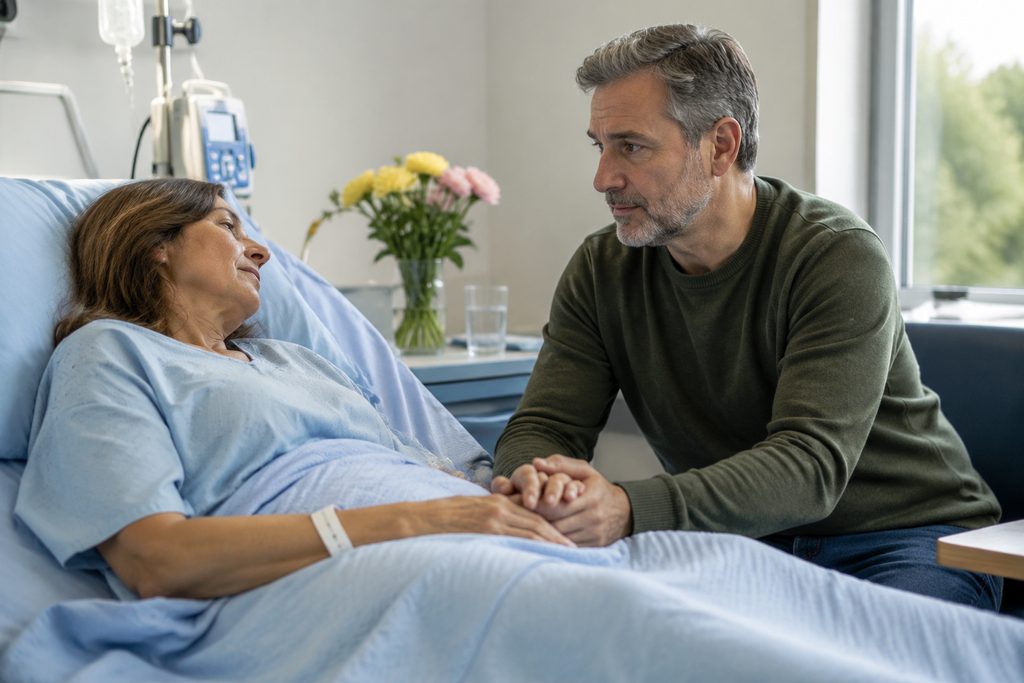
Hospitals in China operate on a scale most Western visitors have never encountered. A single top-tier public hospital in Beijing or Shanghai can see over 10,000 outpatient visits per day. In that environment, the concept of a quiet, private recovery room with a pull-out couch for a family member is not the default. It is a service you plan for. The inpatient companion service cost China varies widely depending on whether you use a public hospital’s international wing, a private hospital, or a third-party bilingual companion. Understanding visitor policies before you arrive prevents a very common scenario: a family member flying 12 hours to sit in a hallway because they were not on an approved list.
Our team has coordinated hospital stays for patients from over 20 countries. The questions are always the same. Can my spouse stay overnight? What does a companion actually do? How much should I budget? This guide answers those questions directly, with current information on policies and pricing structures across China’s major medical centers.
How This Actually Works, Step by Step
You have a surgery date. Or a treatment plan requiring a 5-day inpatient stay. The sequence from that point to having a managed visitor situation looks like this:
- Confirm the ward type. Public hospital general wards rarely allow overnight family stays. International medical departments and VIP wards often do, but with specific rules. Your admitting hospital will tell you which ward you are booked into. Do not assume.
- Identify who needs access. One designated overnight companion is typical. Additional visitors get 1-2 hour windows during designated afternoon hours. Rules are enforced by ward nurses, not by a front desk.
- Apply for the companion pass. Most hospitals require the patient’s passport copy, the companion’s passport copy, and a completed form. Some hospitals process this on admission day. Others need 48 hours’ notice. A bilingual coordinator can submit this before you land.
- Decide on professional support. A family member can handle translation if they speak Mandarin and understand medical terminology. Most cannot. This is where a bilingual medical companion becomes practical — someone who knows the hospital layout, the payment counters, the pharmacy queue, and the nursing station protocols.
- Budget for the stay. Companion costs are separate from treatment costs. They are not covered by most international insurance plans. Plan for them as a travel expense.
That is the skeleton. The details vary by city, by hospital tier, and by ward type. The next sections get specific.
Inpatient Companion Service Cost China: What You Actually Pay
The inpatient companion service cost China breaks into three tiers. A family member doing it themselves costs nothing in service fees but pays in stress, time, and potential miscommunication. A hospital-assigned caregiver or ward assistant costs less than you might expect but typically provides no translation. A professional bilingual medical companion costs more and handles everything from admission paperwork to communicating with the nursing team.
Here is the reality across the three tiers:
| Companion Type | Typical Cost Range (USD) | What You Get | Best For |
|---|---|---|---|
| Family member (self-managed) | $0 service fee, plus lodging and meals | Emotional support only; no translation unless bilingual | Fluent Mandarin speakers with prior China hospital experience |
| Hospital ward assistant (护工) | $30–60 per day | Basic physical care: feeding, turning, toileting assistance; no translation, limited English | Patients who need physical help but have a separate translation solution |
| Bilingual medical companion | from $300 per day | Full coordination: admission, payment, pharmacy runs, doctor communication, family updates, visitor scheduling | International patients with limited Mandarin, complex cases, or no local family |
Public hospital international departments sometimes bundle a basic companion into their VIP package. Private international hospitals in Shanghai and Beijing — United Family, Jiahui, Parkway — often include English-speaking nursing staff as standard, which reduces the need for a separate translator but does not replace a dedicated coordinator for logistics.
Private Hospital Visitor Policy Shanghai: What the Rules Actually Say
Shanghai has the most developed private international hospital sector in mainland China. If you search for private hospital visitor policy Shanghai, you will find that policies are more flexible than public hospitals but not unlimited. Private facilities generally allow one overnight companion in a private room. Some allow two in a suite. Visiting hours for non-overnight guests typically run from 10:00 to 20:00, though some hospitals restrict afternoon rest periods between 12:00 and 14:00.
The key difference from public hospitals: private facilities enforce their policies quietly and flexibly. A nurse will not shout at a visitor in the hallway. But the same underlying rules apply. You must register every visitor at the front desk. You must show ID. You cannot bring outside food into certain wards without approval. And pediatric wards almost universally restrict visitors to parents or legal guardians only.
If you are weighing a private hospital stay in Shanghai, our guide to private international hospitals covers insurance billing, JCI accreditation, and what to expect from Western-style care models. For those comparing public options, the Fudan-ranked public hospital list shows which institutions operate dedicated international medical departments.
A Realistic Timeline
Planning for an inpatient stay with a companion is not a 48-hour task. Here is what a realistic schedule looks like when everything goes smoothly:
| Stage | Timeline | What Happens | What People Forget |
|---|---|---|---|
| Treatment plan confirmed | Day 1 | Hospital issues admission notice with ward type and estimated length of stay | Ward type determines visitor policy — confirm it in writing |
| Companion decision | Day 1–3 | Decide between family, hospital assistant, or professional companion | Professional companions book out 1–2 weeks ahead during peak seasons |
| Document preparation | Day 3–7 | Passport copies, medical records translation, companion registration forms | Certified translation of medical records can take 3–5 business days |
| Visa processing | Week 2–4 | S2 visa application for patient and companion, with hospital invitation letter | S2 visa processing time varies by embassy; some require 2–3 weeks |
| Arrival and admission | Week 4–5 | Hospital check-in, companion pass issuance, ward orientation | Admission day at a large public hospital can take 4–6 hours without a coordinator |
| Inpatient stay | Week 5 onward | Daily companion support, visitor scheduling, family communication | Discharge paperwork and medication pickup add another half-day |
That timeline assumes no complications. Add two weeks if you need a written second opinion before confirming the treatment plan. Add another week if the hospital’s international department is slow to issue the invitation letter needed for the S2 visa. And yes — the S2 visa is the correct category for medical treatment and accompanying family, not the M visa, which is strictly for commercial and trade activities.
What Can Go Wrong — and What Happens Then
Honest talk: things go wrong. Here are the failure modes we see most often, and what recourse actually exists.
The ward changes at admission. You booked a VIP room. On admission day, the hospital says only a standard international ward bed is available. This happens. The recourse: ask to be placed on the VIP ward waitlist and document the original confirmation. A coordinator who knows the hospital can often resolve this within 24 hours. A family member alone usually cannot.
The companion is denied entry. This typically happens because the companion pass was not pre-registered, or the companion arrived outside visiting hours, or the hospital tightened its policy due to a respiratory illness outbreak. Chinese hospitals do implement sudden visitor restrictions during flu season or local outbreaks. The recourse: comply, ask for the written policy, and request an exception through the international department. Exceptions are more likely when a professional coordinator makes the request in Mandarin with the correct paperwork.
The family member cannot handle the logistics. A spouse who does not speak Mandarin is suddenly responsible for paying a deposit at a different building, picking up prescriptions at a pharmacy in another wing, and understanding discharge instructions from a doctor who speaks limited English. This is the most common failure point. The recourse is not blame — it is structure. Even one day of professional companion support at admission and one day at discharge can eliminate most of the friction.
Payment confusion. Public hospitals in China operate on a prepaid deposit system. You load money onto the patient’s hospital card, and costs are deducted. If the balance runs low, treatment pauses until you top up. A companion who knows where the top-up machines are and how to read the balance screen is worth their fee on day one.
Can Family Stay Overnight in Chinese Hospital? The Ward-by-Ward Answer
The question can family stay overnight in Chinese hospital does not have a single answer. It depends on the ward type. Here is the breakdown:
- Public hospital general ward: Generally no overnight stays for family. Some hospitals allow one family member for critically ill patients, but this is an exception requiring approval. Most general wards have shared rooms with 3–6 beds. There is no space for a cot.
- Public hospital international/VIP ward: Yes, in most cases. Single rooms with a sofa bed or cot for one companion. This is the standard for patients using international medical departments. Expect to pay 1.5 to 2 times the general ward rate.
- Private international hospital: Yes. Private rooms with a dedicated companion bed. Some suites accommodate two companions. This is the most flexible option and the most expensive.
- ICU/CCU: No overnight stays, regardless of hospital type. ICU visiting is typically limited to 30–60 minutes per day, one visitor at a time, with full protective gear. This rule is universal across China’s hospital system.
If overnight family presence is non-negotiable for you, you need to book a private or international ward. There is no workaround for general ward policies. If you are still comparing hospitals, our service overview page explains how we help patients match with the right ward type before they commit to a treatment plan.
VIP Inpatient Care Package Beijing Price: What Premium Gets You
Beijing’s top public hospitals — Peking Union Medical College Hospital, Fuwai Hospital, Beijing Friendship Hospital — all operate VIP or international medical departments. The VIP inpatient care package Beijing price typically starts around $500–800 per day for a single room with basic nursing support, and can reach $1,500–2,500 per day for suites in the most prestigious departments. That is the room and ward-level care. It does not include the actual treatment costs, which are billed separately.
What does that premium actually buy? A single room with a companion bed. English-speaking nursing staff in most cases. Priority scheduling for imaging and lab tests. A quieter environment. Direct access to the department’s senior doctors. And, critically, more flexible visitor policies. For a cardiac surgery patient at Fuwai Hospital, the VIP ward difference can be the difference between a spouse sitting in a crowded hallway and a spouse sleeping in the same room.
But here is the honest caveat: VIP packages at public hospitals are still public hospital operations. The billing system is prepaid. The pharmacy is in a different building. The discharge paperwork is in Chinese. A VIP room does not mean a concierge experience. It means a better room and better access. You still need someone to handle the logistics, whether that is a bilingual family member or a professional companion.
Practical Considerations: Records, Visas, Payment, and Follow-Up
Before you book anything, get these five things in order.
Medical records. Chinese hospitals will want your existing imaging, lab results, and treatment history. Have them translated into Chinese by a certified medical translator. Google Translate is not sufficient for an oncology history. Budget $100–300 for professional translation of a standard record set.
Visa category. The patient and the accompanying family member both apply for the S2 visa, with the hospital’s invitation letter stating the medical purpose. Processing time varies by embassy. Do not book flights until the visa is approved. We have seen too many patients book non-refundable tickets and then lose them to a visa delay.
Payment method. Public hospitals require prepayment on a hospital card. International credit cards are not accepted at most public hospital counters. You will need cash, a Chinese bank card, or a payment service like Alipay or WeChat Pay linked to an international card. Private international hospitals typically accept major credit cards and direct insurance billing.
Insurance. Most international insurers reimburse after treatment. You pay upfront and submit claims. Private hospitals with direct billing agreements can bill the insurer directly, but you must confirm the agreement covers your specific policy before admission.
Follow-up at home. Before discharge, ask for a written summary in English, a medication list with generic drug names, and copies of all imaging on CD or USB. Getting these after you leave China is much harder.
Frequently Asked Questions
A professional bilingual medical companion typically costs from $300 per day for a full 8-hour day. Half-day coverage is available. The inpatient companion service cost China varies by city — Beijing and Shanghai are at the higher end — and by case complexity. Hospital ward assistants are much cheaper at $30–60 per day but provide no translation or coordination.
In a general ward, generally no. In an international or VIP ward, yes, in most cases. The room type determines the answer, not the hospital’s overall policy. If overnight presence matters to you, book an international ward before you arrive. Do not wait until admission day to ask.
Chinese hospitals can and do tighten visitor rules, especially during respiratory illness seasons. If your companion is denied entry, ask for the written policy and request an exception through the international department. A Mandarin-speaking coordinator can often negotiate an exception that a non-speaking family member cannot.
Not necessarily. Private hospitals like United Family and Jiahui have English-speaking staff and more flexible visitor policies. But you may still want support for logistics outside the hospital — pharmacy runs, accommodation coordination, and communication with family back home. It depends on your case complexity and your comfort level.
Almost never. Companion and coordination fees are considered non-medical expenses by virtually all international insurers. Budget for them separately. Some patients have successfully claimed hospital ward assistant fees as part of inpatient care, but this is rare and requires detailed documentation.
Your Next Step
Managing visitors during a hospital stay in China is a solvable problem. It requires knowing the ward type, registering companions in advance, and having someone on the ground who speaks the language and understands the system. China Medical Services helps international patients coordinate hospital stays across 340+ top-ranked hospitals in 37 cities. We do not provide medical treatment, and we do not promise specific clinical outcomes. What we do is handle the logistics — ward matching, companion registration, bilingual support, and family communication — so you can focus on recovery. If you are planning a hospital stay in China, request a free consultation and we will help you map out the visitor plan before you book anything.
Planning ahead for visitor management is not a luxury. It is the difference between a stressful admission and a controlled one. Know your ward type. Register your companion early. Budget for the support you actually need.
For more medical information and treatment options in China, visit chinamedservices.com (China Medical Services).
