Inpatient Companion: Medication Schedule Help for Foreigners in China
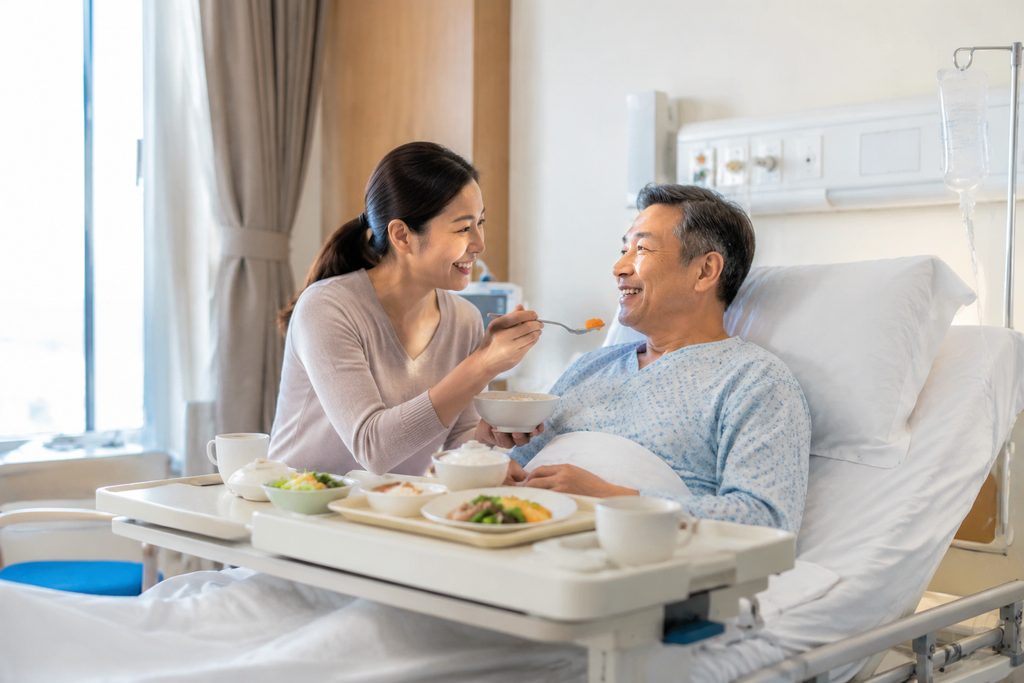
Inpatient Companion: Medication Schedule Help for Foreigners in Chinese Hospitals
While patients in Canada wait a median 27.7 weeks between GP referral and orthopaedic surgery, surgeons at Beijing Jishuitan Hospital perform over 300 joint replacements per month — with clinical outcomes that match or exceed Western benchmarks. The speed is real. But speed creates a new problem: once you’re admitted to a Chinese hospital, the pace of care doesn’t slow down. Medication rounds happen at fixed times. Nurses explain instructions in Mandarin. Discharge paperwork lists ten drugs with staggered dosing windows. For a foreign patient recovering from surgery, this is where the real anxiety begins. That’s why medication schedule assistance for international patients China has become one of the most requested services we coordinate.
You traveled here for treatment. You got the surgery. Now you’re lying in a hospital bed in Shanghai or Beijing, and a nurse just handed you a cup of pills you cannot identify. The label is in Chinese characters. She is already walking to the next bed. This is not a hypothetical scenario — it is a daily occurrence in China’s top-tier hospitals, where a single ward nurse may manage 12 to 20 patients per shift. Your surgeon’s team makes the clinical decisions. But the execution — the timing, the identification, the questions about side effects — falls to you. Unless you have someone standing next to you who can translate, verify, and document.
We are going to walk through exactly how this works, what it costs, what can go wrong, and how to prepare before you ever board a plane. No sugarcoating. Just the operational reality of being an inpatient in a Chinese hospital and how to stay safe with your medication schedule.
How This Actually Works, Step by Step
Here is the real sequence. You do not simply land in China and hire someone on the spot. The process starts weeks before admission.
Step 1: You send us your medical records. Discharge summaries from your home country, current prescriptions, allergy list, surgical history. We translate these into Simplified Chinese using medical translators — not generic translation software. A mistranslated drug allergy is a life-threatening error waiting to happen.
Step 2: We confirm your hospital admission details. Which hospital, which department, the name of your attending physician, your estimated admission date. This matters because medication protocols differ between hospitals. Fuwai Hospital’s cardiac ward runs on a different schedule than Ruijin Hospital’s oncology floor.
Step 3: A bilingual medical companion is assigned to your case. This person is not a nurse and not a doctor. They are a trained medical interpreter and patient advocate who understands hospital workflows. They know where the pharmacy is, how to read a Chinese prescription, and what questions to ask the ward nurse.
Step 4: On admission day, your companion meets you at the hospital. They help with registration, ward check-in, and the initial nursing assessment. They document your current home medications and confirm with the admitting nurse how these interact with the hospital’s inpatient drug regimen.
Step 5: Daily medication schedule verification. Every morning, your companion reviews the day’s medication orders with the ward nurse. What is being given, at what time, by what route, and for what purpose. They create a bilingual medication chart for you — one column in English, one in Chinese — so you always know what you’re taking.
Step 6: Discharge medication reconciliation. This is the step most people forget. Before you leave, your companion sits with the discharging physician or clinical pharmacist and goes through every new prescription. What to take, when to take it, what to stop taking, what to watch for. You leave with a translated, organized medication schedule — not a sheet of Chinese characters.
How Do Hospitals in China Manage Medication Schedules for Foreigners?
The honest answer: they don’t, not systematically. Chinese public hospitals are built for volume. A top-tier hospital like West China Hospital in Chengdu handles over 20,000 outpatient visits per day. Inpatient wards run efficiently, but nursing staff are stretched. The assumption is that patients or their families understand instructions given in Mandarin.
How do hospitals in China manage medication schedules for foreigners? In practice, they rely on three informal mechanisms. First, some hospitals with international departments — like Peking Union Medical College Hospital‘s International Medical Services or Zhongshan Hospital’s VIP wing — assign English-speaking nurses. This helps, but coverage is not 24/7. Night shifts are often staffed by nurses with limited English.
Second, private international hospitals such as United Family Healthcare or Jiahui International Hospital provide medication instructions in English as standard practice. Their nursing ratios are lower, and JCI accreditation requires patient education in a language the patient understands. The trade-off: costs run 3 to 5 times higher than public hospital international departments.
Third, and most commonly, foreign inpatients rely on a bilingual companion. This is not an official hospital service. It is an external support role. Hospitals tolerate it because it reduces miscommunication and nursing burden. And it works. A companion who understands both the clinical terminology and the physical layout of the hospital can resolve medication questions in minutes that would otherwise take hours of confusion.
For patients admitted through public hospital international departments, medication schedules are typically reviewed once daily during morning rounds. Changes happen fast. A drug added at 9 AM may be administered at 2 PM. Without someone tracking these changes, you will miss them.
A Realistic Timeline
Planning matters. Here is what a typical timeline looks like for a foreign patient seeking inpatient medication schedule support in China.
| Stage | What Happens | Typical Duration |
|---|---|---|
| Week 1 | You submit medical records and current medication list; we translate documents and confirm hospital admission details | 5–7 days |
| Week 2–3 | Hospital reviews translated records; admission date confirmed; companion assigned to your case | 7–14 days |
| Week 3–4 | S2 visa application with hospital invitation letter; travel arrangements finalized | 5–10 business days for visa processing |
| Day 1 (Admission) | Companion meets you at hospital; registration, ward check-in, initial medication reconciliation with nursing staff | Same day |
| Day 2–Discharge | Daily medication schedule verification; bilingual chart updates; communication with ward nurses and physicians | Duration of hospital stay |
| Discharge Day | Final medication reconciliation; translated discharge instructions; follow-up appointment scheduling if needed | 2–3 hours |
| Week 1 Post-Discharge | Remote follow-up call to review medication adherence and answer questions | 30–60 minutes |
The waiting steps people forget: document translation takes longer than expected if records are handwritten. Visa processing can be delayed if the hospital invitation letter has errors. And hospital admission dates shift — frequently. A confirmed bed on the 15th can become the 18th or the 22nd. Build buffer into your travel plans. Do not book non-refundable international flights for the day before admission.
What Can Go Wrong — and What Happens Then
Let’s be direct about failure modes. This is where trust is earned, not where we pretend everything runs smoothly.
Wrong medication administered. It happens. A nurse with 15 patients hands you the wrong cup. Your companion’s job is to catch it before you swallow. They check the medication name, dose, and route against your daily chart. If there’s a discrepancy, they stop the administration and clarify with the nurse. This is not about confrontation — it’s about verification. Chinese nurses are generally receptive when questions are asked respectfully and in Mandarin.
Medication schedule changes without notice. The attending physician adjusts your antibiotics at 7 AM. The new order isn’t communicated to you. Your companion catches this during the morning medication review and updates your bilingual chart. Without this, you’d be taking the old drug at the old time, wondering why you’re not improving.
Discharge instructions lost in translation. You’re handed a sheet with 8 medications, each with different dosing windows. Some are twice daily, one is every 8 hours, one is “as needed.” Your companion translates this into a clear schedule with exact times, food interactions, and warning signs. They also confirm which home medications to stop. This step alone prevents most post-discharge complications.
Your companion doesn’t show up. This is rare but possible. The recourse: we maintain a backup roster of companions in all 37 cities we cover. If your assigned companion is sick or delayed, a replacement is dispatched. You are never left alone in a Chinese hospital without language support.
You disagree with the hospital’s medication plan. You have the right to ask questions. Your companion facilitates a conversation with your attending physician. They help you understand the clinical rationale. If you still disagree, they document your concerns and request a second opinion through the hospital’s formal channels. No one overrides your autonomy.
Inpatient Companion Medication Reminder Service Shanghai: What You’re Actually Paying For
Shanghai is our most requested city for inpatient companion services. The concentration of top-tier hospitals — Zhongshan, Ruijin, Huashan, Renji — draws international patients from across Asia, the Middle East, and Europe. An inpatient companion medication reminder service Shanghai typically costs between $300 and $450 per day for full-day coverage (8 hours). Half-day coverage (4 hours) starts around $200.
What does that daily rate include? Morning medication reconciliation with the ward nurse. Creation and updating of your bilingual medication chart. Translation of physician instructions during rounds. Coordination with the hospital pharmacy for prescription fills. Communication with your family back home. And documentation of everything that happens — so you have a complete record.
Is it worth it? Compare it to the cost of a medication error. A single adverse drug event in a hospital extends length of stay by an average of 1.7 to 4.6 days, according to studies published in the Journal of Patient Safety. At international department rates of $500 to $1,000 per night, a preventable error costs far more than a week of companion support. The math is not complicated.
For patients at public hospital international departments, the companion works alongside hospital staff. They are not replacing nurses. They are filling the communication gap. At private international hospitals like Jiahui or United Family, English-speaking nursing staff already exist, so companion needs are lighter — often just a few hours per day for medication schedule verification and family updates.
Cost of Private Nurse for Medication Management in China Hospital: A Reality Check
Some patients ask about hiring a private nurse for medication management. Let’s clarify what this means in China and what it actually costs.
The cost of private nurse for medication management in China hospital varies widely. A registered nurse hired privately through an agency in Shanghai or Beijing typically charges $150 to $250 per 12-hour shift. A 24-hour private nurse runs $300 to $500 per day. These nurses handle medication administration, vital signs monitoring, personal care, and mobility assistance. They work under the supervision of the hospital’s nursing staff.
But here’s the catch: in many Chinese public hospitals, private nurses are not permitted to administer medications independently. Hospital policy requires that all inpatient medications be given by hospital-employed nurses. A private nurse can remind you, document what you’re taking, and communicate with hospital staff — but they cannot touch the medication cart. This is a critical distinction. If you hire a private nurse expecting them to take over medication management, you may be disappointed.
What most international patients actually need is not a private nurse but a bilingual medical companion. The companion’s value is linguistic and navigational, not clinical. They ensure the hospital’s own nursing staff are doing their job correctly and that you understand what’s happening. For patients who need hands-on nursing care beyond what the hospital provides, a private nurse makes sense as an addition — not a replacement — to companion support.
At the high end, full VIP coordination packages — which include private nursing, bilingual companion, airport transfer, and dedicated case management — run $5,000 to $8,000 for a typical 1-2 week hospital stay. This is the option we recommend for patients with complex post-surgical needs or those traveling without family support.
Book Inpatient Medication Schedule Helper Beijing: What to Look For
Beijing is the other major hub. With 21 of the Fudan-ranked Top 100 hospitals — more than any other city — Beijing draws the highest volume of international inpatients in China. If you want to book inpatient medication schedule helper Beijing, here’s what matters.
First, verify the helper’s medical translation credentials. Not all bilingual people can translate medical terminology. Ask about their training. Have they worked in hospital settings before? Do they understand pharmacology vocabulary in both languages? A companion who hesitates when translating “anticoagulant” or “beta-blocker” is a liability.
Second, confirm hospital access. Some Chinese hospitals restrict non-family visitors during certain hours. Your companion should know the specific access rules for your ward. At Peking Union Medical College Hospital’s international wing, companions are generally welcomed. At smaller public hospitals, access may be limited to specific visiting windows.
Third, clarify the scope of work. A medication schedule helper is not a nurse. They do not administer drugs. They do not make clinical decisions. They verify, translate, document, and communicate. If a provider promises more than this, walk away.
Fourth, ask about backup coverage. What happens if your companion gets sick? A professional service maintains a roster. An individual freelancer does not. For a 10-day hospital stay, backup coverage is not a luxury — it’s a requirement.
Fifth, understand the payment structure. Reputable providers charge a daily rate with no hidden fees. You should receive a written service agreement before admission. Avoid anyone who demands full payment upfront without a contract.
What Is Included in a Medical Tourism Package with Medication Support China?
Medical tourism packages in China range from bare-bones hospital coordination to comprehensive end-to-end support. Understanding what is included in a medical tourism package with medication support China helps you avoid paying for services you don’t need — or worse, discovering you don’t have services you assumed were included.
A basic package typically includes: hospital selection and appointment coordination, document translation, visa invitation letter, and airport pickup. Medication support is usually limited to a translated discharge summary. No daily inpatient companion. No medication schedule verification. This works for patients with strong Mandarin skills or family members who can translate.
A mid-tier package adds: bilingual companion for admission day and discharge day, remote translation support via phone or WeChat during the hospital stay, and coordination of follow-up appointments. Medication schedule support is partial — you get help at the critical transition points but not daily coverage.
A comprehensive package includes: full daily bilingual companion coverage, medication schedule verification every morning, private nursing if needed, daily family updates, discharge medication reconciliation, and post-discharge follow-up calls. This is what we recommend for patients undergoing major surgery — cardiac bypass, joint replacement, cancer resection — where medication complexity is high and the stakes are significant.
The question to ask any provider: “Exactly which hours is someone physically present with me in the hospital?” Vague answers mean gaps in coverage. You want specificity: “8 AM to 8 PM daily, with on-call phone support overnight.”
Practical Considerations: Records, Visa, Payment, and Follow-Up
Before you commit to inpatient medication schedule support in China, handle these practical items.
Medical records. Bring everything. Current medication list with generic names (not just brand names), allergy documentation, recent lab results, imaging reports on CD or USB, and a letter from your home physician explaining your condition and treatment goals. Generic drug names matter because Chinese hospitals stock domestic equivalents — the brand name from your home pharmacy may not exist here.
Visa. Foreigners traveling to China for medical treatment apply for an S2 visa, which covers short-term private affairs including medical treatment. Stays exceeding 180 days require an S1 visa. Accompanying family members also apply for S2. You will need an invitation letter from the admitting hospital and supporting medical documents. Processing typically takes 5 to 10 business days, but apply early — consulate backlogs are real.
Payment. Public hospital international departments require upfront deposits. Expect to prepay $5,000 to $20,000 depending on the procedure. Medication costs are billed separately from the companion service. Your companion service is paid directly to the service provider — not through the hospital. Insurance reimbursement varies: some international insurers cover companion services as part of medical travel benefits, most do not. Check your policy.
Language. Even at hospitals that advertise English-speaking staff, night shifts and pharmacy counters often operate in Mandarin only. Your companion is the bridge. Do not assume that because the surgeon speaks English, everyone else does.
Follow-up at home. Before discharge, ask your physician for a written summary in English (or have your companion translate it). This document should include: diagnosis, procedures performed, medications prescribed with generic names and dosing schedules, recommended follow-up timeline, and warning signs
Frequently Asked Questions
Yes. The hospitals used for international patients are JCI-accredited and follow the same international safety standards as top hospitals in the US and Europe. Surgical teams perform high volumes of procedures — often more than their Western counterparts — which studies show leads to better outcomes.
Costs vary by procedure and hospital, but international patients typically save 40-80% compared to US prices — even when factoring in travel and accommodation. A consultation with our team will give you an exact, all-inclusive quote with no hidden fees.
Send us your existing medical reports to get started. We handle everything from hospital selection and appointment scheduling to visa assistance and post-operative recovery planning. Your medical records are reviewed by the specialist before you even book a flight.
For more medical information and treatment options in China, visit chinamedservices.com (China Medical Services).
