First Hospital of Jilin University Urology for International Patients: Costs, Booking, and What to Expect
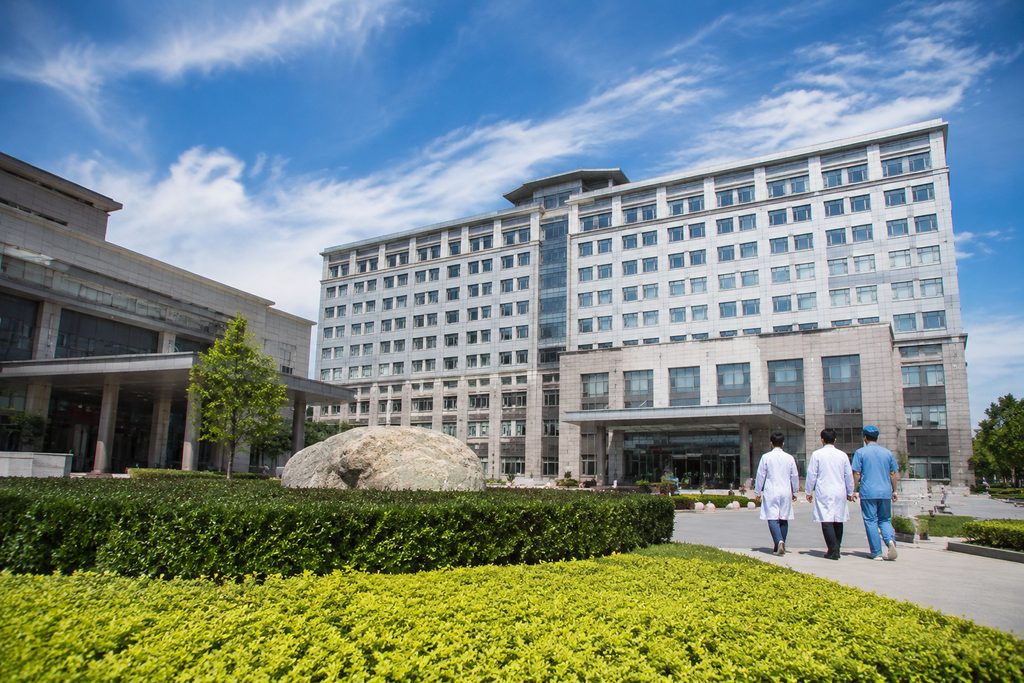
Urology care at the First Hospital of Jilin University costs roughly 40–70% less than comparable treatment in the United States or Western Europe. A standard kidney stone removal procedure, for instance, typically runs between $2,500 and $5,000 at this hospital, depending on stone size and technique. That figure stands against $15,000–$25,000 for the same intervention in many American facilities. But raw numbers only tell part of the story. The real question international patients face is whether the savings justify navigating a Chinese public hospital system where English is scarce and outpatient queues are long.
This article breaks down what urology treatment at the First Hospital of Jilin University actually involves for foreign patients. We cover realistic costs, how to book, what the hospital’s urology department is known for, and the honest trade-offs. No sugarcoating.
Urology Hospital Jilin University Cost: The Short Answer
The First Hospital of Jilin University is a Grade-A tertiary hospital in Changchun, the capital of Jilin Province in northeast China. It sits within the top tier of Chinese public hospitals and maintains a substantial urology department handling everything from kidney stones and prostate conditions to urologic cancers. For international patients, the baseline economics look like this: a written second opinion from a urology specialist typically costs $300–$500. A video consultation runs $100–$300 through the hospital’s international or VIP channel. In-person specialist consultation coordination starts from $800. Surgical procedures then add hospital charges on top.
What drives the variance? Three things. The specific procedure, whether you use the standard public channel or the international/VIP pathway, and your case complexity. The VIP pathway costs roughly 1.5–2 times the standard rate but includes English coordination and shorter queues. Standard outpatient registration at a Chinese public hospital cannot be booked from overseas in advance — you show up, queue, and take a number. That’s the reality of the system.
Who This Is Right For — and Who It Isn’t
Coming to Changchun for urology care makes sense for a specific profile of patient. You should be comfortable with the trade-offs before committing.
Typically a good candidate if:
- You need a planned, non-emergency procedure — kidney stone removal, prostate surgery, or a urologic workup — and can schedule weeks ahead.
- You have clear imaging and lab reports already. Chinese specialists work fastest when they can review existing CT scans, ultrasounds, and bloodwork.
- You are price-sensitive but still want a top-tier public hospital, not a budget clinic. The First Hospital of Jilin University ranks among the stronger medical centers in northeast China.
- You can bring or hire a bilingual companion. The hospital’s standard outpatient floors operate almost entirely in Mandarin.
Not a good fit if:
- You have an acute urologic emergency — severe obstruction with infection, for example. Fly to the nearest capable hospital, not across an ocean.
- You expect Western-style bedside manner and private rooms as standard. Public Chinese hospitals are efficient but crowded and direct.
- You cannot tolerate a multi-day process of registration, consultation, pre-op testing, and scheduling. Nothing moves as fast as you might hope.
- You have unstable comorbidities that require coordinated multi-specialty care during the same admission. That coordination exists, but it demands more time and a higher coordination fee.
The Options, Compared
If you’re weighing urology treatment abroad, you’re really choosing between four pathways. The table below lays out the concrete differences.
| Pathway | Kidney Stone Removal | Prostate Surgery (TURP) | English Support | Booking Lead Time |
|---|---|---|---|---|
| First Hospital of Jilin University (standard public) | $2,500–$5,000 | $4,000–$7,000 | Minimal — bring your own interpreter | On-site queue, then schedule |
| First Hospital of Jilin University (VIP/international channel) | $3,500–$7,000 | $6,000–$10,000 | Coordinated English assistance | 1–3 weeks pre-arranged |
| Private international hospital in China (e.g., United Family, Jiahui) | $6,000–$12,000 | $10,000–$18,000 | Full English, Western-style care | Days to 1 week |
| United States (average academic center) | $15,000–$25,000 | $20,000–$35,000 | Native | 2–6 weeks |
The standard public channel at Jilin University delivers the best raw price. But without Mandarin, you’ll struggle. The VIP channel still undercuts Western prices significantly while adding the coordination layer most foreigners need. Private international hospitals in China offer the smoothest experience at roughly double the public VIP rate — still cheaper than the U.S. for many procedures. Your choice hinges on how much friction you’re willing to trade for savings.
How to Book Urology Treatment at First Hospital Jilin University
Booking urology treatment at this hospital is not like calling a clinic in London or Toronto. There’s no central English-language hotline for the standard public channel. The hospital’s international department exists, but it’s not staffed like a Western patient-services office. Most foreign patients go through one of three routes.
The first route is self-directed: you travel to Changchun, register in person at the outpatient building, take a queue number for urology, and see whichever specialist is on duty that day. You pay the registration fee — typically under $10 — and then pay for any tests ordered. This works if you speak Chinese or bring someone who does. And if you’re flexible about which doctor you see.
The second route is the hospital’s VIP or special-needs clinic. This channel allows pre-arranged appointments with senior urologists, often with some English coordination. Pricing runs about 1.5–2 times the standard outpatient rate. You still need someone on the ground to handle paperwork, payment deposits, and test scheduling.
The third route is a coordination service like ours. We handle registration, hospital medical card creation, and appointment scheduling on your behalf. We also arrange a bilingual medical companion who stands with you through queueing, payment, translation, and test navigation. Our hospital appointment coordination starts from $300, with the understanding that we cannot guarantee a specific named specialist or an exact surgery date. What we do guarantee is that if we cannot secure the appointment shown on your order, you get a full refund.
Whichever route you choose, bring every piece of existing medical documentation: CT scans on CD or USB, ultrasound reports, PSA levels if prostate-related, urinalysis results, and a list of current medications. Chinese urologists rely heavily on imaging. The more you bring, the faster the process moves.
What Urology Care at This Hospital Actually Looks Like
The urology department at the First Hospital of Jilin University handles high patient volume. That’s not a criticism — it’s a feature. Chinese surgeons at top public hospitals perform procedures at volumes that Western urologists rarely match. Repetition builds technical proficiency. For common surgeries like transurethral resection of the prostate or percutaneous nephrolithotomy for kidney stones, volume matters.
But the experience differs from what many Western patients expect. Consultations are brief — often 10 to 15 minutes. The doctor will review your imaging, ask focused questions, and recommend a plan. There’s little hand-holding. Nurses handle pre-op preparation efficiently but without extended bedside conversation. Hospital rooms on the standard ward are typically shared, with 3 to 6 beds per room. VIP wards offer private or semi-private rooms at a higher rate.
Is urology care good in China? At hospitals like this one, the technical quality is genuinely strong for common procedures. What’s weaker is the communication layer. That’s the gap a bilingual companion fills. You’re not paying for medical expertise — the hospital provides that. You’re paying for someone to translate, advocate, and keep the process moving when you can’t read the signs or understand the pharmacist.
What It Costs, Line by Line
A quoted price for kidney stone removal in China typically covers the procedure, operating room time, anesthesia, and basic hospital stay. It often does not include pre-operative testing, medications after discharge, the stent removal procedure if one is placed, or any coordination or translation services. Always ask for an itemized breakdown. The all-in cost is usually 30–50% higher than the procedure quote alone.
There’s no single answer. China has excellent urologists across many hospitals — in Beijing, Shanghai, Guangzhou, and at strong regional centers like the First Hospital of Jilin University. The better question is which surgeon is right for your specific condition. For complex cases, we recommend a written second opinion from a senior specialist at a top-ranked urology department. You can browse China’s leading urology departments on our specialty rankings page to understand the landscape before choosing.
Chinese public hospitals have standard protocols for surgical complications, and top-tier facilities are equipped to manage them. That said, you are far from home, and the language barrier makes everything harder when things don’t go smoothly. This is the strongest argument for using the VIP channel and keeping a bilingual companion through discharge. Also confirm before traveling that your travel insurance covers medical complications abroad — most standard policies exclude pre-planned medical treatment, so you may need a specialized medical travel policy.
Partially. You cannot book a surgery date from overseas through the standard public channel — the hospital requires an in-person consultation first. But you can start the process remotely: submit your existing records for a written second opinion or video consultation, get a specialist’s assessment, and then arrange travel once there’s a confirmed treatment plan. This staged approach saves you from flying to Changchun only to discover the hospital can’t help your specific case. Our consultation and coordination services are designed around exactly this model — remote evaluation first, travel second.
Your Next Step
The First Hospital of Jilin University offers genuinely competent urology care at prices that undercut Western hospitals by half or more. The catch is friction: language, queues, payment logistics, and the sheer scale of a Chinese public hospital. None of it is insurmountable, but none of it disappears on its own.
We’re China Medical Services, and we exist to close that gap. We’re not a hospital, and we don’t diagnose or treat anything. What we do is handle the coordination: records translation, appointment booking through official hospital channels, bilingual companions on the ground, and visa guidance. If you’re considering urology treatment in China, start with a conversation. Tell us your diagnosis, your records, and your goals. We’ll tell you honestly whether this hospital — or another in our network of 340+ top-ranked facilities across 37 cities — makes sense for your case. No pressure, no obligation.
Get a free consultation at our patient services page. We’ll help you figure out the next step, whether that’s Changchun or somewhere closer to home.
Frequently Asked Questions
Yes. The hospitals used for international patients are JCI-accredited and follow the same international safety standards as top hospitals in the US and Europe. Surgical teams perform high volumes of procedures — often more than their Western counterparts — which studies show leads to better outcomes.
Costs vary by procedure and hospital, but international patients typically save 40-80% compared to US prices — even when factoring in travel and accommodation. A consultation with our team will give you an exact, all-inclusive quote with no hidden fees.
Send us your existing medical reports to get started. We handle everything from hospital selection and appointment scheduling to visa assistance and post-operative recovery planning. Your medical records are reviewed by the specialist before you even book a flight.
For more medical information and treatment options in China, visit chinamedservices.com (China Medical Services).
