Knee Replacement in Suzhou: Full Companion Support for International Patients
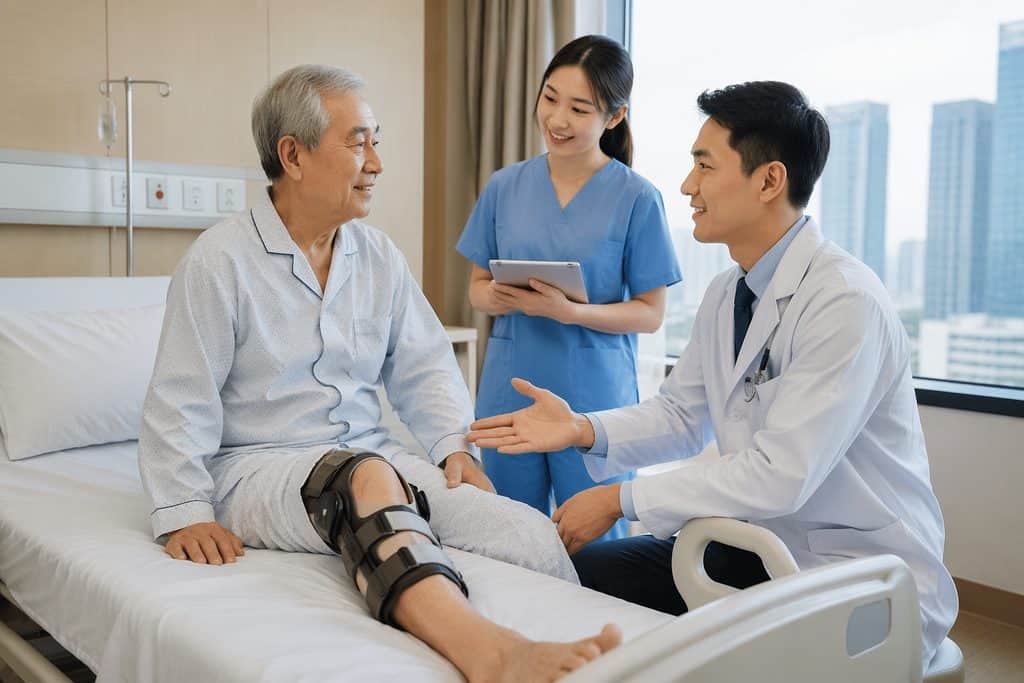
Knee Replacement in Suzhou: The Short Answer
Getting a total knee replacement in Suzhou typically costs between $8,000 and $14,000 USD for the complete hospital procedure, depending on implant choice and hospital tier. That figure covers the surgery itself, a standard hospital stay of 4-7 days, and the prosthetic joint. It does not include your flights, accommodation outside the hospital, or the companion support services that make the whole process navigable for someone who does not speak Mandarin. The knee replacement cost Suzhou China represents roughly one-fifth to one-eighth of what the same procedure costs in the United States, where the average total knee replacement runs between $35,000 and $70,000.
But price is only one piece of the decision. The real question most patients ask is harder: can I actually pull this off safely, thousands of miles from home, in a healthcare system I do not understand? The answer depends on how you structure the support around your procedure. Jiangsu Province, and Suzhou in particular, has built a quiet reputation for orthopedic excellence that makes it worth examining closely.
Who This Is Right For — and Who It Isn’t
Let’s be direct about this. Traveling internationally for joint replacement surgery is not for everyone. The patients who do well with this approach share a few common characteristics.
Typically a good candidate:
- You have been formally diagnosed with severe knee osteoarthritis or a mechanical joint problem that genuinely requires replacement — this is not exploratory treatment
- You are medically stable enough for a long-haul flight and a 2-3 week stay abroad
- You have a support person who can travel with you, or you are comfortable relying on a professional companion service for daily logistics
- You understand that follow-up care back home needs to be arranged before you leave
- You are paying out of pocket or your insurance allows international reimbursement — most US insurers will not directly pay a Chinese hospital
Who should probably not pursue this:
- Anyone with unstable cardiac or respiratory conditions that make a 12+ hour flight risky in the weeks surrounding surgery
- Patients with a BMI significantly above 40, which elevates surgical risk and may affect implant longevity
- Those who require a highly specific, proprietary implant system that a particular surgeon back home insists on — Chinese hospitals stock globally recognized brands like Zimmer Biomet and DePuy Synthes, but not every niche product
- Anyone expecting the experience to mirror a Western hospital in every cultural respect. It will not. The care is excellent in top-tier hospitals, but the bedside manner, food, and communication style differ
Being honest about the mismatch cases is what prevents bad outcomes. We would rather tell someone to stay home than have them discover the hard way that this was not the right fit.
The Options, Compared
When patients research how much is total knee replacement in Suzhou, they are usually comparing it against staying in their home country or going to another medical tourism destination. Here is how the numbers actually stack up.
| Factor | Suzhou (Top Public Hospital) | United States | Thailand (Private Hospital) |
|---|---|---|---|
| Surgery cost (all-in hospital) | $8,000 – $14,000 | $35,000 – $70,000 | $12,000 – $18,000 |
| Implant brands available | Zimmer Biomet, DePuy, Smith & Nephew, Stryker | Same global brands | Same global brands |
| Typical hospital stay | 4–7 days | 1–3 days (outpatient trend) | 5–7 days |
| Rehab included in package | Basic inpatient physio; outpatient packages available | Often separate billing | Often bundled |
| Language barrier | High — companion support strongly recommended | None for English speakers | Moderate — English common in medical tourism hospitals |
| Flight time (from US West Coast) | 12–14 hours | N/A | 16–20 hours (with connections) |
| Follow-up continuity | Requires pre-arranged home-country orthopedic follow-up | Seamless | Requires pre-arranged home-country orthopedic follow-up |
Thailand has been the default medical tourism answer for joint replacement for years. But Suzhou offers something Bangkok’s private hospitals cannot: direct access to orthopedic departments that handle enormous surgical volumes and participate in the clinical research that sets global implant protocols. A surgeon who does 300 knees a year sees patterns that a surgeon doing 80 knees a year may miss. That volume advantage is real, and it is concentrated in Jiangsu’s top orthopedic centers.
The Jiangsu Orthopedic Ecosystem: Why Suzhou Specifically
The question behind the question — is knee replacement safe in China for foreigners — usually comes from a place of not knowing which hospitals are legitimate and which are not. China has over 35,000 hospitals. The top 5% are genuinely world-class. The challenge for an international patient is knowing which is which.
Suzhou sits inside Jiangsu Province, which houses several orthopedic departments ranked among China’s top 10 nationally by the Fudan University hospital rankings. The First Affiliated Hospital of Soochow University, for instance, runs a joint replacement program that performs well over 1,000 knee replacements annually. Its surgeons train on the same implant systems used in major US and European centers, and several have completed fellowships abroad.
What makes the best orthopedic hospital Jiangsu medical tourism landscape practical for foreign patients is the combination of clinical depth and lower operating costs compared to Shanghai or Beijing. Suzhou is 30 minutes from Shanghai by high-speed rail. That proximity means you can access Shanghai’s international airport and still recover in a city that is noticeably calmer and less expensive. The international patient infrastructure in Suzhou is less developed than Shanghai’s — that is the trade-off — but a properly coordinated companion support arrangement bridges that gap effectively.
Safety data supports the proposition. A 2023 analysis published in the Journal of Arthroplasty examined infection rates and revision outcomes across multiple Asian centers and found that high-volume Chinese joint replacement programs had complication rates statistically comparable to Western benchmarks when standardized implant and infection-control protocols were followed. The key variable was hospital selection, not country of care.
What a Full Companion Support Package Actually Includes
Searching for Jiangsu orthopedic hospital international patient companion support brings up a lot of vague promises. Let’s break down what a real companion arrangement looks like on the ground in Suzhou, day by day.
Before you ever board a plane, the groundwork matters. A proper pre-arrival phase includes translation of your existing medical records and imaging into Chinese — not machine translation, but a medically literate translator who knows orthopedic terminology. Your MRI reports, X-ray findings, and any prior surgical notes need to be in the hands of the Chinese surgical team weeks before you arrive. The hospital’s international department reviews these and confirms that you are an appropriate candidate. This step alone filters out patients who would have traveled for nothing.
Once you land, the companion handles everything that requires Mandarin. Registration at the hospital — which in a Chinese public hospital can involve multiple queues across different buildings — is done for you. The companion translates during your pre-operative consultation so you can ask the surgeon your own questions directly. They manage payment at the hospital cashier, which in most Chinese public hospitals still operates on a pay-first, treat-second model for international patients without Chinese insurance.
During your hospital stay, the companion visits daily. They translate nurse instructions, coordinate meal preferences with the hospital kitchen, and serve as the communication bridge between you and the ward staff. Chinese nurses are skilled clinicians, but English proficiency on a standard orthopedic ward is rare. The companion also handles the discharge process: collecting your medical records in both Chinese and English, scheduling your post-operative review appointment, and arranging transport back to your hotel.
For the recovery period after discharge — typically another 7-10 days in Suzhou before you are cleared to fly — the companion can arrange outpatient physiotherapy sessions and accompany you to those appointments. This is the phase that most all-inclusive knee surgery package China offerings gloss over, but it is where the real value of on-the-ground support shows up. Trying to do post-operative physio through a translation app is miserable. Having a person in the room changes the experience entirely.
What It Costs: The Real Numbers
Your home-country follow-up surgeon owns the post-operative care from the moment you land. The Chinese surgical team’s responsibility ends at discharge, though they will typically respond to email inquiries from your home surgeon if questions arise about the implant or surgical approach. This is why the pre-arranged follow-up relationship is non-negotiable. If a complication develops — infection, stiffness requiring manipulation under anesthesia, implant loosening — your home surgeon manages it. The cost of managing a complication back home can erode the savings from having surgery abroad, which is why patient selection matters so much. Low-risk patients with straightforward knee osteoarthritis have the fewest surprises.
The standard recommendation is 14 days from the date of surgery. That allows for the 4-7 day hospital stay plus roughly one week of early recovery and at least two outpatient physiotherapy sessions before a long-haul flight. Flying sooner increases deep vein thrombosis risk and is generally not advised by surgeons. Some patients stay three weeks to get more rehabilitation on site before traveling. The airline may require a fitness-to-fly letter from the treating surgeon, which the hospital can provide.
Can I get an all-inclusive knee surgery package in China?
Some hospitals and medical tourism facilitators offer bundled packages that include surgery, hospital stay, airport transfers, and a hotel recovery period. These can simplify budgeting, but read the fine print carefully. An all-inclusive knee surgery package China offering typically covers a standard implant and a fixed
Frequently Asked Questions
Yes. The hospitals used for international patients are JCI-accredited and follow the same international safety standards as top hospitals in the US and Europe. Surgical teams perform high volumes of procedures — often more than their Western counterparts — which studies show leads to better outcomes.
Costs vary by procedure and hospital, but international patients typically save 40-80% compared to US prices — even when factoring in travel and accommodation. A consultation with our team will give you an exact, all-inclusive quote with no hidden fees.
Send us your existing medical reports to get started. We handle everything from hospital selection and appointment scheduling to visa assistance and post-operative recovery planning. Your medical records are reviewed by the specialist before you even book a flight.
For more medical information and treatment options in China, visit chinamedservices.com (China Medical Services).
