LASIK on Both Eyes at Once: Safety, Cost, and China Options
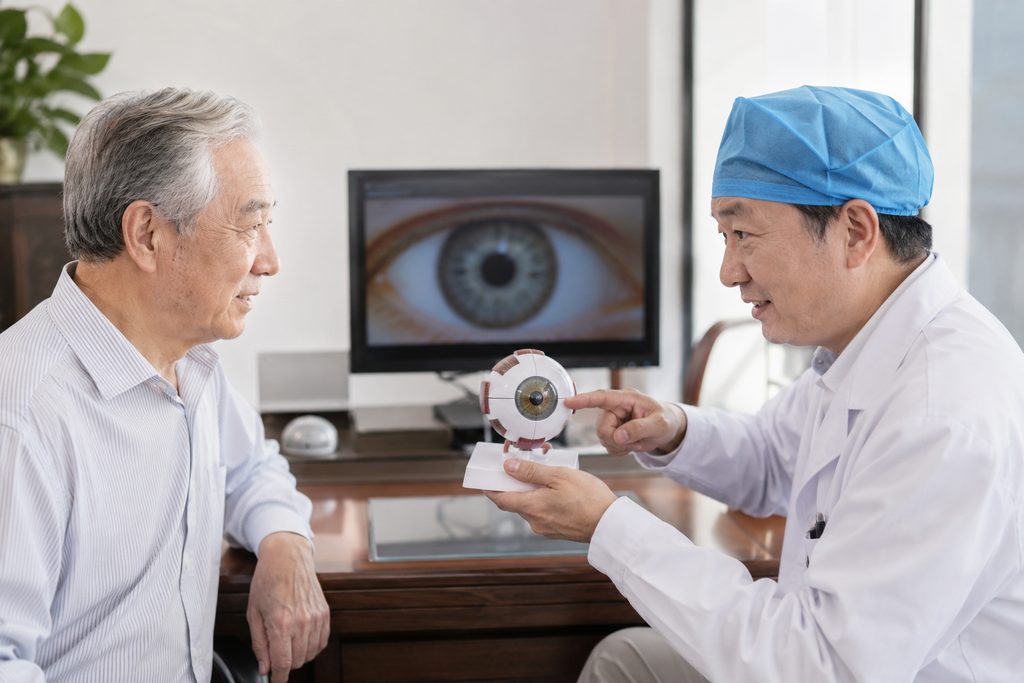
Can I Have LASIK on Both Eyes at Once? The Short Answer
Yes. The overwhelming majority of LASIK procedures worldwide are performed on both eyes during the same surgical session. Roughly 95% of LASIK patients in the United States elect simultaneous bilateral treatment, and the same pattern holds across most major medical destinations, including China. If you are searching for LASIK both eyes same time China cost, you are looking at a well-established, routine approach — not an experimental one.
But there is a caveat that matters more than the yes itself. “Routine” does not mean “automatic.” The decision to treat both eyes in one sitting depends on your corneal thickness, refractive error, tear film stability, and the specific laser platform your surgeon uses. Some patients are better served by sequential treatment — one eye, then the other weeks later. A responsible surgeon will tell you which camp you fall into only after a comprehensive preoperative evaluation, not before.
Who This Is Right For — and Who It Isn’t
Simultaneous bilateral LASIK works well for most people, but candidacy is narrower than marketing materials suggest. Here is what actually determines whether you can do LASIK on both eyes at once.
Typically good candidates for same-day bilateral LASIK:
- Stable refractive error for at least 12 months — your prescription has not shifted by more than 0.50 diopters in a year
- Corneal thickness sufficient to safely create a flap and ablate tissue in both eyes (typically above 500 microns, though this varies by the degree of correction needed)
- Myopia up to approximately -10.00 diopters, hyperopia up to +4.00 diopters, and astigmatism up to 5.00 diopters, depending on the laser platform
- No active autoimmune disease, uncontrolled diabetes, or pregnancy
- Realistic expectations about night vision, dry eye, and the possibility of enhancement surgery later
Who should not pursue simultaneous bilateral LASIK:
- Anyone with keratoconus or forme fruste keratoconus — LASIK can destabilize an already weak cornea
- Patients with severe dry eye disease; LASIK temporarily worsens tear film instability in nearly everyone, and for some that becomes permanent
- Those with thin corneas where treating both eyes in one session leaves insufficient residual stromal bed tissue
- People whose occupation demands perfect monocular vision in each eye independently — certain pilots and military roles have specific rules
- Anyone who cannot commit to the postoperative follow-up schedule, which includes visits at day 1, week 1, month 1, and month 3
If you are considering traveling abroad for surgery, the follow-up schedule becomes the real constraint. More on that later.
The Options, Compared
You have three genuine pathways when considering bilateral LASIK: same-day surgery in your home country, same-day surgery abroad, or sequential surgery with a gap between eyes. Each has different trade-offs on cost, convenience, and risk management. The table below compares them for a patient based in the United States or Europe considering treatment.
| Factor | Same-Day Bilateral (Home Country) | Same-Day Bilateral (China) | Sequential (One Eye at a Time) |
|---|---|---|---|
| Typical cost per eye | $2,200–$3,500 | $800–$1,800 | $2,200–$3,500 |
| Total surgery time | 20–30 minutes | 20–30 minutes | 20–30 minutes × 2 sessions |
| Recovery overlap | Both eyes heal simultaneously | Both eyes heal simultaneously | One eye functional while other heals |
| Time off work | 3–5 days | 3–5 days plus travel | 5–10 days total across two periods |
| Risk of bilateral complication | Rare but real | Rare but real | Effectively eliminated |
| Follow-up access | Local, immediate | Requires coordination or local optometrist | Local, immediate |
| Total cost estimate | $4,400–$7,000 | $1,600–$3,600 plus travel | $4,400–$7,000 |
Sequential treatment appeals to patients whose profession or anxiety level makes the small risk of simultaneous bilateral complications unacceptable. But the practical downside is real: you go through the entire surgical experience twice, and your vision is imbalanced for weeks. Most patients find the imbalance more bothersome than the theoretical risk of same-day surgery. That is why bilateral treatment dominates.
Is Simultaneous Bilateral LASIK Safe Abroad?
The safety question deserves a direct answer. The risk of serious vision-threatening complications from LASIK is low regardless of geography — studies consistently report flap complications in under 1% of cases and sight-threatening infection in under 0.1%. But “safe abroad” depends on three things: the laser platform, the surgeon’s volume, and the sterility protocols of the facility.
China’s top-tier ophthalmic centers use the same equipment you would find in Seoul, Singapore, or Los Angeles. The most common platforms — Zeiss VisuMax, Alcon EX500, and Schwind Amaris — are manufactured in Germany, the United States, and Switzerland. A hospital running a Schwind Amaris 1050RS in Shanghai is using the same machine as a clinic in Munich. The variable is not the hardware. It is the operator and the preoperative screening.
High-volume Chinese eye hospitals perform thousands of refractive surgeries annually. Some centers exceed 10,000 cases per year. That volume matters. Surgeons who perform LASIK daily develop pattern recognition for borderline corneas that lower-volume surgeons may miss. But volume alone is not a guarantee. You need to verify that the specific surgeon assigned to your case has substantial experience with the exact platform being used, not just the hospital in aggregate.
One more point about safety abroad: the biggest risk is not the surgery itself. It is poor postoperative care after you fly home. Infection, flap dislocation, and diffuse lamellar keratitis typically appear within the first 72 hours. If you leave China 48 hours after surgery and something goes wrong at day 5, you need a local ophthalmologist who understands LASIK complications. That is manageable — most Western ophthalmologists do — but it requires planning before you book a flight.
LASIK Recovery Time Both Eyes Medical Tourism: What to Expect
Recovery from bilateral LASIK follows a predictable timeline, but medical tourism compresses it. Here is what the first two weeks actually look like if you travel to China for surgery.
Day 0: Surgery takes about 10 minutes per eye. Your vision is immediately clearer but hazy. You will be sensitive to light and your eyes will water. You go back to your hotel and sleep. No screens, no reading.
Day 1: Follow-up appointment. Your surgeon checks the flap position and measures your uncorrected visual acuity. Most patients see 20/40 or better at this point. You can usually fly home after this appointment, though staying two more days is wiser.
Days 2–3: Vision sharpens noticeably. Dry eye peaks. You will use preservative-free artificial tears every hour or two. Light sensitivity fades. Most patients can use a phone or laptop in short bursts by day 3.
Days 4–7: The haze clears. Night vision still shows halos and starbursts around lights — this is normal and fades over weeks to months. You can resume most daily activities. No swimming, no eye makeup, no contact sports.
Week 2: Vision is typically stable at or near the final outcome. Dry eye is improving but still present. You can return to work and most exercise. Avoid rubbing your eyes for at least a month.
Month 1–3: The flap is now structurally secure. Night vision symptoms continue to fade. Dry eye may persist for several months, especially if you had dry eye before surgery. Final visual outcome is usually reached by month 3.
The compressed timeline for medical tourism means you should plan to stay in China for at least 3–4 days after surgery. Flying the same day is not recommended. Cabin air is dry and the pressure changes are uncomfortable on freshly operated eyes.
Best Eye Hospital Shanghai LASIK Price: What You Actually Pay
Shanghai is the most common entry point for international patients seeking refractive surgery in China, and for good reason. The city has several high-volume ophthalmic centers that treat international patients regularly. The best eye hospital Shanghai LASIK price typically ranges from $800 to $1,800 per eye, depending on the technology tier.
Here is what drives the price difference:
- Standard LASIK with a mechanical microkeratome flap: $800–$1,200 per eye
- Femtosecond laser LASIK (bladeless flap creation): $1,200–$1,800 per eye
- SMILE (small incision lenticule extraction, no flap): $1,500–$2,200 per eye
- Topography-guided or wavefront-optimized custom ablation: add $200–$400 per eye
These figures are for the surgical fee only. Preoperative evaluation, postoperative medications, and follow-up visits are sometimes bundled, sometimes separate. Ask for a written quote that itemizes everything before you commit. A hospital that cannot produce an itemized quote is not one you want operating on your eyes.
For comparison, the same femtosecond LASIK procedure in the United States averages $2,200–$3,500 per eye. In Western Europe, expect €1,800–€2,800 per eye. The savings in China are real, but they come with travel costs and the coordination burden of arranging surgery in a country where you may not speak the language.
Practical Considerations: Records, Visas, and Follow-Up
If you are serious about booking a LASIK surgery package in China, the logistics are not complicated, but they are specific. Here is what you need to know.
Medical records: Bring your most recent eyeglass or contact lens prescription, any corneal topography or tomography you have had, and a list of medications. If you wear contact lenses, stop wearing soft lenses for at least one week before your evaluation — two weeks for toric lenses, three to four weeks for rigid gas permeable lenses. Contact lens wear temporarily alters corneal shape and can invalidate your preoperative measurements.
Visa: For medical treatment in China, the appropriate short-stay category is the S2 visa, which covers private affairs including medical care. Your hospital should provide an invitation letter and treatment confirmation to support your application. Requirements vary by embassy and change periodically, so confirm the current documentation list with the Chinese embassy or consulate in your country before applying. Do not assume a standard tourist visa covers surgery.
Payment: Chinese public hospitals generally require prepayment for surgical procedures. International departments at major hospitals accept international credit cards, but smaller clinics may require cash or domestic payment platforms. Clarify payment methods before you arrive. Insurance rarely covers elective refractive surgery regardless of where it is performed, so expect to pay out of pocket.
Language: Even in Shanghai’s most international hospitals, the surgical team may have limited English. The preoperative counseling, consent process, and postoperative instructions are too important to leave to guesswork. If you do not speak Mandarin, arrange for an interpreter or work through a coordinator who can sit with you during every step.
Follow-up after returning home: You will need a local ophthalmologist who can see you at week 1, month 1, and month 3 after surgery. Book these appointments before you travel. Some Chinese hospitals will provide a postoperative care protocol that you can hand to your local doctor. This is standard practice and your local ophthalmologist should have no problem following it.
Frequently Asked Questions
Yes. Astigmatism is corrected in the same treatment session as myopia or hyperopia. Modern excimer lasers correct sphere and cylinder simultaneously. The limit is the magnitude of the astigmatism — most platforms handle up to 5.00 or 6.00 diopters of cylinder. Beyond that, a toric lens implant might be a better option than LASIK.
A responsible surgeon will pause and reassess if the first eye develops a flap complication or any unexpected finding. In most cases, the issue is minor and the second eye proceeds as planned. But if the complication suggests a systemic problem — for example, the flap is irregular and the surgeon suspects the microkeratome or femtosecond laser is malfunctioning — the second eye will be postponed. This is one reason sequential treatment exists as an option, even though it is rarely chosen.
Most surgeons clear patients to fly 24–48 hours after surgery, provided the day-1 follow-up shows a well-positioned flap and no signs of inflammation. That said, staying 3–4 days is safer for international patients. Cabin air is extremely dry, which worsens postoperative dry eye, and you will need to apply artificial tears frequently during the flight. If you can extend your stay, do it.
The surgical fee itself is genuinely lower — often 50–70% below US prices for equivalent technology. Hidden fees are less common in Chinese hospitals than in some other medical tourism destinations, but they exist. The most common surprise costs are preoperative testing that is billed separately, postoperative medication not included in the package, and follow-up visits that carry their own fees. A written, itemized quote resolves most of this. The bigger financial variable is travel: flights, hotel, food, and time off work. For a two-week trip, expect to spend $2,000–$4,000 on logistics before you pay a cent for surgery.
Enhancement rates after LASIK run 1–5% depending on the original prescription and the platform used. If you need a touch-up, you have two options: return to China for the enhancement, or have it done locally. Most Western refractive surgeons will perform enhancements on patients who had primary surgery elsewhere, provided the records are complete and the cornea has adequate residual thickness. The Chinese hospital will typically provide your full surgical record on request. Enhancement fees in China are usually lower than the primary procedure, but travel costs may make local enhancement more practical.
Your Next Step
Bilateral LASIK is a safe, well-established procedure, and China offers it at prices that are difficult to match in Western markets. But the decision to have surgery abroad should rest on more than cost. The quality of the preoperative evaluation, the surgeon’s experience with your specific refractive error, and the follow-up plan you put in place before you travel matter more than the dollar figure on the quote.
We are China Medical Services, a coordination team that helps international patients navigate the Chinese healthcare system. We are not a hospital, and we do not provide medical advice or diagnoses. What we do is connect you with top-ranked Chinese hospitals and help you understand your options — including ophthalmic centers in Shanghai — before you commit to travel. If you are weighing bilateral LASIK in China and want an honest assessment of whether it makes sense for your situation, request a free consultation through our patient services page. There is no obligation, and no one will pressure you into a decision.
Your eyes are worth the diligence. Do the homework first, then book the flight.
For more medical information and treatment options in China, visit chinamedservices.com (China Medical Services).
