Is LASIK Painful? What to Expect During Surgery and Recovery
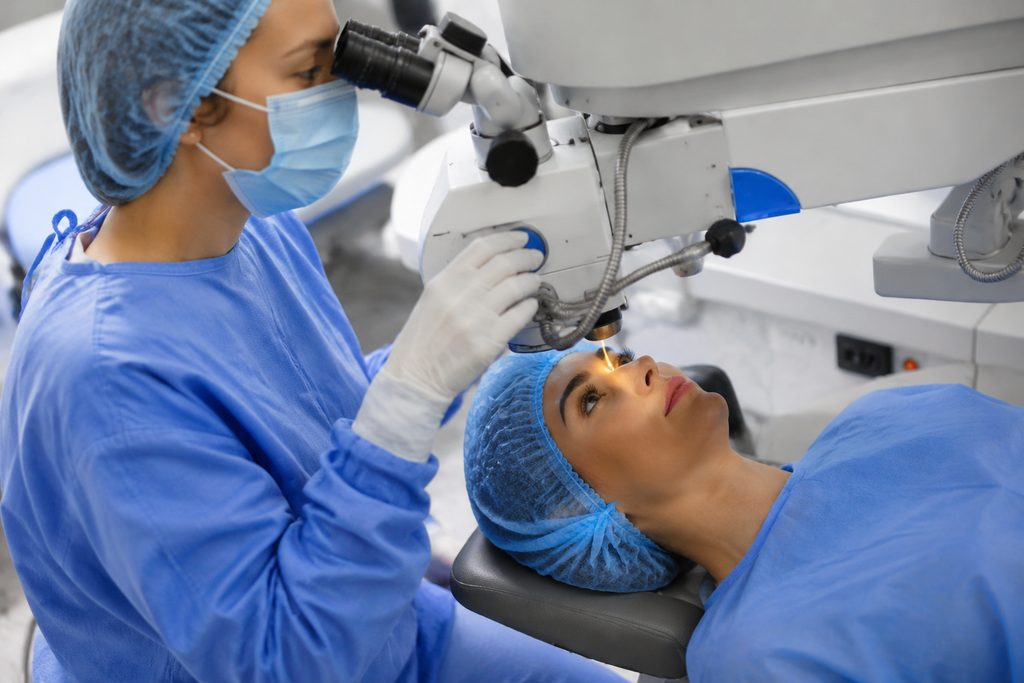
Each year, more than 700,000 LASIK procedures are performed in the United States alone, according to the American Refractive Surgery Council. Most patients describe the procedure itself as painless. That’s the short answer. You won’t feel the laser. You won’t feel the corneal flap being lifted. What you will feel is pressure — a brief, heavy sensation on the eye that lasts about 20 seconds per eye. The discomfort comes later, during the first four to six hours of recovery, when your eyes may burn, water, and feel gritty. For many international patients weighing lasik eye surgery cost China against treatment at home, the fear of pain is often a bigger barrier than the price tag. Let’s address both honestly.
Is LASIK Eye Surgery Painful: The Short Answer
No, the LASIK procedure itself is not painful. Numbing drops containing a topical anesthetic like proparacaine or tetracaine are applied to both eyes before surgery begins. These drops block corneal nerve signals within seconds. You remain awake. You can see light and movement. But you cannot feel sharp pain.
What you feel is pressure. A suction ring holds your eye steady while the femtosecond laser or microkeratome creates the corneal flap. Patients describe it as a heavy hand pressing on the eyelid, or a tightness around the eye socket. Your vision dims or goes dark for a few seconds. That’s normal. The excimer laser then reshapes the cornea in under 60 seconds per eye. You hear clicking sounds. You smell a faint odor some compare to burning hair. None of it hurts.
The real discomfort starts about 30 to 45 minutes after surgery, once the numbing drops wear off. Your eyes tear heavily. Light sensitivity spikes. A gritty, sandy feeling sets in. Most patients rate this phase a 4 out of 10 on a pain scale. It fades within four to six hours. By the next morning, the worst is over.
Who This Is Right For — and Who It Isn’t
LASIK works best for a specific profile. If you fit it, the procedure is fast and the results are predictable. If you don’t, no reputable surgeon will operate.
Good candidates typically have:
- Stable vision prescription for at least 12 months
- Corneal thickness above 500 microns
- Myopia up to -12.00 diopters, hyperopia up to +6.00, astigmatism up to 6.00
- Age 18 or older, with most surgeons preferring 21+
- No active eye infections or severe dry eye
Who should not pursue LASIK:
- Pregnant or nursing women — hormonal shifts alter corneal shape
- Patients with keratoconus or corneal ectasia risk
- Those with autoimmune disorders like lupus or rheumatoid arthritis
- People with severe dry eye syndrome
- Patients with unrealistic expectations about perfect vision
If you have thin corneas, PRK or SMILE may be alternatives. A thorough pre-operative screening — corneal topography, pachymetry, tear film assessment — determines eligibility. Any hospital that skips these tests should be avoided.
The Options, Compared
LASIK isn’t the only refractive surgery. And China isn’t the only destination. Here’s how the main options stack up for international patients.
| Procedure | Typical Cost (China) | Typical Cost (USA) | Recovery Time | Pain Level |
|---|---|---|---|---|
| LASIK | $1,500–$3,500 | $4,000–$8,000 | 1–2 days | Mild, 4–6 hours |
| SMILE | $2,500–$4,500 | $5,000–$9,000 | 1–3 days | Minimal |
| PRK | $1,200–$2,800 | $3,500–$7,000 | 3–7 days | Moderate, 2–3 days |
| ICL (implantable lens) | $3,500–$6,000 | $8,000–$12,000 | 1–2 days | Minimal |
LASIK suits most patients with moderate prescriptions and healthy corneas. SMILE is gentler for dry eye sufferers. PRK works for thin corneas but hurts more. ICL is reversible and handles extreme prescriptions. The right column depends on your corneal map, not your budget.
Best LASIK Hospital Shanghai Price and Beijing Costs
Shanghai and Beijing dominate China’s refractive surgery landscape. Both cities host hospitals with femtosecond laser platforms from Zeiss, Alcon, and Schwind — the same equipment used in London or Los Angeles. The difference is price and volume.
In Shanghai, private international hospitals like Jiahui and United Family offer LASIK packages starting around $2,500 to $3,500. Public hospital ophthalmology departments, such as those at Eye and ENT Hospital of Fudan University, often charge less — typically $1,500 to $2,500 — but English support is limited. The best lasik hospital Shanghai price depends on whether you prioritize concierge-level service or raw cost. Both deliver excellent surgical outcomes. The surgeons at top Shanghai centers perform thousands of procedures annually.
Beijing follows a similar pattern. How much does lasik cost in Beijing? At Tongren Hospital’s refractive surgery center — one of China’s highest-volume eye centers — LASIK starts near $1,800. Private clinics like Beijing United Family quote $3,000 to $4,000 with full English coordination. For comparison, the average LASIK price in the United States is $4,400 per eye, according to a 2023 MarketScope report. That’s $8,800 for both eyes. In China, you pay roughly one-third to one-half of that.
Our database includes top-ranked hospitals across 37 Chinese cities, including ophthalmology departments with refractive surgery units. For a deeper look at specific institutions, the department rankings by specialty page lists centers with strong eye surgery reputations.
LASIK Surgery Recovery Time Abroad: What the First Week Looks Like
Recovery is fast, but it’s not zero. If you’re planning lasik surgery recovery time abroad, schedule realistically.
Day 0 (surgery day): Procedure takes 10–15 minutes per eye. You rest in a dark room for 2–3 hours. Vision is blurry. Eyes water. You cannot drive. A companion is essential.
Day 1: Follow-up exam. Most patients see 20/40 or better. You can read, use screens with breaks, and walk outside with sunglasses. No eye makeup, no swimming, no contact sports.
Days 2–3: Vision stabilizes. Dryness and halos around lights persist. Preservative-free artificial tears every 1–2 hours. You can fly home — cabin air is dry, so use drops frequently.
Week 1: Most patients return to work. Night driving may still be uncomfortable due to glare. Avoid rubbing your eyes — the flap needs months to fully adhere.
Months 1–3: Vision reaches final clarity. Dry eye gradually improves. One in five patients still needs occasional drops at six months.
If you’re traveling from abroad, plan at least three to four days in China. Day 1 for pre-op screening, day 2 for surgery, day 3 for the mandatory next-day follow-up. Some patients add a buffer day before flying home. That’s sensible, not excessive.
What It Costs: LASIK Eye Surgery Cost China Breakdown
Chinese LASIK pricing breaks down into three tiers. The variance comes from hospital type, surgeon seniority, and laser platform.
Public hospital standard route: $1,500–$2,500. Includes pre-op testing, surgery, and basic follow-up. Chinese-language environment. Long queues. You’ll need a local speaker to navigate registration and payment.
Public hospital international/VIP department: $2,500–$4,000. Same surgeons, shorter waits, English-speaking coordinators. This is the sweet spot for many foreign patients.
Private international hospital: $3,000–$5,000. JCI-accredited facilities, direct insurance billing, Western-style care. The premium buys convenience, not better surgical skill.
What’s included? Pre-operative corneal mapping, the procedure itself, post-op medications, and one to three follow-up visits. What’s often not included: airport transfers, accommodation, and long-term follow-up after you return home. Those costs run $500–$1,500 depending on your hotel choices and length of stay.
Some patients ask about a book lasik surgery China package that bundles everything. These exist. A typical package includes surgery, two nights’ hotel, airport pickup, and bilingual coordination for $3,500–$5,500. Always confirm which hospital performs the surgery. The package is only as good as the surgeon behind it.
Practical Considerations: Records, Visa, Payment, and Follow-Up
Traveling to China for LASIK requires more than booking a flight. Here’s what actually matters.
Medical records: Bring your last two prescription records, any corneal imaging, and a list of medications. If you wear contact lenses, stop wearing soft lenses for at least one week before screening — two weeks for hard lenses. Lenses reshape your cornea and skew measurements.
Visa: Medical treatment in China falls under the S2 visa category, which covers short-term private affairs including medical visits. You’ll need an invitation letter or supporting documents from the hospital. Family members accompanying you apply for the same S2 category. Processing takes one to two weeks at most embassies. Requirements change, so verify with the Chinese embassy or consulate in your country before applying.
Payment: Public hospitals require upfront payment — cash, Chinese debit card, or major credit cards at larger facilities. Private international hospitals accept international credit cards and often bill insurers directly. If you have overseas health insurance, check whether elective refractive surgery is covered. Most plans exclude it.
Language: Top public hospitals see 10,000+ outpatients daily. Signage is in Chinese. Registration kiosks are in Chinese. Pharmacy queues are in Chinese. You can manage alone if you’re patient and use translation apps. Most foreign patients don’t want that friction. A bilingual companion costs from $300 per day and handles registration, payment, queueing, and translation. It’s a service, not a requirement.
Follow-up after returning home: Your Chinese surgeon will want to see you at day 1, week 1, and month 1. The month 1 visit can often be done with a local ophthalmologist in your home country, who sends the report back. Confirm this arrangement before leaving China.
Frequently Asked Questions
No. Numbing drops eliminate corneal pain. You feel pressure from the suction ring and a brief heaviness. The entire laser portion takes under a minute per eye. If you feel anything sharp, tell the surgeon immediately — it usually means the numbing drops need reapplication.
The laser tracks your eye movements at over 1,000 times per second. If your eye drifts beyond a safe range, the laser pauses automatically. A speculum holds your eyelids open, so blinking is impossible. The suction ring keeps your eye stable during flap creation.
Four to six hours for most patients. The worst is the first two hours. Sleep is the best medicine — surgeons recommend going home and napping immediately. By evening, the burning fades to mild dryness. By the next morning, most patients describe only a “foreign body” sensation that resolves within a day.
At top-tier Chinese hospitals, yes. The femtosecond and excimer laser platforms are identical to those used in Western centers. The surgeons at high-volume eye hospitals perform more procedures annually than most Western surgeons. The key is choosing a hospital with modern equipment and an experienced refractive team — not the cheapest clinic you can find.
Yes, after your day-1 follow-up exam. Cabin pressure does not affect the corneal flap. The dry cabin air does increase eye dryness, so use preservative-free artificial tears every hour during the flight. Avoid rubbing your eyes. If you have a long-haul flight, consider staying one extra day.
Your Next Step
LASIK pain is minimal and brief. The bigger decisions are eligibility, surgeon quality, and cost — and lasik eye surgery cost China remains one-third to one-half of Western prices at comparable quality levels. We help international patients identify suitable hospitals, coordinate appointments, arrange bilingual companions, and navigate the S2 visa process. We are not a hospital. We do not diagnose or perform surgery. We connect you with the right specialists and handle the logistics. If you’re considering refractive surgery in China, request a free consultation to discuss your prescription, timeline, and options.
Start with a pre-screening. Know your corneal thickness. Then decide. The laser doesn’t hurt — but choosing the wrong clinic can. Get the data first.
For more medical information and treatment options in China, visit chinamedservices.com (China Medical Services).
