Limb Length Discrepancy in Shanghai: A Parent’s Guide to Care
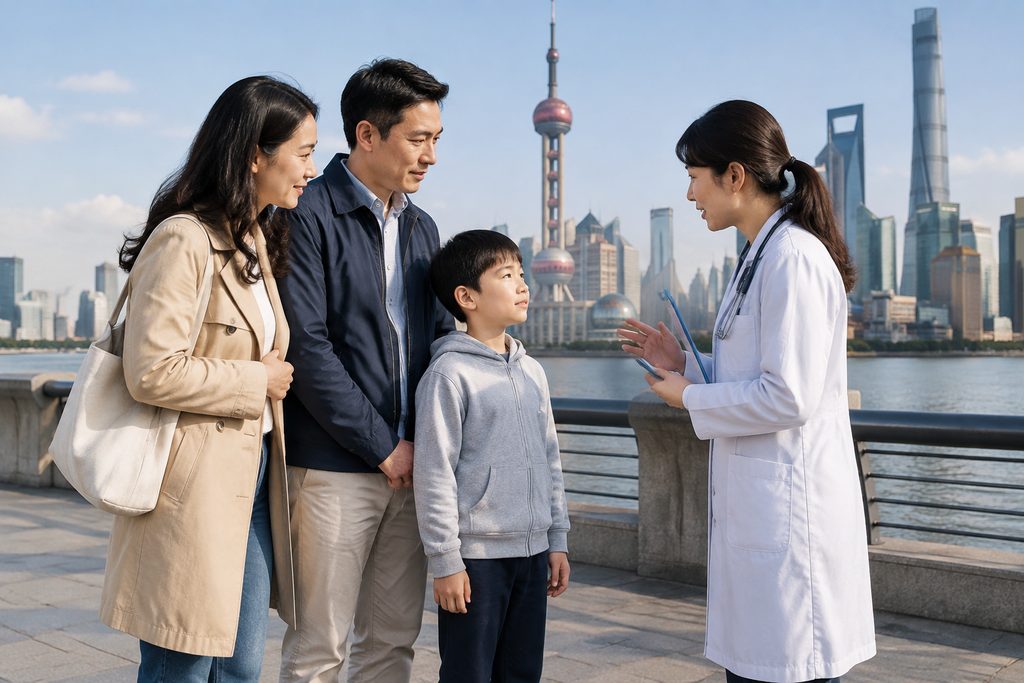
Limb Length Discrepancy in Shanghai: A Parent’s Guide
A limb length discrepancy means one leg is shorter than the other. That’s the whole concept. In plain terms, the bones of the legs have grown at different rates, or one side was affected by an injury, infection, or a condition present since birth. In mild cases a child simply needs a shoe lift. In larger differences — usually measured at 2 centimeters or more — the treatment conversation turns to surgery, and that’s when parents start searching for options abroad. If you are weighing limb length discrepancy treatment cost China against what you’d pay at home, this guide walks through how Shanghai’s pediatric orthopedic system actually works, what the numbers look like, and where the real risks sit.
We are not doctors. Our team connects international families with Chinese hospitals, and we’ve watched enough parents make this decision to know the fear is rarely about the surgery itself. It’s about being in a foreign city, in a language you don’t speak, with a child who needs follow-up care for years.
How This Actually Works, Step by Step
Most families assume the first step is booking a flight. It isn’t. Here is the real sequence, and it starts at your kitchen table with a folder of scans.
Step one: gather records. You send us your child’s standing X-rays (full-length leg films, not just knee or hip views), the radiologist’s report, any MRI or CT images, growth charts, and a short written history — when the discrepancy was first noticed, how it’s been measured, and any prior treatment. Scans taken more than six months ago are often not enough, because a child’s discrepancy changes as they grow.
Step two: a written second opinion. The relevant Chinese pediatric orthopedic specialty reviews those files and returns written analysis — how they’d measure the discrepancy, which treatment category fits, and what direction they’d take. This is a document, not a prescription, and it typically costs $300–500. It exists so you don’t fly 12 hours on a guess.
Step three: a video consultation. If the written opinion raises questions, you speak directly with the specialty team online. You explain your child’s symptoms and your goals; they explain their reasoning. A standard international-department video consultation runs $100–300, and a top-specialist session runs $500–800. Complex cases involving growth-plate concerns may warrant a multidisciplinary team review at $1,500–2,000.
Step four: the in-person visit. Here is the part that surprises parents. At Chinese public hospitals, you generally cannot book a specialist outpatient slot from overseas. Registration happens on the day, in person, and surgery is only scheduled after that face-to-face examination. To lock in an earlier appointment with a senior specialist and English-speaking staff, families use the hospital’s international or VIP channel — expect roughly 1.5 to 2 times the standard consultation price. We can coordinate that appointment for $800–1,200, and if we cannot secure the booking, that fee is refunded.
Step five: surgery and follow-up. Only after the in-person exam does a surgeon propose a plan and a date. Limb lengthening is not a single operation for most children — it’s a staged process involving an external or internal device, gradual distraction, and months of monitoring.
Why Shanghai, and What It Costs
There is no single standard package. A hospital quote typically covers surgeon fees, anesthesia, the hospital stay, and basic medications; the fixation device may be billed separately. Our coordination fees are separate again and are quoted after we understand your case. Always request an itemized estimate in writing before committing.
Plan for roughly 4 to 8 weeks of active distraction, 2 to 4 months of consolidation, and 6 to 12 months before a full return to sports. Younger children generally consolidate faster. Your surgeon will adjust the schedule based on X-ray findings, not a fixed calendar.
At high-volume pediatric orthopedic centers, outcomes and protocols are comparable to Western centers, and complication rates are driven mostly by case complexity and follow-up discipline. The genuine risks are pin-site infection, joint stiffness, and delayed consolidation. Choose a specialized unit, not a general hospital.
Medical treatment uses the S2 category, and accompanying family members apply under the same category. Confirm current documentation requirements with your nearest Chinese embassy or consulate, since rules are updated periodically.
Your Next Step
The core message is simple: a limb length discrepancy is treatable, Shanghai offers world-class pediatric orthopedic care at a fraction of Western pricing, and the hard part is logistics rather than medicine. Our team is a medical concierge service — we coordinate hospital matching, appointment booking, bilingual accompaniment, and visa guidance. We are not doctors and we do not provide medical advice or promise any clinical outcome. If you’d like a written second opinion or a video consultation to see whether Shanghai makes sense for your child, start with a free consultation at our patient services page. No pressure, no obligation — just a clear picture of your options.
Frequently Asked Questions
Yes. The hospitals used for international patients are JCI-accredited and follow the same international safety standards as top hospitals in the US and Europe. Surgical teams perform high volumes of procedures — often more than their Western counterparts — which studies show leads to better outcomes.
Costs vary by procedure and hospital, but international patients typically save 40-80% compared to US prices — even when factoring in travel and accommodation. A consultation with our team will give you an exact, all-inclusive quote with no hidden fees.
Send us your existing medical reports to get started. We handle everything from hospital selection and appointment scheduling to visa assistance and post-operative recovery planning. Your medical records are reviewed by the specialist before you even book a flight.
For more medical information and treatment options in China, visit chinamedservices.com (China Medical Services).
