Liposuction Recovery: What to Expect Week by Week After Surgery
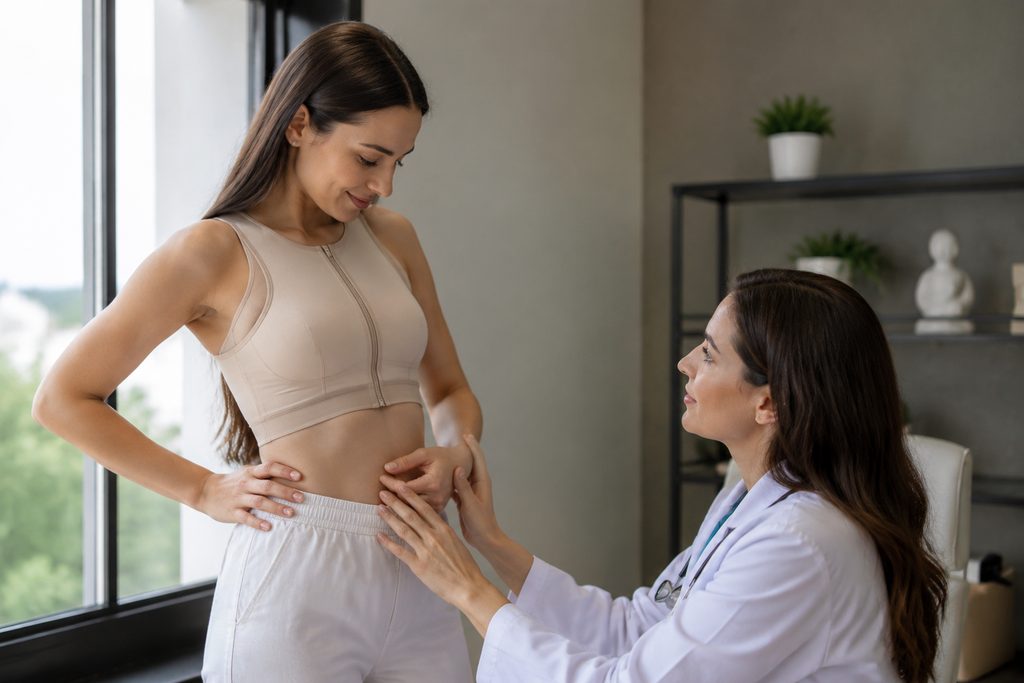
When 34-year-old Sarah from Manchester booked her liposuction procedure in Shanghai, her surgeon handed her a one-page recovery timeline. It looked simple enough. What she didn’t anticipate was the swelling on day four, the emotional dip in week two, or the very specific question of whether she could safely fly home on day nine. Recovery after liposuction is not a single event. It’s a staged process with distinct physical and logistical milestones. For anyone planning liposuction recovery time China, the honest answer is this: most patients return to desk work in 5–10 days, feel substantially normal by week four, and see final contours emerge between three and six months. But the details matter more than the headline.
Liposuction Recovery Time China: The Short Answer
You’ll be walking the same day. Most people resume light desk work within a week. Full exercise takes four to six weeks. And the final result? That shows up around month three to six, once residual swelling fully resolves and the skin tightens over the new contour. That’s the compressed version.
The longer version involves compression garments, lymphatic drainage, and a realistic understanding of what “recovered” actually means. You won’t be bedridden. But you also won’t be sightseeing the Bund on day two. The recovery curve is front-loaded: the first 72 hours are the most uncomfortable, the first two weeks are the most inconvenient, and the months after are mostly about patience.
Who This Is Right For — and Who It Isn’t
Liposuction is body contouring, not weight loss. The best candidates are within 10–15 kg of their target weight with stubborn fat deposits that resist diet and exercise. Good skin elasticity helps too — it allows the skin to contract smoothly over the reduced volume underneath.
Good candidates typically:
– Are at a stable weight for at least six months
– Have localized fat on the abdomen, flanks, thighs, arms, or chin
– Are non-smokers or willing to quit for six weeks around surgery
– Understand that liposuction removes fat cells but doesn’t prevent future weight gain
Who should not do this? Anyone with significant heart or lung disease, uncontrolled diabetes, or a bleeding disorder. Smokers face substantially higher risks of skin necrosis and poor wound healing — most surgeons in China and elsewhere will refuse to operate on active smokers. And if your primary goal is weight loss, liposuction is the wrong tool. A patient with a BMI over 35 is generally better served by medically supervised weight management first, then reassessing contouring later.
The Options, Compared
Liposuction isn’t one procedure. The technology has splintered into several distinct approaches, each with different recovery profiles and price points. Here’s how they stack up for international patients considering China:
| Method | Typical Downtime | Pain Level (1–10) | Indicative Cost Range (China) | Best For |
|---|---|---|---|---|
| Traditional Tumescent Liposuction | 7–14 days | 5–6 | $2,000–$4,500 per area | Larger volume removal, predictable results |
| Power-Assisted (PAL) | 7–10 days | 4–5 | $2,500–$5,000 per area | Fibrous areas like the back or male chest |
| Laser-Assisted (e.g., SmartLipo) | 5–10 days | 3–4 | $3,000–$6,000 per area | Small areas, skin tightening benefit |
| VASER (Ultrasound-Assisted) | 7–12 days | 4–6 | $3,500–$7,000 per area | High-definition contouring, athletic patients |
| Water-Jet Assisted (Body-Jet) | 5–10 days | 3–4 | $2,800–$5,500 per area | Gentler fat removal, faster early recovery |
Prices vary by hospital tier and case complexity. A public hospital’s international department in Shanghai typically charges less than a private JCI-accredited facility, but the private hospital more often bundles aftercare into the package. Which column fits you? If you’re traveling from abroad and want the simplest possible logistics, a private international hospital with an integrated aftercare team is often worth the premium. If your priority is surgeon expertise and cost, a top-tier public hospital’s international wing — like those listed in our ranked hospital database — is a strong alternative.
What Recovery Actually Feels Like: A Week-by-Week Breakdown
This is the section most articles skip. Here’s what your body does after liposuction, and what you’ll notice at each stage.
Days 0–3: The Leaky Phase. The tumescent fluid injected during surgery drains from the incision sites over the first 24–72 hours. Expect pink-tinged fluid on your bedding. This is normal, not blood loss. Pain peaks around day two or three as the local anesthetic fully wears off. Most patients describe it as deep soreness, like an intense workout, not sharp pain. You’ll wear a compression garment 24/7 from the moment you leave the operating room.
Days 4–7: The Swelling Peak. Swelling actually increases during this window as your body ramps up the inflammatory response. Your clothes may fit tighter than before surgery. This is the most psychologically difficult phase — you look worse, not better. It passes. Light walking is encouraged; anything that raises your heart rate is not.
Weeks 2–3: The Turning Point. Bruising fades from purple to yellow-green. Energy returns unevenly — you’ll have good days and exhausted days. Most patients can return to non-physical work during this window. Compression garments remain mandatory for 23 hours a day.
Weeks 4–6: The Normalization. Swelling drops substantially. You can resume moderate exercise — jogging, cycling, resistance training — usually around week four to six, with surgeon clearance. The garment may be reduced to 12 hours a day.
Months 3–6: The Reveal. Residual swelling, especially in the lower abdomen and ankles, takes months to fully clear. Skin contraction continues. The final contour is typically visible by month six.
What It Costs — and What’s Actually Included
Here’s where international patients get surprised. The surgical fee in China is often quoted as a standalone number, but liposuction cost Shanghai recovery included varies enormously depending on what the package covers. A bare surgical quote of $3,000 might not include compression garments, post-operative lymphatic drainage massage, antibiotics, or follow-up consultations. A comprehensive package at a private hospital might run $6,000–$9,000 but include a dedicated recovery nurse, daily wound checks, and all medications.
Typical cost components:
– Surgeon and anesthesiologist fees
– Operating room and hospital stay (often 1 night for larger-volume cases)
– Compression garments (one or two sets, $50–$150 each)
– Post-operative medications and dressings
– Lymphatic drainage massage sessions ($30–$80 per session, often 5–10 sessions recommended)
– Follow-up consultations
Liposuction aftercare packages abroad are increasingly common at Chinese private international hospitals. These bundle the surgery with a recovery hotel stay, daily nursing visits, and massage therapy. They cost more upfront but remove the coordination burden — which matters if you’re recovering alone in a foreign country. Ask for an itemized breakdown before you commit.
Is Liposuction in China Safe? The Data Question
The honest answer: safety depends less on the country and more on the facility and surgeon. China’s top-tier hospitals perform liposuction at high volume, and the best ones are JCI-accredited with protocols comparable to Western standards. The risk profile — infection, seroma, contour irregularities, deep vein thrombosis — is similar to any developed healthcare system when performed by a qualified plastic surgeon in a properly equipped facility.
What you should verify before booking:
– Surgeon credentials: board certification in plastic surgery, not general surgery or dermatology
– Facility accreditation: JCI or equivalent
– Anesthesia: a dedicated anesthesiologist, not a nurse-administered sedation
– Volume limits: no more than 5 liters of aspirate in an outpatient setting is a common safety threshold
The complication rate for liposuction in accredited Chinese facilities is broadly comparable to international benchmarks — serious adverse events occur in well under 1% of cases. But the range between the best and worst facilities in China is wide. That’s why hospital selection matters more than country selection. Our department-level hospital rankings can help you filter by specialty reputation rather than marketing claims.
Practical Considerations: Flying Home, Garments, and Follow-Up
Flying after liposuction carries a real risk: deep vein thrombosis. Long-haul flights within the first week are not recommended by most surgeons. If you’re traveling to China for surgery, plan to stay at least 10–14 days before flying home. That allows the highest-risk window to pass and lets your surgeon clear you for travel.
Compression garments are non-negotiable. You’ll need them for four to six weeks minimum, often longer. Bring at least two so one can be washed. They’re tight, hot, and inconvenient — and they’re the single biggest factor in how smoothly your skin contracts.
Payment at Chinese public hospitals is typically required upfront, with insurance reimbursement handled afterward. Private international hospitals more often offer direct billing if you have international coverage. Check your policy’s stance on elective cosmetic surgery abroad before you commit — most policies exclude it entirely.
Language is the other practical hurdle. Public hospital staff may speak limited English. A bilingual medical companion — available from around $300 per day — handles registration, pharmacy runs, and translation during follow-up visits. It’s not mandatory, but it removes a meaningful source of stress during a vulnerable week.
Frequently Asked Questions
For desk-based work, most patients return in 5–10 days. Physical jobs require four to six weeks. The limiting factors are swelling, garment discomfort, and energy levels rather than pain. If you work remotely, you might manage light tasks by day five. If your job involves lifting or standing for hours, budget a full month.
No reputable surgeon will clear you for a long-haul flight within seven days of liposuction. The DVT risk is simply too high. Plan for a minimum 10–14 day stay in China. Some patients extend to three weeks to complete initial lymphatic drainage sessions and a final in-person check before flying.
This is the uncomfortable reality of medical tourism. Your Chinese surgeon can provide remote follow-up and documentation, but they cannot physically examine you. You’ll need a local plastic surgeon willing to take over post-operative care — and some are reluctant with another surgeon’s work. Before booking, identify a local provider who will see you for complications. It’s a conversation worth having before you travel, not after.
The first 48–72 hours are the hardest. You’ll be mobile but slow, medicated, and managing drains or leaking incisions. Having someone to fetch food, help with the garment, and keep you company is genuinely valuable. If you’re traveling alone, consider a recovery package that includes nursing support, or budget for a companion service.
Your Next Step
Recovery after liposuction is predictable but not trivial. The patients who do best are the ones who plan for the unglamorous middle weeks — the swelling, the garment, the patience — not just the before-and-after photos. At China Medical Services, we’re not a hospital and we don’t provide medical advice. We help international patients navigate the practical side of treatment in China: identifying top-ranked hospitals, coordinating appointments, arranging bilingual support, and clarifying what packages actually include. If you’re weighing liposuction in China and want a clearer picture of facilities, costs, and logistics, start with a conversation. Request a free consultation and we’ll help you map out what the full journey — surgery and recovery — would actually look like.
The core message is simple: liposuction recovery is a marathon, not a sprint. The first week is uncomfortable, the first month is inconvenient, and the final result is worth the wait. Plan for the middle part, and the rest falls into place.
For more medical information and treatment options in China, visit chinamedservices.com (China Medical Services).
