Liver Cancer Specialist in Shanghai: Costs, Hospitals, and How to Book
Liver Cancer Specialist in Shanghai: The Short Answer
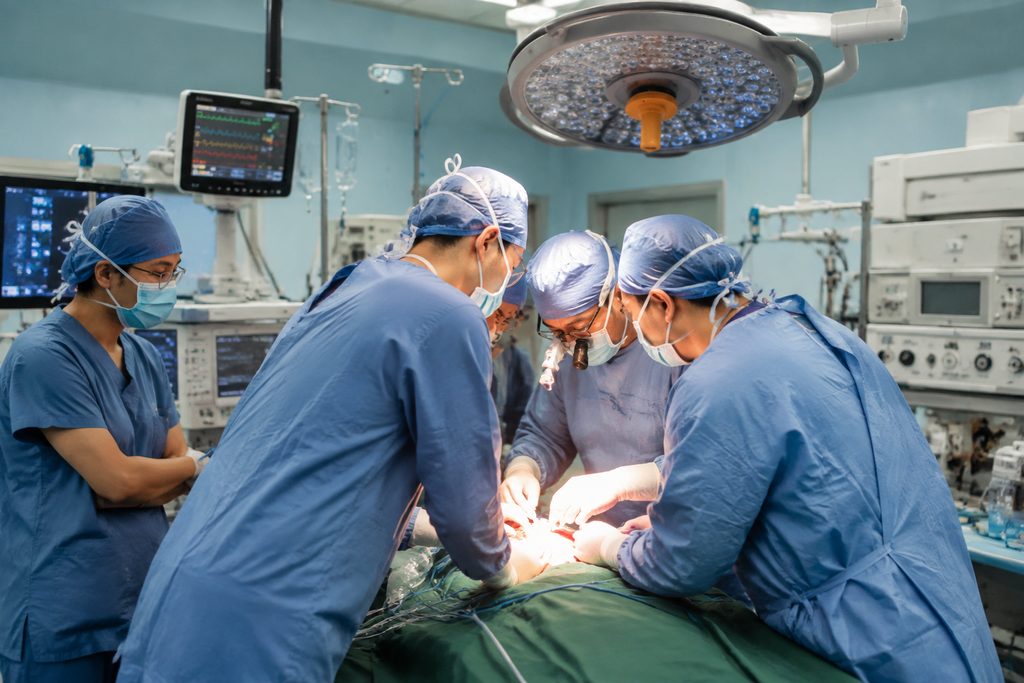
For international patients seeking a liver cancer specialist in Shanghai, the Eastern Hepatobiliary Surgery Hospital (Oriental Hepatobiliary) is one of the most focused centers in the world. But the real question most people ask is simpler: what is the liver cancer treatment cost Shanghai hospitals charge, and can a foreigner actually get treated there? The short answer is that a liver resection in a top Shanghai public hospital typically costs between $15,000 and $35,000 USD, while more complex interventions like TACE or ablation run $5,000 to $12,000 per session. By comparison, the same surgery in the United States can exceed $150,000.
That gap explains why patients from the Middle East, Southeast Asia, and Eastern Europe increasingly look to Shanghai. But getting an appointment at Oriental Hepatobiliary is not as simple as walking in. The hospital sees enormous domestic volume. Foreign patients need a structured pathway.
Who This Is Right For — and Who It Isn’t
Shanghai’s top hepatobiliary centers make sense for a specific profile of patient. They are not the right answer for everyone.
Typically a good candidate:
- Diagnosed with hepatocellular carcinoma (HCC) at an early or intermediate stage (BCLC stage 0, A, or B) where resection, ablation, or TACE is indicated
- Has existing imaging (CT, MRI, PET) and pathology reports that can be reviewed remotely before travel
- Is medically stable enough to fly internationally and wait 1–3 weeks for a surgical slot
- Has a realistic budget of $15,000–$40,000 for surgery plus travel, accommodation, and coordination
- Wants access to high-volume surgical teams — Oriental Hepatobiliary performs several thousand liver resections annually
Who should think twice:
- Patients with decompensated cirrhosis (Child-Pugh C) or severe portal hypertension — surgery may be too risky regardless of where it is done
- Those with metastatic disease requiring systemic therapy only; Shanghai offers excellent oncology care, but a local medical oncologist may be the better first step
- Anyone expecting to fly in, get surgery the same week, and fly home. That is not how Chinese public hospitals work.
- Patients who cannot produce translated medical records or who need continuous family presence but cannot arrange it
Being honest about the second list matters more than the first. A bad fit wastes time and money.
The Options, Compared
If you are asking is Shanghai good for liver cancer treatment, the answer depends on what you compare it to. Here is a direct look at the main routes international patients consider.
| Option | Typical Liver Resection Cost | Wait Time for Surgery | English Support | Best For |
|---|---|---|---|---|
| Oriental Hepatobiliary (public, VIP/International Dept) | $18,000–$35,000 | 1–3 weeks after in-person consult | Limited; interpreter needed | Complex resections, high surgical volume |
| Zhongshan Hospital Fudan University (public, VIP) | $20,000–$38,000 | 2–4 weeks | Some English-speaking coordinators | HCC with underlying liver disease, transplant-adjacent care |
| Private international hospital in Shanghai (e.g., Jiahui, United Family) | $40,000–$70,000 | 1–2 weeks | Full English service | Patients who prioritize comfort and direct insurance billing |
| United States (major academic center) | $120,000–$250,000 | 2–6 weeks | Native English | Those with comprehensive US insurance or employer coverage |
| Singapore or South Korea | $45,000–$90,000 | 2–4 weeks | Good English support | Patients wanting regional care with Western-style administration |
If your priority is the highest-volume liver surgery team at the lowest realistic price, Oriental Hepatobiliary and Zhongshan are the strongest picks. If you need direct insurance billing and zero language friction, a private international hospital in Shanghai still costs less than the US but more than the public route. The public hospital VIP pathway sits in the middle — you pay roughly 1.5 to 2 times the standard domestic rate, and in exchange you get a senior specialist and faster scheduling.
What Makes Oriental Hepatobiliary Different
Oriental Hepatobiliary Surgery Hospital is not a general hospital. It is a specialty institution under the Naval Medical University, and its entire clinical focus is liver, biliary tract, and pancreatic surgery. That concentration produces volume numbers most Western centers cannot match. Annual liver resection cases run into the thousands, and the hospital has pioneered techniques in complex hepatectomy that are now used across China.
For a patient with a large or centrally located tumor, that matters. Surgical teams that perform a procedure 300 times a year simply have better intraoperative judgment than teams that perform it 30 times a year. This is the core argument for considering Shanghai at all.
But there is a tradeoff. Oriental Hepatobiliary’s public wards are crowded, fast-moving, and entirely Chinese-speaking. The international patient experience is not like a Western private hospital. You will not get a private room by default. You will not get a nurse who speaks English. That is where coordination support becomes essential.
Liver Cancer Treatment Cost Shanghai: What the Numbers Include
The headline price for liver cancer surgery in Shanghai covers the procedure itself, the operating room, standard anesthesia, and a typical hospital stay of 7 to 14 days. It does not include several things that add up quickly.
Usually included in the surgical quote:
- Surgeon and surgical team fees
- Operating room and standard surgical consumables
- Anesthesia and post-anesthesia recovery
- Standard ward bed for 7–14 days
- Basic nursing care and routine post-op monitoring
Usually billed separately:
- Pre-operative imaging if your existing scans are older than 1–2 months
- Specialized surgical instruments or stapling devices (can add $2,000–$5,000)
- ICU stay if needed (typically $1,500–$3,000 per day)
- Pathology and molecular testing of the resected tumor
- Interpreter or bilingual companion services
- Post-discharge accommodation and follow-up visits
The realistic all-in cost for a foreign patient at Oriental Hepatobiliary, including a 10-day hospital stay, separate device fees, interpreter support, and two weeks of local accommodation, usually lands between $25,000 and $45,000. That is still roughly one-fifth of the US price. But it is not the $15,000 figure sometimes quoted for domestic Chinese patients.
So how much is liver cancer surgery in Shanghai really? Plan for $25,000–$45,000 all-in. If your case is straightforward and you recover quickly, you may spend less. If complications arise, you may spend more.
How International Patients Actually Book a Specialist
Here is the part most overseas patients get wrong. You cannot simply email Oriental Hepatobiliary and book a surgery date. Chinese public hospitals do not work that way.
The standard pathway for a foreigner trying to book liver cancer specialist Shanghai care looks like this:
First, you need a remote evaluation. Send your existing CT/MRI images, pathology report, and a summary of your medical history to a coordination team that can translate and route them to the right department. A written second opinion from a senior hepatobiliary specialist costs between $300 and $500. A video consultation with a top specialist costs $500 to $800.
Second, if the specialist agrees that Shanghai treatment is appropriate, you travel to China on an S2 visa. This is the short-stay visa category used for medical treatment and private affairs. Your accompanying family members also apply for S2 visas. You will need a hospital invitation letter or supporting documents from the medical institution to strengthen the application.
Third, you attend an in-person outpatient consultation. This is mandatory. No reputable Chinese hospital will schedule surgery without first seeing you face-to-face. At this visit, the surgeon reviews your imaging, orders any additional tests, and confirms the surgical plan.
Fourth, surgery is scheduled. Through the VIP or international department pathway, this typically happens within 1 to 3 weeks of the consultation. Through the standard public pathway, it can take longer and you will have far less language support.
Fifth, you pay a deposit before admission. Public hospitals in China operate on a prepayment basis. You load funds onto a hospital card, and costs are deducted as they accrue. International insurance is usually reimbursed after the fact, not billed directly — unless you choose a private international hospital.
Practical tip: Bring a printed copy of every scan on CD or USB, plus the original radiology reports. Chinese specialists almost always want to review raw DICOM files, not just the written summary from your home country.
Practical Considerations: Records, Visa, Payment, and Follow-Up
The medical part is only half the challenge. The logistics around it are where most plans fall apart.
Medical records. Every document must be translated into Chinese before your first consultation. This includes pathology reports, surgical history, current medication list, and allergy information. A professional medical translator is worth the cost. Google Translate will not cut it for a pathology report.
Visa timing. S2 visa processing typically takes 1 to 4 weeks depending on your home country and the local Chinese embassy or consulate. You should start the visa process only after the remote consultation confirms that Shanghai treatment is viable. Applying too early wastes time; applying too late delays surgery.
Payment methods. Public hospitals accept WeChat Pay, Alipay, UnionPay cards, and sometimes international credit cards at the VIP counter. But large deposits are easiest with a wire transfer arranged in advance or a UnionPay card loaded with sufficient funds. Check with your bank before departure — many Western cards have daily transaction limits that are far below what a surgical deposit requires.
Language. The clinical team at Oriental Hepatobiliary will not speak English in most cases. Even in the international department, English support is limited to coordination staff, not bedside nurses. A bilingual medical companion who can translate during rounds, explain medication instructions, and handle billing questions is not a luxury. It is the difference between understanding your own treatment and guessing.
Follow-up after returning home. Liver cancer requires surveillance. After resection, you will need CT or MRI scans every 3 to 6 months for at least two years. Your Shanghai team will give you a follow-up protocol, but you will need a local hepatologist or oncologist at home to execute it. Make that arrangement before you travel, not after you return.
Frequently Asked Questions
Yes. The hospital accepts international patients through its international department and VIP pathway. However, you cannot book a surgery date remotely. You must first complete a remote consultation, then travel to Shanghai for an in-person outpatient visit, and only then can surgery be scheduled. Expect the whole process from first contact to surgery date to take 3 to 6 weeks.
For surgical volume and cost, Shanghai is highly competitive. Top centers like Oriental Hepatobiliary and Zhongshan perform liver resections at volumes that exceed most Western hospitals. The tradeoff is administrative friction: prepayment instead of insurance billing, language barriers, and a more crowded hospital environment. If you can manage those logistics, the clinical quality at the top tier is excellent.
This is the hardest question to answer honestly. Your Shanghai surgeon will provide a discharge summary and follow-up plan, but they cannot manage post-operative complications from across the ocean. You need a local hepatologist or surgical team at home who is willing to take over your care. Some patients arrange a video follow-up with their Shanghai team if imaging shows something concerning. But emergency complications must be handled locally. Do not travel to China for surgery unless you have a home-country physician who agrees to manage your post-operative care.
Most Western insurance plans do not directly reimburse treatment at Chinese public hospitals unless you have a specific international or expatriate policy. Some private international hospitals in Shanghai have direct billing agreements with major insurers. At public hospitals, you pay upfront and submit claims for reimbursement. Check with your insurer before committing to any plan.
Start with a written second opinion. Send your existing CT or MRI images and pathology report to a Shanghai hepatobiliary team for review. A senior specialist will assess whether your tumor is resectable, whether your liver function can tolerate surgery, and what alternative treatments (ablation, TACE, targeted therapy) might be more appropriate. This costs $300–$500 and can save you a wasted international trip.
Your Next Step
Shanghai offers some of the highest-volume liver cancer surgery in the world at a fraction of Western prices. But the pathway for international patients is not a website booking form. It is a staged process: remote evaluation first, then travel, then in-person consultation, then surgery.
We help patients navigate that process. China Medical Services maintains a database of 340+ top-ranked hospitals across 37 cities, including Shanghai’s leading hepatobiliary centers. We are not a hospital and we do not provide medical advice or diagnoses. What we do is handle the coordination: translating records, arranging remote consultations with the right specialists, coordinating S2 visa documentation, and providing bilingual companions on the ground. If you are weighing liver cancer treatment cost Shanghai options and want a realistic assessment of your case, request a free consultation and we will walk you through what is possible.
For more medical information and treatment options in China, visit chinamedservices.com (China Medical Services).
