Liver Cancer Surgery Cost China: 2026 Price Guide for Foreign Patients
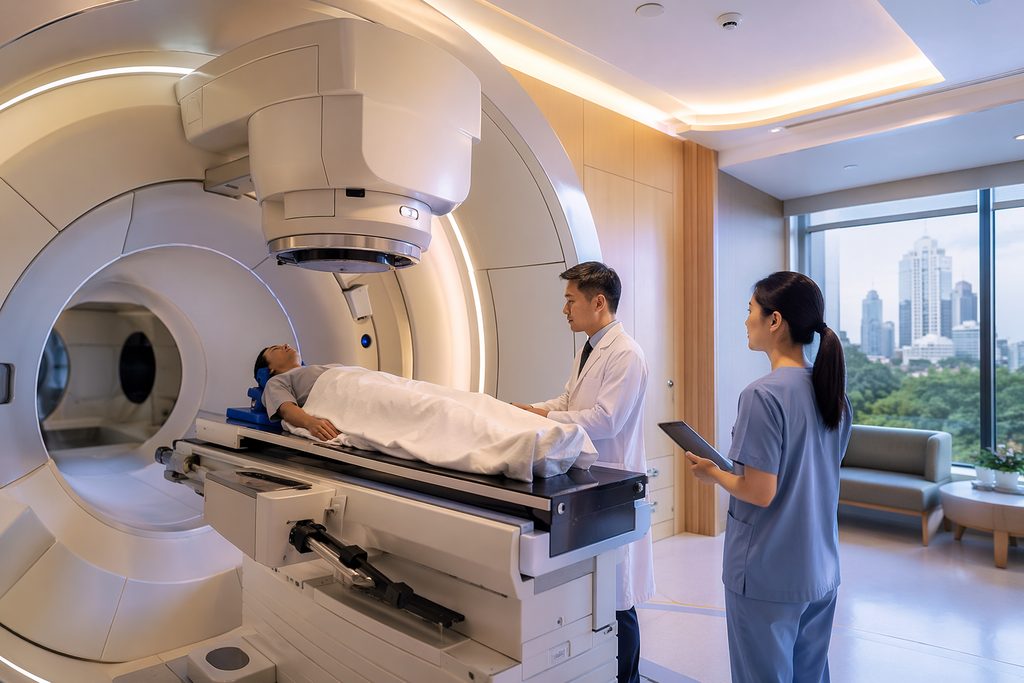
While an uninsured patient in the United States can face bills exceeding $200,000 for a complex liver resection, the same procedure at a Fudan-ranked hospital in Shanghai typically runs between $15,000 and $40,000. That gap explains why patients from over 100 countries now evaluate the liver cancer surgery cost China offers as a serious alternative to treatment at home. But price is only one variable. Hospital selection, surgeon volume, and logistical planning determine whether the savings translate into a good outcome.
Key Takeaways
- Liver cancer surgery at top Chinese public hospitals costs $12,000–$45,000, roughly 1/5 to 1/8 of US private-pay prices.
- China’s top hepatobiliary centers perform 1,000+ liver resections annually — volumes that correlate with lower complication rates.
- The biggest barrier for foreign patients is not surgical quality but navigating a Chinese-language hospital system without local support.
- You cannot book surgery remotely through standard public outpatient channels. A face-to-face consultation is mandatory, and international/VIP channels are the realistic path for overseas patients.
The Problem: Liver Cancer Surgery Costs Are Crushing Western Patients
Liver cancer is the sixth most common cancer worldwide and the third leading cause of cancer death. The global burden is rising — the World Health Organization projects over 1 million new cases annually by 2030. For patients who need surgery, the financial reality in Western healthcare systems is brutal. In the United States, a hepatectomy for liver cancer carries an average list price of $150,000 to $250,000 depending on the extent of resection and hospital location. Even insured patients can face $20,000 to $50,000 in out-of-pocket costs after deductibles, co-insurance, and out-of-network charges.
In the UK and Canada, the problem is different but equally painful: public systems cover the procedure, but wait times for cancer surgery have deteriorated. A 2024 report from the UK’s Royal College of Surgeons found that nearly 40% of cancer patients waited longer than the 62-day target from urgent referral to first treatment. In Canada, provincial data shows median waits for liver cancer surgery stretching past 8 weeks in some regions. For a malignancy where tumor doubling time can be measured in months, that delay carries real risk.
So patients start searching. They look for alternatives. And increasingly, the search leads to China.
Why China Delivers Results for Liver Cancer Surgery
China treats more liver cancer patients than any other country on earth. That is not a marketing claim — it is epidemiology. Hepatocellular carcinoma (HCC) is endemic in East Asia due to historical hepatitis B prevalence. China accounts for nearly half of global liver cancer cases and deaths. The clinical consequence: Chinese hepatobiliary surgeons accumulate operative experience that Western surgeons rarely match.
Clinical Volume Drives Better Outcomes
The relationship between surgical volume and patient outcomes is one of the most robust findings in modern surgery research. A landmark 2016 study in The Lancet Oncology analyzing over 60,000 liver resections found that hospitals performing more than 25 liver resections annually had significantly lower 30-day mortality than low-volume centers. Now consider the scale at Chinese centers. Zhongshan Hospital in Shanghai — consistently ranked among China’s top two hepatobiliary surgery programs — performs over 2,000 liver resections per year. West China Hospital in Chengdu reports similar volumes. By comparison, a “high-volume” liver surgery center in the United States might perform 100 to 200 cases annually.
Volume matters because liver surgery is technically unforgiving. The liver has a dual blood supply, complex segmental anatomy, and a remarkable but fragile regenerative capacity. Intraoperative bleeding control, margin decisions, and preservation of functional liver remnant all improve with repetition. Chinese surgeons at top centers simply do more of these operations, more frequently, under more varied anatomical conditions.
Technology and Efficiency at Scale
Chinese hospitals have invested heavily in surgical infrastructure over the past decade. Most Fudan-ranked hepatobiliary centers now routinely use intraoperative ultrasound, ICG fluorescence imaging for real-time tumor localization, and 3D reconstruction software for preoperative planning. Laparoscopic and robotic liver resections — once considered experimental — are now standard offerings at major centers. The da Vinci robotic system is deployed across multiple Chinese hospitals for selected liver cases, offering reduced blood loss and faster recovery for suitable tumors.
Operational efficiency is another structural advantage. Chinese public hospitals run on high-throughput models. Preoperative workups that take 2–3 weeks in Western systems can often be completed in 5–7 days at a Chinese tertiary hospital. This is not because corners are cut — it is because imaging departments run extended hours, laboratory turnaround times are compressed, and surgical teams operate in parallel. For a foreign patient paying out of pocket, this efficiency directly reduces hotel costs and time away from home.
Cost Advantage Without Quality Compromise
Lower cost does not mean lower quality. It means different cost structure. Chinese surgeons earn a fraction of US surgeon salaries. Hospital construction costs, administrative overhead, and malpractice insurance premiums are all dramatically lower. A liver resection that requires $20,000 in operating room fees alone in the US can be performed for $3,000–$5,000 in OR fees at a top Chinese hospital. The clinical outcome data tells the same story. A 2021 study published in Hepatobiliary Surgery and Nutrition comparing liver resection outcomes at high-volume Chinese and Western centers found no significant difference in 90-day mortality or major complication rates after adjusting for case mix.
That said, patients should understand what they are buying. The $12,000 price point is real — it exists at excellent public hospitals using standard wards. The $45,000 price point reflects international department care, English-speaking coordination, private rooms, and senior surgeon preference. Both are legitimate. Neither is a scam. The difference is the level of service infrastructure around the surgery itself.
What Actually Determines Your Liver Cancer Surgery Cost in China
The single most important variable is the type of hospital channel you access. Public hospitals in China operate multiple tiers of service. The standard public ward is the cheapest — and for a foreign patient without Chinese language skills, nearly impossible to navigate independently. The international medical department (国际医疗部) at the same hospital charges 1.5 to 2 times the standard rate, but provides English-speaking staff, expedited scheduling, and private rooms. Private international hospitals like United Family Healthcare or Jiahui International Hospital offer Western-style care with direct insurance billing, but their surgical fees run 2 to 3 times higher than public hospital international departments.
The second variable is surgical complexity. A simple wedge resection of a small peripheral tumor costs less than a right hepatectomy requiring vascular reconstruction. Tumor size, location relative to major vessels, underlying liver function (cirrhosis status), and whether laparoscopic or open approach is used all shift the final bill. A patient with well-compensated cirrhosis undergoing a laparoscopic left lateral sectionectomy might pay $12,000–$18,000. A patient requiring open right hepatectomy with bile duct reconstruction could see $30,000–$45,000.
| Cost Component | Public Hospital (Standard) | Public Hospital (International Dept.) | Private International Hospital |
|---|---|---|---|
| Liver resection surgery fee | $8,000–$15,000 | $12,000–$25,000 | $20,000–$40,000 |
| Hospital stay (7–14 days) | $1,500–$3,000 | $3,000–$6,000 | $5,000–$10,000 |
| Preoperative imaging & labs | $800–$1,500 | $1,200–$2,500 | $2,000–$4,000 |
| Anesthesia & OR fees | $1,500–$3,000 | $2,500–$5,000 | $4,000–$7,000 |
| Estimated total range | $12,000–$22,500 | $19,000–$38,500 | $31,000–$61,000 |
These figures are estimates based on published hospital price lists and patient-reported costs from 2024–2026. They vary by hospital and case complexity. Always request a written quote before committing.
How to Book Liver Cancer Treatment Package China: The Realistic Path
Here is the hard truth that most websites will not tell you: you cannot book liver cancer surgery in China from your living room through a standard public hospital channel. Chinese public hospitals require a face-to-face outpatient consultation before any surgery can be scheduled. The surgeon must see you, review your imaging personally, and document the clinical indication. This is non-negotiable hospital policy at every Fudan-ranked institution.
So what does the realistic path look like? For most foreign patients, it follows a staged sequence. Stage one is remote review: you send your existing CT/MRI scans, pathology reports, liver function tests, and medical history to a Chinese hepatobiliary team for a written second opinion or video consultation. This costs $300–$800 depending on the specialist tier and gives you a candid assessment of resectability, recommended approach, and estimated costs. Stage two is travel and in-person evaluation: you fly to China, complete additional imaging if needed, and meet the surgical team face-to-face. Stage three is surgery and recovery: typically a 2–3 week stay including preoperative preparation, the operation itself, and initial postoperative monitoring.
Some patients search for a “book liver cancer treatment package China” option that bundles everything. These packages exist through hospital international departments and third-party coordinators. They typically include airport pickup, hotel or hospital accommodation, all medical fees, interpreter services, and postoperative follow-up coordination. Package pricing for liver cancer surgery generally runs $25,000–$50,000 all-inclusive depending on hospital tier and surgical complexity. The advantage is predictability. The disadvantage is that you pay a premium for the convenience.
Is Liver Cancer Surgery Safe in China? What the Data Shows
Safety is the question every patient asks, and it deserves a direct answer. The short version: at top-ranked Chinese hepatobiliary centers, liver resection safety outcomes are comparable to major Western cancer centers. The long version requires nuance about which hospitals you are considering.
China has over 35,000 hospitals. The top 5% — roughly 340 institutions ranked by the Fudan University hospital ranking system or accredited by JCI — deliver care that meets international standards. These are the hospitals where foreign patients should seek treatment. Our database of Fudan-ranked hospitals lists the institutions with documented hepatobiliary surgery programs, including those with dedicated liver cancer centers. At these hospitals, reported 30-day mortality for elective liver resection ranges from 0.5% to 2%, depending on patient selection and extent of resection. Major complication rates (bile leak, post-hepatectomy liver failure, hemorrhage) run 10%–20%, consistent with international benchmarks.
But here is the caveat: the same safety profile does not apply uniformly across all Chinese hospitals. A county-level hospital performing 10 liver resections per year is not the same as Zhongshan Hospital performing 2,000. Hospital selection is the single most important safety decision you will make. This is where a specialty-specific hospital directory becomes essential. The Fudan specialty reputation rankings for hepatobiliary surgery and oncology identify the institutions with demonstrated expertise — not just general hospital prestige.
One more safety consideration: infection control and postoperative monitoring. Chinese top-tier hospitals have strengthened surgical site infection protocols significantly since 2020. Most international departments now follow WHO surgical safety checklist procedures. Postoperative ICU monitoring is standard for major liver resections, with dedicated hepatobiliary ICU beds at the leading centers.
Practical Considerations: Documentation, Visas, and Payment for Liver Cancer Surgery
Planning a surgical trip to China requires more than booking a flight. The paperwork matters. Start with medical records: you will need complete imaging files (DICOM format preferred), pathology slides or reports, liver function panels from the past 3 months, viral hepatitis serology, and any prior treatment records including ablation, TACE, or systemic therapy. Chinese surgeons will want to see the actual images, not just the written reports.
Visa is the next hurdle. Foreign patients traveling to China for medical treatment apply for an S2 visa, which covers short-term private affairs including medical treatment. The S2 visa typically allows stays of up to 180 days. If your treatment and recovery will exceed 180 days, the S1 visa is the long-term alternative. Your accompanying family members also apply for S2 visas. The Chinese embassy or consulate will require a formal invitation letter from the treating hospital, your medical records, and proof of sufficient funds. Processing time varies by country — allow 2 to 4 weeks. Do not book non-refundable flights before your visa is approved.
Payment mechanics are straightforward but worth understanding. Chinese public hospitals require prepayment for surgical admissions. Expect to deposit 50%–100% of the estimated surgical fee before admission. International departments accept wire transfers and major credit cards. Private international hospitals typically bill insurance directly if you have coverage with a participating insurer. Most Western insurance plans do not cover elective surgery in China unless you have a specific international health policy — check your plan documents carefully before committing. Some patients use medical tourism insurance products, though these remain niche.
Language is the practical barrier most patients underestimate. Even at top hospitals, the standard wards operate entirely in Chinese. Registration forms, consent documents, dietary instructions, nursing communication — all Chinese. The international departments mitigate this, but they do not eliminate it entirely. A bilingual medical companion who handles registration, payment, translation, and navigation removes a significant source of stress. This is a service worth budgeting for, whether through a hospital-affiliated program or an independent coordinator.
Practical tip: Request a written, itemized cost estimate from the hospital’s international department before you travel. Reputable hospitals will provide this. If a hospital refuses to provide any written estimate, consider that a red flag.
Frequently Asked Questions
At Shanghai’s top hepatobiliary centers — Zhongshan Hospital, Huashan Hospital, and Renji Hospital — liver cancer surgery through the international department typically costs $18,000 to $40,000 depending on surgical complexity. Standard ward pricing at the same hospitals runs $12,000 to $25,000. Private international hospitals in Shanghai like Jiahui charge $30,000 to $55,000. These ranges assume an uncomplicated resection without major vascular reconstruction.
Zhongshan Hospital in Shanghai is widely regarded as China’s premier liver cancer surgery center, with the highest annual resection volume and a dedicated liver cancer institute. West China Hospital in Chengdu and Peking Union Medical College Hospital in Beijing are also top-tier options with strong hepatobiliary programs. The “best for the price” calculation depends on your specific tumor characteristics and whether you need English-language support. A written second opinion from two different hospitals is often the most cost-effective way to compare surgical plans and pricing.
Top Chinese hospitals have well-established protocols for surgical complications. Major hepatobiliary centers maintain dedicated liver surgery ICUs with 24/7 intensivist coverage. Bile leaks, bleeding, and liver failure are managed with the same interventional radiology and endoscopic techniques used in Western centers. The key difference is communication: in a standard ward, complication management happens entirely in Chinese. In an international department, you will have English-speaking coordination throughout. Ask any hospital you are considering about their specific complication rates and ICU capabilities before committing.
Most domestic health insurance plans — including US Medicare, UK NHS, and Canadian provincial plans — will not cover elective surgery in China. Some international private health insurance policies (Bupa, Cigna Global, Allianz) do cover treatment at Chinese private international hospitals that are part of their network. Public hospital international departments generally require self-payment with reimbursement sought from your insurer afterward. Always obtain pre-authorization in writing from your insurer before traveling.
Plan for a minimum of 3 to 4 weeks. The typical timeline: 3–5 days for preoperative evaluation and imaging, 1 day for surgery, 7–14 days for hospital recovery, and 7–10 days for outpatient monitoring before you are cleared to fly. Complex resections or patients with significant cirrhosis may need 5–6 weeks. Your surgeon will provide a specific timeline after reviewing your case, but do not book a return flight until you have that clearance.
Your Next Step
Liver cancer surgery in China offers a legitimate path to high-volume, high-quality surgical care at a fraction of Western private-pay prices. The trade-off is
For more medical information and treatment options in China, visit chinamedservices.com (China Medical Services).
