Medical Escort in China: How It Works, What It Costs, and When You Need One
Medical Escort in China: How It Works, What It Costs, and When You Need One
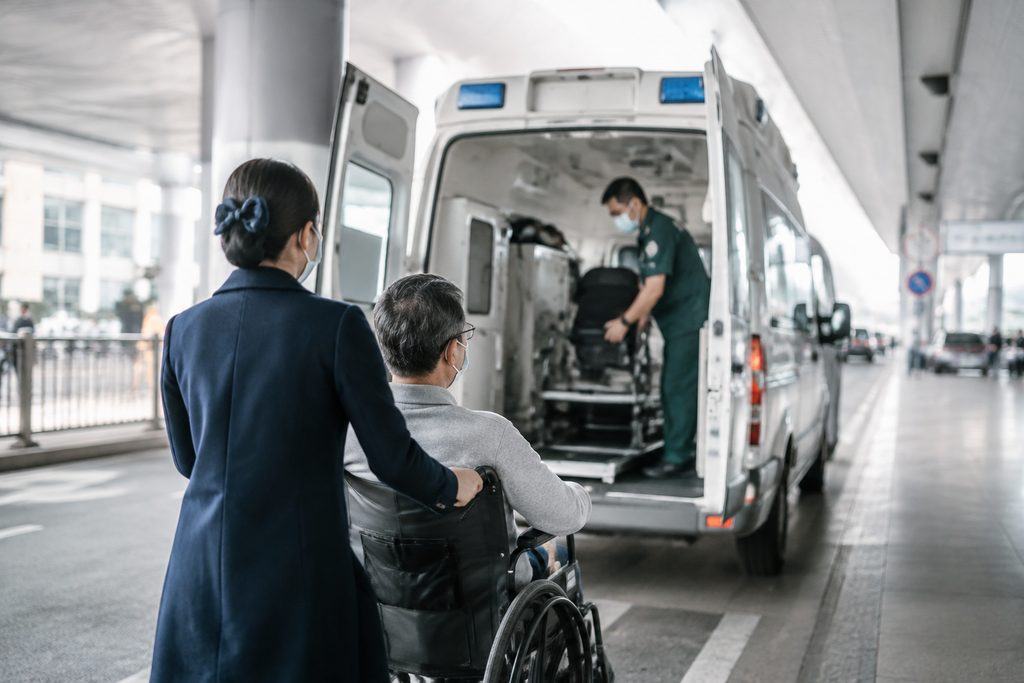
What happens if you fly to Beijing for surgery and nobody speaks your language? That question sits behind almost every inquiry we receive. A medical escort in China is a trained, bilingual companion who handles the hospital floor for you — registration, queueing, payment windows, pharmacy runs, translation between you and your doctors — so your only job is recovery. The medical escort service China cost typically starts around $300 per day, but the full picture is more layered than a single number.
Here is the honest version. An escort does not replace a doctor, cannot promise you a specific surgeon, and will not shorten a queue that every local patient also stands in. What a good escort does is remove the operational chaos that makes solo medical travel genuinely risky.
Medical Escort Service China Cost: The Short Answer
Our bilingual medical companion service starts from $300 per day, covering either a four-hour half day or an eight-hour full day. That rate includes hospital registration, queue management, payment assistance, wayfinding, interpretation, and accompaniment. Final pricing depends on your city, the number of days, and whether your case requires overnight or surgical-day coverage.
Compare that to the alternative. A single missed appointment, a mistranslated consent form, or a botched pharmacy pickup can cost far more than a week of escort time. Top Chinese hospitals see tens of thousands of outpatients daily. Without Mandarin, even finding the correct building becomes an ordeal.
Who This Is Right For — and Who It Isn’t
Escort support suits some travelers far better than others. Being clear about the mismatch saves everyone time and money.
Typically a good fit:
- Patients traveling alone for surgery, chemotherapy, or a complex diagnostic workup
- Older adults managing mobility issues alongside a language barrier
- Families where one member is the patient and the others cannot take leave from work
- Anyone using a public tertiary hospital rather than a private international facility
- Patients who want a second set of ears during consent discussions and discharge instructions
Probably not worth it:
- You are being treated at a private international hospital with English-speaking staff and a dedicated patient coordinator
- You speak conversational Mandarin and are comfortable navigating large institutions
- Your trip is a straightforward health checkup at a facility that already assigns a bilingual liaison
- Your condition makes commercial air travel medically inadvisable — that is a question for your treating physician, not for us
Nobody should feel pressured into buying companionship they do not need. Plenty of patients manage independently. The question is whether you want to spend your energy on logistics or on healing.
The Options, Compared
Medical travel to China comes in several shapes. The table below lays out what each actually involves, so you can see where an escort fits and where it does not.
| Approach | Typical Daily Support Cost | Language Coverage | Best For |
|---|---|---|---|
| Solo travel, no support | $0 | Whatever you bring | Fluent Mandarin speakers, repeat visitors |
| Bilingual medical companion | From $300/day | Full interpretation, hospital navigation | Public tertiary hospitals, surgical patients |
| Private international hospital coordinator | Bundled into hospital fees | English-speaking staff on site | Patients prioritizing comfort and direct insurance billing |
| VIP end-to-end coordination | $5,000–8,000 total | Full trip management | High-net-worth and Gulf-region patients |
| Family member as informal escort | Flights and lodging only | Depends on their Mandarin | Companions who know the hospital system |
Which column suits you? If you are heading to a top public hospital — and most patients chasing world-class cardiac or oncology care are — the companion column is the practical middle ground. If your priority is a Western-style experience with direct insurance billing, browse our private international hospital directory before deciding you need an escort at all.
How Does Medical Escort Work in China, Day by Day?
This is the part most articles skip. Here is what the work actually looks like.
Before you fly. We review your existing reports, help translate key documents, and coordinate an appointment through the hospital’s official international department or VIP channel. Note the constraint: at most public hospitals, ordinary outpatient registration cannot be reserved from overseas. You take a number on the day. Surgery is scheduled only after an in-person consultation. Nobody can honestly promise otherwise.
Arrival day. Your companion meets you at the hospital, helps create your medical card, and walks you through registration. If you have booked an airport transfer, that runs $200 round-trip.
Consultation day. Your escort interprets between you and the specialist, takes notes on the treatment plan, and confirms what tests are required before any procedure.
Testing and admission. Pre-operative workups can sprawl across multiple buildings and floors. This is where solo travelers most often lose a full day.
Surgical day and after. Your companion assists with admission paperwork, payment windows, pharmacy collection, and discharge instructions. Follow-up appointments get scheduled before you leave the ward.
Is It Safe to Travel to China for Surgery Alone?
China’s top hospitals are genuinely excellent. The infrastructure around them is not built for foreigners. That gap is the real risk — not the medicine.
Consider what a solo patient faces. Consent forms in Mandarin. Payment counters that accept local methods first. Pharmacy instructions you cannot read. Discharge guidance delivered at speed in a crowded corridor. Add post-anesthetic grogginess and the equation gets worse.
Is it safe? For a fluent Mandarin speaker with prior experience of Chinese hospitals, generally yes. For a first-time visitor recovering from a major procedure, the honest answer is that you are taking on avoidable risk. A companion reduces it. It does not eliminate it.
What It Costs: The Full Picture
Escort fees are one line item among several. Here is the broader cost map, with the caveat that everything varies by hospital and case complexity.
- Bilingual medical companion: from $300/day
- Airport transfer: $200 round-trip
- Hospital appointment coordination: from $300 — refunded in full if we cannot secure the appointment shown in your order
- Written second opinion from a top-hospital specialist: $300–500 (for reference only, not a prescription)
- Video consultation, standard international department: $100–300
- Top-specialist video consultation: $500–800
- Multidisciplinary team consultation: $1,500–2,000
- VIP end-to-end coordination: $5,000–8,000
One mechanism worth knowing: any consultation fee is credited in full toward on-the-ground coordination if you travel to China within 90 days. It applies once, to the coordination fee only, and never to hospital treatment charges.
For context on the medical side, comparable procedures in China often run a fraction of U.S. prices. Coronary bypass at a top public hospital, for example, commonly falls in the $12,000–20,000 range against $120,000+ in the United States. Your treating hospital quotes the clinical fees directly — we do not mark them up.
Practical Considerations: Visas, Records, and Payment
Visa category matters, and people get this wrong constantly. Medical travelers apply for the S2 visa, annotated for medical treatment purposes. Stays beyond 180 days use S1. Accompanying family members also apply under S2. The M visa is strictly for commercial and trade activity and has nothing to do with medical care — if a service tells you otherwise, walk away. Always confirm current requirements with your nearest Chinese embassy or consulate, since documentation rules shift.
Records. Bring recent imaging on disc, pathology slides where relevant, and translated summaries. Chinese specialists move fast and want source material, not a paragraph of prose.
Payment. Public hospitals generally require prepayment, with insurance reimbursed afterward. Private international hospitals frequently bill insurers directly. International credit cards work at most large facilities, but daily limits can bite on surgical sums — arrange a wire or raise your limit in advance.
After you return home. Ask for discharge summaries and imaging in English before you leave the ward. Chasing documents from another continent is slow and expensive.
Choosing where to go matters as much as who walks you through it. Our Fudan-ranked hospital directory groups China’s top 100 hospitals by city, and the specialty rankings show which facilities lead in cardiac surgery, oncology, orthopedics, and reproductive medicine. If you already know your target city, pages like Beijing and Shanghai break down what each offers international patients.
Frequently Asked Questions
No — and treat any provider who guarantees this with suspicion. We coordinate through official international departments and VIP channels and pursue the earliest available slot. If we cannot secure the appointment shown in your order, the coordination fee is refunded in full. What we never do is promise a named specialist or a fixed surgical date.
Often not. Facilities with English-speaking staff and JCI accreditation typically assign their own coordinators. An escort adds most value at large public tertiary hospitals, where daily patient volumes run into the tens of thousands and English signage is scarce.
Delays happen — operating theatre schedules shift, pre-operative tests reveal something needing further review. Escort days are booked flexibly and can usually be adjusted with notice. Hospital admission decisions always rest with the hospital, not with us.
Two to four weeks before travel is comfortable for most cases. Urgent situations can sometimes be accommodated faster, but visa processing for S2 applications sets a hard floor on how quickly anyone can realistically arrive.
Standard companion coverage is daytime hours. Overnight attendance is a separate arrangement and depends on the ward’s rules, which vary by hospital. Ask before you book if this matters to you.
Your Next Step
The core message is simple: China’s top hospitals offer genuine world-class medicine at a fraction of Western prices, and the barrier is rarely clinical — it is logistical. A bilingual companion closes that gap for roughly the price of a hotel night.
We are China Medical Services, a coordination and language-support team. We are not a hospital, we do not diagnose, and we do not sell access. What we do is help you understand your options, connect you with the right facility through official channels, and stand beside you on the ward. Start with a free consultation at our patient services page — no obligation, and no pressure to commit to anything until you have real answers.
This article is for general information only and does not constitute medical advice. Treatment decisions should always be made with a qualified physician who has reviewed your individual case.
For more medical information and treatment options in China, visit chinamedservices.com (China Medical Services).
