Medical Tourism from Middle East to China: Your Halal & Cultural Support Hub
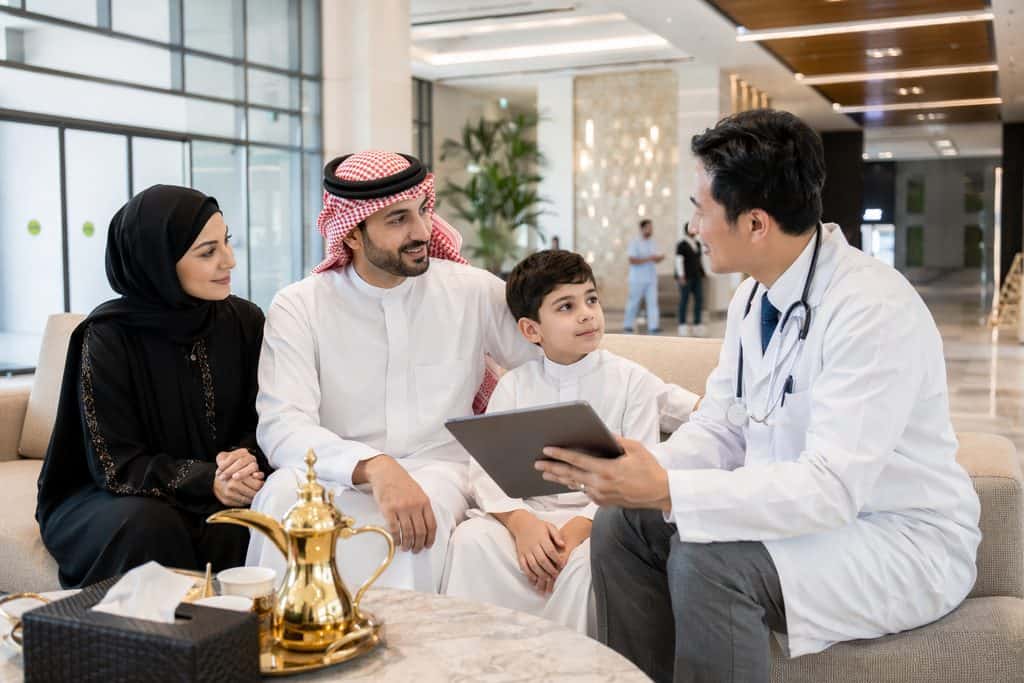
When 47-year-old Fatima from Riyadh first searched for advanced oncology care outside the GCC, she had a single, non-negotiable requirement: her treatment environment had to respect her faith, her language, and her family’s need to be with her. She found scattered information. A hospital in Seoul with one halal option. A clinic in Germany with a prayer room but no Arabic support. Nothing felt complete. Then her son found a pathway that connected her to a top-5% Chinese hospital with a dedicated international patient center, halal-certified kitchen coordination, and a bilingual companion who spoke her dialect. That pathway exists. It is not a single packaged deal you buy off a shelf. It is a coordinated sequence of services built around your specific medical case and cultural needs. Our team handles the logistics so you and your family can focus on the treatment.
How This Actually Works, Step by Step
You do not book a “halal medical tourism china package” like a vacation. The process starts with your medical records. You send us what you have — diagnosis reports, imaging, pathology slides, treatment history. We translate them into clinical Chinese. Our team submits them to the international department of the hospital best matched to your condition, drawing from our database of 340+ top-ranked hospitals across 37 cities.
A specialist reviews your case. You receive a written second opinion. This costs from $300 to $500 and gives you a clear picture: what the Chinese team recommends, whether they can treat you, and what the expected timeline looks like. If you want to speak directly with the specialist, we arrange a video consultation. Prices range from $100 for a standard international department consult to $800 for a top-specialist session.
After you decide to proceed, we coordinate the appointment. For public hospitals, this means navigating the international VIP channel — the only route that lets you lock in a surgery date and senior specialist before you fly. We handle hospital registration, schedule coordination, and deposit arrangements. At the same time, our team guides you through the S2 visa application, providing the invitation letter and hospital documentation the Chinese embassy requires.
You arrive. A bilingual medical companion meets you at the airport. This person stays with you through every hospital visit — registration, queueing, payment, translation during consultations, and discharge instructions. They also bridge the cultural gap: confirming halal meal arrangements with the hospital kitchen, locating the prayer room, helping your family find nearby accommodation with halal dining options.
Treatment concludes. You return home with a complete discharge summary in English and a follow-up plan. If any video follow-up consultation fee was paid earlier, it is credited in full toward the coordination service.
What “Full Cultural Support” Actually Means on the Ground
Hospitals do not advertise this. But the infrastructure exists in major Chinese medical centers, especially in Beijing, Shanghai, and Guangzhou. The question is whether anyone connects you to it.
Halal food is the most common concern. Large public hospitals like Peking Union Medical College Hospital and West China Hospital have international wards where dietary requests are routed through the nutrition department. The kitchen itself may not hold halal certification. But the international patient coordinator can arrange meals sourced from certified halal suppliers in the city. In Shanghai, for instance, multiple halal-certified restaurants and catering services deliver to the hospital zone. Your companion handles the daily coordination — confirming meals, verifying ingredients, and troubleshooting if something goes wrong.
Prayer facilities vary. Dedicated musallas exist in the international wings of several top-tier hospitals. Where they do not, your companion identifies a clean, private space and ensures the nursing staff know not to interrupt during prayer times. This is not a luxury add-on. It is basic dignity.
Arabic-speaking staff is the hardest piece. Most Chinese hospitals do not employ full-time Arabic interpreters. What they have is English-speaking international coordinators. The practical solution is a layered approach: we provide an Arabic-English-Chinese bilingual companion who translates in real time during consultations. For critical consent forms and treatment plans, we produce written Arabic translations verified by a second translator. In Beijing, a small number of hospitals have begun contracting with Arabic interpretation agencies — our team tracks which ones and routes patients accordingly.
Then there is family accommodation. Arab patients rarely travel alone. A spouse, adult children, sometimes a parent come too. We help secure serviced apartments near the hospital with kitchen facilities, halal grocery access within walking distance, and enough space for a family of three or four. This costs more than a hotel but matters enormously for recovery and peace of mind.
A Realistic Timeline
| Stage | What Happens | Typical Duration |
|---|---|---|
| Week 1–2 | You send medical records. We translate and format them for Chinese clinical review. | 5–10 business days |
| Week 2–4 | Records submitted to hospital international department. Specialist reviews and produces written second opinion. | 7–14 business days |
| Week 4–5 | Optional video consultation with the specialist. You ask questions, hear the plan directly. | Scheduled within 5–7 days of request |
| Week 5–7 | Treatment decision. We coordinate appointment, secure the VIP channel slot, and confirm surgery or admission date. | 7–14 days for coordination |
| Week 6–9 | S2 visa application. You submit passport, invitation letter, hospital documents to Chinese embassy. | 5–10 business days processing |
| Week 8–10 | Travel to China. Companion meets you. Admission, treatment, initial recovery. | Varies by procedure |
| Week 10 onward | Discharge, return home, remote follow-up. | Ongoing |
This timeline assumes no complications in record review and standard visa processing. Delays happen. A specialist may request additional imaging. The embassy may take longer during peak seasons. We build buffer weeks into every plan and communicate delays immediately.
What Can Go Wrong — and What Happens Then
The hospital changes the specialist after you arrive. This is rare in VIP channels but possible if the assigned doctor has an emergency. Our companion escalates immediately to the international department head. The replacement is always of equivalent seniority — these are top-5% institutions, and the department does not assign junior residents to international patients. You are informed before the consultation, not after.
The halal meal arrangement breaks down. A shift change in the kitchen. A miscommunication. It happens. Your companion checks every meal before it reaches you. If it is wrong, they go to the kitchen directly, speak to the nutrition supervisor, and get it corrected within the hour. For longer stays, we pre-arrange a backup catering contact who can deliver within 45 minutes.
The visa is delayed. This is the most stressful failure mode. We track your application status daily once submitted. If processing exceeds the standard window, we contact the embassy with your case reference and hospital documentation. In extreme cases, we work with the hospital to reschedule the admission date without losing your VIP channel slot. You do not start over.
The diagnosis changes after in-person evaluation. Chinese specialists sometimes identify something missed in the original reports. This is not a failure — it is why you came. But it means the treatment plan shifts. We pause all logistics, arrange an immediate family consultation with the new specialist, and re-scope the timeline and costs. You decide whether to proceed based on the updated picture.
How to Evaluate Whether a Chinese Hospital Is Right for You
Not every condition warrants traveling to China. The strongest cases are procedures where Chinese hospitals perform exceptionally high volumes. Fuwai Hospital in Beijing performs over 14,000 cardiac surgeries annually — the highest volume globally. For complex valve repair or bypass, that volume translates to complication rates that rival or beat any Western center. The cost of cancer treatment in China for international patients, particularly for radiotherapy and minimally invasive tumor resection, runs between one-fifth and one-tenth of US prices. A course of proton therapy that costs $150,000 in the United States may cost $30,000 to $50,000 in Shanghai.
But volume is not everything. You need to check whether the hospital has a functioning international department with English-speaking coordinators — not just a website in English. Our database filters for this. You also need to verify that the specific specialist you are being matched with has treated international patients from the Middle East before. Cultural competence is not universal. A brilliant surgeon who has never managed a patient who prays five times a day may not understand why the nursing schedule needs adjustment. Our team flags this during the matching process.
The best hospital in China for Arab patients is not a single institution. It depends on the diagnosis. For oncology, the Fudan University Shanghai Cancer Center ranks among China’s top 10 for tumor treatment. For orthopedics, Beijing Jishuitan Hospital handles a caseload that dwarfs most Western centers. For cardiac care, Fuwai is the global leader. The match is diagnosis-specific, not brand-driven.
Do not choose based on a city you have heard of. Choose based on the department ranking. Our specialty-specific hospital rankings break this down by 45 clinical areas, drawn from the Fudan University hospital reputation survey — the most authoritative medical ranking system in China.
Practical Considerations: Visas, Payments, and Follow-Up at Home
The China medical visa for Middle East patients is the S2 visa, endorsed for private affairs including medical treatment. This is not an M visa — M is for commercial trade and has nothing to do with healthcare. Your S2 application requires an invitation letter from the Chinese hospital, proof of appointment, and standard passport documentation. Processing takes five to ten business days at most GCC-country Chinese embassies. Family members accompanying you apply under the same S2 category. For treatment courses exceeding 180 days, the S1 visa applies instead.
Payment works on a prepaid model in public hospitals. You deposit an estimated amount before admission. The hospital deducts from it daily. At discharge, you settle the balance or receive a refund. International wards accept wire transfers and major credit cards. Private international hospitals like United Family often bill your insurance directly. Public hospital international departments provide detailed English invoices for insurance reimbursement — you submit them yourself to your carrier.
Language support is the practical backbone. Is there Arabic speaking staff in Beijing hospitals? In most cases, no — not on the hospital payroll. The international department staff speak English. Your Arabic-English-Chinese companion fills the gap. For informed consent, surgical permits, and discharge instructions, we provide written Arabic translations. This is not a machine translation. It is done by a human translator who understands medical terminology in both languages.
Follow-up after you return home is coordinated through video consultation. Your Chinese specialist reviews follow-up imaging and lab work that you send. Adjustments to medication or rehabilitation protocols come back in writing. This costs from $100 to $300 per session. If you paid for a pre-arrival video consultation, that amount is credited toward your coordination service fee — a one-time credit applied within 90 days.
How to find halal food in Chinese hospitals is a practical question with a location-specific answer. In Beijing, halal catering services deliver to the major international wards. In Shanghai, the hospital nutrition department can source from city-certified halal kitchens. In Guangzhou, the large Muslim community means halal restaurants are plentiful near the medical district. Your companion handles the daily logistics. You do not negotiate with the kitchen.
Frequently Asked Questions
Most public hospital kitchens do not hold halal certification. International patient coordinators arrange meals from certified external halal suppliers who deliver to the ward. Your bilingual companion verifies every meal. Private international hospitals in Shanghai and Beijing are more likely to have in-house halal options — but always confirm before booking.
Yes. International wards typically allow one family member to stay in the room. For larger families, we arrange nearby serviced apartments with kitchen access. The S2 visa covers accompanying family members. Plan for accommodation costs of $80 to $200 per night depending on the city and proximity to the hospital.
Your Chinese specialist provides a complete discharge summary and treatment protocol in English. Share this with your local physician. For urgent questions, we arrange an expedited video consultation, usually within 24 to 48 hours. This is not a substitute for local emergency care — go to your nearest hospital first, then contact us for specialist input.
For major procedures, yes. A cardiac bypass that costs $120,000 or more in the United States runs $12,000 to $20,000 in a top Chinese public hospital international ward. Cancer treatment costs vary widely by protocol but consistently fall in the one-fifth to one-tenth range. The trade-off is that you travel, you navigate a different system, and your insurance may not directly settle with the hospital. We help you weigh that trade-off for your specific case.
We use the Fudan University Hospital Ranking, China’s most authoritative independent hospital evaluation. It ranks the top 100 hospitals nationally and the top 10 in 45 clinical specialties. Our database includes all of them. You can browse by specialty and city on our top hospitals directory. We never match patients to unranked institutions unless the patient specifically requests a private international hospital for language or insurance reasons.
Your Next Step
This pathway exists because Chinese medicine has scaled to a level where volume, technology, and cost intersect in ways that benefit international patients. But the cultural layer — halal food, prayer space, Arabic interpretation, family accommodation — does not happen automatically. It requires someone on the ground who knows both systems and speaks both languages.
Our team at China Medical Services does not provide medical care. We do not make treatment decisions or promise outcomes. What we do is connect you to the right hospital, handle the logistics that would otherwise overwhelm you, and ensure your cultural and religious needs are met throughout your stay. If you are considering treatment in China, start with a free consultation. Send your records. We will tell you honestly whether a Chinese hospital is a strong option for your case and what the pathway looks like. Visit our patient services page to begin.
For more medical information and treatment options in China, visit chinamedservices.com (China Medical Services).
