Medical Transport in China: What We Coordinate Before You Land
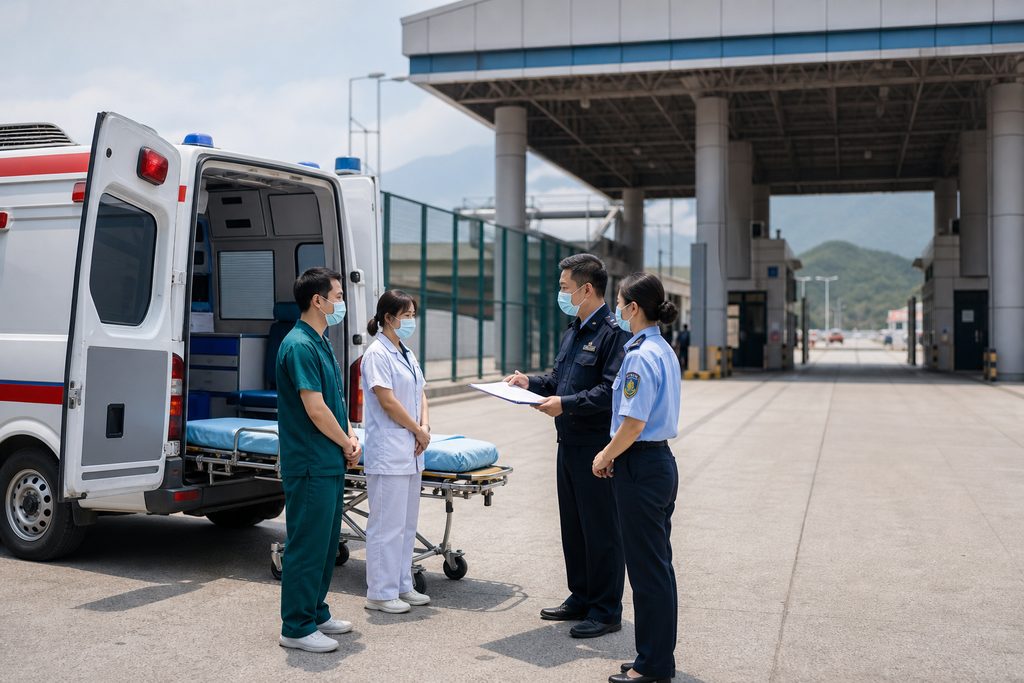
Transport: What We Coordinate Before You Land — The Short Answer
We coordinate the physical logistics that get you from your home airport to a hospital bed in China. That includes airport pickup, intercity rail or domestic flight booking, hotel-to-hospital transfers, and wheelchair-accessible vehicles when needed. The goal is straightforward: you land, and someone who speaks both languages is already waiting.
The caveat is that transport is only one layer. Before any vehicle moves, the hospital appointment, the department, and the doctor’s availability need to be locked down. Without that, you are just a tourist with a suitcase. So transport coordination always starts with the medical plan, not the flight number.
Who This Is Right For — and Who It Isn’t
Medical travel to China makes sense for a specific profile of patient. It is not a universal solution.
Typically a good fit:
- Patients who have already received a diagnosis at home and need a second opinion or a specific procedure
- Families planning a longer treatment stay — oncology, orthopedics, cardiac surgery, or rehabilitation
- People traveling with limited mobility, language barriers, or complex medication schedules
- Patients who want to compare cancer treatment cost China against quotes from the US or Europe before committing
Who should think twice:
- Patients with unstable conditions that make long-haul flights medically risky
- Anyone expecting to walk into a top-tier public hospital without a prior arrangement — that is not how Chinese public hospitals work
- Travelers who want a “medical tourism package” with hotel, sightseeing, and spa included. That is not what we do.
- Patients who need an organ transplant. We do not coordinate or market access to donor organs, and no legitimate Chinese hospital will promise a foreign patient a transplant slot.
The Options, Compared
When patients ask us how to get from the airport to the hospital, they are really asking a broader question: what does the whole arrival process look like? Here is how the main approaches compare.
| Approach | Cost (USD) | Wait Time | Language Support | Best For |
|---|---|---|---|---|
| DIY — taxi or Didi from airport | $20–60 | Immediate | None — driver speaks Chinese | Budget travelers with local contacts |
| Hotel concierge transfer | $40–100 | Booked in advance | Basic English at best | Short stays, simple needs |
| Private medical transfer (our coordination) | from $200 round-trip | Pre-arranged, driver tracks your flight | Bilingual coordinator on call | Surgery, chemo, mobility issues, first-time visitors |
| VIP end-to-end coordination | $5,000–8,000 | Full itinerary before departure | Dedicated bilingual case manager | High-net-worth patients, complex multi-city treatment plans |
The DIY route works if you speak Chinese, know the city, and are traveling light. Most of our patients are none of those things. The private transfer column is where the majority land — it costs a few hundred dollars and removes the single most stressful hour of the trip.
What “Coordination” Actually Means Before You Land
This is the part that surprises people. Transport is not just a car. It is a sequence of confirmations that happen days or weeks before your flight takes off.
We start with the hospital. Which department? Which doctor? Has the international medical center confirmed your appointment time? Public hospitals in China rarely let overseas patients book a specific specialist from abroad through the standard outpatient channel. The international department or VIP channel is different — that is where pre-arranged appointments exist. So the first thing we coordinate is not a vehicle. It is a confirmed consultation slot.
Then comes the route. If you land at Shanghai Pudong International Airport and your hospital is Huashan or Zhongshan, that is a 45–60 minute drive depending on traffic. If you are heading to a hospital in Hangzhou, we would book a high-speed rail ticket instead — 45 minutes by train, no traffic risk. Beijing Capital International Airport to Peking Union Medical College Hospital is roughly 40 minutes by car. These specifics matter when you are jet-lagged and carrying medical records.
And then the vehicle itself. We confirm whether you need a standard sedan, an SUV for luggage, or a wheelchair-accessible van. We confirm the driver’s phone number and WeChat ID. We send you a photo of the pickup sign with your name on it. We track your flight and adjust if it lands early or late. That is the job.
What It Costs
Transport pricing in China is genuinely low by Western standards. A private airport transfer in Beijing or Shanghai typically runs $50–100 one-way when booked through a hotel. Our coordinated round-trip airport transfer is priced from $200, which includes flight tracking, bilingual phone support during the transfer, and a driver who knows the hospital entrance — not just the hospital name.
High-speed rail between major cities runs $30–80 for a second-class seat, depending on distance. A domestic flight from Shanghai to Chengdu, where West China Hospital is located, often costs $100–200 one-way. We book these at standard market rates and pass the cost through without markup.
The bigger cost conversation is usually about the treatment itself. Patients frequently ask us to compare cancer treatment cost China versus what they were quoted at home. A course of treatment that runs $120,000 in the United States might run $20,000–35,000 at a top-tier Chinese hospital. That gap is what makes the transport logistics worth sorting out. But transport itself is rarely the expensive line item.
Practical Considerations: Documents, Visas, and Payment
Before you board the plane, there are a few things that will make or break the trip.
Visa. Medical travelers to China apply for an S2 visa, which covers short-term private affairs including medical treatment. Stays longer than 180 days require an S1 visa. The M visa is for commercial and trade activities — it is not a medical visa, and applying under the wrong category will cause delays. The hospital’s international department will issue an invitation letter and treatment confirmation, which you submit with your visa application. We guide you through this, but the embassy or consulate makes the final decision.
Medical records. Bring everything: imaging on CD or USB, pathology reports, blood work, medication list, and a translated summary if possible. Chinese specialists will want to see the raw data, not just the conclusion. We can arrange document translation before you travel.
Payment. Public hospitals in China require prepayment for inpatient care. International credit cards are accepted at private international hospitals and some public hospital international departments, but not everywhere. We advise patients on how to structure payment — often a combination of bank transfer for the hospital deposit and cash or card for daily expenses. Insurance reimbursement depends entirely on your policy; Chinese hospitals do not bill Western insurers directly except at private facilities like United Family or Jiahui.
Language. Even at top-tier public hospitals, most nurses and many junior doctors do not speak English. The international department staff usually do, but the moment you step into a CT scan queue or a pharmacy line, you are on your own. A bilingual companion for $300 per day solves this. Some patients only need a companion for the first two days. Others book one for the entire stay. It depends on how much you want to handle independently.
Frequently Asked Questions
You have three choices: a taxi or ride-hailing app (cheapest, but no English support), a hotel-arranged transfer (slightly more expensive, limited help), or a pre-arranged medical transfer with a bilingual coordinator. The hospital’s international department can also sometimes arrange pickup, but this varies by hospital and is not guaranteed. We recommend confirming your transfer before you fly, not after you land.
At top-ranked public hospitals and JCI-accredited private facilities, the standard of care is high. Fuwai Hospital performs over 14,000 cardiac surgeries a year — more than any hospital in the world. But safety depends on choosing the right hospital for your specific condition, not just any hospital. That is why we focus on the top 5% of China’s 35,000+ hospitals, ranked by Fudan and JCI. No surgery is risk-free anywhere. The question is whether the surgical team has done your procedure thousands of times. At the hospitals we work with, the answer is usually yes.
Peking Union Medical College Hospital is the most recognized name for complex diagnostics and internal medicine. For cardiac care, Fuwai Hospital is the global leader. For private, English-speaking care with direct insurance billing, Beijing United Family Hospital is the standard choice. The right answer depends on your diagnosis. We match the condition to the department, not the patient to a brand name.
We coordinate the medical and logistical components separately. Airport pickup, hotel, and intercity transport are logistics — we arrange those. The hospital, doctor, and treatment plan are medical — we facilitate those through the hospital’s official international department. What we do not do is bundle them into a fixed-price “package” that promises a specific outcome. Your case is not a package. It is a sequence of decisions, and each one should be made deliberately.
You can, but it is usually premature. Without a clear diagnosis, you do not know which department you need, which city makes sense, or which specialist is relevant. The more efficient path is a remote video consultation or written second opinion first. Send your existing records, speak with the Chinese specialty team online, and then decide whether to travel. This also gives you a realistic picture of the cancer treatment cost China hospitals will quote — before you spend money on flights.
Your Next Step
Transport is the easy part. The hard part is knowing which hospital to go to, which doctor to see, and whether the trip is even necessary. That is the conversation we start with. China Medical Services maintains a database of 340+ top-ranked hospitals across 37 cities — the top 5% of the country’s 35,000+ institutions. We are not a hospital. We do not diagnose or treat. We connect you with the right department, coordinate the logistics, and make sure you are not navigating a foreign healthcare system alone.
If you are considering treatment in China, start with a free consultation. Tell us your diagnosis, your current situation, and what you are hoping to achieve. We will tell you honestly whether China makes sense for your case — and if it does, we will map out the rest, from the first airport pickup to the last follow-up.
For more medical information and treatment options in China, visit chinamedservices.com (China Medical Services).
