Multiple Hospitals: A Companion to Navigate China’s Top 5%
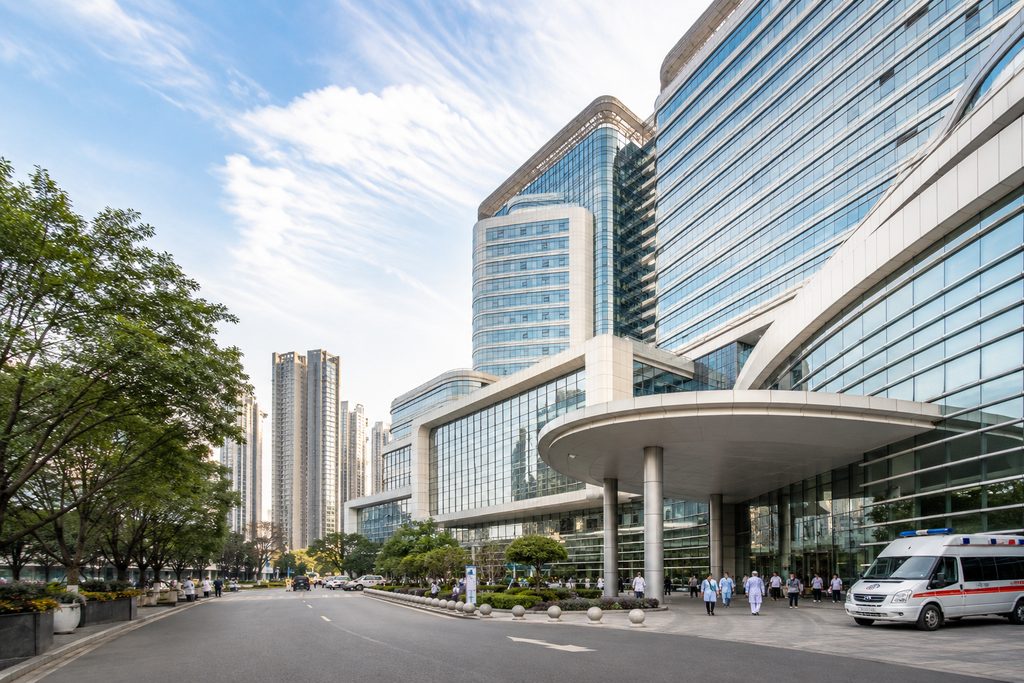
Multiple Hospitals: A Companion to Navigate China’s Top 5%
Comparing cancer treatment cost China requires navigating a system of 35,000+ hospitals. Only the top 5% matter for international patients. Our team acts as your companion across 340+ ranked institutions in 37 cities. You do not have to figure this out alone.
A cancer diagnosis lands like a brick through a window. Then the bills start arriving. In the United States, a single round of immunotherapy can exceed $15,000. A full course of radiation therapy often runs past $50,000. Surgery, imaging, pathology, hospital stays — the total climbs past $150,000 before most families catch their breath. And that is with insurance. Without it, the number doubles.
Now consider China. The same treatment protocols at top-tier public hospitals typically cost one-fifth to one-tenth of American prices. A complex cancer surgery that bills $80,000 in Houston might run $12,000 to $20,000 in Shanghai. The medications are the same. The imaging equipment is the same. The clinical outcomes are often comparable. What is different is the system — and that system requires a companion to navigate.
Key Takeaways
- China’s top 5% includes 340+ hospitals across 37 cities, ranked by Fudan University and JCI accreditation standards
- Cancer treatment at leading Chinese public hospitals typically costs 70-90% less than equivalent care in the US or Western Europe
- Ordinary outpatient departments cannot be booked from overseas — surgery requires an in-person consultation first, unless you use a hospital’s international or VIP channel
- You will need an S2 visa for medical treatment, and a bilingual companion changes everything once you are inside a hospital that sees 10,000+ patients daily
The Problem: A World-Class System That Is Nearly Impossible to Access Alone
China’s healthcare landscape is enormous. The country has more than 35,000 hospitals. A small fraction — roughly 1,700 — are classified as Grade III Class A (三级甲等), the highest official tier. Within that group, the Fudan University Hospital Rankings identify the top 100 general hospitals, distributed across 23 cities. Beijing hosts 21 of them. Shanghai has 18. Guangzhou has 10.
These are not small community clinics. Fuwai Hospital in Beijing performs over 14,000 cardiac surgeries annually — the highest volume of any heart center on the planet. Peking Union Medical College Hospital handles complex cases that other institutions have given up on. West China Hospital in Chengdu manages a daily outpatient volume that exceeds 20,000 visits. The scale is staggering.
But scale creates friction. Registration happens on the day of the visit, not weeks in advance. Queues form before dawn. Signs are in Chinese. Payment windows require local banking apps. A foreign patient without language support will spend hours lost, confused, and exhausted — and that is before seeing a doctor. The system is excellent. Getting into it is the hard part.
Why a Companion Changes Everything When Navigating Multiple Hospitals
Most international patients do not need one hospital. They need several. A cancer patient might need imaging at one facility, surgery at a second, and radiation therapy at a third. A cardiac patient might need a diagnostic catheterization at a top cardiology center, then surgery at a cardiac surgery specialty hospital. Each transfer involves new registrations, new queues, new payment counters, and new departments.
This is where the companion model earns its value. Not as a luxury. As logistics.
Clinical Volume Drives Better Outcomes
The relationship between surgical volume and patient outcomes is one of the most consistent findings in medical research. A surgeon who performs 300 joint replacements per year has fewer complications than one who performs 30. A cancer center that treats 5,000 cases of a specific tumor type annually has refined protocols that a general hospital treating 200 cases cannot match.
Chinese top-tier hospitals operate at volumes that Western institutions rarely approach. A leading orthopedic surgeon in Beijing may complete 200 to 500 joint replacements annually. The average US orthopedic surgeon performs roughly 65. For complex cancer resections, the gap is even wider. When you search for the best hospital for heart surgery Shanghai, you are really searching for volume — and Zhongshan Hospital Fudan University delivers it at a scale unmatched in Europe.
Technology and Efficiency at Scale
Walk into any Fudan-ranked hospital and you will see equipment that matches anything at the Mayo Clinic or Charité Berlin. Da Vinci surgical robots. PET-CT scanners. Proton therapy centers. The difference is throughput. A CT scanner in a Shanghai public hospital might image 150 patients per day. The same machine in a US hospital might handle 40.
That efficiency translates directly into cost. Fixed costs — the building, the equipment, the support staff — get spread across far more patients. Variable costs — physician time, nursing care, medications — are structurally lower due to labor economics. The result is a system that delivers high-quality care at a fraction of Western prices, without cutting corners on technology or clinical standards.
Cost Advantage Without Quality Compromise
Let us address the elephant in the room. Many people assume lower cost means lower quality. That assumption is wrong — and the data backs it up.
China’s top hospitals publish outcomes in international peer-reviewed journals. Fuwai Hospital’s cardiac surgery mortality rates are comparable to Cleveland Clinic’s. Cancer survival rates at Fudan University Shanghai Cancer Center align with National Cancer Institute benchmarks. The equipment is manufactured by the same companies — Siemens, GE, Philips. The medications come from the same pharmaceutical firms — Roche, Merck, AstraZeneca.
What is different is the price structure. A hip replacement in Beijing runs $8,000 to $15,000 at a top public hospital. The same procedure in the United States averages $40,000 to $60,000. A cardiac bypass in Shanghai costs $12,000 to $20,000. In America, it exceeds $120,000. These are not hypothetical numbers — they reflect published price surveys and patient-reported costs.
Cancer Treatment Cost China: What the Numbers Actually Show
Cancer care is where the savings become life-changing. A full course of immunotherapy with pembrolizumab (Keytruda) in the United States costs approximately $150,000 per year. In China, the same drug — now covered under national health insurance negotiations — costs significantly less, and out-of-pocket prices at international departments run 40-60% below US list prices.
But medication is only one line item. Let us look at the full picture.
| Treatment | China (Top Public Hospital) | United States | Savings |
|---|---|---|---|
| Lung cancer surgery (lobectomy) | $8,000 – $15,000 | $40,000 – $80,000 | 75-85% |
| Radiation therapy (full course) | $5,000 – $12,000 | $50,000 – $100,000 | 80-90% |
| Chemotherapy (6 cycles) | $6,000 – $15,000 | $30,000 – $80,000 | 75-85% |
| Breast cancer surgery + reconstruction | $10,000 – $20,000 | $50,000 – $120,000 | 75-85% |
| Stomach cancer resection | $10,000 – $18,000 | $60,000 – $150,000 | 80-90% |
These figures vary by hospital and case complexity. A private international hospital in Shanghai will charge more than a public hospital’s international department. A complex case requiring ICU care will exceed a straightforward resection. But the structural gap remains: Chinese healthcare costs less because the entire system costs less to operate, not because the care is inferior.
Is It Safe to Have Surgery in China? A Straight Answer
Yes — at the right hospitals. The question is not whether China has safe surgical care. The question is whether you can identify the hospitals that meet international safety standards.
Here is the honest picture. China has world-class hospitals and it has mediocre ones. The top 5% — the 340+ institutions in our database — meet or exceed international benchmarks for infection control, surgical safety, and clinical outcomes. Many hold JCI (Joint Commission International) accreditation, the same standard used by top hospitals in Singapore, Thailand, and the United States. Others are ranked by Fudan University’s rigorous peer-review process, which evaluates clinical reputation, research output, and patient outcomes across 45 specialties.
But the bottom 50% of Chinese hospitals would not meet Western expectations. That is not a secret — it is a reality of any large healthcare system. Your safety depends entirely on hospital selection. This is where a companion who knows the landscape becomes not just helpful but essential. We direct patients to Fudan-ranked public hospitals, JCI-accredited private facilities, and specialty centers with documented international patient programs. We do not send anyone to facilities we would not choose for our own families.
Medical Tourism Packages China: What to Expect in 2025
The term “medical tourism package” conjures images of beach resorts and spa treatments. China is different. This is not Thailand or Turkey. China’s medical tourism infrastructure is built around clinical excellence, not hospitality.
A typical package includes hospital selection, appointment coordination, visa documentation support, airport pickup, bilingual accompaniment during hospital visits, and assistance with accommodation. Prices for coordination services start from $300 for basic appointment scheduling. A full VIP end-to-end coordination package runs $5,000 to $8,000 — a fraction of what the treatment itself saves you.
What a package cannot include is a guaranteed outcome. No ethical provider promises that. What we promise is logistics: you will see the right specialist, your records will be translated properly, and someone who speaks both languages will be standing next to you when the doctor explains your options.
Practical Considerations: Visas, Payments, and Follow-Up
Let us get concrete. Here is what you actually need to handle.
Visa. Foreign nationals traveling to China for medical treatment apply for an S2 visa, which covers short stays for private affairs including medical care. Stays exceeding 180 days require an S1 visa. The M visa is for commercial and trade activities — it is not a medical visa, and using it for treatment would be incorrect. Your hospital will provide an invitation letter and treatment confirmation to support your application. Approval is never guaranteed; it depends on your nationality, documentation, and the latest consulate requirements.
Payment. Chinese public hospitals require prepayment. You deposit funds at admission, and the hospital deducts charges as they accrue. International departments accept major credit cards and bank transfers. Private international hospitals often bill insurance directly. If you have US or European insurance, check whether your policy covers overseas treatment — many do not, and you will need to pay out of pocket and seek reimbursement later.
Records. Bring everything. Pathology slides, imaging discs, operative reports, medication lists. Chinese specialists want to see raw data, not just summaries. We arrange professional medical translation before your consultation so nothing gets lost.
Follow-up. After you return home, your Chinese medical team will typically provide a written summary and recommendations. Ongoing monitoring can happen in your home country. For complex cases, video consultations with your Chinese specialists are available for $100 to $800 depending on the seniority of the physician.
Frequently Asked Questions
At public hospitals, no. The standard pathway requires an in-person outpatient consultation first. The surgeon must evaluate you face-to-face before scheduling an operation. The exception is the hospital’s international or VIP department, where remote evaluation can lead to a provisional surgical plan — but even then, you will meet the surgeon before the operation. Anyone who promises a locked-in surgery date before you land is not being honest with you.
At a top public hospital’s international department, expect $8,000 to $15,000 for the surgery itself, excluding implants and extended rehabilitation. Premium implant choices can push the total toward $20,000. Compare that to the US average of $40,000 to $60,000, and the savings remain substantial even with travel costs included. Prices vary by hospital and case complexity — always confirm your specific quote before committing.
Chinese hospitals have formal processes for managing complications, including ethics committees and patient complaint channels. International departments typically assign an English-speaking case manager who coordinates care if issues arise. We also maintain communication with your home-country physicians so that everyone stays informed. No medical system can promise zero complications — but top Chinese hospitals have the clinical depth to manage them when they occur.
No — but you need someone who does. International departments have English-speaking staff, but the moment you step outside that bubble — to the pharmacy, the imaging center, the payment window — the language shifts to Mandarin. A bilingual companion handles registration, queue management, payment, and translation throughout your visit. This is not a luxury. It is the difference between a smooth visit and a stressful ordeal.
No. The cost difference comes from structural economics: lower labor costs, higher patient volumes, and government price controls on medications and procedures. Clinical outcomes at Fudan-ranked hospitals are published in international journals and compare favorably with Western benchmarks. The care is not worse. It is delivered in a different economic system.
Your Next Step
Navigating multiple hospitals in a foreign country is hard. Doing it while managing a serious diagnosis is harder. Our team at China Medical Services exists to make it manageable — we match you with the right hospital, coordinate appointments, handle visa documentation, and put a bilingual companion beside you throughout your treatment. We are not a hospital and we do not provide medical advice or diagnoses. We are the bridge between you and China’s top 5% of medical institutions. When you are ready to explore your options, request a free consultation and we will help you understand what is possible.
For more medical information and treatment options in China, visit chinamedservices.com (China Medical Services).
