Nanfang Hospital Guangzhou Infectious Disease: Hepatitis B & Tropical Care
Key Takeaways
- Nanfang Hospital manages over 250,000 infectious disease outpatient visits annually, ranking it among China’s most experienced centers for complex hepatitis B and tropical pathology.
- The structural cost advantage is significant: a comprehensive hepatitis B management plan here typically ranges from $3,000–$8,000 USD annually, compared to $15,000–$25,000 in the U.S. for self-pay patients.
- Language is the single biggest barrier. The hospital’s standard outpatient system runs entirely in Mandarin, and navigating it without a bilingual medical companion can delay diagnosis by weeks.
- China classifies hepatitis B antiviral drugs differently than Western regulators; some first-line options available here are not yet standard in the EU or North America, and vice versa.
The Problem: Waiting for a Liver in a Silent Epidemic
Hepatitis B affects approximately 296 million people globally. The Western Pacific region carries the heaviest burden. But here is the number that keeps infectious disease specialists awake: only 10% of those infected worldwide know their status. The rest walk around with a slow-burning liver inflammation that can, over twenty or thirty years, turn into cirrhosis or hepatocellular carcinoma. You might feel fine. Your liver might not be. And if you live in a country where HBV prevalence is low—say, the United States or the United Kingdom—finding a clinician who has managed hundreds of complicated hepatitis B cases is genuinely hard. Most Western hepatologists see a handful of chronic HBV patients a week. They are excellent doctors. But volume matters in medicine. It matters a lot.
Then there is the tropical disease question. Dengue, scrub typhus, leptospirosis, melioidosis. These infections do not announce themselves with neat textbook symptoms. They mimic flu, or food poisoning, or a bad migraine. A delayed diagnosis can mean multi-organ failure. If you have spent time in Southeast Asia, sub-Saharan Africa, or the Amazon basin, and you develop a fever that does not make sense, you need a team that has seen it before. Most Western hospitals have not. Nanfang Hospital in Guangzhou has. That is the difference.
Who We Are
We are not a hospital. We do not provide medical treatment, prescribe medication, or offer clinical diagnoses. What we do is dismantle the logistical nightmare that stops international patients from accessing China’s top-tier medical expertise. Our team handles hospital matching, appointment coordination through official international channels, bilingual medical companionship, visa guidance, and every practical detail from airport pickup to discharge paperwork. Think of us as your operational backbone. You focus on your health. We handle the friction. We have connected patients with over 340 top-ranked hospitals across 37 Chinese cities, and Nanfang Hospital’s infectious disease department is one we know intimately.
Why Nanfang Hospital’s Infectious Disease Department Delivers Results
Clinical Volume That Reshapes Clinical Instinct
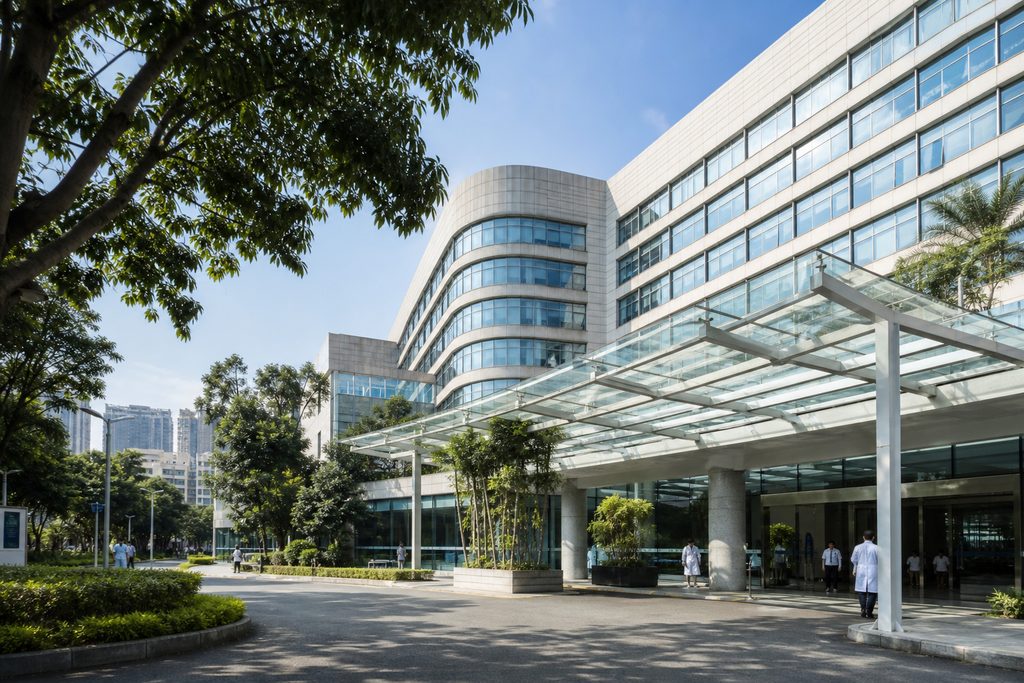
Nanfang Hospital, a flagship institution of Southern Medical University, runs one of the largest infectious disease departments in South China. The numbers are not abstract. The department’s outpatient clinic sees more than 700 patients daily during peak seasons. Its inpatient wards maintain over 150 dedicated beds for infectious diseases, with a separate negative-pressure isolation unit for highly pathogenic cases. This is not a small, boutique program. It is an industrial-scale operation built on decades of managing southern China’s unique disease burden—a region where hepatitis B prevalence has historically hovered around 8–10% of the adult population, and where tropical pathogens cross borders from Southeast Asia with seasonal regularity.
What does volume mean for you? It means the attending physician reviewing your hepatitis B viral load and liver elastography results has likely managed thousands of similar cases. They have seen the rare drug-resistant mutations. They know when a normal ALT level is actually misleading. They understand, at a pattern-recognition level that no textbook can teach, the subtle difference between a patient who can safely discontinue antivirals and one who needs lifelong suppression. The department’s hepatology unit participates in multiple national clinical trials for novel HBV therapies, including RNA interference approaches and therapeutic vaccines. You benefit from a team operating at the frontier of treatment protocols.
Tropical Disease Expertise Built on Geography, Not Theory
Guangzhou sits at 23°N latitude, with a humid subtropical climate that mirrors much of Southeast Asia. Dengue outbreaks occur annually. Scrub typhus is endemic. Leptospirosis spikes after monsoon flooding. The hospital’s infectious disease team does not just read about these conditions in journals. They manage them, season after season, year after year. The department houses a dedicated tropical disease specialist unit that collaborates with the Guangzhou Center for Disease Control and Prevention on pathogen surveillance. When an international patient presents with an undifferentiated febrile illness after travel to rural Thailand or the Niger Delta, this team runs a differential diagnosis that includes pathogens most Western labs never test for.
This matters because tropical disease diagnosis is notoriously tricky. Melioidosis, caused by Burkholderia pseudomallei, mimics tuberculosis on chest X-rays. Standard empiric antibiotics do not touch it. Without the right culture media and a clinician who thinks to order it, the diagnosis is missed—and the mortality rate for septicemic melioidosis exceeds 40%. Nanfang’s lab runs selective media for Burkholderia as a standard protocol for febrile patients with relevant travel history. That is not standard practice in London or Boston. It is standard practice here.
The Nanfang Hospital Hepatitis B Treatment Price and Cost Structure
Let us address the question most international patients ask first: what is the real Nanfang Hospital hepatitis B treatment price? The answer requires some unpacking because Chinese hospital billing separates into distinct categories that Western patients may not recognize. Here is a realistic breakdown based on current pricing for international patients accessing care through the hospital’s official international medical service channel:
| Service Component | Estimated Cost (USD) | Notes |
|---|---|---|
| Initial specialist consultation (international channel) | $150–$300 | Includes interpretation if arranged in advance |
| Comprehensive blood panel (HBV DNA, liver function, HBeAg/anti-HBe, HBsAg quantitative) | $200–$400 | Prices vary by specific assays ordered |
| Liver elastography (FibroScan) | $80–$150 | Non-invasive fibrosis assessment |
| Abdominal ultrasound with Doppler | $100–$200 | Screens for HCC and portal hypertension |
| First-line antiviral therapy (annual, entecavir or tenofovir) | $600–$1,200 | Generic options widely available in China |
| Annual comprehensive monitoring package | $3,000–$8,000 | Includes consultations, labs, imaging, and medication |
These figures reflect the hospital’s standard charges for self-pay international patients. They are not a quote—your specific costs depend on disease complexity, required testing frequency, and whether you need advanced interventions like liver biopsy or hepatocellular carcinoma screening with contrast-enhanced MRI. But the structural cost advantage is clear. A comparable annual management plan at a major U.S. academic medical center for an uninsured or self-pay patient typically runs $15,000–$25,000. The medications alone—branded entecavir or tenofovir in the U.S. market—can exceed $1,000 per month without insurance. In China, generic equivalents manufactured to international GMP standards bring that cost below $100 monthly.
Now, a crucial distinction: these prices apply to the hospital’s international service pathway. The standard public outpatient system is cheaper—sometimes dramatically so—but it operates entirely in Chinese, requires in-person queuing for registration, and does not accommodate advance appointments from overseas. We explain this because some patients arrive expecting to walk into the public system and save money. You can. But you will need a bilingual medical companion, and you will spend hours navigating a system designed for domestic patients who speak the language. The international channel costs more because it provides English-capable coordination, faster scheduling, and a less chaotic clinical environment. Whether that premium is worth it depends on your priorities.
Is Nanfang Hospital Good for Hepatitis B? The Evidence
The question “is Nanfang Hospital good for hepatitis B” has a straightforward answer: yes, and the evidence is structural, not anecdotal. The hospital’s Department of Infectious Diseases is a National Key Clinical Specialty—a designation awarded by China’s National Health Commission to departments demonstrating superior clinical outcomes, research output, and teaching capacity. Its hepatology division contributes to China’s national guidelines for hepatitis B management, published jointly with the Chinese Society of Hepatology and the Chinese Society of Infectious Diseases.
What does this mean for treatment quality? China’s approach to hepatitis B differs from Western guidelines in several evidence-based ways. Chinese protocols more readily initiate antiviral therapy in patients with normal ALT but high HBV DNA levels, reflecting data from large Asian cohort studies showing that ALT alone is an insufficient marker of histological damage. Chinese hepatologists also have extensive experience with combination therapy strategies—using two nucleos(t)ide analogues simultaneously for patients with partial virological response—that remain underutilized in Western practice. The department’s clinical research unit has published extensively on optimizing treatment for HBeAg-negative chronic hepatitis B, a subtype that is notoriously difficult to manage and accounts for an increasing proportion of cases globally.
One more point worth understanding: how effective is hepatitis B treatment in China is not a question with a single answer. It depends on what you measure. If you measure virological suppression—getting HBV DNA below detectable levels—Chinese centers using current first-line antivirals achieve rates exceeding 95% in adherent patients, comparable to any top Western hepatology unit. If you measure HBsAg seroclearance, the functional cure endpoint, rates remain low across all populations—typically 1–3% annually on oral antivirals alone. China is investing heavily in clinical trials for curative therapies precisely because its HBV disease burden, while declining due to universal infant vaccination since 1992, still leaves tens of millions of chronically infected adults who need better options. Patients who travel to Nanfang for hepatitis B care are not just accessing current standard-of-care. They are positioning themselves at a center that will likely be among the first globally to implement curative protocols when they emerge from ongoing trials.
What You Need to Know Before Going Alone
Honesty builds trust. So here is the unvarnished reality of attempting to navigate Nanfang Hospital’s infectious disease department independently as an international patient.
- Visa Complexity: Medical treatment in China requires an S2 visa specifically endorsed for medical purposes. This is not a tourist visa. The application requires an official invitation letter from the hospital—a document that Nanfang’s international medical office can issue, but only after you have established a clinical relationship and scheduled a consultation. You cannot simply apply for an S2 visa on your own initiative without this hospital-issued documentation. Consulates scrutinize these applications carefully. Errors in the invitation letter format or discrepancies between your stated treatment plan and the visa category will result in rejection. We have seen it happen.
- Registration and Payment Systems: The hospital’s public registration system operates through a real-name, passport-verified digital platform that links to WeChat and Alipay. International credit cards are not accepted for outpatient registration fees. You need a Chinese bank account or a local contact to load funds onto a hospital-issued medical card. The international service pathway bypasses this by accepting wire transfers and international cards, but you must be routed through that specific channel from the start. If you show up at the main outpatient hall without a local contact and without pre-arranged international channel access, you will stand in lines you cannot pay your way out of.
- Medical Records and Translation: Nanfang’s physicians need your prior medical records to make informed clinical decisions. If those records are in English, French, Arabic, or Russian, they need certified Chinese translation before your consultation. The hospital does not provide this translation service for standard outpatient visits. Showing up with a stack of English-language lab reports and expecting the specialist to interpret them in real-time during a 15-minute consultation slot is not realistic. This is a solvable problem—we handle it routinely—but it requires advance preparation.
How We Help You Navigate This
These barriers exist for structural reasons. Chinese public hospitals are designed to serve a domestic population of 1.4 billion people at extraordinary scale and efficiency. They were not built with international patient convenience in mind. That is not a flaw—it is a design choice. Our job is to bridge that gap without pretending the gap does not exist.
When you contact us about book hepatitis B treatment Nanfang Hospital Guangzhou, here is what actually happens. First, we conduct a detailed intake: your diagnosis, your treatment history, your current medications, your latest lab results, and your specific clinical goals. Are you seeking a second opinion on whether to initiate antiviral therapy? Do you need advanced fibrosis staging not available in your home country? Are you exploring clinical trial eligibility for curative HBV therapies? The answer shapes everything downstream.
We then translate and format your medical records according to the hospital’s documentation standards. This is not just language translation—it is clinical document restructuring to match the format Chinese specialists expect. We submit your case through the hospital’s official international medical coordination office and secure a consultation slot with a specialist whose subspecialty aligns with your condition. For hepatitis B, that might mean a hepatologist focused on antiviral resistance management. For tropical disease, it might mean the physician who runs the department’s febrile illness surveillance program. We confirm the appointment date and time in writing, and we coordinate your S2 visa invitation letter with the hospital’s administrative office.
On the ground in Guangzhou, our bilingual medical companion meets you at your hotel or the hospital entrance. This person handles registration, payment processing, queue management, and real-time interpretation during your consultation. They ensure the specialist has your translated records in hand before you walk into the exam room. They take notes during the consultation so you can focus on asking questions. Afterward, they collect your prescriptions, schedule follow-up tests, and translate your updated treatment plan into clear English. If you need ongoing medication supply after returning home, we coordinate international pharmacy logistics. This is not a luxury concierge service. It is practical operational support for a system that was never designed for foreign patients. The cost for a bilingual medical companion starts from $200 per day, and hospital appointment coordination begins from $300. These are separate from the hospital’s own charges. For patients who begin with a remote video consultation and later decide to travel for in-person care, any consultation fees paid are credited in full toward the on-the-ground coordination service—a one-time credit applied to our coordination fee, never to hospital treatment charges.
For those researching medical tourism infectious disease China packages, understand that we do not sell pre-packaged bundles. Every case is different. A patient with compensated chronic hepatitis B needs a fundamentally different care pathway than someone with acute dengue hemorrhagic fever or a returning traveler with suspected neuroschistosomiasis. We build your plan around your clinical reality, not a brochure template. That approach takes more upfront work. It produces better outcomes.
Frequently Asked Questions
If you have a confirmed diagnosis from your home country and your local infectious disease specialist has experience managing that condition, you likely do not need to travel. Nanfang becomes relevant when you have an undiagnosed febrile illness with travel exposure to endemic regions, when you have a complex hepatitis B case with suspected drug resistance, or when you need access to diagnostic assays or treatment protocols unavailable in your home country. A remote video consultation—available from $100–$300—can often clarify whether travel is warranted before you commit to the logistics.
How do I book hepatitis B treatment at Nanfang Hospital Guangzhou without speaking Chinese?
You cannot book directly through the hospital’s public registration system without Chinese language capability. The options are: use the hospital’s official international medical service department (limited English support, requires persistence), or work with a coordination service like ours that handles the entire process from medical record translation to appointment confirmation through the official international channel. The hospital does not accept walk-in international patients for specialist consultations without prior arrangement. Attempting to register at the main outpatient hall on the day of arrival will almost certainly fail.
What happens if my hepatitis B treatment plan from Nanfang differs from what my doctor at home recommended?
This happens regularly, and it is not necessarily a problem. Chinese and Western HBV treatment guidelines diverge on several points—thresholds for treatment initiation, preference for certain antiviral combinations, and frequency of hepatocellular carcinoma screening. The Nanfang specialist will document their clinical reasoning in your discharge summary. You take that documentation back to your home physician for discussion. Having two evidence-based perspectives on a complex chronic infection is generally an advantage, not a conflict. If the recommendations are fundamentally incompatible, that signals a need for further discussion, not a reason to discard either opinion.
Are the generic hepatitis B medications available in China as effective as the branded versions I would get in the U.S. or Europe?
Yes. China’s State Food and Drug Administration requires generic antiviral medications to demonstrate bioequivalence to the reference product—meaning the active ingredient reaches the same concentration in your bloodstream over the same time period. The major Chinese generic manufacturers, including those producing entecavir and tenofovir, supply active pharmaceutical ingredients to global markets and maintain manufacturing facilities inspected by the U.S. FDA and the European Medicines Agency. The cost difference reflects patent expiration and market competition, not quality compromise.
What if I need hospital admission? Can my family stay with me?
Nanfang’s inpatient wards allow one family member to stay in the patient’s room, though accommodations are basic—typically a fold-out cot rather than a proper guest bed. Your accompanying family member needs their own S2 visa, endorsed for accompaniment. We coordinate both the patient’s and the companion’s visa documentation simultaneously. During hospitalization, our bilingual companion can continue daily visits to facilitate communication with the nursing staff and attending physicians, though overnight interpretation is not part of standard companionship services.
Your Next Step
Nanfang Hospital’s infectious disease department represents a genuine center of excellence for hepatitis B management and tropical disease diagnosis—built on clinical volume, research depth, and a geography that forces daily engagement with the pathogens most Western hospitals only encounter in textbooks. Accessing that expertise requires navigating a system that was not designed for you. That is not unfair. It is simply reality. The question is whether the clinical benefit justifies the logistical effort. For many patients, the answer is yes. If you want to explore that question with real information rather than marketing claims, we are here to help you think it through. Start with a free consultation. No pressure. Just clarity.
Learn more about how we coordinate care at our patient services page, or browse our directory of top-ranked hospitals in Guangzhou to understand the broader medical landscape in this city.
For more medical information and treatment options in China, visit chinamedservices.com (China Medical Services).
