Nanjing BenQ Mingji Hospital: Taiwan-Managed Private Care Near Shanghai for International Patients
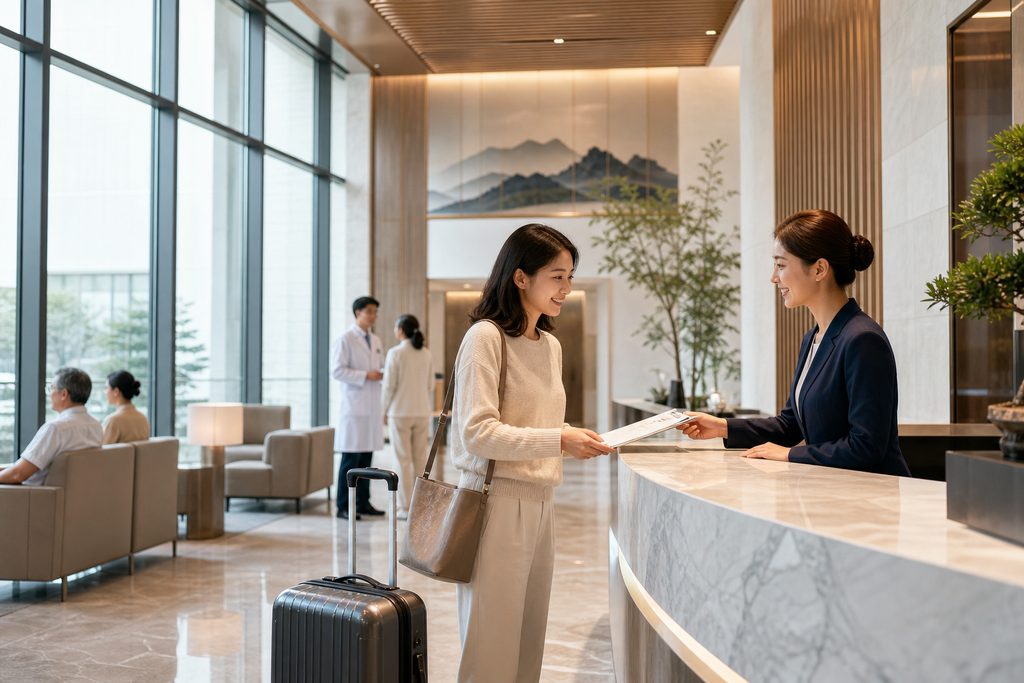
Key Takeaways
- Nanjing BenQ Mingji Hospital is a Taiwan-managed private hospital approximately 90 minutes from Shanghai by high-speed train, offering JCI-accredited care with English-speaking staff and direct insurance billing.
- International outpatient consultations typically range from $80 to $200, and inpatient procedures cost 60-70% less than equivalent care in the United States or Western Europe.
- The hospital operates on an appointment-based system through its International Patient Service Center, but walk-in access to specific specialists without prior coordination is not guaranteed.
- Taiwan-managed hospitals in mainland China follow a distinct operational philosophy emphasizing patient communication, family involvement, and integrated care coordination that differs from standard mainland public hospitals.
The Problem: Quality Private Healthcare Near Shanghai Without the Shanghai Price Tag
Shanghai’s private international hospitals have earned their reputation. United Family, Jiahui, Parkway — these names come up in every expat forum and corporate relocation packet. They also come with consultation fees that start at $150 and climb fast. For a family of four needing routine care, a specialist visit, or a planned surgery, the annual out-of-pocket can hit five figures before insurance kicks in. And that assumes your policy covers private care in China at full rates. Many don’t.
Approximately 700,000 foreign nationals live in Shanghai’s broader metropolitan region. Not all of them have executive-tier insurance. A growing number are self-employed, retired, or working for smaller firms with high-deductible plans. They need JCI-level quality. They need English-speaking physicians. They need a hospital that understands Western expectations around informed consent, privacy, and care coordination. They just can’t justify paying Shanghai private hospital prices for every visit.
Nanjing sits 300 kilometers west of Shanghai. The high-speed train covers that distance in just over an hour. And inside Nanjing, a Taiwan-managed private hospital has been quietly building a reputation that is worth the trip.
Who We Are
We are China Medical Services. We are not a hospital. We do not provide medical treatment, clinical diagnoses, or second opinions. We are your logistical architects — the team that bridges the gap between you and China’s top-tier medical expertise. Our network spans over 340 top-ranked hospitals across 37 cities, including private international facilities like Nanjing BenQ Mingji Hospital. We handle appointment coordination, bilingual medical companion services, visa guidance, and the hundreds of small logistical decisions that turn a stressful medical trip into a manageable plan. We speak the hospital’s language. We know which department handles international patients. We make sure your records arrive before you do.
Why Taiwan-Managed Hospital Shanghai Prices Matter: The Nanjing BenQ Mingji Alternative
The phrase Taiwan-managed hospital Shanghai prices captures something specific. Patients want Shanghai-quality private care. They want the price to make sense. Nanjing BenQ Mingji Hospital — a subsidiary of Taiwan’s BenQ Medical Technology Corporation and managed under the BenQ Medical Center system — operates on a model that makes this possible. Taiwan’s healthcare management philosophy emphasizes operational efficiency, patient-centered communication, and integrated care pathways. Those principles translate into lower overhead and a different pricing structure than what you find at Shanghai’s most prominent international hospitals.
Is this a budget hospital? No. It is a private, JCI-accredited facility with modern equipment, English-speaking physicians, and an International Patient Service Center designed specifically for foreign patients. The difference is structural. Nanjing’s real estate costs are a fraction of Shanghai’s. Staff salaries, while competitive, do not carry the Shanghai premium. These savings pass through to the patient bill. An outpatient specialist consultation that runs $200-300 at a top-tier Shanghai private hospital often costs $80-150 here. An inpatient surgical procedure might run 60-70% of the Shanghai private hospital equivalent. The clinical quality does not drop. The city just costs less to operate in.
Taiwan-Managed Means Something Specific
Mainland Chinese public hospitals are extraordinary in many ways. The clinical volume is staggering. Surgeons at top-tier facilities perform procedures at a scale unmatched anywhere in the world. But the patient experience can feel transactional. Wait times are long. Communication is often minimal. Family members are frequently excluded from care discussions. This is not a criticism — it is a function of hospitals serving 10,000 outpatient visits per day.
Taiwan-managed hospitals operate differently. Taiwan’s healthcare culture emphasizes physician-patient communication, shared decision-making, and family involvement. Nurses are trained to explain what they are doing and why. Physicians expect questions. Care coordinators track patients across departments rather than leaving them to navigate referrals alone. When you walk into Nanjing BenQ Mingji, you are entering a hospital built on that philosophy. The clinical standards are high. The communication style is familiar to anyone who has received care in North America, Western Europe, or Singapore.
This matters for international patients. Language barriers are one problem. Cultural barriers around medical communication are another. A hospital where physicians are trained to explain treatment rationales, discuss alternatives, and welcome family participation removes a layer of stress that even a good interpreter cannot fully solve.
What “Private Hospital Nanjing International Patient Cost” Actually Looks Like
Let’s get specific. The private hospital Nanjing international patient cost structure at BenQ Mingji breaks down into several categories. Outpatient specialist consultations range from approximately $80 to $200 depending on the physician’s seniority and specialty. Routine imaging — X-rays, ultrasound, basic CT — runs $50 to $300. An MRI might cost $400 to $700. These are cash-pay prices. Patients with international insurance that offers direct billing can often settle the bill without upfront payment, though this depends on the specific insurer and plan.
Inpatient care is where the savings compound. A standard private room runs $150 to $300 per night. Surgical procedures vary widely by complexity, but as a reference point: a laparoscopic cholecystectomy (gallbladder removal) might total $4,000 to $7,000 all-inclusive. The same procedure at a private hospital in Shanghai could run $8,000 to $12,000. In the United States, it is $15,000 to $25,000 or more depending on the market.
These numbers are estimates. Every case differs. Surgical complexity, length of stay, implant choices, and specialist fees all shift the final bill. But the directional comparison holds. Nanjing BenQ Mingji delivers private international hospital quality at a meaningful discount to Shanghai equivalents — and at a dramatic discount to US or European private care.
How Is Care at Taiwan-Run Hospitals in China Different?
The question is Nanjing BenQ Mingji hospital good for expats deserves a straight answer. For most outpatient needs, specialist consultations, routine surgeries, and maternity care — yes. The hospital has invested heavily in its international patient infrastructure. The International Patient Service Center employs English-speaking coordinators who handle appointment scheduling, insurance verification, and care navigation. Many physicians speak functional or fluent English. Those who do not are paired with hospital-provided interpreters at no additional charge.
For highly complex or rare conditions, the calculus shifts. A top-tier Shanghai public hospital like Zhongshan or Ruijin may offer deeper subspecialty expertise or access to clinical trials unavailable in Nanjing. That is not a knock on BenQ Mingji — it is a statement about where China’s most concentrated clinical expertise resides. For most international patients, the question is not “is this the best hospital in China” but “does this hospital meet my needs at a reasonable cost with acceptable convenience.” For the majority of conditions, the answer is yes.
The expat patient experience at BenQ Mingji also benefits from something less tangible. The hospital is accustomed to foreign patients. Staff do not freeze up when a non-Chinese speaker walks in. Forms exist in English. Billing departments understand international insurance. These things sound small until you have experienced the alternative — standing in a crowded mainland public hospital hallway, unable to read a single sign, with no idea where to go next.
How to Book International Medical Service Nanjing BenQ: The Process
Patients searching book international medical service Nanjing BenQ want a clear answer: what do I actually do? The hospital accepts international patients through its dedicated International Patient Service Center. You cannot simply walk in and expect an English-speaking coordinator to be available — appointments must be arranged in advance.
The standard process works like this. Contact the International Patient Service Center by phone or email. Provide basic information: your nationality, the medical concern, preferred dates, and any relevant medical records. The coordinator confirms physician availability and schedules the appointment. On the day of your visit, an English-speaking staff member meets you at the international patient reception area. They guide you through registration, escort you to the appropriate department, and remain available throughout your visit.
For patients traveling from Shanghai or other cities, the hospital can assist with logistical recommendations — nearby hotels, transportation from Nanjing South Railway Station, and extended-stay accommodations if follow-up visits are needed. They do not book hotels for you, but they know which ones are convenient.
Here is where things get real. The International Patient Service Center handles a finite number of patients. During peak periods — spring and autumn are busy seasons for medical travel in China — preferred specialists may have limited availability. Last-minute appointments are not guaranteed. Complex cases requiring multidisciplinary input may take days to coordinate, not hours.
This is where working with a service like ours changes the equation. We maintain ongoing relationships with the international patient teams at hospitals across our network. We know who to contact. We know what documentation they need before you arrive. We handle the back-and-forth in Chinese so you spend your energy preparing for treatment, not wrestling with administrative friction. For patients considering best private hospital near Shanghai for foreigners, BenQ Mingji belongs on the shortlist — but getting the most out of it requires advance coordination.
What You Need to Know Before Going Alone
Nanjing BenQ Mingji Hospital is a genuinely international facility. That does not mean navigating it independently is effortless. Several barriers deserve honest acknowledgment.
- Visa Requirements: Medical treatment in China requires an S2 visa with a specific annotation for medical purposes. This is not a tourist visa. The application requires an invitation letter from the treating hospital, medical records, and proof of financial means. The hospital’s International Patient Service Center can provide the invitation letter, but they do not handle the visa application itself. Processing times vary by country and season. If your home country’s Chinese consulate is backlogged, you wait.
- Payment Systems: BenQ Mingji accepts international credit cards, but China’s domestic payment ecosystem runs on WeChat Pay and Alipay. Taxis, restaurants, and hotels outside the hospital may not accept foreign cards. Cash works but requires advance preparation. Setting up WeChat Pay as a foreigner is possible but involves multiple verification steps that frustrate even tech-savvy travelers.
- Medical Records and Translation: The hospital accepts English-language medical records, but complex imaging studies, pathology reports, or physician notes may need professional translation if the reviewing physician requests it. The hospital does not provide this service. You arrive with records in hand, but whether every page is immediately useful depends on the content and the specialist’s preferences.
- Follow-Up Care Coordination: If you return to your home country after treatment, continuity of care depends on how well your Chinese medical records translate into your local physician’s system. Discharge summaries are provided in English. Detailed operative notes or imaging files may require additional requests and formatting. This is not unique to BenQ Mingji — it is a universal challenge in cross-border medical care.
How We Help You Navigate This
These barriers exist for structural reasons. They are not failures of the hospital. They are the natural friction that arises when a patient crosses borders for care. Our job is to reduce that friction to near zero.
Before you travel, we work with the hospital’s International Patient Service Center to secure your appointment, confirm physician availability, and ensure your medical records are complete and properly formatted. We handle the Chinese-language communication so nothing gets lost in translation. We advise on visa documentation requirements and connect you with resources for the application. We recommend hotels based on proximity, comfort, and budget — not generic lists, but specific properties we have seen work well for previous patients.
During your treatment, our bilingual medical companions accompany you to the hospital. They handle registration, guide you to the correct departments, interpret conversations with physicians, and ensure you understand every step of the process. They are not doctors. They do not offer medical advice. What they offer is presence — someone who speaks both languages, knows the hospital layout, and can advocate for your needs in real time.
After treatment, we help you obtain properly formatted medical records, discharge summaries, and imaging files for your home-country physician. We coordinate follow-up communication with the hospital if questions arise after you return home. The goal is continuity — your care does not end when you leave Nanjing.
Our service model is consultation-first. You tell us what you need. We provide a clear plan with transparent pricing. No pressure. No rush. Just an honest assessment of what is possible and what it costs. For patients seeking the best private hospital near Shanghai for foreigners, we help you evaluate whether BenQ Mingji fits your specific situation — and if not, we help you find the hospital that does.
Frequently Asked Questions
How do Taiwan-managed hospital Shanghai prices compare to actual Shanghai private hospitals?
Nanjing BenQ Mingji’s outpatient consultations typically cost 30-50% less than equivalent visits at top-tier Shanghai private international hospitals. Inpatient procedures show similar savings. A surgery that costs $12,000 at a Shanghai private hospital might run $7,000-9,000 at BenQ Mingji. These are directional comparisons — exact pricing depends on your specific condition, the specialist involved, and the complexity of care required. The savings come from lower operational costs in Nanjing, not from lower clinical standards. The hospital maintains JCI accreditation and follows Taiwan-managed care protocols.
Do the doctors speak English at Nanjing BenQ Mingji Hospital?
Many do. The hospital recruits physicians with international training or experience, and English proficiency is a significant consideration in hiring for departments that frequently serve international patients. That said, English fluency varies by individual physician. The International Patient Service Center can match you with English-speaking doctors when availability permits. For consultations with physicians who are not fluent in English, the hospital provides interpreter services at no additional charge. If guaranteed English-speaking care is critical for your situation, advance coordination is essential — walk-in patients may not have immediate access to an English-speaking physician.
What happens if something goes wrong during my treatment?
Nanjing BenQ Mingji Hospital is a full-service acute care facility with emergency department capabilities, intensive care units, and 24/7 in-house physician coverage. For complications arising during a planned procedure, the hospital has the resources to manage most situations on-site. For extremely rare or complex complications requiring subspecialty expertise not available at BenQ Mingji, transfer to a larger tertiary center in Nanjing or Shanghai can be arranged. This is standard practice in any hospital system — no single facility can handle every conceivable complication. Our team maintains contingency plans for every patient we serve, including protocols for escalation and transfer if needed.
Can I use my international health insurance at BenQ Mingji?
The hospital accepts most major international insurance plans and offers direct billing arrangements with many insurers. This means the hospital bills your insurer directly, and you pay only your deductible or co-pay at the time of service — no need to pay the full bill upfront and wait for reimbursement. However, direct billing depends on your specific insurance plan and the hospital’s current agreements. Some plans require pre-authorization before treatment. We recommend verifying coverage with both your insurer and the hospital’s billing department before scheduling any procedure. If direct billing is not available for your plan, the hospital accepts cash, international credit cards, and bank transfers.
How far in advance should I book my appointment?
For routine outpatient consultations, two to four weeks of advance notice is usually sufficient. For surgical procedures or consultations with high-demand specialists, four to eight weeks provides more scheduling flexibility. Last-minute appointments are sometimes possible but not guaranteed. Peak periods — March through May and September through November — see higher demand from both local and international patients. If your travel dates are inflexible, earlier booking is strongly advisable. Our team can often secure appointments on shorter notice through our established relationships with the hospital’s international patient team, but we never promise what we cannot deliver.
Your Next Step
Nanjing BenQ Mingji Hospital represents a specific value proposition: private, Taiwan-managed, JCI-accredited care within easy reach of Shanghai, at prices that reflect Nanjing’s lower cost base rather than Shanghai’s premium. It is not the right choice for every patient or every condition. For many, it is exactly the right balance of quality, cost, and convenience. The key is making that determination with accurate information and a clear plan — not guesswork. If you are considering medical care in China and want to understand whether BenQ Mingji or another facility in our network of over 340 top-ranked hospitals fits your needs, we are here to help you think it through. Contact our team for a free consultation. No pressure. Just clarity.
For more medical information and treatment options in China, visit chinamedservices.com (China Medical Services).
