Medical Treatment in Nanning China: Guangxi’s ASEAN Gateway for Foreign Patients
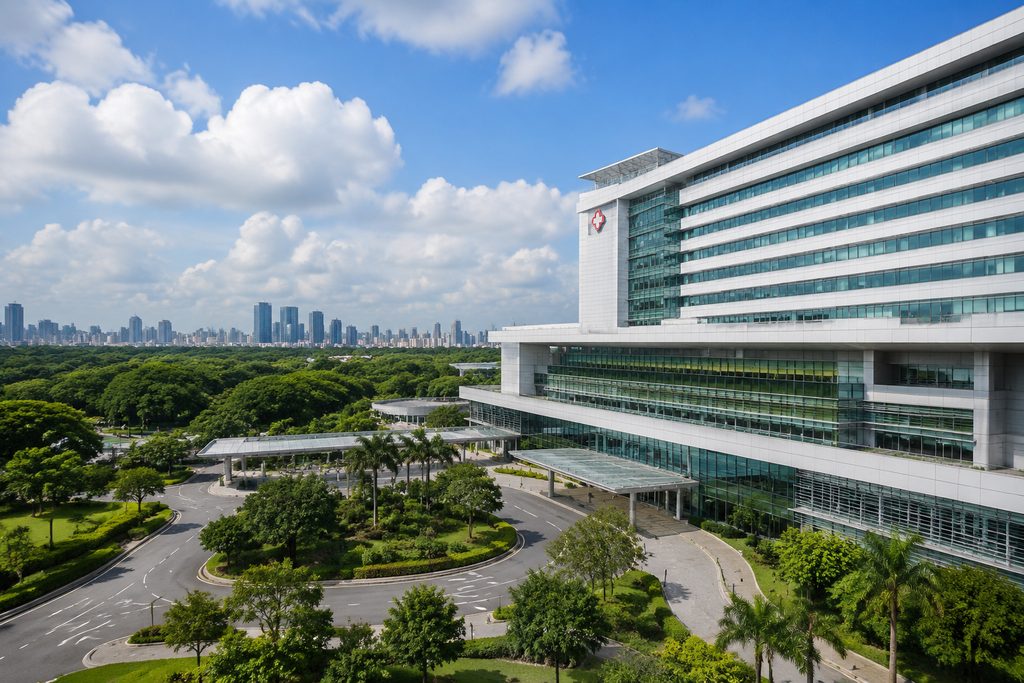
While patients in the United Kingdom wait a median of 14.6 weeks just for a specialist consultation after GP referral, hospitals in Nanning routinely schedule international patients for complex procedures within two to three weeks. The cost differential is just as stark: a total hip replacement that averages $40,000 in the United States often falls below $8,000 in Guangxi’s top-tier hospitals. For patients across Southeast Asia facing long queues in Bangkok or unaffordable quotes in Singapore, Nanning has quietly become a logical alternative. It is not the most famous medical destination in China. That is precisely why it works.
Key Takeaways
- Nanning’s top hospitals offer surgical procedures at 60-80% less than US prices, with cardiac surgery ranging from $10,000-18,000 compared to $120,000+ in America.
- The city’s designation as the China-ASEAN medical gateway means streamlined visa processes and dedicated international patient centers built specifically for Southeast Asian visitors.
- Language barriers remain significant outside international departments — independent navigation of public hospital systems without Mandarin fluency is functionally impossible.
- Any patient considering treatment here should verify their chosen hospital’s international accreditation status and understand that “medical tourism packages” advertised online rarely reflect actual clinical reality.
The Problem: Southeast Asia’s Growing Healthcare Gap
Medical tourism in Asia has a familiar map. Bangkok. Singapore. Kuala Lumpur. Penang. These cities have spent two decades building reputations as destinations for affordable, high-quality care. But the economics are shifting. Singapore’s private hospitals now quote prices that rival Western Europe. Thailand’s most famous international hospitals have seen procedure costs rise 30-40% since 2019, driven by currency appreciation and surging demand from China and the Middle East. A cardiac bypass at a leading Bangkok hospital now runs $18,000-25,000 — still cheaper than the US, but no longer the bargain that built the industry.
Meanwhile, wait times in public systems across ASEAN have stretched thin. Indonesia’s BPJS system leaves patients waiting months for elective orthopedic procedures. The Philippines faces specialist shortages that push patients toward expensive private care. Vietnam’s top public hospitals in Hanoi and Ho Chi Minh City are overwhelmed, with bed occupancy rates regularly exceeding 120% in major departments. Patients with serious conditions — cardiac disease, cancer, degenerative joint disorders — face a brutal calculus: pay beyond their means or wait beyond what feels safe.
China’s southern gateway offers a different equation. Nanning, the capital of Guangxi province, sits just 300 kilometers from the Vietnam border. It is closer to Hanoi than to Guangzhou. For decades, it was an afterthought in China’s medical hierarchy — a provincial capital with decent hospitals but nothing world-class. That has changed. Over the past ten years, Guangxi’s government has poured billions of yuan into upgrading Nanning’s top hospitals, explicitly positioning the city as the medical hub for the China-ASEAN corridor. The investment shows.
Who We Are
We are not a hospital. We do not provide medical treatment, make diagnoses, or offer clinical opinions. China Medical Services operates as a logistical bridge between international patients and China’s network of 340+ top-ranked hospitals across 37 cities. Our team handles the practical barriers that stop foreign patients from accessing Chinese healthcare: hospital matching based on real clinical data, appointment coordination through official international departments, bilingual medical companion services, visa guidance, and travel logistics. We translate medical records, not just languages. We navigate hospital systems, not just city streets. Think of us as your local operations team — people who know which department head specializes in your condition, how to get imaging results transferred properly, and what to do when the pharmacy counter only accepts WeChat Pay. We exist because China’s best hospitals deliver extraordinary clinical outcomes at remarkable prices, but their systems were not designed for patients who do not speak Chinese or understand how Chinese healthcare works.
Why Nanning Delivers Results That Rival Better-Known Destinations
Nanning does not compete with Beijing or Shanghai on prestige. It competes on accessibility, cost, and a deliberate institutional focus on serving patients from Vietnam, Thailand, Cambodia, Laos, Myanmar, and beyond. That focus has produced real infrastructure, not just marketing slogans.
Clinical Volume That Builds Surgical Expertise
The First Affiliated Hospital of Guangxi Medical University handles over 4 million outpatient visits annually. Its cardiac surgery department performs more than 1,200 open-heart procedures each year. The orthopedics department at the People’s Hospital of Guangxi Zhuang Autonomous Region completes over 2,500 joint replacements annually. These are not abstract statistics. Surgical volume correlates directly with outcomes — studies published in The Lancet and JAMA have demonstrated this relationship across multiple specialties. A surgeon who does a procedure 200 times a year simply encounters and manages complications more effectively than one who does it 20 times. Nanning’s top hospitals operate at volumes that rival major Western academic medical centers, but with cost structures that reflect Guangxi’s lower operating expenses.
For ASEAN patients specifically, this volume matters in another way. Many arrive with conditions that have progressed further than typical Western patients — advanced cardiac disease, late-stage orthopedic degeneration, cancers detected later. Nanning’s surgical teams see these complex presentations regularly because they serve a catchment area of over 50 million people across Guangxi and neighboring regions. Complex cases are not outliers here. They are Tuesday.
Infrastructure Built for Cross-Border Patients
Guangxi’s government designated medical tourism as a provincial priority industry in 2016. The results are visible. Nanning Wuxu International Airport now offers direct flights to every ASEAN capital. The city’s major hospitals have established dedicated international medical centers with English-speaking coordinators, separate registration areas, and protocols for handling foreign insurance documentation. The China-ASEAN Information Harbor in Nanning includes a telemedicine platform that connects Guangxi specialists with partner hospitals in Vietnam, Thailand, and Cambodia for pre-arrival consultations.
This is not theoretical. The Guangxi ASEAN International Medical Center, opened in 2020, was purpose-built to serve cross-border patients. It includes interpretation services for Vietnamese, Thai, and English, streamlined payment systems that accept international credit cards and bank transfers, and a patient liaison office specifically for coordinating follow-up care after patients return to their home countries. These are structural advantages that general hospitals in larger Chinese cities often lack — their international departments serve a global patient base. Nanning’s serve ASEAN specifically.
Cost Structures That Change the Affordability Equation
Let’s address the question directly: what is the cost of medical treatment in Guangxi China? The numbers tell a compelling story, but they require context. Lower cost does not mean lower quality in this system. It means different economics.
| Procedure | Guangxi (Top Public Hospital) | Thailand (Private International) | Singapore (Private) | United States |
|---|---|---|---|---|
| Coronary Artery Bypass Graft | $10,000 – 18,000 | $18,000 – 25,000 | $35,000 – 50,000 | $120,000+ |
| Total Hip Replacement | $6,000 – 9,000 | $12,000 – 16,000 | $22,000 – 30,000 | $40,000+ |
| Knee Replacement | $5,500 – 8,500 | $10,000 – 14,000 | $20,000 – 28,000 | $35,000+ |
| Cardiac Valve Replacement | $12,000 – 20,000 | $20,000 – 30,000 | $35,000 – 50,000 | $150,000+ |
| Spinal Fusion (Single Level) | $8,000 – 14,000 | $15,000 – 22,000 | $28,000 – 40,000 | $80,000+ |
All prices are estimates in USD and vary by hospital, surgeon seniority, implant choice, and case complexity. These represent total hospital charges for international patients through official channels.
The structural reasons behind these medical tourism Nanning China prices are worth understanding because they dispel the assumption that cheap means compromised. Guangxi’s lower cost of living translates directly to lower hospital operating costs — staff salaries, facility expenses, administrative overhead — without affecting clinical supply chains. The implants, surgical instruments, and pharmaceuticals used in Nanning’s top hospitals are the same international brands used in Bangkok and Singapore: Stryker, Medtronic, Johnson & Johnson, Zimmer Biomet. Chinese hospitals purchase these at comparable wholesale prices. The savings come from labor costs and operational efficiency, not from cutting corners on materials.
Also, China’s public hospital system operates on a high-volume, lower-margin model that differs fundamentally from Southeast Asia’s private international hospitals. A hospital like Bumrungrad in Bangkok must generate profit for shareholders. The First Affiliated Hospital of Guangxi Medical University is a public institution. Its mandate is clinical service and medical education, not return on investment. That structural difference shows up on the bill.
What You Need to Know Before Considering Treatment in Nanning
Honesty about barriers is more useful than polished marketing. Here is what makes independent medical travel to Nanning genuinely difficult.
- Visa Requirements Are Specific and Unforgiving: Medical treatment in China requires an S2 visa with the specific purpose of medical treatment noted. This is not a tourist visa. It is not an M business visa. Applying requires an official invitation letter from the Chinese hospital where you will receive treatment — not an email, not a brochure, but a formal document with the hospital’s official stamp. Obtaining this letter independently means first contacting the hospital’s international department, submitting medical records for review, receiving a treatment acceptance confirmation, and only then getting the invitation letter. This process alone can take two to four weeks. Getting it wrong means visa rejection at the consulate. There is no workaround.
- Public Hospital Systems Were Not Designed for Foreign Patients: Walk into the main outpatient hall of any major Nanning public hospital at 8 AM on a Monday. You will see thousands of people. Registration counters with queues snaking through lobbies. Digital kiosks with interfaces entirely in Chinese characters. Payment systems that accept WeChat, Alipay, or Chinese bank cards — and nothing else. Signs in Mandarin. Announcements in Mandarin. The hospital is excellent. The system is overwhelming. This is not a complaint about Chinese healthcare. It is simply the reality of a system built to serve a domestic population of millions. International departments exist as separate entities within these hospitals precisely because the main system is impenetrable without local knowledge and language fluency.
- The “Surgery Package” Problem: You may encounter websites offering to book surgery package Nanning China deals — fixed-price bundles that promise a specific procedure at a set cost with hotel and airport transfer included. Approach these with extreme skepticism. No legitimate Chinese hospital sells fixed-price surgery packages online to international patients sight unseen. Surgery requires in-person consultation. The surgeon must examine you, review your imaging personally, and determine the appropriate surgical plan. The final cost depends on implant choice, surgical approach, length of stay, and any complications. Any website offering to lock in a price before a doctor has seen you is not representing a real hospital’s process. They are selling something else — often a commission-based referral to a private clinic of uncertain quality. Real hospital coordination involves submitting records, receiving a preliminary treatment plan and cost estimate, traveling for consultation, and only then confirming surgery details and final pricing. The process is slower. It is also honest.
- Is Medical Treatment in Nanning Safe for International Patients? The short answer is yes — within the right hospitals and through proper channels. The First Affiliated Hospital of Guangxi Medical University and the People’s Hospital of Guangxi hold national accreditation and maintain international-standard surgical protocols. Infection rates in their operating theaters are comparable to international benchmarks. But safety also depends on communication. A surgical team that cannot understand your medical history, allergies, or current medications is a surgical team working with incomplete information. This is why the international department pathway matters. It is not about VIP treatment. It is about ensuring that every clinician who touches your care has access to accurately translated records and can communicate with you directly about symptoms, pain levels, and concerns. Safety is not just about surgical skill. It is about information flow.
How We Help You Navigate This
These barriers exist for structural reasons. They are not anyone’s fault — they are the natural result of a healthcare system optimized for China’s domestic population of 1.4 billion people. Our role is to bridge the gap between that system and an international patient who needs access to it.
Before you travel, we handle hospital matching. This means reviewing your medical records, understanding your diagnosis and treatment needs, and identifying which of Nanning’s top hospitals has the most relevant specialist expertise for your specific condition. We do not recommend hospitals based on commission agreements. We recommend based on clinical data — which departments have published research in your condition, which surgeons have the highest procedure volumes, which hospitals have established international patient protocols. We then coordinate with the hospital’s official international department to submit your records, obtain a preliminary treatment assessment and cost estimate, and secure the formal invitation letter required for your S2 visa application. Our team also provides specific guidance on visa documentation, flight arrangements, and accommodation near the hospital.
During your treatment, a bilingual medical companion accompanies you to every appointment. This person is not a translator standing awkwardly in the corner. They are your operational interface with the hospital system. They handle registration. They navigate the physical layout of massive hospital campuses so you do not spend 45 minutes looking for the imaging department. They ensure your medical history and current concerns are communicated accurately to every doctor you see. They manage payment at counters that would otherwise reject your international credit card. They collect your lab results, your imaging reports, your discharge summary — and they make sure you receive translated copies before you leave. For ASEAN patients specifically, we can arrange companions who speak Vietnamese or Thai in addition to English and Mandarin, which is a capability that Nanning’s geographic position makes uniquely practical.
After you return home, we coordinate follow-up. Chinese hospitals expect post-surgical patients to return for follow-up visits at specific intervals. For international patients, this is often impractical. We work with your hospital’s international department to arrange remote follow-up consultations, secure translated surgical records and implant documentation for your home-country physician, and coordinate any necessary rehabilitation guidance. The goal is continuity — your surgeon in Nanning should remain connected to your recovery even after you have left Guangxi.
Our service model is consultation-first. You tell us what you need. We assess whether Nanning — or another Chinese city — is genuinely the right fit for your situation. Sometimes the answer is Beijing or Shanghai, where certain subspecialties concentrate. Sometimes the answer is that your condition is better managed at home. We tell you the truth, provide a detailed plan and cost estimate if treatment in China makes sense, and let you decide. Our coordination fees start from $300 for hospital appointment arrangement, with comprehensive bilingual companion services from $200 per day. Any consultation or coordination fee you pay is credited in full toward on-the-ground coordination services if you proceed with treatment within 90 days.
Frequently Asked Questions
The First Affiliated Hospital of Guangxi Medical University is the province’s top-ranked institution, with particular strength in cardiac surgery, oncology, and organ transplantation. The People’s Hospital of Guangxi Zhuang Autonomous Region excels in orthopedics and minimally invasive surgery. Both operate dedicated international medical centers with English-speaking staff and established protocols for foreign patient intake. For patients seeking private international facilities, Nanning has fewer options than Shanghai or Beijing, but several JCI-accredited private clinics offer outpatient and diagnostic services with direct insurance billing. The key distinction: public hospitals provide the highest-level surgical expertise. Private clinics offer convenience and language accessibility for consultations and diagnostics.
No legitimate hospital offers fixed-price surgery packages to patients who have not been examined in person. You will see websites making these offers. They are not representing real hospital processes. The legitimate pathway involves submitting medical records for preliminary review, receiving a treatment plan and cost estimate, traveling for in-person consultation, and only then confirming surgery details. Any service offering to lock in a final surgical price before a doctor has evaluated you should be treated with extreme caution. Real surgical planning does not work that way.
Verify the hospital’s accreditation status. China’s top public hospitals undergo regular national evaluation — look for “Grade 3A” designation, which indicates the highest level of comprehensive capability. For international benchmarks, check whether the hospital’s international department maintains any Joint Commission International accreditation or equivalent. Ask directly about infection rates in the specific department where you would receive treatment. Request information about the surgical team’s experience with international patients and their procedure-specific volumes. A hospital that cannot or will not provide this information should raise concerns. Safety also depends heavily on communication — ensure that a clear interpretation pathway exists for every clinical interaction, not just the initial consultation.
Geographic proximity is the obvious advantage — direct flights from most ASEAN capitals take under three hours. But the structural advantages run deeper. Nanning’s hospitals have built international departments with specific expertise in ASEAN patient demographics, including familiarity with common genetic and lifestyle-related conditions in Southeast Asian populations. The city’s medical interpreter pool includes Vietnamese and Thai speakers alongside English and Mandarin, which is rare in most Chinese cities. The China-ASEAN telemedicine platform enables pre-arrival consultations and post-discharge follow-up with partner hospitals in Southeast Asia. And the provincial government’s explicit policy focus on ASEAN medical tourism means streamlined visa processing and dedicated patient support infrastructure that general international departments in Beijing or Shanghai do not prioritize for Southeast Asian patients specifically.
Chinese hospitals carry medical liability insurance, and international patients treated through official hospital channels have legal recourse through China’s medical dispute resolution system. In practice, the most important protection is choosing a hospital with high surgical volumes and established complication management protocols — problems are best prevented, not litigated. Our coordination includes ensuring that you receive complete translated surgical records and implant documentation, which is essential if you need follow-up care in your home country. We also maintain communication with your surgical team after discharge so that any post-operative concerns can be addressed directly with the surgeon who operated on you, not an emergency room physician unfamiliar with your case. No system is risk-free. But a properly coordinated treatment pathway ensures that if complications arise, you are not navigating them alone in a foreign hospital system.
Your Next Step
Nanning has built something genuinely useful for patients across Southeast Asia: high-volume surgical expertise at prices that make treatment accessible, delivered through hospital systems increasingly designed with ASEAN patients in mind. The barriers are real — visa requirements, language incompatibility, payment systems that assume local residency. But they are navigable with proper coordination. If you are weighing treatment options and want to understand whether Nanning’s hospitals are a fit for your specific situation, our team can provide an honest assessment based on your medical records and treatment needs. No pressure. No packages. Just clarity about what is possible, what it costs, and how to proceed safely.
Medical Disclaimer: This article provides informational context about medical travel logistics. It does not constitute medical advice, treatment recommendations, or clinical guidance. Always consult a qualified physician regarding any medical condition or treatment decision. Hospital rankings and surgical volumes cited reflect publicly available data and institutional reporting; individual outcomes vary based on patient factors and case complexity.
For more medical information and treatment options in China, visit chinamedservices.com (China Medical Services).
