Nasal Polyp Removal in China: Costs, Top Hospitals, and Safety
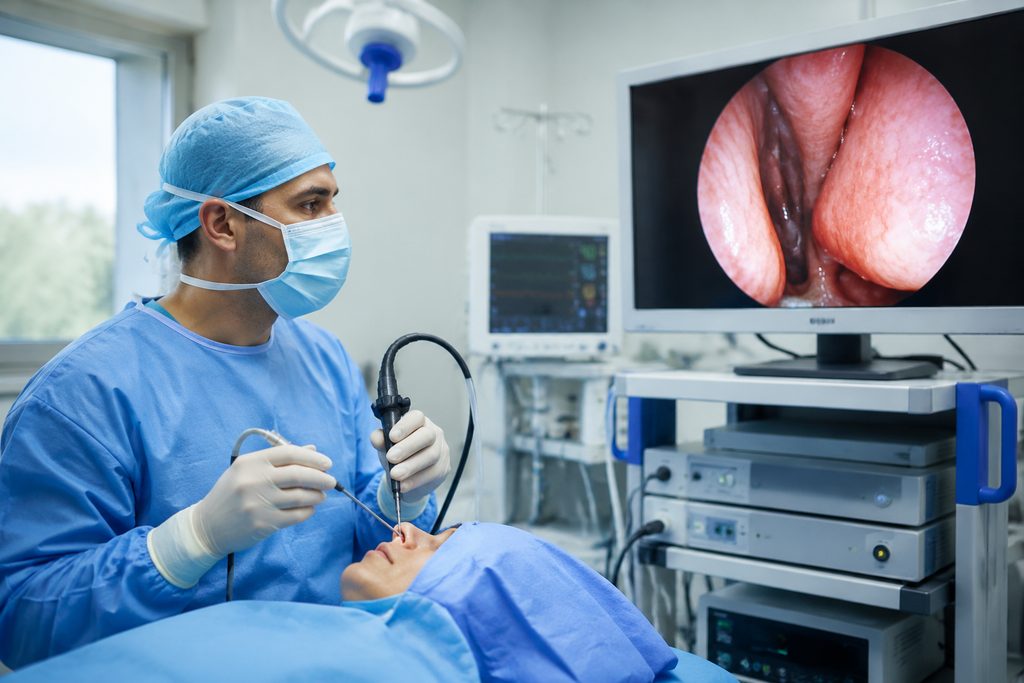
You’ve probably heard that traveling abroad for surgery means gambling with your health. When it comes to nasal polyp removal in China, the evidence points the other way. China’s top ENT departments perform tens of thousands of endoscopic sinus procedures annually, and the equipment — image-guided navigation, microdebriders, high-definition endoscopes — is the same hardware you’d find in a German or American operating room.
What differs is the bill. And the waiting.
This guide covers what nasal polyp removal cost China patients actually pay, which hospitals lead the field, how safety compares, and what the process looks like from first email to follow-up scan.
Nasal Polyp Removal in China: The Short Answer
At a top-tier public hospital in China, functional endoscopic sinus surgery (FESS) for nasal polyps typically costs $3,000 to $8,000 all-in — surgeon fees, anesthesia, operating room time, hospital stay, and initial follow-up. The same procedure in the United States runs $15,000 to $35,000 before insurance. In the UK, private rates sit around £6,000–£9,000.
That’s the headline. The complication is this: you cannot simply book a Chinese public hospital online the way you’d book a hotel. Public hospital outpatient slots open on the day, and surgery follows an in-person consultation. To lock in a date before you fly, you go through a hospital’s international department or a coordination service. That distinction shapes everything below.
Who This Is Right For — and Who It Isn’t
Nasal polyps are benign growths of the nasal lining, often tied to chronic rhinosinusitis. They cause congestion, loss of smell, facial pressure, and sometimes sleep disruption. Surgery is considered when medication — usually intranasal corticosteroids, sometimes biologics — fails to control symptoms.
You may be a reasonable candidate for treatment in China if you:
- Have a confirmed diagnosis from your home ENT, with a recent CT scan of the sinuses
- Face a long wait at home (in some public systems, months for non-urgent ENT surgery)
- Are paying out of pocket or have insurance that reimburses internationally
- Can travel for 10–14 days, including consultation, surgery, and early recovery
- Have someone accompanying you, or are comfortable using a bilingual medical companion
You should probably not pursue this if you:
- Have an active, untreated bleeding disorder or severe uncontrolled cardiac disease
- Are on anticoagulants that cannot be safely paused — this needs your cardiologist’s sign-off first
- Have a suspected tumor rather than simple polyps; that requires a different diagnostic pathway
- Cannot obtain your imaging and pathology records in a transferable format
- Expect a guaranteed outcome. No responsible provider promises that, anywhere
Being honest about the last point matters. Surgery for polyps has a real recurrence rate — studies in peer-reviewed rhinology journals put recurrence at roughly 20–40% over several years, higher in patients with aspirin-exacerbated respiratory disease or allergic fungal sinusitis. China doesn’t change that biology. What it changes is access and price.
The Options, Compared
Here’s how the realistic pathways stack up for a Western patient with confirmed nasal polyps.
| Pathway | Typical Cost (USD) | Wait Time | Language Support | Best For |
|---|---|---|---|---|
| US hospital, insured | $15,000–$35,000 billed; $3,000–$8,000 out-of-pocket | 3–8 weeks | Native English | Patients with good US coverage and no travel appetite |
| UK private | £6,000–£9,000 (~$7,500–$11,500) | 2–6 weeks | Native English | UK residents wanting speed without leaving the country |
| China public hospital, international dept. | $3,000–$8,000 | 1–3 weeks after records review | English-speaking staff at international wings | Cost-conscious patients with straightforward anatomy |
| China private international hospital | $8,000–$15,000 | Days to 2 weeks | Full English service, insurance direct billing | Patients who prioritize comfort and direct billing |
| China public hospital, standard channel | $2,000–$5,000 | Requires in-person queuing; unpredictable | Limited; needs a companion | Long-stay residents, not short-trip visitors |
Read the table by priority. If your main constraint is money and your case is uncomplicated, the public international department is the sweet spot. If you carry international insurance that settles directly, private hospitals remove most friction. And if you’re in China long-term and speak some Mandarin, the standard channel is cheapest but slowest to organize.
Which Hospitals Lead for Nasal Polyps in China
China has more than 35,000 hospitals. The top 5% — roughly 340 institutions tracked by the Fudan Hospital Ranking and JCI accreditation — handle the complex ENT volume. For sinus and skull-base work, three names come up repeatedly in specialist reputation rankings: Beijing Tongren Hospital (affiliated with Capital Medical University, long regarded as China’s flagship eye-and-ENT center), Fudan University Eye & ENT Hospital in Shanghai, and West China Hospital in Chengdu.
Ranking methodology matters here. The Fudan specialist reputation list ranks departments within 45 specialties, so you can legitimately say a department sits “among China’s top 10 for otolaryngology.” The general hospital list only assigns tiers (A++++ down to A), not numbered positions. Anyone quoting you a precise “number 3 hospital in China” is inventing precision that doesn’t exist.
For a broader view of how departments are scored, our specialty rankings by department breaks down the top 10 hospitals in each field, including ENT. If you’d rather compare cities first — Shanghai’s Fudan cluster versus Beijing’s Tongren and Peking Union ecosystem — the Fudan Top 100 hospitals by city page groups them geographically.
Is Nasal Polyp Surgery Safe in China?
Safety is the question every patient asks, and it deserves a direct answer rather than reassurance.
Endoscopic sinus surgery is a mature procedure worldwide. Major complications — orbital injury, cerebrospinal fluid leak, significant hemorrhage — occur in a small single-digit percentage of cases in published series, and rates fall when experienced surgeons operate with navigation guidance. Chinese tertiary hospitals with high ENT volume publish outcomes broadly in line with international benchmarks. Volume helps: a department performing hundreds of these procedures yearly has seen the anatomy variations that trip up low-volume surgeons.
The honest caveats. First, quality is not uniform across 35,000 hospitals — the gap between a top-10 ENT department and a mid-tier provincial hospital is real. Choose deliberately. Second, communication risk is genuine. If you don’t speak Mandarin and your surgeon doesn’t speak English, consent discussions and post-op instructions can go sideways. That’s a safety issue, not just an inconvenience. Third, follow-up. You’ll need an endoscopy and possibly a CT after returning home, and your local ENT needs your operative report in English.
What It Costs and How Long It Takes
Back to the numbers, with the detail that determines where in the range you land.
Cost drivers:
- Hospital tier. A top-10 ENT department charges more than a provincial hospital — but still a fraction of Western rates
- Primary vs. revision surgery. Revision cases take longer and often need navigation; expect the upper end
- Polyp extent. Simple antrochoanal polyps are quicker than diffuse pan-sinus disease
- Length of stay. Most FESS patients stay 2–4 nights in China
- Private vs. public. Private international hospitals can run 2–3 times the public international department rate
A typical all-in figure at a public hospital international wing: $3,000–$8,000. That covers pre-op labs, CT if needed, surgeon and anesthesia fees, the OR, ward bed, medications, and one or two follow-up visits. It does not cover flights, hotel, visa costs, or the coordination service itself.
Timeline, week by week:
- Days 1–7: Send CT scans, endoscopy photos, and history. Receive a written second opinion or hold a video consultation
- Days 7–14: Hospital confirms feasibility and offers dates. You apply for the S2 visa
- Arrival day: Registration, hospital card creation, pre-op assessment
- Day 2–3: Surgery
- Day 3–6: Observation, first post-op endoscopy, discharge
- Week 2–3: Fly home with operative reports and imaging in hand
Practical Considerations for Sinus Surgery Abroad
Visa. Foreign patients coming to China for medical treatment use the S2 visa, which covers short-stay private affairs including medical care. Accompanying family members apply for S2 as well. Stays beyond 180 days fall under S1. Note that the M visa is for commercial and trade activity — it has nothing to do with medical treatment, despite what some outdated blog posts claim. Requirements shift, so confirm current documentation with your nearest Chinese embassy or consulate, and expect to submit a hospital invitation letter.
Records. Bring your CT scan on disc or as DICOM files, your endoscopy images, a medication list, and any allergy testing. Chinese hospitals will re-run some labs, but imaging from home saves time and money.
Payment. Public hospitals generally require prepayment; you settle the bill and seek reimbursement from your insurer afterward. Private international hospitals often bill international insurance directly. Confirm your policy covers treatment in China before you book anything.
Language. In a hospital that sees 10,000+ outpatients on a busy day, navigation is genuinely hard without Mandarin. A bilingual medical companion handles registration, queuing, payment, pharmacy pickup, and translation during consent and discharge — from $300 per day for a half or full day.
Follow-up at home. Ask for your operative report, discharge summary, and post-op imaging in English before you leave China. Your local ENT will want them. Plan your first home endoscopy for roughly 2–4 weeks after surgery.
Frequently Asked Questions
Shanghai’s top ENT departments generally land in the $4,000–$8,000 range for endoscopic sinus surgery at an international wing, slightly above cities like Chengdu or Wuhan for equivalent procedures. The premium reflects demand and the concentration of specialist expertise, not a difference in technique. Beijing prices are broadly similar to Shanghai’s.
Not through the standard public channel — that requires an in-person consultation first. You can, however, secure a confirmed surgical plan and date through a hospital’s international department or a coordination service, based on a remote review of your records. That’s the practical route for short-trip medical travelers.
At high-volume tertiary hospitals, complication rates are comparable to international benchmarks, and the equipment is current. The variables that affect your personal safety are hospital selection, surgeon experience with your specific anatomy, and clear communication. Address all three before booking, and don’t skip the remote second opinion.
Packages vary enormously. A useful one includes hospital coordination, interpretation, airport transfer, and accommodation near the hospital — the logistics you can’t easily arrange remotely. A less useful one bundles sightseeing you won’t feel like doing after nasal surgery. Read what’s actually included, and check whether the hospital itself is named.
Your Chinese hospital can provide records and, in many cases, a follow-up video consultation. For anything urgent, you’ll be treated locally — which is exactly why you leave China with complete English-language documentation. Discuss your post-op plan with your home ENT before you travel, not after.
Your Next Step
Nasal polyp surgery in China is a legitimate option for the right patient: confirmed diagnosis, realistic expectations, and a willingness to plan carefully. The savings are real, the top hospitals are genuinely strong, and the main risks are logistical rather than surgical — which means they can be managed.
We are China Medical Services, a coordination service, not a hospital. We don’t diagnose, operate, or promise outcomes. What we do is connect you with the right ENT department among the 340+ top-ranked hospitals in our network across 37 cities, arrange written second opinions and video consultations, and provide bilingual support on the ground. If you’d like a straight assessment of whether your case fits, start with a free consultation — no pressure, no obligation, just a clear answer.
This article is for general information only and is not medical advice. Treatment decisions should be made with a qualified physician who has reviewed your individual records.
For more medical information and treatment options in China, visit chinamedservices.com (China Medical Services).
