Nigerian Patients Guide to China Medical Care: Full Service
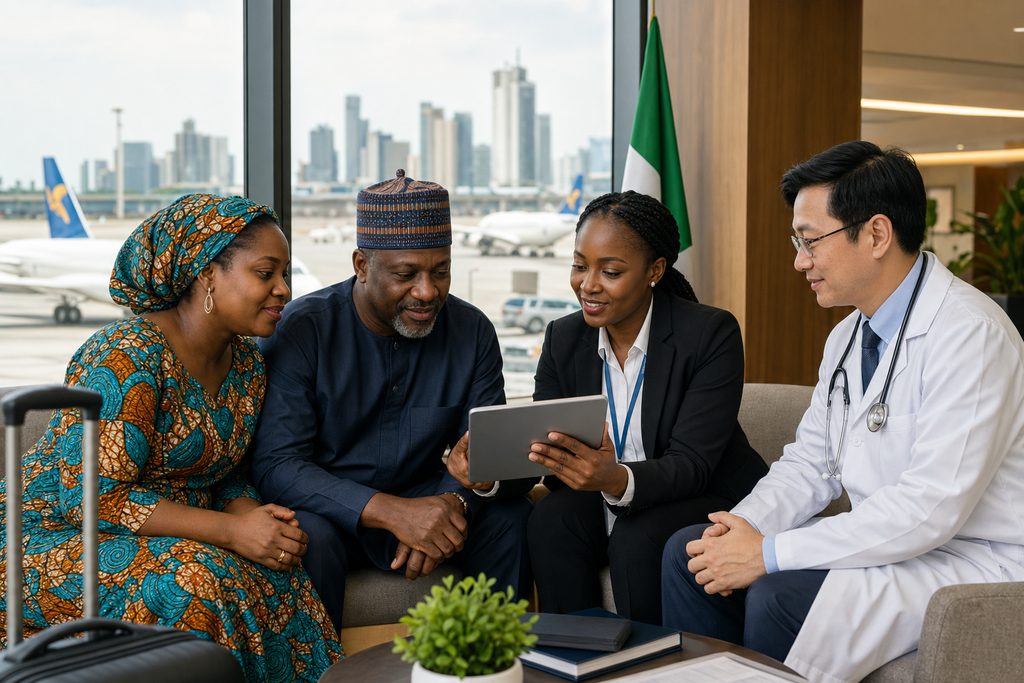
Have you ever sat in a Lagos hospital waiting room and wondered whether there is a faster, more affordable path to advanced surgery? For many Nigerian families, that question leads to a single country: China. The kidney transplant cost China for foreigners typically ranges from $45,000 to $75,000 at top-tier public hospitals, compared with $100,000 to $150,000 in India or Turkey and well over $400,000 in the United States. That gap explains why more Nigerians are asking about full-service medical care in China.
But cost is only one part of the picture. Navigating a Chinese hospital without language support, without a clear visa pathway, and without someone on the ground is not something we would recommend. This guide covers what full service actually means, what it costs, and how to decide whether it fits your situation.
Full-Service Medical Care in China: The Short Answer
China offers Nigerian patients access to 340+ top-ranked hospitals across 37 cities, staffed by specialists who perform high volumes of complex procedures. A full-service arrangement means a coordinator handles hospital matching, appointment scheduling, bilingual accompaniment, visa guidance, and logistics. You arrive with a plan already in place.
The caveat: ordinary outpatient clinics in Chinese public hospitals cannot be booked from overseas. You cannot email a hospital and reserve a surgery date. What full service does is route you through the hospital’s international department or VIP channel, where overseas scheduling is possible. That channel costs roughly 1.5 to 2 times the standard outpatient rate — but it is still far below Western prices.
Who This Is Right For — and Who It Isn’t
Full-service medical travel to China suits a specific profile. Here is who typically benefits:
- Patients with a confirmed diagnosis who need a second opinion or a surgical plan before committing to travel.
- Families seeking cardiac surgery, oncology treatment, orthopedics, neurosurgery, or organ transplantation at a fraction of US or UK costs.
- Patients who can provide recent medical records, imaging, and lab results in English or have them translated.
- Those who can fund treatment upfront and seek reimbursement from insurance later, since Chinese public hospitals require prepayment.
And here is who should probably not pursue this route:
- Patients in unstable condition who cannot tolerate an international flight.
- Anyone expecting a fixed, guaranteed surgery date before a face-to-face consultation. Chinese law and hospital policy require in-person evaluation first.
- Patients whose primary concern is a luxury hotel-like hospital experience. Chinese public hospitals are efficient but crowded; private international hospitals offer more comfort at higher cost.
- Those who cannot arrange at least $15,000 to $30,000 in liquid funds for initial deposits and travel.
The Options, Compared
Nigerian patients weighing China against other destinations often ask us to lay out the differences plainly. Here is a comparison based on typical figures for major procedures:
| Factor | China (Top Public) | India | Turkey | USA |
|---|---|---|---|---|
| Heart bypass surgery | $12,000–$20,000 | $8,000–$14,000 | $14,000–$22,000 | $120,000+ |
| Kidney transplant | $45,000–$75,000 | $14,000–$25,000 | $25,000–$40,000 | $400,000+ |
| Liver transplant | $80,000–$140,000 | $35,000–$55,000 | $70,000–$110,000 | $500,000+ |
| Cancer immunotherapy (annual) | $30,000–$60,000 | $20,000–$40,000 | $50,000–$90,000 | $150,000–$250,000 |
| English-speaking coordination | Available via international departments | Widely available | Available | Native |
India is cheaper for transplants. But for cardiac surgery, oncology, and orthopedics, China’s pricing is competitive while offering access to hospitals like Fuwai Hospital, which performs over 14,000 cardiac surgeries annually — the highest volume globally. If your priority is a specific specialty, the 45 specialty rankings on our site show which Chinese hospitals rank among the country’s top 10 for oncology, cardiac surgery, and more.
What “Full Service” Actually Covers for a Nigerian Patient
This is the part most people misunderstand. Full service is not a hospital package. It is a coordination layer between you and the hospital. Here is what a Nigerian patient should expect:
Medical records review. You send your existing reports, scans, and lab work. A relevant Chinese specialty team reviews them and provides a written second opinion — typically $300 to $500 for a top hospital expert. This step tells you whether traveling is worthwhile before you spend money on flights.
Video consultation. For $100 to $300, you can speak online with a physician from a public hospital international department or a private international hospital. Top-specialist video consultations run $500 to $800. Any consultation fee is credited in full toward on-the-ground coordination if you proceed within 90 days.
Hospital appointment coordination. Starting from $300, we handle registration, medical card creation, and scheduling through the hospital’s official international or special-needs channel. If we cannot secure the appointment shown in the order, the coordination fee is refunded in full.
Bilingual medical companion. From $300 per day, a companion handles queueing, payment, wayfinding, and translation during your hospital visits. This is not a luxury. In a hospital seeing 10,000 outpatient visits per day, without Chinese language support you will lose hours and possibly miss critical instructions.
Visa guidance and logistics. We advise on the correct visa category and the documents the embassy requires. We do not guarantee visa approval.
How to Arrange a Medical Visa for China from Nigeria
Let us address the visa question directly, because there is a common mistake we see repeatedly. The correct visa for medical treatment in China is the S2 visa, which covers short-term private affairs including medical care. If your treatment requires a stay longer than 180 days, you apply for an S1 visa. Accompanying family members also apply for S2.
The M visa is for commercial and trade activities. It has nothing to do with medical treatment. Do not apply for an M visa expecting it to work for hospital admission.
To arrange an S2 visa from Nigeria, you generally need:
- A valid Nigerian passport with at least six months of validity and blank pages.
- A completed visa application form and a recent passport photograph.
- An invitation letter or medical treatment confirmation from the Chinese hospital.
- Medical records and a doctor’s referral letter explaining why treatment in China is necessary.
- Proof of funds to cover treatment and stay.
- Proof of accommodation arrangements.
Processing times vary. Apply through the Chinese Embassy in Abuja or the Consulate in Lagos. Requirements change, so verify with the embassy before submitting. A coordinator can help you assemble the hospital documents that strengthen your application.
Is It Safe to Have Surgery in China?
This question deserves a straight answer. For patients who select a top-tier hospital — those in the Fudan ranking’s top 100 or with JCI accreditation — safety standards are high. Fuwai Hospital’s cardiac surgery volume exceeds any other center worldwide. Peking Union Medical College Hospital and West China Hospital are internationally known. These are not facilities that tolerate mediocrity.
But “safe” also depends on factors beyond the operating room. Post-operative care quality varies by hospital tier. Language barriers can create real risks if instructions are misunderstood. Infection control standards in top hospitals are comparable to Western benchmarks, but hospital environments are more crowded. A bilingual companion mitigates the communication risk. Choosing a hospital from a verified database rather than a broker’s recommendation mitigates the quality risk.
We do not promise outcomes. No ethical organization can. What we can tell you is that thousands of international patients undergo surgery in China each year, and the hospitals we work with publish their volumes and accreditations openly.
What It Costs: A Realistic Breakdown for a Nigerian Patient
Let us put numbers on a typical full-service journey for a major procedure. These are ranges, not quotes, and they vary by hospital and case complexity.
- Written second opinion: $300–$500
- Video consultation with top specialist: $500–$800
- Hospital appointment coordination: from $300
- Bilingual companion (per day): from $300
- Airport transfer (round trip): $200
- VIP end-to-end coordination: $5,000–$8,000 for high-end and complex cases
- Surgery and hospitalization: varies widely — bypass surgery $12,000–$20,000, kidney transplant $45,000–$75,000, liver transplant $80,000–$140,000
- Flights from Lagos or Abuja to Beijing or Shanghai: $800–$1,500 round trip per person
- Accommodation near hospital: $40–$120 per night for a standard hotel
What is not included: visa fees, meals, local transportation beyond hospital visits, and any complications that extend the hospital stay. Chinese public hospitals require prepayment. Private international hospitals like United Family or Jiahui often accept direct insurance billing, but their prices run higher.
Practical Considerations: Records, Payments, and Follow-Up
Before you book anything, get your medical records in order. Chinese specialists will want recent imaging, pathology reports, lab results, and a summary of prior treatments. If your records are not in English, have them translated. The written second opinion step exists precisely to determine whether your case is suitable before you spend thousands on travel.
Payment is another reality. Chinese hospitals do not bill your insurance company. You pay, then claim reimbursement. Bring a combination of international credit cards, a debit card that works overseas, and confirm with your bank that transactions in China will not be blocked. Some hospitals accept wire transfers for large deposits.
Organ transplant policy note: China strictly regulates organ transplantation. Foreign patients must comply with all legal requirements, including ethical review and documentation. No legitimate hospital or coordinator can promise a donor organ or a guaranteed transplant slot. Anyone who makes such a promise is not operating within the law.
Follow-up after returning to Nigeria matters. Chinese surgeons will provide discharge instructions and a medication plan. You need a local physician in Nigeria who can manage your recovery and order follow-up tests. Video follow-up consultations with your Chinese team are available and typically cost $100 to $300 per session.
Frequently Asked Questions
You cannot book a liver transplant directly. The process starts with a written second opinion or video consultation, where a transplant center reviews your records and determines whether you are a candidate. If the hospital accepts your case, you travel for in-person evaluation. Admission, transplant listing, and surgery dates depend entirely on the hospital’s medical assessment and legal requirements. No coordinator can bypass this.
Beijing is home to several top-ranked oncology centers. The Chinese Academy of Medical Sciences Cancer Hospital and Peking Union Medical College Hospital both appear in the national top 10 for oncology in the Fudan specialty rankings. For international patients, the hospital’s international department provides English-speaking coordination, though scheduling through these channels costs more than standard outpatient registration. Our specialty rankings page lists top hospitals by department so you can compare options before committing.
Yes. Zhongshan Hospital affiliated with Fudan University is one of China’s leading cardiac centers, and bypass surgery at top Shanghai hospitals typically runs $12,000 to $20,000. That is roughly one-tenth of the US price. “Packages” in the Western sense do not exist at public hospitals — you pay for consultation, surgery, and hospitalization as separate line items. Private international hospitals in Shanghai may offer bundled pricing but at higher overall cost.
This is a legitimate concern. Your Chinese medical team will provide documentation for your local physician. We recommend identifying a Nigerian specialist before you travel who agrees to manage your post-operative care. For complications directly related to the surgery, you can arrange a video consultation with your Chinese team. For urgent issues, you may need to seek care locally first. Medical travel always carries this follow-up gap, and you should plan for it honestly.
Typically four to eight weeks. The written second opinion takes one to two weeks. Visa processing in Nigeria can take two to four weeks depending on embassy workload. Once you arrive, the in-person consultation, pre-operative testing, and surgery scheduling usually take one to two weeks. Complex cases with extensive pre-operative preparation can take longer.
Your Next Step
China’s combination of high-volume expertise, advanced technology, and prices that undercut Western hospitals by 80 to 90 percent makes it a serious option for Nigerian patients facing major surgery. But the value only materializes when the coordination is handled properly. We are not a hospital, and we do not diagnose or treat. We are a team that connects international patients with verified top-tier Chinese hospitals and provides the on-the-ground support that makes the journey work.
If you are weighing your options, start with a free consultation. We will review your situation, suggest whether China is a realistic fit, and outline the next steps without pressure. Visit our patient services page to begin.
For more medical information and treatment options in China, visit chinamedservices.com (China Medical Services).
