Sir Run Run Shaw Hospital Oncology for International Patients: Real Costs & Access
Sir Run Run Shaw Hospital Oncology for International Patients: A Practical Guide to Cost, Quality, and Access
Key Takeaways
- Sir Run Run Shaw Hospital (SRRSH) is a top-tier teaching hospital in Hangzhou with a dedicated International Medical Center, but its oncology department is not listed among Fudan’s national top 10 for the specialty.
- Chemotherapy in China typically costs 60–80% less than in the United States, and foreign patients at SRRSH can expect treatment through the hospital’s international or VIP channel, not the standard public queue.
- The biggest barrier for international patients is not medical quality — it is logistics. Language, registration, payment deposits, and follow-up coordination require planning.
- Any written second opinion or video consultation fee you pay can be fully credited toward on-the-ground coordination if you later travel to China for treatment.
The Problem: Cancer Care Costs Are Crushing Patients in Western Countries
Cancer does not wait for insurance approvals. In the United States, a single cycle of standard chemotherapy can run anywhere from $10,000 to $30,000 before insurance. Newer immunotherapy drugs push that figure far higher. Even with coverage, out-of-pocket maximums routinely hit $8,000 to $15,000 per year. For patients without employer-sponsored insurance, the numbers become unmanageable.
What happens then? People delay treatment. They skip cycles. They drain retirement accounts. A 2022 study published in JAMA Network Open found that approximately 42% of newly diagnosed cancer patients in the U.S. deplete their entire life savings within two years. That is not a statistic about disease progression. It is a statistic about financial ruin.
So patients start looking elsewhere. Thailand, India, Turkey, South Korea. And increasingly, China.
Why China — and Specifically Hangzhou — Is on the Radar for Oncology Care
China treats an enormous volume of cancer cases. The country diagnoses roughly 4.5 million new cancer patients annually, according to the World Health Organization. That scale drives clinical experience that few Western centers can match. A medical oncologist at a major Chinese teaching hospital may manage more complex chemotherapy regimens in a single quarter than a community oncologist in the U.S. sees in a year.
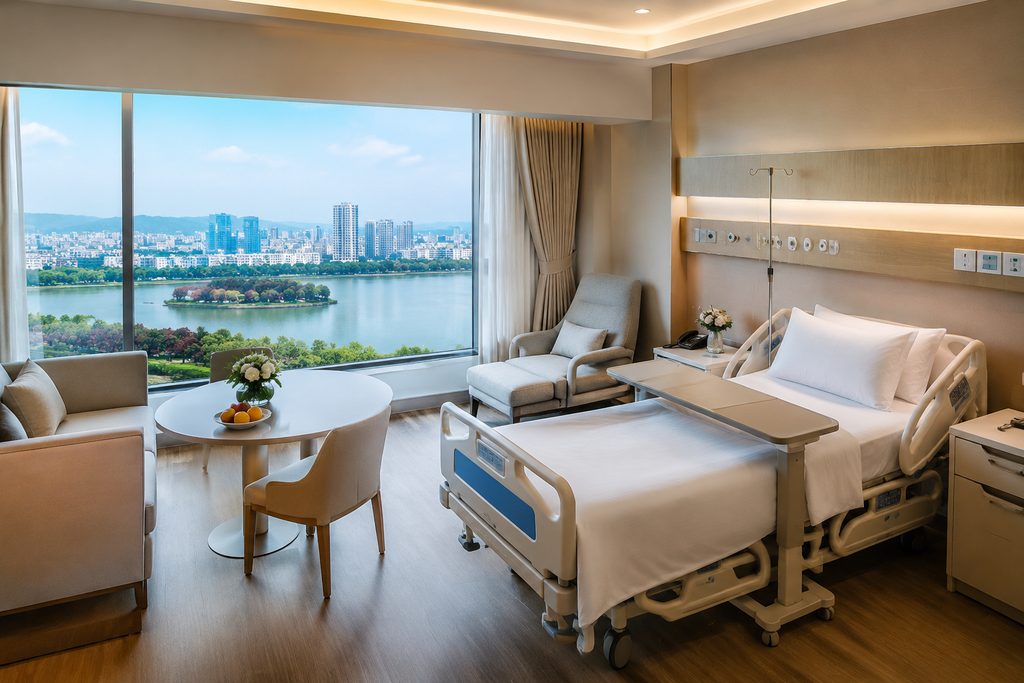
Sir Run Run Shaw Hospital sits inside this system. It is a 2,400-bed teaching hospital affiliated with Zhejiang University School of Medicine, founded in 1994 through a collaboration with the Loma Linda University Health system in California. That Western connection is unusual for a Chinese public hospital and shows up in operational details: a stronger English-language capability, a dedicated International Medical Center, and workflows designed to accommodate foreign patients.
Clinical Volume Drives Better Outcomes
Volume matters in oncology. Studies consistently show that hospitals treating more patients with a specific cancer type produce better survival rates. China’s top cancer centers — Fudan University Shanghai Cancer Center, Sun Yat-sen University Cancer Center, Peking University Cancer Hospital — each treat tens of thousands of new patients per year. SRRSH is not in that national top tier for oncology specifically, but it operates at a scale that most Western regional hospitals cannot approach.
For international patients, this creates a meaningful trade-off. You may not get the single most famous oncology brand in China. But you get a reputable academic center with modern equipment, internationally trained department heads, and prices far below U.S. or European benchmarks.
The International Medical Center Changes the Access Equation
Here is the operational reality of Chinese public hospitals: standard outpatient registration is same-day, first-come-first-served. You cannot book a specialist appointment from overseas through the regular queue. Surgery requires an in-person consultation first, then the hospital schedules you based on bed availability and surgeon capacity.
But SRRSH operates a formal International Medical Center. This is the channel foreign patients use. It provides English-speaking coordination, priority scheduling, and access to senior specialists. The cost runs approximately 1.5 to 2 times the standard public rate — still dramatically cheaper than Western private care. This is the structural reason why international patients can realistically receive oncology treatment at a Chinese public hospital.
Cost Advantage Without Quality Compromise
The obvious question: why is it cheaper? Is something being sacrificed?
The answer is structural, not clinical. Chinese hospital labor costs are lower. Facilities are built at scale. Drug pricing is regulated by the National Healthcare Security Administration, which negotiates directly with pharmaceutical companies. A targeted therapy that costs $12,000 per month in the U.S. might cost $3,000 to $5,000 in China. Chemotherapy regimens follow the same NCCN or CSCO guidelines used internationally.
That means the Sir Run Run Shaw Hospital oncology cost for foreigners typically lands between 20% and 40% of what the same treatment protocol would cost in the United States. A full course of adjuvant chemotherapy that runs $80,000 in the U.S. might run $15,000 to $25,000 at SRRSH through the international channel. These are rough ranges — final pricing depends on drug choice, dosing, hospital fees, and case complexity.
What Treatment at SRRSH Actually Looks Like for an International Patient
The process is not as simple as booking a flight and walking in. Here is the realistic sequence.
First, you submit your existing medical records — pathology reports, imaging, lab results, treatment history. The hospital’s oncology team reviews them and issues a written second opinion or schedules a video consultation. This step costs $300 to $800 depending on whether you use a standard international department review or a top-specialist video consultation. That fee is credited in full toward coordination if you proceed to in-person treatment within 90 days.
Second, if the team confirms that treatment in Hangzhou is appropriate, you apply for an S2 visa. This is the short-stay visa category used for private affairs, including medical treatment. The hospital issues an invitation letter and treatment confirmation document. Processing time varies by consulate, but four to six weeks is a realistic planning window. For treatment stays exceeding 180 days, an S1 visa applies.
Third, you arrive in Hangzhou. Your first in-person consultation happens at the International Medical Center. The oncologist confirms the treatment plan, orders any missing tests, and schedules your first cycle. Chemotherapy is typically administered in the hospital’s day-treatment unit. You do not need to be admitted for most regimens.
Fourth, payment. Chinese public hospitals operate on a prepayment model. You deposit funds upfront, and the hospital draws down from that balance as services are delivered. Insurance is handled on a reimbursement basis — you pay first, then submit claims to your insurer. Some international insurers have direct billing arrangements with private hospitals in China, but public hospital international departments generally require self-payment.
Comparing Your Real Options: SRRSH vs. Other Chinese Cancer Centers
If you are considering China for oncology care, Hangzhou is one of several viable cities. The decision usually comes down to clinical fit, cost, and logistics.
| Factor | Sir Run Run Shaw Hospital (Hangzhou) | Fudan Shanghai Cancer Center | Private International Hospital (e.g., Jiahui, United Family) |
|---|---|---|---|
| Oncology reputation | Strong regional academic center; not in Fudan national top 10 | Ranked among China’s top 10 for oncology | Western-style care; smaller oncology programs |
| English support | Dedicated International Medical Center | International department available; more limited | Fully English-speaking staff |
| Chemotherapy cost (per cycle) | $2,000–$6,000 (international channel) | $1,500–$5,000 | $4,000–$10,000 |
| Insurance | Self-pay, reimbursement basis | Self-pay, reimbursement basis | Direct billing with many international insurers |
| Best for | Cost-conscious patients wanting a reputable academic center with English coordination | Complex or rare cancers requiring top-tier subspecialty expertise | Patients prioritizing Western-style communication and insurance convenience |
Hangzhou itself is a practical choice. It is a first-tier city with an international airport, good infrastructure, and a lower cost of living than Shanghai or Beijing. Accommodation near the hospital runs $60 to $150 per night for a decent hotel or serviced apartment. Shanghai is 45 minutes away by high-speed rail if you need to consult a second center.
Practical Considerations: Documentation, Visa, and Follow-Up
Before you even contact the hospital, gather your records. You need complete pathology reports, all imaging studies (preferably on CD or via a secure link), surgical notes if applicable, and a summary of every treatment you have received. If any documents are not in English or Chinese, get them translated. The hospital’s international team will review what you send, but incomplete records delay the process.
Visa: S2, not M. The M visa is for commercial and trade activities and has nothing to do with medical treatment. The S2 visa covers short-term private affairs, including medical visits. Your accompanying family members also apply for S2. The hospital provides supporting documents, but the Chinese embassy or consulate makes the final decision. We never guarantee approval.
Payment: Chinese hospitals require prepayment. Bring a credit card that works internationally or arrange a wire transfer. Cash is accepted but impractical for large deposits. Some banks impose daily transaction limits on foreign cards — check with your bank before you travel.
Follow-up after returning home: your Chinese oncologist will provide a written treatment summary and recommendations for ongoing care. You will need a local oncologist who is willing to take over management. This handoff is critical. Do not skip it.
Frequently Asked Questions
Yes, with caveats. SRRSH is a reputable academic center with modern oncology facilities and internationally trained specialists. It is not ranked among China’s top 10 oncology hospitals in the Fudan specialty rankings, but it offers solid, guideline-based care at a fraction of Western costs. For common cancers — breast, lung, colorectal — the treatment protocols are the same ones used at top U.S. centers.
Through a public hospital’s international department, expect $2,000 to $6,000 per cycle depending on the drugs used. Through a private international hospital, $4,000 to $10,000 per cycle. These figures vary by hospital and case complexity. The same cycle often costs $10,000 to $30,000 in the United States before insurance.
You cannot book a specific surgery date or hospital bed from overseas. What you can do is submit your records for a written second opinion or video consultation. If the oncology team confirms treatment is appropriate, they will issue the documents needed for your S2 visa application. Actual admission is confirmed only after you arrive and complete your in-person consultation.
You get two expert opinions. That is a feature, not a bug. Chinese oncologists follow international guidelines — NCCN, ESMO, CSCO — so recommendations are usually consistent. Where they differ, you make the final call. No one forces you into treatment. You can take the Chinese recommendation back to your home oncologist and discuss it.
At SRRSH’s International Medical Center, some English support exists. But outside that department — in the pharmacy, the lab, the imaging center, the billing office — staff may speak little or no English. A bilingual medical companion handles registration, payment, queueing, and translation. It is not mandatory, but it removes the single biggest source of stress for foreign patients.
Your Next Step
Sir Run Run Shaw Hospital offers a credible, cost-effective option for international cancer patients who are willing to navigate a different healthcare system. The medical quality is real. The savings are real. The logistics are the hard part.
We are China Medical Services, a patient coordination team based in China. We are not a hospital, and we do not provide diagnoses or treatment recommendations. What we do is handle the practical side: record translation, hospital communication, appointment coordination, visa guidance, and bilingual accompaniment. If you want to understand whether SRRSH is a realistic option for your case, start with a free consultation. Bring your questions. We will give you honest answers.
For more medical information and treatment options in China, visit chinamedservices.com (China Medical Services).
