Orthodontics in China for Foreigners: Costs, Top Clinics, and How to Book
Orthodontics in China for Foreigners: The Short Answer
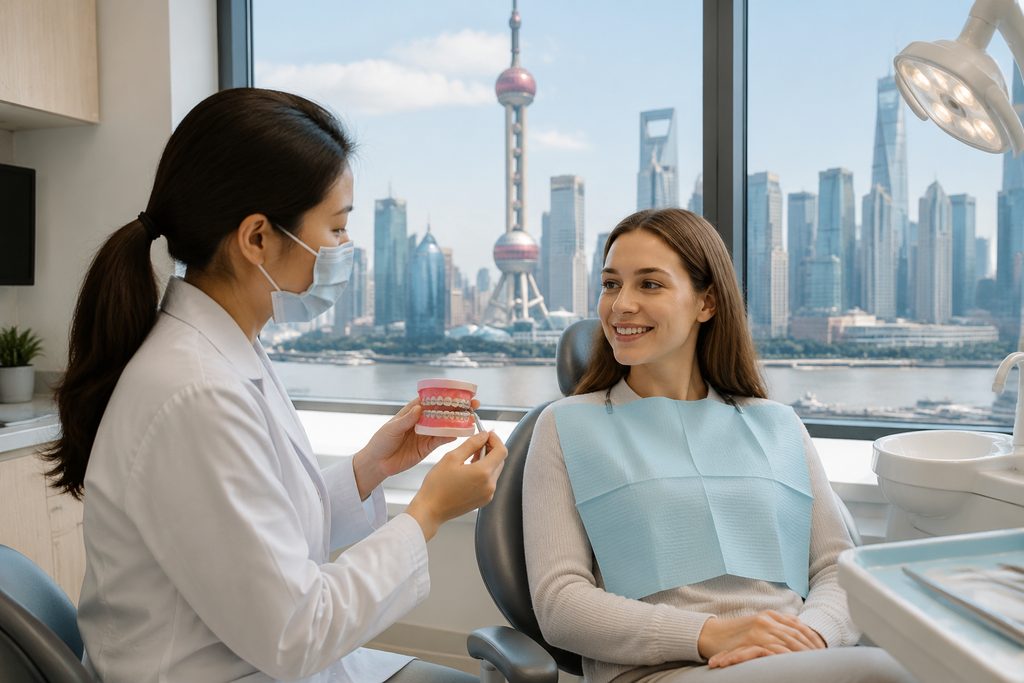
What if straightening your teeth abroad could cost a third of what you’d pay at home — without compromising on quality? For many international patients, that’s exactly the reality of orthodontics in China. The orthodontics cost in China typically runs $1,500 to $5,000 for a full treatment course, compared with $5,000 to $8,000 in the United States. Metal braces sit at the low end. Clear aligners like Invisalign land in the middle. Lingual or ceramic options push toward the top.
But here’s the caveat that matters. Orthodontics is not a one-visit procedure. It unfolds over 12 to 24 months, with adjustments every 4 to 8 weeks. That single fact reshapes everything — the visa you need, the clinic you choose, and whether treatment in China is genuinely practical for your life. So before you compare prices, understand the logistics.
Who This Is Right For — and Who It Isn’t
Orthodontic treatment in China suits some travelers far better than others. Being honest about that saves everyone time.
Good candidates typically include:
- Expats, students, and long-term business travelers already living in China who need braces or aligners
- Patients from visa-friendly regions (Southeast Asia, the Middle East, Russia) who can return every 6 to 8 weeks for adjustments
- People combining orthodontics with other dental work — implants, crowns, whitening — in a single trip
- Anyone seeking a written second opinion on a treatment plan quoted at home
Who should probably stay home:
- Patients who cannot commit to regular follow-up visits. Aligners tolerate gaps better than braces, but neither thrives on neglect
- Complex cases involving jaw surgery, cleft palate revision, or severe skeletal discrepancies — these need a coordinated surgical-orthodontic team you can see repeatedly
- Anyone expecting to finish a two-year treatment in a two-week vacation
The Options, Compared
Price is the headline, but the treatment type and the clinic tier matter just as much. Here’s how the genuine alternatives stack up.
| Option | Typical Cost (USD) | Treatment Time | Best For |
|---|---|---|---|
| Metal braces — public hospital | $1,500 – $2,800 | 18–24 months | Budget-focused, straightforward cases |
| Ceramic braces — public hospital | $2,500 – $4,000 | 18–24 months | Adults wanting less visible hardware |
| Clear aligners (Invisalign) — private international clinic | $3,500 – $6,500 | 12–18 months | Professionals, remote follow-up tolerance |
| Lingual braces — top-tier specialist | $5,000 – $9,000 | 18–30 months | Fully hidden treatment, complex cases |
| Same treatments in the USA | $5,000 – $8,000+ | Same | — |
Which column fits you? If you’re cost-sensitive and live in China, the public hospital route delivers solid results for a fraction of Western prices. If you’re flying in and out, a private international clinic with English-speaking staff and predictable scheduling usually justifies the premium. And if you’re comparing aligner pricing specifically, the question of Invisalign price Beijing vs USA almost always lands in China’s favor — often by 40 to 60 percent.
Finding the Best Orthodontist in Shanghai for Foreigners
Shanghai deserves its own section because it’s where most international patients start. The city hosts a dense cluster of hospitals and clinics accustomed to foreign patients, and the best orthodontist in Shanghai for foreigners is usually found in one of three settings.
First, the international departments of major public hospitals. These are staffed by senior specialists, offer English-language coordination, and charge roughly 1.5 to 2 times the standard public rate. Second, private international clinics — think United Family, Jiahui, and similar JCI-accredited facilities — where English-speaking staff, direct insurance billing, and Western-style scheduling come standard. Third, dedicated dental hospitals with orthodontic departments that see high patient volumes and, consequently, high case experience.
Beijing follows a similar pattern, with strong orthodontic departments in its top-tier hospitals and international clinics clustered around the embassy and CBD districts. The practical difference between the two cities is minor. Choose based on where you can return most easily.
You can browse vetted institutions by city and specialty through our ranked hospital directory, which groups China’s top-ranked facilities by location and department strength.
How Much Do Braces Cost in China? Breaking Down the Numbers
The honest answer to how much do braces cost in China depends on four variables: bracket material, clinic tier, case complexity, and city. A straightforward adult case in a mid-tier public hospital in Chengdu might total $1,800. The same case in a Shanghai international clinic with ceramic brackets could reach $4,500.
What drives the variance most is not the hardware. It’s the labor and the follow-up schedule. Orthodontic fees in China are frequently quoted as a package covering the full treatment arc — initial records, bracket placement, monthly adjustments, and retainers. Ask explicitly whether retainers and post-treatment review are included. Many quotes exclude them.
Additional costs to budget for: diagnostic imaging (panoramic X-ray and cephalometric films, typically $50 to $150), extraction of teeth if needed ($80 to $250 per tooth), and retainers ($150 to $400). None of these are unique to China — but they add up, and they’re often omitted from headline prices.
Practical Considerations: Visas, Records, and Follow-Up
This is where most guides go quiet, and where patients get tripped up.
Visa category. For medical treatment in China, the applicable short-stay category is the S2 visa, which covers medical treatment and private affairs. Stays exceeding 180 days fall under S1. Accompanying family members also apply under S2. Be aware that the M visa is strictly for commercial and trade activities — it is not a medical visa, despite what you may read elsewhere. Requirements shift, so confirm current rules with your nearest Chinese embassy or consulate and secure supporting documents from your treating hospital.
Medical records. Bring your dental history, prior X-rays if available, and any previous orthodontic records. Digital copies are fine. Chinese specialists can work from them for an initial assessment, often before you travel.
Payment and insurance. Public hospitals generally require prepayment, with insurance reimbursement handled afterward in your home country. Private international clinics frequently bill insurers directly. Check your policy’s coverage for elective dental treatment — many exclude it entirely.
Follow-up after returning home. This is the quiet dealbreaker. If you start treatment in China and move home mid-course, you’ll need a local orthodontist willing to take over. Many are reluctant to assume another provider’s case. Plan the full arc before you begin.
For a broader look at how treatment planning works across specialties, our department and specialty guide explains how Chinese hospitals are ranked and how to match a condition to the right facility.
Is Dental Care in China Safe for Tourists?
It’s a fair question, and the answer is reassuring but not blanket. China’s top-tier hospitals and JCI-accredited international clinics maintain sterilization and safety standards comparable to Western facilities. Infection control protocols are rigorous, instruments are single-use or autoclaved, and accreditation bodies audit these sites regularly.
The variable is not the country. It’s the specific clinic. A well-regarded hospital orthodontic department or an internationally accredited private clinic is a safe choice. A walk-in dental shop in a tourist district with no accreditation may not be. Vet your provider the same way you would anywhere — credentials, accreditation, reviews, and a clear treatment plan.
Frequently Asked Questions
Sometimes, but it’s risky. Many orthodontists decline to take over an in-progress case they didn’t plan. If you’re considering this, discuss the transfer with both providers before starting, and get your Chinese clinic to prepare a detailed handover file.
Public hospital general clinics typically cannot be pre-booked from abroad — you register in person on the day. To lock in a specific specialist or appointment time in advance, you generally go through a hospital’s international or VIP department. Private international clinics accept advance booking directly. If you want help navigating this, our team can assist with appointment coordination through our patient support services.
Reputable clinics provide a treatment contract and aftercare terms. Read them before signing. Complications in orthodontics — root resorption, gum issues, relapse — are uncommon but real. Ask how the clinic handles them and whether revision treatment is included in your fee.
Generally yes, often by 40 to 60 percent. But confirm you’re receiving genuine aligners from an authorized provider, not a generic alternative marketed under a similar name. Ask to see the treatment simulation and the manufacturer’s branding.
Not at top international clinics, where English-speaking staff are standard. In standard public hospital departments, English is far less common. This is precisely where a bilingual medical companion becomes valuable — handling registration, payment, and translation so nothing gets lost.
Your Next Step
Orthodontics in China can deliver excellent results at a fraction of Western prices — provided you plan around the follow-up schedule, choose an accredited provider, and understand the visa and payment realities before you commit. The savings are real. So are the logistics.
We are not a hospital and we do not diagnose or treat anyone. What we do is connect international patients with China’s top-ranked hospitals, coordinate appointments, and provide bilingual support on the ground. If you’d like a clearer picture of your options, start with a no-pressure conversation through our free consultation page — and take it from there at your own pace.
This article is for general information only and does not constitute medical advice. Treatment decisions should be made with a qualified orthodontist who has reviewed your individual case.
For more medical information and treatment options in China, visit chinamedservices.com (China Medical Services).
