Why Palestinian Patients Come to China for Medical Treatment: Full Coordination Access
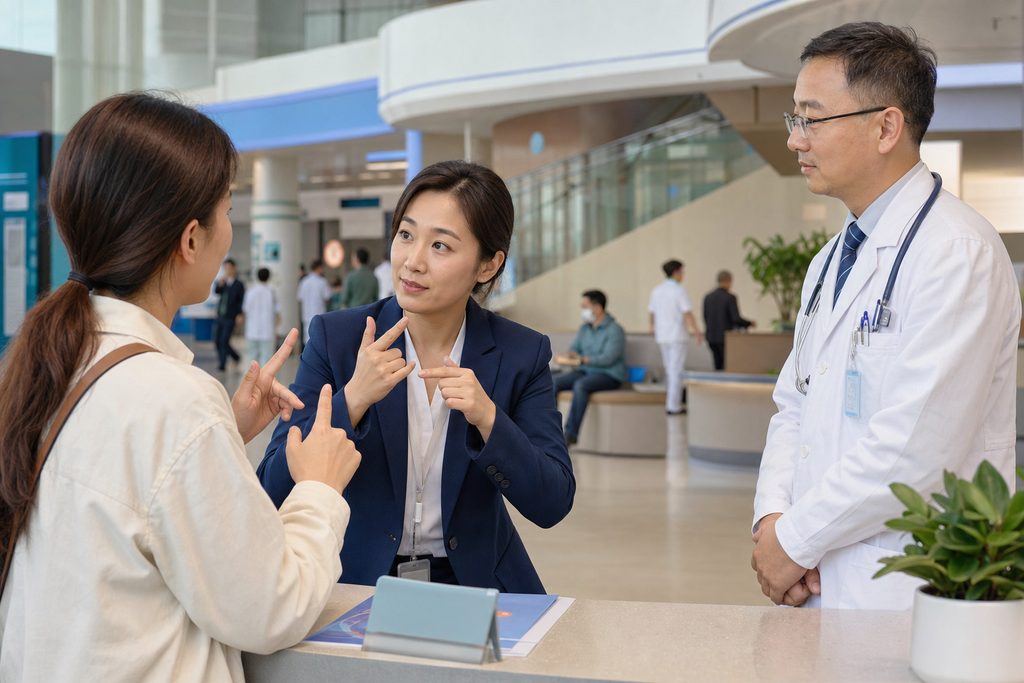
While a patient in Gaza might wait months for a diagnostic scan that takes days in Shanghai, the gap is not about capability. It is about capacity and systemic strain. Fuwai Hospital in Beijing performs over 14,000 cardiac surgeries annually. That single institution handles a surgical volume that eclipses many national health systems. This stark contrast in operational scale is driving more Palestinian families to look east. They are searching for medical treatment packages China for Palestinians that offer not just advanced medicine, but a coordinated, predictable path from their home to a hospital bed.
Key Takeaways
- China’s top-tier hospitals perform surgical volumes that are unmatched globally, with cardiac surgery costs averaging $12,000-20,000 versus $120,000+ in the United States.
- Full-service coordination handles the most daunting barrier for Arab patients: navigating a non-Arabic, non-English hospital system with zero language support in public wards.
- China does not offer a dedicated “medical visa.” The correct category is the S2 short-stay private affairs visa, which requires hospital documentation and has strict limitations that a coordinator can help you manage.
- Direct patient-to-hospital booking is virtually impossible for international patients. The only reliable path is through a hospital’s official international department or a vetted coordination service.
The Problem: A Medical System Under Unbearable Strain
For Palestinian patients, the decision to seek care abroad rarely starts with a preference. It starts with a dead end. The World Health Organization documented that in 2023, over 40% of permit requests for patients in Gaza to exit for medical care were delayed or denied. Even when exit is possible, the nearest referral hospitals in Jordan, Egypt, or Israel often have waitlists that stretch for critical months. A cancer diagnosis does not pause while paperwork moves through channels.
The internal options are equally constrained. Specialized oncology, complex pediatric cardiac surgery, or advanced orthopedic reconstruction often require technologies and sub-specialties that a system under chronic pressure cannot consistently deliver. This is the reality that pushes families to search for answers thousands of miles from home. They are not looking for a miracle. They are looking for a functional, high-capacity system that can say “yes, we can start next week.”
That search increasingly leads to China. Not because of marketing. Because of math. The scale of China’s hospital system—340+ top-ranked institutions across 37 cities—means that capacity is a structural feature, not a bottleneck. For a patient who has been told to wait six months for a hip replacement, learning that a Chinese orthopedic center performs more joint procedures in a month than a regional hospital does in a year changes the calculus entirely.
Why China’s Hospital System Delivers Results for Arab Patients
Clinical Volume Drives Better Outcomes
There is a hard truth in complex medicine: the surgeon who does 300 of your procedure a year will, on average, have fewer complications than the one who does 30. This is not speculation. A landmark study in the New England Journal of Medicine established the volume-outcome relationship for complex surgical procedures. Chinese hospitals operate at a scale that makes high volume the norm, not the exception.
Consider oncology. Cancer treatment in China for international patients often happens at centers like the Cancer Hospital Chinese Academy of Medical Sciences, where clinicians see a concentration of rare and aggressive tumor types that a general hospital might encounter only a handful of times annually. This concentrated exposure translates directly into refined surgical technique and nuanced chemotherapy protocols. For a Palestinian patient with a complex diagnosis, being treated where your condition is routine, not remarkable, is a form of safety.
Cost Structure That Makes Treatment Accessible
The cost of cancer treatment in China for foreigners often becomes the deciding factor after families exhaust local options. A full course of radiotherapy and chemotherapy that might cost $80,000-150,000 in a Western private hospital can be delivered at a Chinese top-tier public hospital’s international wing for $20,000-40,000. Cardiac bypass surgery runs $12,000-20,000 in China, compared to $120,000 or more in the United States.
These numbers are not about cheap care. They are about structural economics. China’s hospital system operates on high throughput. A single CT machine might scan 200 patients daily. The fixed costs of advanced infrastructure are spread across an enormous patient base. Labor costs for highly trained specialists, while rising, remain a fraction of Western equivalents. The result is a price point that makes treatment financially viable for families who would otherwise face catastrophic debt or forgo care entirely.
Important: These prices reflect treatment at public hospital international departments. Private international hospitals like United Family or Jiahui charge higher rates, closer to Western private hospital pricing. The lower-cost option requires navigating a Chinese-language environment—which is exactly where coordination services become essential.
How Can Palestinians Access Healthcare in China: The Practical Path
The question how can Palestinians access healthcare in China has a straightforward answer, but a non-negotiable sequence. You cannot simply book a flight and walk into a hospital. The pathway runs through three stages, and skipping any one of them will leave you stranded.
Stage one is remote evaluation. You send your existing medical records—imaging files, pathology reports, physician notes, current medication list—to a coordination team or directly to a hospital’s international department. A specialist reviews your case and issues a written opinion: is treatment in China appropriate, what protocol do they recommend, what is the estimated duration and cost. This step costs $300-500 for a written second opinion from a top-tier hospital. It is the gatekeeper. Without a positive evaluation, no hospital will issue the documentation required for your visa.
Stage two is the invitation and visa. Once a hospital accepts your case, they issue an official treatment invitation letter. You take this letter, along with your passport, passport photos, and a completed visa application form, to the Chinese embassy or consulate. You apply for an S2 short-stay visa, specifying medical treatment as your purpose. Processing typically takes 4-7 business days. Your accompanying family members apply for their own S2 visas under the same application, listing private affairs as their purpose. There is no guarantee of approval. But a properly documented application with a legitimate hospital invitation has a high success rate.
Stage three is arrival and treatment. You land. A coordinator meets you. Within days, you have your first face-to-face consultation, followed by any necessary pre-operative testing, and then admission. The rhythm from airport to operating room can be under two weeks for a well-documented, pre-evaluated case.
Practical tip: Do not book flights until your visa is in hand. Do not assume your preferred dates will work. Let the hospital’s schedule and the visa timeline dictate your travel, not the other way around. Flexibility here prevents expensive mistakes.
Is China Safe for Palestinian Medical Tourists: What You Need to Know
The question is China safe for Palestinian medical tourists comes up in nearly every initial consultation. It is a fair question, and the answer requires separating genuine concerns from unfamiliarity. China’s major cities—Beijing, Shanghai, Guangzhou, Shenzhen—have violent crime rates that are dramatically lower than most Western capitals. Street crime against foreigners is rare. Hospitals in the top-tier bracket maintain security and international patient protocols that add another layer of protection.
The safety concern that actually matters is clinical, not criminal. A patient who arrives without proper coordination, without language support, and without a confirmed treatment plan is at risk. Not from violence. From miscommunication. From getting lost in a hospital that sees 10,000 outpatients daily. From signing consent forms they do not understand. This is the real safety issue, and it is entirely solvable with a bilingual medical companion who stays with you from registration through discharge.
For Palestinian patients specifically, there is an additional layer: cultural and dietary needs. Halal food is widely available in major Chinese cities with significant Muslim populations, including in Xi’an, Beijing, and Guangzhou. Hospital international wards are accustomed to accommodating dietary restrictions when notified in advance. Prayer spaces can be arranged. These are logistics, not obstacles, but they require advance planning by someone who knows the system.
Selecting the Best Hospitals in China for Arab Patients
When Palestinian families ask about the best hospitals in China for Arab patients, they are really asking two things: which hospitals have the strongest clinical outcomes for my specific condition, and which hospitals will not make me feel lost and invisible. The answer to the first question depends entirely on the diagnosis. The answer to the second depends on choosing the right access channel.
For cardiac conditions, Fuwai Hospital in Beijing is the global leader in surgical volume. For oncology, the Cancer Hospital Chinese Academy of Medical Sciences and Fudan University Shanghai Cancer Center are the reference points. For orthopedics, Beijing Jishuitan Hospital handles a surgical caseload that reshapes how you think about efficiency. For neurosurgery, Huashan Hospital in Shanghai is the destination. These names come from the Fudan University hospital rankings, China’s most authoritative independent hospital evaluation system.
| Specialty | Top Hospital | City | Why It Stands Out |
|---|---|---|---|
| Cardiac Surgery | Fuwai Hospital | Beijing | 14,000+ cardiac surgeries/year; global volume leader |
| Oncology | Cancer Hospital CAMS | Beijing | China’s national cancer center; rare tumor expertise |
| Orthopedics | Beijing Jishuitan Hospital | Beijing | 300+ joint replacements/month; trauma center of excellence |
| Neurosurgery | Huashan Hospital | Shanghai | Ranked #1 in China for neurosurgery by Fudan rankings |
| General Surgery | Peking Union Medical College Hospital | Beijing | Multidisciplinary diagnostic excellence; complex case referral center |
But clinical excellence alone is not enough. A hospital that does not communicate in your language, that cannot explain your bill, that leaves you alone in a waiting room for hours without updates—that experience erodes trust and can compromise recovery. This is why the channel matters as much as the institution. Accessing these hospitals through their official international departments means you get English-speaking coordinators, streamlined billing, and a point of contact who can advocate for you. Going through the public registration window as a non-Chinese speaker means you get none of that.
Medical Visa China for Palestinian Patients: The S2 Visa Explained
There is persistent confusion around the medical visa China for Palestinian patients, largely because the term “medical visa” is a misnomer. China does not issue a visa category called “medical visa.” The correct category for short-term medical treatment is the S2 visa, which covers private affairs including medical treatment. If your treatment requires a stay longer than 180 days, you apply for an S1 visa instead.
The S2 visa application requires a passport valid for at least six months beyond your intended stay, a completed application form, a recent passport photo, and—critically—an official invitation letter from the Chinese hospital where you will receive treatment. This letter must state your diagnosis, the planned treatment, and the expected duration of your stay. Without this document, your application will not be processed as a medical case.
Visa officers have discretion. A complete, professionally prepared application with clear documentation from a recognized hospital is your strongest case. Incomplete paperwork or vague treatment plans invite rejection. This is not a formality to rush through. It is the single document that determines whether your entire medical travel plan proceeds or stops.
Accompanying family members apply under the same S2 category, listing “accompanying family member for medical treatment” as their purpose. Each person submits a separate application. Processing times at Chinese embassies and consulates in the Middle East typically range from 4 to 7 business days, though this can extend during peak periods or if additional documentation is requested.
Frequently Asked Questions
No. Public hospitals in China do not accept direct international patient bookings for surgery through their general registration systems. You must go through the hospital’s official international department or work with a coordination service that has established relationships with these departments. The remote evaluation—where a Chinese specialist reviews your records—must happen first. Surgery is scheduled only after you arrive, complete an in-person consultation, and undergo any required pre-operative testing. Anyone promising you a locked-in surgery date before you leave home is not being honest about how the system works.
This is the nightmare scenario, and it is almost entirely preventable. Hospitals refuse treatment when the patient’s condition does not match what was described in the records, when the patient arrives without confirmed acceptance, or when the patient cannot pay the required deposit. The safeguard is the written evaluation and treatment invitation issued before you travel. If a hospital has reviewed your full records and issued an official invitation, refusal at the door is exceedingly rare. Do not travel without that invitation letter in hand.
Most public hospitals, even top-tier ones, do not have Arabic-speaking staff. International departments operate in English and Mandarin. For patients who speak neither language, a bilingual medical companion who speaks Arabic and either English or Mandarin is essential. Some coordination teams include Arabic-speaking coordinators specifically to serve patients from the Middle East and North Africa. Confirm language support before you commit to a hospital. Do not assume it will be available on arrival.
Chinese public hospitals require upfront payment. You pay a deposit upon admission, and the hospital draws down from it as services are delivered. International bank transfers, major credit cards, and sometimes cash are accepted at international departments. Most Palestinian and regional insurance plans do not have direct billing arrangements with Chinese public hospitals, meaning you pay out of pocket and seek reimbursement later. Private international hospitals in China are more likely to offer direct insurance billing, but their treatment costs are substantially higher. Verify your insurance coverage and reimbursement process before you travel.
Your Chinese medical team will provide a detailed discharge summary in English, including medication schedules, activity restrictions, recommended follow-up tests, and imaging files on a CD or USB drive. This becomes the handoff document for your local physician. Some Chinese hospitals offer post-discharge video consultations for a fee, allowing your surgeon to check your progress remotely. But day-to-day follow-up care—wound checks, physical therapy, lab work—must be managed locally. Before you leave for China, identify a physician at home who is willing to receive the discharge summary and continue your care. Do not leave this to sort out after you return.
Your Next Step
You now have a clear picture of what accessing medical treatment in China actually requires: a remote evaluation, an S2 visa with a hospital invitation, and on-the-ground coordination to bridge the language and logistics gap. The path is well-defined, but it is not a path you should walk alone. Our team at China Medical Services handles the entire sequence—from translating your records for specialist review to meeting you at the airport and staying with you through discharge. We do not provide medical care, and we do not make clinical decisions. We make sure the system works for you, not against you. When you are ready to explore whether treatment in China is right for your situation, a conversation is the place to start. No commitment. Just clarity on what is possible.
For more medical information and treatment options in China, visit chinamedservices.com (China Medical Services).
