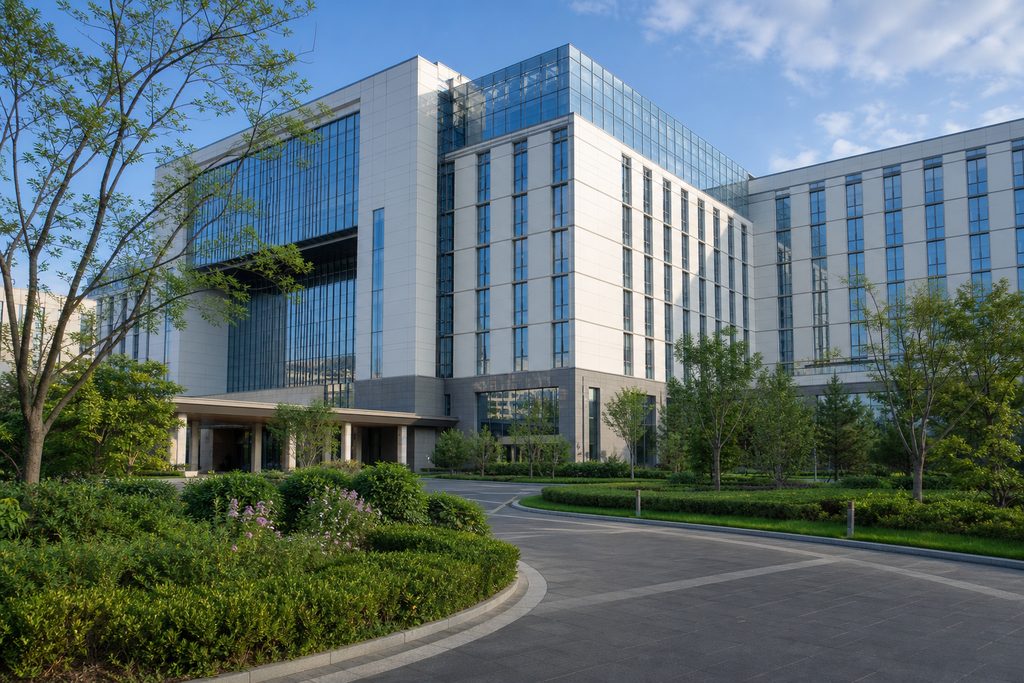
Peking University Cancer Hospital Beijing: World-Class Gastric & Breast Cancer Surgery
Key Takeaways
- Peking University Cancer Hospital performs over 1,200 gastric cancer surgeries annually — one of the highest single-center volumes globally — with 5-year survival rates for resectable gastric cancer exceeding 60%.
- For international breast cancer patients, the hospital’s Breast Center offers sentinel lymph node biopsy with a false-negative rate below 5%, matching top Western cancer centers.
- Public hospital registration cannot be secured from overseas without a physical presence. Walk-in queues routinely exceed three hours. This is not an exaggeration — it is the daily reality of China’s busiest oncology hospital.
- International patients who coordinate through the hospital’s official VIP International Department gain pre-scheduled specialist consultations, English-capable coordinators, and bypass the general outpatient chaos — at roughly 1.5 to 2 times standard public pricing.
The Problem: A Diagnosis That Demands Speed and Precision
Gastric cancer kills approximately 11,000 people in the United States each year. But the real shock is the stage at diagnosis. Nearly 60% of Western gastric cancer patients are diagnosed at stage III or IV, when curative surgery is no longer an option. For those lucky enough to catch it early, the clock starts ticking. And in publicly funded health systems, that clock can be brutal. Wait times for a first oncology surgical consultation stretch to 8 weeks in parts of Canada’s provinces. In the UK, the 62-day cancer waiting time target has been missed for gastric cancer referrals consistently since 2021. Breast cancer patients face similar pressure. A lumpectomy or mastectomy delayed beyond 60 days from diagnosis shows measurably worse outcomes. The Lancet Oncology published a 2020 meta-analysis confirming it: each 4-week delay in cancer surgery increases mortality risk by 6-8%. You cannot afford a queue. You need a center that moves fast, sees high volumes, and has the surgical muscle memory that only comes from repetition. That is what Peking University Cancer Hospital offers.
Who We Are
We are not a hospital. We do not provide medical treatment, surgical opinions, or clinical diagnoses. Our team at China Medical Services functions as your logistical architects — we bridge the gap between you and China’s top-tier oncology expertise. We handle hospital matching, appointment coordination through official VIP international channels, bilingual medical companion services, visa guidance, and every practical detail from airport pickup to post-operative accommodation. We work within the hospital’s established international patient pathways. We do not promise shortcuts that do not exist. What we do promise is clarity, honesty, and a system that actually works.
Why Peking University Cancer Hospital Delivers Results
Surgical Volume That Translates to Survival
Peking University Cancer Hospital (PUCH) is not just another large hospital. It is one of China’s two dedicated cancer hospitals ranked among the top 10 nationally for oncology by the Fudan University Hospital Rankings — a distinction earned through measurable clinical performance, not marketing. The Department of Gastrointestinal Surgery alone performs more than 1,200 gastric cancer surgeries per year. To put that in perspective: MD Anderson Cancer Center, widely considered the top US cancer hospital, reports roughly 250-300 gastrectomies annually. Memorial Sloan Kettering performs a similar number. Volume matters in gastric cancer surgery. A 2019 study in JAMA Surgery found that hospitals performing fewer than 20 gastrectomies per year had a 30-day mortality rate nearly double that of high-volume centers. PUCH surgeons operate on gastric cancer cases every single day. Their D2 lymph node dissection technique — the standard for curative intent — is performed with a consistency that low-volume Western centers simply cannot replicate. The 5-year overall survival rate for stage II gastric cancer treated surgically at PUCH exceeds 60%, according to published institutional data. That aligns with the best outcomes reported globally.
Breast Cancer Surgery: Precision at Scale
The Breast Center at PUCH handles over 1,800 newly diagnosed breast cancer cases annually. For international patients seeking the best breast cancer surgeon Beijing international patients can access, the center’s surgical team has particular depth in oncoplastic reconstruction — combining tumor removal with immediate cosmetic restoration in a single procedure. Their sentinel lymph node biopsy protocol, using dual-tracer mapping, achieves a detection rate above 98% and a false-negative rate consistently below 5%. These numbers mirror the performance benchmarks set by Europe’s top breast units. What distinguishes the center for foreign patients is the integration of traditional Chinese medicine (TCM) into post-operative recovery pathways. Acupuncture for chemotherapy-induced nausea and herbal formulations for fatigue management are offered alongside standard adjuvant therapy — an approach rarely available in Western cancer centers but increasingly supported by evidence. A 2022 systematic review in the Journal of Clinical Oncology found that acupuncture reduced chemotherapy-induced nausea severity by approximately 40% compared to antiemetics alone.
Cost Advantages Without Cutting Corners
Let’s address the question most international patients ask first: how much does stomach cancer surgery cost in China? At Peking University Cancer Hospital, a standard radical gastrectomy with D2 lymphadenectomy through the VIP International Department typically ranges from $18,000 to $28,000 USD, including hospitalization, surgeon fees, anesthesia, and standard post-operative care. Complex cases requiring multi-organ resection or extended ICU stays can reach $35,000. For breast cancer, a mastectomy with sentinel node biopsy runs approximately $8,000 to $14,000 USD. Breast-conserving surgery (lumpectomy) with oncoplastic reconstruction falls between $12,000 and $18,000. Compare these figures to US cash-pay rates: a gastrectomy at a major American cancer center costs $80,000 to $150,000. A mastectomy with reconstruction easily exceeds $50,000. The Peking University Cancer Hospital gastric surgery cost represents roughly one-fifth of US pricing. Why? Not because of lower quality. Chinese surgeon salaries, hospital infrastructure costs, and pharmaceutical pricing are structurally lower. A senior surgical professor at PUCH earns a fraction of what a US counterpart commands. The operating theater equipment — Da Vinci Xi surgical robots, intraoperative ultrasound, advanced laparoscopic towers — is identical to what you would find at Mayo Clinic or Charité in Berlin. The cost differential reflects economics, not compromise.
For patients exploring breast cancer surgery packages China for foreigners, it is important to understand that PUCH does not sell pre-packaged bundles like a medical tourism resort. What exists is a coordinated care pathway through the VIP International Department. You receive a tailored treatment plan with transparent line-item pricing — consultation, imaging, surgery, pathology, inpatient stay, medications — each quoted before commitment. Our team helps you interpret these quotes, compare them against alternatives, and make an informed decision without pressure.
Is Peking University Cancer Hospital Good for Oncology? The Evidence
The question is Peking University Cancer Hospital good for oncology deserves a direct answer. Yes — and the evidence is structural, not anecdotal. PUCH is one of only two dedicated cancer hospitals in China’s Fudan Top 100 hospital ranking for oncology. It houses 26 clinical departments focused exclusively on cancer. The hospital’s pathology department processes over 50,000 tumor specimens annually, with immunohistochemistry and next-generation sequencing capabilities that feed directly into treatment planning. Their multidisciplinary team (MDT) model is mandatory, not optional: every new gastric cancer and breast cancer case is reviewed by a tumor board comprising surgeons, medical oncologists, radiation oncologists, pathologists, and imaging specialists before a treatment plan is finalized. This is not unique to China — but the consistency of MDT application at PUCH is higher than at many Western hospitals where tumor board review remains selective. The hospital also participates in over 200 active clinical trials, many in partnership with international pharmaceutical companies. For patients with advanced or treatment-resistant disease, trial access can be a deciding factor. PUCH’s early-phase oncology trial unit is one of the busiest in Asia.
What You Need to Know Before Going Alone
Peking University Cancer Hospital is a public institution. That means certain structural realities that no amount of optimism can change. International patients who arrive without preparation face obstacles that can derail treatment before it starts.
- Registration Cannot Be Done Remotely: The general outpatient department does not accept overseas appointments. You must physically queue at the registration window, often starting at 5:00 AM, to secure a same-day specialist slot. Gastroenterology and breast surgery slots routinely sell out by 7:30 AM. If you fail, you try again the next day. There is no remote fallback for the public track.
- Language Barriers Are Absolute: Fewer than 5% of PUCH’s clinical staff speak functional medical English. Registration forms, consent documents, surgical instructions, and discharge summaries are in Chinese. Misunderstanding a post-operative instruction — when to resume anticoagulants, how to recognize an anastomotic leak — can be catastrophic. This is not a scenario where Google Translate suffices.
- Payment Is Upfront and Cash-Based: Public Chinese hospitals require deposit payments before admission. International credit cards are not accepted at standard payment counters. Wire transfers must clear before surgery is scheduled. Insurance reimbursement is your responsibility — the hospital will provide itemized invoices and translated medical records, but they do not bill foreign insurers directly.
- The VIP International Department Is the Only Viable Path: This is the honest truth. If you want to book gastric cancer treatment Beijing fast track, the VIP International Department is the mechanism. It costs more — approximately 1.5 to 2 times the public rate — but it provides pre-scheduled specialist appointments, English-speaking coordinators, priority admission, and private inpatient rooms. You bypass the 5:00 AM queue entirely. Our team coordinates exclusively through this channel because the alternative is not realistic for international patients.
How We Help You Navigate This
These barriers exist for structural reasons. Chinese public hospitals are designed to serve a domestic population of 1.4 billion people at extraordinary scale. They were never optimized for international patient flow. That is where we fit.
Before you travel, we translate and format your medical records — pathology reports, imaging studies, prior treatment summaries — into the standardized format that PUCH specialists expect. We coordinate directly with the VIP International Department to secure a pre-scheduled consultation with the appropriate surgical specialist based on your specific diagnosis. If you need a gastric surgeon specializing in laparoscopic total gastrectomy, we match you accordingly. If your breast cancer requires a surgeon experienced in immediate DIEP flap reconstruction, we identify that specific expertise. We do not promise a specific named surgeon — no ethical coordinator can — but we ensure your case reaches the right sub-specialty team.
During your hospital visit, a bilingual medical companion from our team accompanies you. This person handles registration paperwork, translates every conversation with your surgical team in real time, guides you through pre-operative testing sequences, and ensures you understand every consent form before signing. They are not clinicians — but they are trained in medical terminology and hospital workflow. When your surgeon explains the risks of an anastomotic leak after gastrectomy, you will understand every word. That matters.
After discharge, we coordinate follow-up appointments, arrange accommodation for recovery periods, and assist with medical documentation for insurance claims. If your treatment plan requires adjuvant chemotherapy over several months, we help structure the logistics so you can return home between cycles if that is your preference.
Frequently Asked Questions
Through the VIP International Department, a radical gastrectomy with D2 lymphadenectomy ranges from $18,000 to $28,000 USD. Complex cases requiring extended resection or prolonged ICU stay can reach $35,000. This includes surgeon fees, anesthesia, standard inpatient stay, and routine post-operative care. Pre-operative imaging, advanced molecular pathology, and adjuvant therapy are billed separately. Every quote is case-specific — we help you obtain a formal treatment proposal with line-item pricing before you commit to travel.
Through the VIP International Department, the typical timeline from initial contact to surgical consultation is 1 to 2 weeks, assuming your medical records are complete and translated. Surgery scheduling depends on surgeon availability and pre-operative clearance, but typically follows within 2 to 4 weeks of the consultation. This is significantly faster than public system wait times in the UK, Canada, or parts of Europe. The public outpatient track at PUCH offers no scheduling predictability for international patients — wait times are indeterminate and dependent on daily queue dynamics.
PUCH’s Breast Center has multiple senior surgeons with extensive experience in oncoplastic techniques. The key is matching your specific clinical needs — tumor subtype, stage, reconstruction preference — to the surgeon whose sub-specialty aligns. We facilitate this matching by presenting your translated case to the department’s international patient coordinator, who assigns the appropriate specialist. We do not allow patients to “shop” for specific named surgeons because the hospital’s internal referral system is designed around case-appropriate matching, not consumer choice. What we ensure is that your case reaches a surgeon with demonstrated expertise in your specific procedure type.
PUCH maintains a surgical complication rate consistent with international benchmarks — major morbidity after gastrectomy runs approximately 12-15%, comparable to high-volume Western centers. The hospital has a 24/7 surgical intensive care unit staffed by critical care specialists. For international patients, we remain involved throughout the admission. If an extended hospital stay becomes necessary, we handle visa extension paperwork. If a complication requires transfer to a different facility, we coordinate that transfer. We do not provide clinical care — but we ensure the logistical infrastructure around your care does not fail when you are most vulnerable.
No — and caution is warranted with any provider that claims otherwise. Cancer surgery is not a commodity. A “package” that does not account for tumor biology, nodal status, reconstruction complexity, and co-morbidities is medically irresponsible. What PUCH offers through the VIP International Department is a transparent, pre-quoted care pathway tailored to your individual diagnosis. You receive a formal treatment plan with itemized costs before committing. This is not a fixed-price bundle — it is an honest estimate based on your specific clinical situation. Our role is to help you understand that estimate and compare it against alternatives.
Your Next Step
Peking University Cancer Hospital represents one of the world’s highest-volume, evidence-driven oncology surgery centers. Its gastric and breast cancer outcomes stand comparison with any Western institution — at a fraction of the cost and often with shorter wait times. The trade-off is complexity. Navigating a Chinese public hospital as an international patient without local expertise is genuinely difficult. The VIP International Department solves the access problem, but it still requires coordination, translation, and someone on the ground who understands both medical systems. That is what we provide. If you are considering gastric or breast cancer surgery at PUCH, start with a conversation. No commitment, no pressure — just an honest assessment of whether this path makes sense for your specific diagnosis.
Learn more about our coordination services at our patient support page. For a broader view of China’s top-ranked oncology centers, visit our specialty departments directory.
For more medical information and treatment options in China, visit chinamedservices.com (China Medical Services).
