Peking University Stomatology Hospital: Dental Implants & Oral Surgery for International Patients
Key Takeaways
- A single dental implant at Peking University Stomatology Hospital typically ranges from $1,200 to $2,800, compared to $3,000 to $6,000 in the US or Western Europe — a structural cost difference driven by volume and labor economics, not lower clinical standards.
- The hospital handles over 1.5 million outpatient visits annually and is consistently ranked among China’s top two stomatology centers in the Fudan University specialty reputation rankings — a case volume that directly correlates with procedural proficiency.
- Walk-in registration is the default for general outpatient clinics. International patients who need to lock in a specific surgical date before traveling must use the hospital’s International VIP Department, which adds a coordination layer and approximately 1.5× to 2× the standard pricing.
- Language is the single largest friction point. The hospital’s billing, registration kiosks, and preoperative paperwork operate entirely in Mandarin. Without bilingual support, a 30-minute registration can stretch into a three-hour ordeal.
The Problem: Dental Care Costs Are Breaking the Bank Back Home
What if you could walk out of one of the world’s highest-volume dental hospitals with a fully restored smile — and keep roughly $15,000 in your pocket that would have gone to a clinic in Los Angeles or London?
That question is not hypothetical. The American Dental Association’s 2022 Survey of Dental Fees reports an average cost of $3,000 to $4,500 for a single implant and crown in the United States. Full-mouth reconstruction with implant-supported prostheses frequently exceeds $45,000. In Australia, a single implant runs AUD $3,000 to $6,500. The UK’s NHS rarely covers implants for non-reconstructive cases, pushing patients toward private clinics where fees start at £2,000 per tooth. Dental tourism is not a fringe trend anymore. It is a rational economic response to a system where one procedure can cost more than a used car.
But cost is only half the equation. Wait times matter. In Canada, patients in some provinces wait 6 to 12 months for an oral surgeon consult, then another 3 to 6 months for the surgical date. That is a year of living with compromised function — difficulty chewing, bone resorption, shifting adjacent teeth. The clinical literature is clear: delayed implant placement after extraction leads to progressive alveolar bone loss. A 2023 systematic review in the Journal of Clinical Periodontology found that horizontal bone resorption averages 29-63% within the first six months post-extraction. Waiting is not neutral. It changes the surgical landscape, often requiring additional bone grafting that could have been avoided.
So the question becomes: where can you access high-volume, high-expertise care without waiting a year and without draining your savings?
Who We Are
We are not a hospital. We do not provide medical treatment, clinical diagnoses, or dental care. Our team at China Medical Services functions as your logistical architects — we bridge the gap between you and China’s top-tier stomatology centers. We handle hospital matching, appointment coordination through official international departments, bilingual medical companion services, visa guidance, and post-procedure recovery logistics. We do not promise shortcuts or backdoor access. We work through the hospital’s established international patient channels, and we are transparent about what those channels can and cannot do.
Why Peking University Stomatology Hospital Delivers Results
Surgical Volume That Rivals Entire National Systems
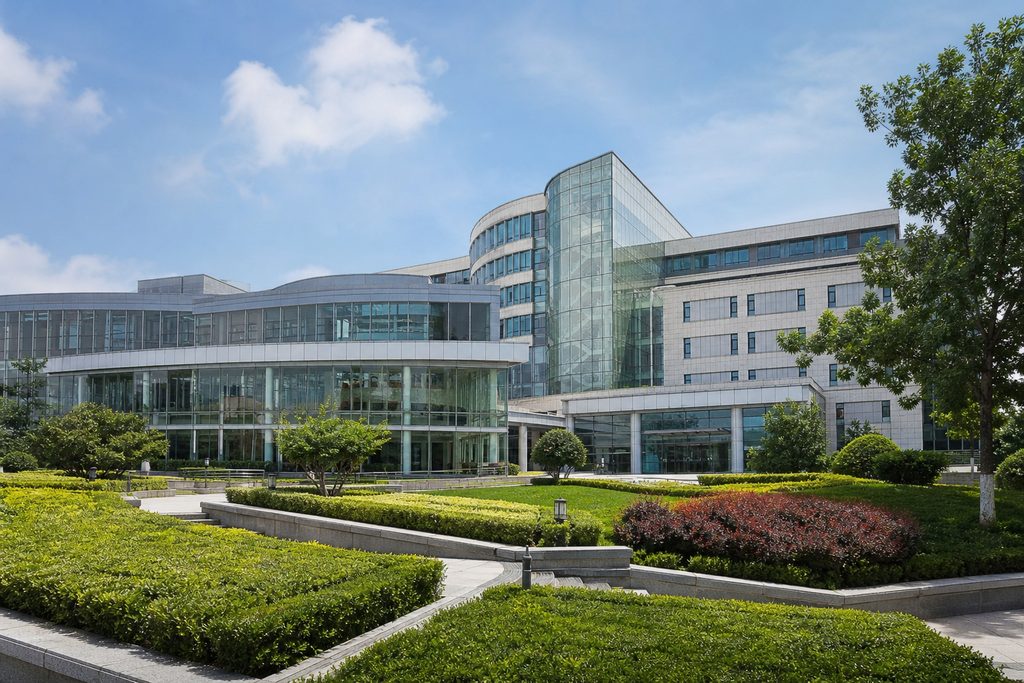
Peking University Stomatology Hospital, often abbreviated as PKUSS, is not a dental clinic. It is a national-level stomatology center attached to one of China’s most prestigious universities. The hospital operates across multiple campuses in Beijing’s Haidian District, with a combined capacity that saw over 1.5 million outpatient visits and more than 80,000 inpatient surgeries in a recent year. To put that in perspective: the entire oral and maxillofacial surgery department at a major US academic medical center might handle 3,000 to 5,000 cases annually. PKUSS does that in a single quarter.
Why does volume matter? Because dental implantology and oral surgery are heavily skill-dependent procedures. A 2019 study in the International Journal of Oral & Maxillofacial Implants found a statistically significant inverse relationship between surgeon case volume and early implant failure rates. Surgeons performing more than 100 implant placements per year had failure rates below 2%, while those with lower volumes showed failure rates exceeding 5%. At PKUSS, implant surgeons routinely place hundreds of implants annually. The implantology department alone is one of the largest in Asia, with dedicated teams for single-tooth replacement, full-arch reconstruction, zygomatic implants for severe bone atrophy, and immediate-load protocols.
Technology Infrastructure Built for Scale and Precision
The hospital operates multiple in-house digital dentistry labs equipped with cone-beam computed tomography (CBCT), intraoral optical scanners, and computer-aided design and manufacturing (CAD/CAM) systems. This is not outsourced to a third-party milling center in another city. The digital workflow — from CBCT scan to surgical guide fabrication to custom abutment milling — happens under one roof. That means a patient arriving for implant planning on a Monday can have a digitally designed surgical guide ready by Wednesday, with the final prosthesis delivered within the same treatment trip for certain protocols.
For complex oral surgery cases — orthognathic surgery, temporomandibular joint reconstruction, maxillofacial trauma repair — the hospital’s Department of Oral and Maxillofacial Surgery is one of the oldest and largest in China. It is a designated national key clinical specialty. Surgeons here use virtual surgical planning software to simulate osteotomies and plate fixation before entering the operating room. The precision gains are measurable. A 2021 paper from the department published in the Journal of Cranio-Maxillofacial Surgery reported that computer-assisted orthognathic surgery reduced operative time by an average of 22% and improved skeletal accuracy to within 1.2 mm of the virtual plan.
Cost Structure: Why the Numbers Are Different
Let’s address the elephant in the room directly. The Peking University Stomatology Hospital dental implant cost is significantly lower than Western benchmarks — and that makes some patients nervous. Is the implant material inferior? Are the sterilization protocols lax? Is this a discount operation?
No. The cost difference is structural, not qualitative. Chinese hospital pricing reflects fundamentally different labor economics. An experienced implant surgeon’s professional fee in Beijing is a fraction of what a comparable surgeon charges in New York or Sydney — not because the surgeon is less skilled, but because China’s physician compensation model operates on a different scale. Hospital infrastructure costs are amortized across enormous patient volumes. Implant systems used at PKUSS include the same globally recognized brands — Straumann, Nobel Biocare, Dentsply Sirona, Osstem — that you would encounter in any Western dental school. The titanium is the same. The sterilization standards follow national regulations aligned with international infection control protocols.
Here is what the numbers look like in practice. A single Straumann SLA implant with a porcelain-fused-to-metal crown at PKUSS through the international department typically runs $1,800 to $2,800. The same system in the US averages $3,500 to $5,000. Full-arch immediate-load rehabilitation (the “All-on-4” or “All-on-6” concept) at PKUSS ranges from $12,000 to $18,000 per arch. Comparable treatment in the US starts at $25,000 per arch and can exceed $35,000. When patients search for “full mouth dental implants China price abroad,” they are often shocked to find total costs in the $25,000 to $35,000 range for both arches — roughly what a single arch costs in many Western markets.
| Procedure | PKUSS International Dept (USD) | US Average (USD) | UK Private (USD equiv.) |
|---|---|---|---|
| Single implant + crown (Straumann) | $1,800 – $2,800 | $3,500 – $5,000 | $2,800 – $4,500 |
| Full-arch fixed prosthesis (per arch) | $12,000 – $18,000 | $25,000 – $35,000 | $18,000 – $28,000 |
| Sinus lift + guided bone regeneration | $800 – $1,500 | $2,000 – $4,000 | $1,500 – $3,000 |
| Orthognathic surgery (bimaxillary) | $8,000 – $15,000 | $40,000 – $80,000 | $25,000 – $50,000 |
All ranges are estimates and vary by case complexity, implant system selection, and specific surgeon. Hospital treatment charges are separate from coordination service fees.
Is Peking University Stomatology Hospital Good for International Patients?
The honest answer: yes, with the right preparation. The hospital has a dedicated International VIP Department that handles foreign patient intake. This is the channel through which overseas patients can pre-arrange consultations, schedule surgeries, and receive English-language coordination. The department assigns a case coordinator who manages appointment scheduling, preoperative instructions, and billing. Some senior surgeons in the implantology and oral surgery departments have trained or completed fellowships abroad and speak functional English.
But — and this is crucial — the International VIP Department is not a fully Westernized hospital wing. The broader hospital environment remains Chinese. Registration kiosks display Mandarin. Pharmacy instructions come in Chinese. The canteen menu has no English translation. A patient who arrives alone expecting a seamless English-language experience from curb to discharge will encounter friction. This is precisely where a bilingual medical companion changes the experience from stressful to manageable. Someone who can read the CT requisition form, explain the postoperative medication schedule in detail, and intervene when the pharmacy dispenses a generic with unfamiliar packaging.
For anyone asking “is Peking University Stomatology Hospital good for international patients,” the clinical answer is an emphatic yes — the surgical outcomes and implant survival rates are on par with top Western academic centers. The logistical answer is: only if you have language support and understand how the system works.
What You Need to Know Before Going Alone
- Visa Requirements Are Specific: Medical treatment in China requires an S2 visa with the purpose explicitly noted as “medical treatment.” This is not an M visa — M visas are for commercial and trade activities, and presenting one for hospital admission will cause problems at registration. Your accompanying family member also needs an S2 visa. The hospital’s International Department provides a formal invitation letter and treatment confirmation document, which are required for the visa application. Processing typically takes 2 to 4 weeks depending on your home country’s Chinese embassy workload.
- Payment Is Upfront, Not Post-Insurance: Chinese public hospitals, including PKUSS, operate on a prepayment model. You deposit funds at admission, and treatment is drawn against that balance. The hospital does not directly bill international insurers. You pay first, then file for reimbursement with your insurance carrier. The International VIP Department accepts wire transfers, UnionPay, and major international credit cards, but daily transaction limits on foreign cards can be a problem — some banks cap at $2,000 per day, which is insufficient for a major surgical deposit.
- Medical Records Must Be Translated: The surgical team will want your panoramic radiographs, CBCT scans, medical history, and any prior implant failure documentation. These must be translated into Chinese. A Google Translate printout will not be accepted for surgical planning. Professional medical translation is a prerequisite, and our team handles this as part of case preparation.
How to Book Oral Surgery at Peking University Stomatology Hospital International Service
Booking oral surgery at Peking University Stomatology Hospital international service follows a defined pathway. The first step is not booking a flight. It is submitting your case for review.
Our team begins with a remote case assessment. You send us your dental records, radiographs, and a treatment summary from your home dentist. We translate these documents and submit them to the International VIP Department for a preliminary review. A senior surgeon evaluates whether your case is appropriate for treatment at PKUSS and what the proposed surgical plan would entail. This step takes 5 to 10 business days. If the hospital accepts the case, you receive a treatment plan outline, a cost estimate, and a tentative surgical window.
Only then do we coordinate dates. The International Department confirms a consultation and surgery schedule. We provide the invitation letter for your S2 visa application. Once your visa is approved, we arrange airport pickup, accommodation near the Haidian campus, and a bilingual medical companion who meets you at the hospital on day one. The companion handles registration, translates the informed consent discussion with your surgeon, and stays with you through discharge. Postoperative follow-up — suture removal, prosthetic loading, adjustments — is also coordinated through the same channel.
The coordination fee for hospital appointment booking starts from $300. For patients seeking the best oral surgery hospital Beijing for foreigners, the value is not in the booking itself — it is in avoiding the cascade of small failures that happen when language and system barriers collide.
Frequently Asked Questions
A single implant with crown at PKUSS through the international department ranges from $1,800 to $2,800, depending on the implant system (Straumann, Nobel Biocare, or Osstem) and whether bone grafting is required. This is approximately 60-70% less than the $3,500-$5,000 average in the United States. The cost difference reflects China’s lower professional fees and high patient volume, not inferior materials or techniques. The implant systems used are the same globally recognized brands.
It depends on the protocol. Immediate-load techniques — where a temporary fixed prosthesis is placed on the day of implant surgery — are available at PKUSS for carefully selected cases with adequate bone volume. In these cases, the surgical phase (implant placement + temporary teeth) can be completed in one trip of 10 to 14 days. The final permanent prosthesis typically requires a second trip 4 to 6 months later, after osseointegration is complete. Some patients opt to have the final restoration done by their home dentist, though this requires close coordination between the surgical team and the restoring dentist.
This is the most important question to ask before any cross-border medical procedure. PKUSS provides a written surgical report and postoperative care instructions in both Chinese and English. Your home dentist receives the full documentation, including implant system details, abutment specifications, and CBCT data. Early complications — infection, implant mobility, prosthesis issues — are managed by your local dentist. Late complications attributable to the implant system itself are covered under the manufacturer’s warranty, which is globally valid for Straumann and Nobel Biocare systems. The hospital’s International Department maintains communication channels for follow-up questions, though they cannot provide clinical care remotely. Our team stays available to facilitate communication between you, your home dentist, and the surgical team if questions arise.
Some senior surgeons in the Implantology Department and Oral and Maxillofacial Surgery Department speak functional to fluent English, particularly those who completed fellowships in Europe or North America. However, the surgical team is not your primary communication challenge. The challenge is everything else — registration clerks, pharmacy staff, radiology technicians, billing officers. None of these touchpoints operate in English. A bilingual medical companion bridges every one of these gaps, ensuring the surgeon’s instructions reach you accurately and your questions reach the surgeon without distortion.
Your Next Step
Choosing where to have dental implants or oral surgery is a decision that affects your health, your appearance, and your finances for decades. The clinical quality at Peking University Stomatology Hospital is world-class. The cost savings are real and structural. But the pathway is not frictionless — language, visas, payment systems, and the sheer scale of a Chinese public hospital can overwhelm an unprepared patient.
That is what we exist for. If you want to understand whether your specific case is suitable for treatment at PKUSS, and what the total cost and timeline would look like, our team can walk you through it — no commitment, no pressure. Just a clear-eyed assessment of your options. Request a free consultation and we will help you map out the path forward.
For more medical information and treatment options in China, visit chinamedservices.com (China Medical Services).
