Peking University People’s Hospital: Hematology and Bone Marrow Transplant Center
Key Takeaways
- Peking University People’s Hospital performs over 1,000 hematopoietic stem cell transplants annually, placing it among the world’s highest-volume centers.
- The bone marrow transplant cost Beijing ranges from $50,000 to $100,000 — roughly one-fifth to one-third of the $350,000 to $800,000 price in the United States.
- Language barriers and a complex public hospital system make independent navigation nearly impossible without local expertise.
- International patients must use the hospital’s VIP International Department to pre-arrange treatment; walk-in appointments are not feasible.
The Problem: A Diagnosis With No Easy Path Forward
Every year, approximately 1.24 million people worldwide are diagnosed with a blood cancer — leukemia, lymphoma, or myeloma. For many, a bone marrow transplant is not just an option. It is the only option. But the path from diagnosis to transplant is brutal. In countries like the United States, Canada, and the UK, patients face two crushing realities: wait times that stretch into months and costs that can bankrupt a family. A single allogeneic transplant in the US averages $350,000 to $800,000. Even with good insurance, out-of-pocket costs routinely exceed $50,000. And for patients without US insurance? The numbers are simply impossible.
Some patients are told their case is too complex. Others are placed on waiting lists for a matching donor while their disease progresses. The helplessness is real. You search for alternatives. You hear whispers about medical treatment in Asia. And then you hit a wall of questions. Is the quality there? Can I trust a hospital I have never seen? What if something goes wrong? These are not abstract fears. They are the exact questions that keep people up at night. And they deserve direct, evidence-based answers — not marketing fluff.
Who We Are
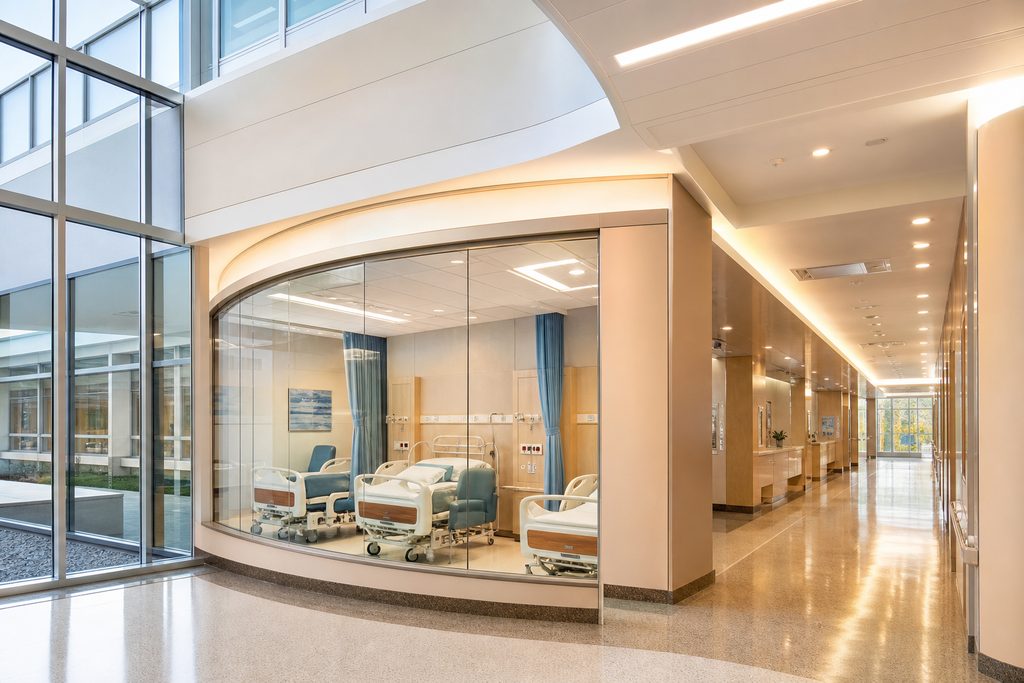
Walk into the bone marrow transplant ward at Peking University People’s Hospital and you will see something striking: a dedicated 18-story building housing over 300 laminar flow transplant beds. Most Western transplant centers measure their beds in dozens. This is not just a number. Laminar flow rooms are high-tech isolation environments that dramatically reduce infection risk during the critical neutropenic phase when a patient has no immune system. The hospital invested in this infrastructure because they treat a volume of patients that demands it.
Diagnostics move fast here. A complete leukemia immunophenotyping panel — something that might take two weeks at a regional US hospital — often returns in 48 to 72 hours. The hospital operates its own hematology laboratory with next-generation sequencing capabilities. There is no sending samples to a third-party lab and waiting. The entire diagnostic-to-treatment pipeline is under one roof. For an international patient, this compression of timelines can be the difference between starting a conditioning regimen next week versus next month.
Cost Advantage Without Quality Compromise
Let us address the elephant in the room directly. The bone marrow transplant cost Beijing is dramatically lower than in the United States or Europe. An allogeneic transplant here typically ranges from $50,000 to $100,000, depending on the conditioning regimen complexity, donor type, and whether complications arise. An autologous transplant often falls between $30,000 and $50,000.
Why so much lower? Not because corners are cut. The structural reasons are straightforward. Chinese physician salaries are lower than their US counterparts. Hospital construction costs and administrative overhead are a fraction of what American hospitals carry. Malpractice insurance premiums are minimal compared to the crushing burden in the US. And high patient volume spreads fixed costs across far more cases. The chemotherapy drugs, the monoclonal antibodies, the immunosuppressants — these are the same molecules, often manufactured by the same global pharmaceutical companies, at prices that reflect local market economics.
Clinical outcomes tell the real story. The five-year overall survival rate for acute myeloid leukemia patients receiving haploidentical transplants at this center has been reported above 65% in published studies — comparable to results from MD Anderson or Fred Hutchinson. This is not discount medicine. This is high-volume, high-expertise care in a different economic system. For patients asking “how much does a bone marrow transplant cost in China,” the answer includes both the number and the context behind it.
What You Need to Know Before Going Alone
We believe in transparency. Here are the barriers that make independent access to this hospital genuinely difficult for international patients.
- Visa Requirements: Medical treatment in China requires an S2 visa with a specific annotation for medical purposes. The hospital must issue an official invitation letter confirming your treatment plan and duration. Without this document, your visa application will be rejected. Obtaining that letter requires a confirmed appointment and a deposit paid to the hospital — a circular process that frustrates many patients before they even start.
- Payment Systems: Chinese public hospitals operate on a prepaid debit system. You load money onto a hospital card at admission, and every test, medication, and procedure draws from that balance. If your balance hits zero, services stop. International credit cards are not accepted at the cashier window. You need a Chinese bank account or a local contact to manage this. Daily balances can shift by thousands of dollars during the transplant process.
- Language and Navigation: Peking University People’s Hospital sees over 10,000 outpatient visits per day. Signage in English is sparse. Registration kiosks operate in Chinese only. A single blood draw might require visiting three different floors. Without a native speaker who understands hospital workflow, you will lose hours — and during a transplant workup, lost time is lost clinical momentum.
How We Help You Navigate This
These barriers exist for structural reasons. They are not designed to exclude foreigners. They are the natural consequence of a hospital system built to serve a domestic population of 1.4 billion people. Our entire service exists to bridge that gap.
Before you ever board a plane, we translate your complete medical history — pathology reports, cytogenetics, prior chemotherapy regimens, imaging studies — into the precise clinical terminology Chinese hematologists expect. We submit your case through the hospital’s official International Department, not through a back channel. We secure the visa invitation letter and coordinate your arrival date with the transplant team’s schedule. When you land in Beijing, a bilingual medical companion meets you at the airport. This person stays with you through every step: registration, payment management, escorting you to the correct floor for a bone marrow biopsy, sitting beside you during the consent discussion and translating every word. They do not make medical decisions. They make sure you understand every decision being made.
During the transplant itself, you will be in isolation for three to four weeks. Your companion coordinates with the nursing staff, relays updates to your family back home, and handles the endless small logistics — refilling your hospital card balance, picking up medications from the pharmacy, arranging for special dietary requirements. After discharge, you remain in Beijing for at least two to three months of close follow-up. We manage your accommodation, your twice-weekly outpatient visits, and your medication adherence. We do not leave until you are stable and cleared for travel home.
For patients who want to evaluate the hospital before committing to travel, we arrange a top-specialist video consultation. You speak directly with a hematologist from Peking University People’s Hospital. You ask every question that keeps you up at night. The consultation fee — from $500 to $800 — is fully credited toward our coordination service if you decide to proceed. There is no pressure. There is only information, and the power to act on it.
Frequently Asked Questions
Is bone marrow transplant safe in China for foreigners?
Safety in transplantation depends on three factors: the clinical team’s experience, the quality of infection control, and the rigor of donor screening. Peking University People’s Hospital meets international standards on all three. The transplant unit operates under protocols that mirror those of JCI-accredited centers. Infection rates are tracked and published. The donor program follows standards aligned with the World Marrow Donor Association. The question is not whether the hospital is safe — it is whether you have the logistical support to navigate it safely. That is where a professional coordination team becomes essential.
How much does a bone marrow transplant cost in China compared to the US?
An allogeneic transplant in the US typically costs $350,000 to $800,000. At Peking University People’s Hospital, the same procedure ranges from $50,000 to $100,000. This includes the conditioning regimen, the transplant procedure, the hospital stay, and standard post-transplant medications during the inpatient period. It does not include airfare, long-term accommodation in Beijing, or our coordination fees. Autologous transplants run $30,000 to $50,000. These are cash prices for international patients paying through the hospital’s International Department.
What is the Peking University People’s Hospital stem cell transplant price for haploidentical procedures?
Haploidentical transplants — using a half-matched family donor — typically fall at the higher end of the range, from $70,000 to $100,000. The additional cost reflects the more intensive immunosuppression and the longer inpatient monitoring required compared to a matched sibling transplant. The Beijing Protocol developed here has made this procedure a standard option, and the outcomes data supports its use when a fully matched donor is unavailable.
Can I book a bone marrow transplant in Beijing as an international patient before traveling?
Yes, but only through the hospital’s International Department. You cannot register through the general outpatient system or walk in expecting immediate admission. The process requires a medical records review, a treatment plan confirmation, a deposit payment, and a visa invitation letter. Our team handles this entire sequence. We do not promise you will be accepted — that is a clinical decision made by the transplant team. We promise that your case will be presented professionally and that you will receive an honest assessment.
What if complications arise during the transplant?
Graft-versus-host disease, infections, and organ toxicity are known risks of any bone marrow transplant, anywhere in the world. Peking University People’s Hospital manages these complications daily at a scale few centers match. The hospital has dedicated intensive care facilities, an infectious disease team experienced in immunocompromised patients, and access to the full range of immunosuppressive and antimicrobial therapies. Your medical companion remains with you throughout, ensuring you understand every intervention and can communicate your symptoms clearly. We also maintain direct communication with your family back home, so no one is left in the dark.
Your Next Step
Peking University People’s Hospital is one of the best hematology hospital China has to offer — a center where high clinical volume, pioneering protocols, and reasonable costs converge. Accessing it as an international patient is not simple. But it is possible, and it is done every month by patients who refuse to let logistics stand between them and a chance at curative treatment.
If you want to understand whether this center is right for your specific diagnosis, start with a conversation. Our team reviews your medical records, explains your options honestly, and never pushes you toward a decision. Reach out through our free consultation and let us show you what a clear path forward looks like.
For more medical information and treatment options in China, visit chinamedservices.com (China Medical Services).
