Peking University Sixth Hospital Beijing: A Guide for International Patients Seeking Mental Health Care
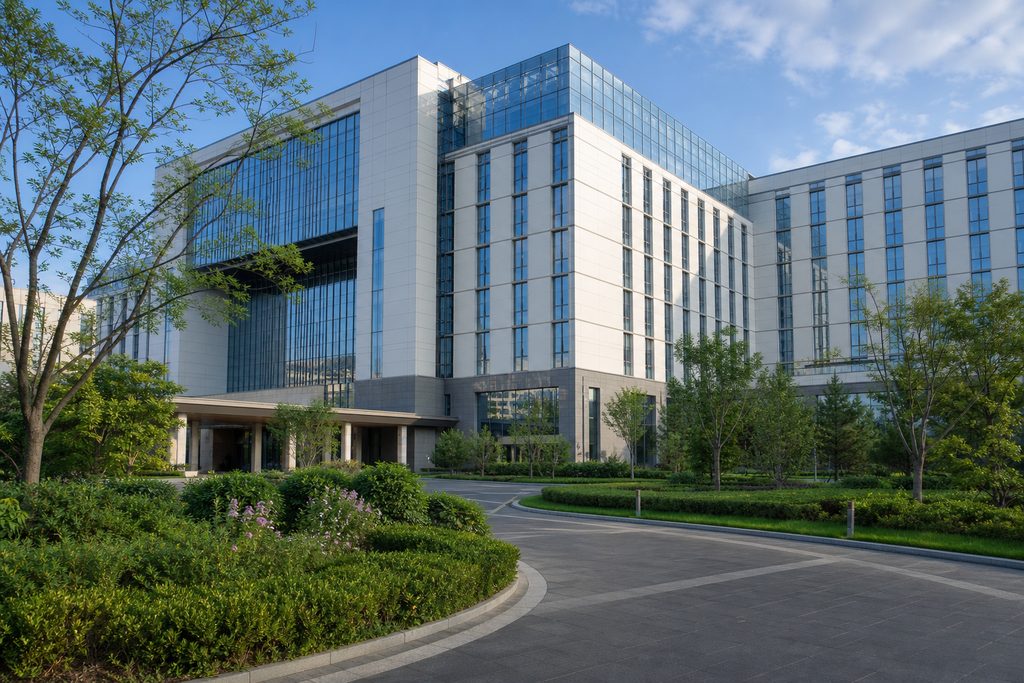
You have probably heard that seeking mental health treatment in a foreign country is impossibly complicated. The language barrier alone feels insurmountable. The idea of navigating a massive Chinese public hospital to find a psychiatrist — especially when you are already struggling — can stop you before you even start. But the reality of what Peking University Sixth Hospital offers is not what you might expect. It is the preeminent psychiatric institution in China, a place where clinical volume meets research depth on a scale rarely seen elsewhere. The real question is not whether the expertise exists. It is how to access it.
Key Takeaways
- Peking University Sixth Hospital is China’s undisputed top center for psychiatry, treating over 300,000 outpatients annually with a faculty that shapes national mental health policy.
- Outpatient psychiatry costs for international patients typically range from $100–$300 USD per consultation through the international channel, a fraction of comparable US specialist fees.
- The hospital operates entirely in Mandarin Chinese; without a bilingual medical companion, navigating registration, assessment, and prescriptions is not merely difficult — it is functionally impossible for non-Chinese speakers.
- You cannot book a first-time appointment online from overseas for the standard public outpatient clinic; securing a confirmed slot before you fly requires coordination through the hospital’s designated international VIP pathway.
The Problem: Mental Health Care Wait Times and Costs Are Breaking the System
In the United States, the average wait to see a psychiatrist for a new patient appointment now stretches to 26 days in major metropolitan areas. In some regions, it exceeds three months. The situation in the UK is bleaker: the NHS reported in 2023 that 1.2 million people were waiting for mental health services, with some waiting over a year for a first appointment. Canada is not much better — 41% of Canadians surveyed by the Canadian Mental Health Association said they could not access mental health care at all. The system is not bending. It is buckling.
And then there is the cost. A single 45-minute session with a private psychiatrist in New York or London runs $400–$600. Intensive outpatient programs for depression or anxiety disorders can cost $500–$800 per day. Inpatient psychiatric hospitalization in the US averages $1,400 per day. Even for those with insurance, deductibles and out-of-network charges make sustained treatment financially devastating. The math is brutal. Approximately 1 in 8 people globally live with a mental health disorder, according to the WHO, yet the majority receive no treatment. Cost and access are not side issues. They are the main barrier.
Who We Are
We are not a hospital. We do not provide medical treatment, prescribe medication, or offer clinical diagnoses. China Medical Services functions as your logistical architect — we bridge the gap between you and China’s top-tier medical expertise. Our team coordinates with over 340 top-ranked hospitals across 37 cities, including Peking University Sixth Hospital. We handle the practical barriers that stop international patients cold: securing the right visa, booking confirmed appointments, providing bilingual medical companions who translate everything in real time, and making sure you never stand alone in a crowded hospital hallway wondering where to go next. We exist because great psychiatry should not be locked behind a language you cannot speak.
Why Peking University Sixth Hospital Delivers Results
Clinical Depth That Comes From Unmatched Volume
Peking University Sixth Hospital is not simply a hospital with a psychiatry department. It is the Peking University Institute of Mental Health — a national center that simultaneously functions as a clinical powerhouse, a research institute, and the training ground for China’s leading psychiatrists. The hospital handles over 300,000 outpatient visits each year. Its inpatient capacity, while smaller than the outpatient load, manages complex cases ranging from treatment-resistant depression to schizophrenia and bipolar disorder with a multidisciplinary approach that integrates pharmacotherapy, psychotherapy, and rehabilitation. This volume creates a clinical feedback loop: the psychiatrists here see more rare presentations and complex comorbidities in a single year than many Western practitioners encounter in a decade. That pattern recognition matters when you need an accurate diagnosis.
Research and Policy Leadership
This hospital does not just treat patients. It sets national standards. Peking University Sixth Hospital houses the National Clinical Research Center for Mental Disorders and leads China’s National Mental Health Program. When the Chinese government updates its treatment guidelines for major depressive disorder or anxiety, the faculty here writes them. The hospital’s research output — spanning biological psychiatry, psychopharmacology, and digital mental health interventions — is published in journals like The Lancet Psychiatry and JAMA Psychiatry. For international patients considering care here, this means your treatment plan is informed by the same clinical team that defines best practices for a population of 1.4 billion. That is not marketing. That is structural reality.
Peking University Sixth Hospital Psychiatry Cost: The Numbers That Change Decisions
Let us address the question most international patients ask first: what is the Peking University Sixth Hospital psychiatry cost? Through the international patient pathway, an initial outpatient consultation with a senior psychiatrist typically falls between $100 and $300 USD. Follow-up visits run lower — often in the $80–$150 range. These fees cover the clinical assessment, diagnostic formulation, and treatment plan discussion. Medication costs, if prescribed, are separate and generally far lower than US pharmacy prices. For context, a month’s supply of a standard SSRI antidepressant in China might cost $20–$40 out of pocket, compared to $100–$300 without insurance in the US.
Inpatient psychiatric care at Peking University Sixth Hospital, arranged through the international department, varies significantly based on room type, treatment intensity, and length of stay. A rough benchmark is $300–$800 per day — still a fraction of the $1,400+ daily rate common in American psychiatric hospitals. These figures are estimates. The final Peking University Sixth Hospital psychiatry cost depends on your specific diagnosis, the treatment protocol your psychiatrist recommends, and the hospital’s current fee schedule. But the pattern holds: you are paying 60–80% less than comparable US private care, without sacrificing clinical quality.
| Service | Estimated Cost (USD) at Peking University Sixth Hospital | Comparable US Cost (USD) |
|---|---|---|
| Initial psychiatrist consultation | $100–$300 | $400–$600 |
| Follow-up consultation | $80–$150 | $200–$400 |
| Monthly antidepressant medication | $20–$40 | $100–$300 |
| Inpatient psychiatric care (per day) | $300–$800 | $1,200–$1,800 |
Is Peking University Sixth Hospital Good for Depression?
The short answer is yes — but let us be precise about what that means. Peking University Sixth Hospital is the national reference center for mood disorders in China. Its Department of Mood Disorders runs dedicated outpatient clinics, a specialized inpatient unit, and active research programs investigating the neurobiology of depression, treatment-resistant depression protocols, and the integration of cognitive behavioral therapy with pharmacotherapy. The hospital’s psychiatrists have extensive experience with both first-line treatments and complex cases where standard SSRIs and SNRIs have failed. For international patients asking “is Peking University Sixth Hospital good for depression,” the clinical answer is that this is where Chinese physicians themselves refer their most difficult depression cases.
But a caveat matters here. The therapeutic model in China differs from what many Western patients expect. Chinese psychiatry tends to emphasize pharmacological treatment more heavily than talk therapy, though the hospital does offer psychotherapy services. The cultural framework around mental health is also different — less emphasis on verbalizing emotional states, more focus on restoring functional capacity. This does not make the care worse. It makes it different. If your expectation is a 50-minute weekly psychotherapy session with an English-speaking therapist exploring childhood dynamics, you will not find that here. If you need a rigorous diagnostic assessment, a medication management plan informed by cutting-edge research, and a treatment team that has seen thousands of depression cases across the full severity spectrum, you will.
What You Need to Know Before Going Alone
Walking into Peking University Sixth Hospital without preparation is not an adventure. It is a guarantee of frustration. Here is what you face if you try to navigate this alone:
- Language Is an Absolute Wall: Every sign, every form, every registration screen, every pharmacy label is in Chinese. The psychiatrists conduct assessments in Mandarin. Even if a doctor speaks some English, the nuanced conversation required for a psychiatric evaluation — describing mood states, cognitive symptoms, trauma history — cannot happen in broken second-language exchanges. You need a fluent bilingual interpreter who understands psychiatric terminology. Without one, you cannot even complete registration at the front desk.
- No Overseas Online Booking for Standard Outpatient Care: The public outpatient system at Peking University Sixth Hospital does not accept advance appointments from overseas patients. You show up in person, queue for a registration number, and hope a slot is available. Some patients line up before dawn. For a foreigner who has flown 12 hours to Beijing, this is an unacceptable gamble. The alternative — the international VIP channel — requires coordination through an authorized intermediary. That is not a preference. That is the structure.
- Payment and Documentation Systems Are Closed to Foreigners: The hospital’s standard payment system does not process international credit cards directly. You need a Chinese bank account or a local payment method like WeChat Pay or Alipay, which require a Chinese phone number and bank card to set up. Medical records are issued in Chinese. Prescriptions are written in Chinese. Insurance reimbursement requires translated documentation and coded invoices that the hospital’s standard billing desk may not provide in the format your insurer requires.
How We Help You Navigate This
These barriers are not flaws in the Chinese healthcare system. They are features of a system designed for 1.4 billion domestic patients. International patients were never the design target. Our role is to build the bridge that does not exist.
Before you travel, we handle the appointment coordination through the hospital’s international department. This means you arrive in Beijing with a confirmed consultation time, not a hope and a queue number. We advise on the correct visa — an S2 visa annotated for medical treatment purposes, with documentation we help prepare. We arrange airport pickup and accommodation. On the day of your appointment, a bilingual medical companion meets you at the hospital entrance. This person handles registration, payment processing, and navigation through the facility. More critically, they sit with you during the psychiatric consultation and translate everything — the psychiatrist’s questions, your answers, the diagnostic discussion, the treatment recommendations. Nothing is lost in translation.
After the consultation, we ensure you understand the treatment plan. We translate your medical records and prescriptions into English. If your psychiatrist recommends medication, we guide you through the pharmacy process and explain dosing instructions clearly. If follow-up is needed, we coordinate it. Our goal is that you leave the hospital with a clear plan, not confusion. For patients considering ongoing care, we can arrange remote follow-up consultations via video, with the same bilingual support. The best mental hospital Beijing international patient pathway is not the one you hack together alone. It is the one with a guide who knows every step.
Frequently Asked Questions
You cannot book a standard outpatient appointment online from overseas. The public registration system requires in-person queuing. To secure a confirmed appointment before you travel, you must go through the hospital’s international department or VIP channel. This requires coordination through a service like ours — we contact the international department directly, submit your basic medical history, and lock in a specific date and time with a senior psychiatrist. This is the only reliable way to book appointment Peking University Sixth Hospital foreigner access without arriving in Beijing and hoping for the best.
Some psychiatrists at Peking University Sixth Hospital speak functional English, particularly those involved in international research collaborations. But functional English is not clinical fluency. A psychiatric assessment demands precise language — describing the quality of your anxiety, the nature of your depressive thoughts, your medication history. Even English-capable Chinese psychiatrists typically prefer to conduct assessments in Mandarin for diagnostic accuracy. The realistic path to mental health treatment China English speaking psychiatrist care is pairing a qualified Chinese psychiatrist with a skilled bilingual interpreter who understands psychiatric terminology. That is what our medical companions provide. You get the clinical expertise of China’s best psychiatrist plus the linguistic bridge that makes that expertise usable.
If the psychiatrist determines you need inpatient treatment, the admission process moves quickly — often same-day. The international department arranges a private or semi-private room. Inpatient stays typically range from two to six weeks, depending on your condition and treatment response. Your bilingual companion can visit daily to facilitate communication with your treatment team. Family members can stay nearby; we help arrange accommodation. Your S2 visa covers the treatment period, but if your stay exceeds 180 days, you will need to upgrade to an S1 visa. This is manageable but requires planning.
Most international insurance plans that cover overseas treatment will reimburse care at Peking University Sixth Hospital, but you must confirm this with your insurer before you travel. The hospital is a recognized top-tier institution, which helps with insurer acceptance. The challenge is documentation: you will need properly translated invoices, medical records, and diagnostic codes formatted for international insurance claims. We provide this translation and documentation support as part of our coordination service. You pay the hospital directly at the time of service, then submit to your insurer for reimbursement. The hospital does not do direct billing with foreign insurance companies.
Your Next Step
Peking University Sixth Hospital is China’s best psychiatric institution — a place where clinical volume, research leadership, and treatment expertise converge. The Peking University Sixth Hospital psychiatry cost is a fraction of what you would pay in the US or Europe for comparable specialist care. But accessing that expertise requires navigating a system that was never built for international patients. The language barrier, the registration process, the payment infrastructure — these are real obstacles. They are also solvable with the right support.
If you are considering mental health treatment in Beijing, start with a conversation. Tell us what you need, and we will tell you honestly whether Peking University Sixth Hospital is the right fit. No pressure. No hard sell. Just practical guidance from a team that has done this many times before. Contact us for a free consultation about your options.
Medical Disclaimer: This article is for informational purposes only and does not constitute medical advice. Always consult a qualified healthcare provider about your specific condition and treatment options. China Medical Services is a medical coordination and facilitation service — we are not a healthcare provider and do not offer clinical diagnoses or treatment recommendations.
For more medical information and treatment options in China, visit chinamedservices.com (China Medical Services).
