Peking University First Hospital Pediatric Urology: A Guide for International Patients
Peking University First Hospital Pediatric Urology for International Patients: What Families Need to Know
You’ve probably heard that getting specialized surgical care for a child in China means long waits, language chaos, and uncertain quality. The reality for pediatric urology at Peking University First Hospital is far more structured than that — but only if you understand how the system actually works before you book a flight. For families researching pediatric urology Beijing hospital cost, the numbers often surprise them. A hypospadias repair that might run $15,000–25,000 in the United States typically costs between $3,000 and $7,000 at this hospital, depending on complexity and whether you use the standard or international channel.
This guide explains what the hospital offers, what it costs, how to actually get an appointment as a foreign family, and where the process can break down. No sugarcoating. Just the operational reality from our team at China Medical Services, who coordinate these cases regularly.
How This Actually Works, Step by Step
The sequence matters more than most families expect. Here is the real path from your child’s diagnosis abroad to a completed procedure in Beijing.
First, you gather every existing record: ultrasound reports, surgical notes if the child has had prior repairs, voiding cystourethrogram (VCUG) images, renal scans, and the referring physician’s summary. These need professional medical translation into Chinese — not Google Translate. Our team handles this as part of case management.
Second, you submit the translated file to the hospital’s international patient office or to a coordination service like ours. A pediatric urologist reviews the materials. This review determines whether the case is appropriate for remote evaluation or requires an in-person visit first. For complex reconstructions — repeat hypospadias repairs, neurogenic bladder, exstrophy — the hospital often wants to see the child before quoting a surgical plan.
Third, you receive a written assessment: whether surgery is indicated, what technique is proposed, estimated hospital stay, and a cost range. This written second opinion costs between $300 and $500 through top-tier channels. It is for reference only — not a prescription, not a binding quote.
Fourth, if you proceed, you apply for the S2 visa. This is the short-stay visa category used for private affairs including medical treatment. Bring the hospital’s invitation letter, your child’s passport, and proof of relationship. Processing typically takes 5–10 business days at your nearest Chinese embassy or consulate, though timelines vary by country.
Fifth, you arrive in Beijing. The child undergoes pre-operative evaluation — blood work, anesthesia clearance, sometimes repeat imaging. Surgery is scheduled after this clearance, not before. For most pediatric urology procedures, the hospital stay ranges from 3 to 10 days, with follow-up catheter removal or stent removal in the days after discharge.
Peking University First Hospital Pediatric Urology International Patients: The Department in Context
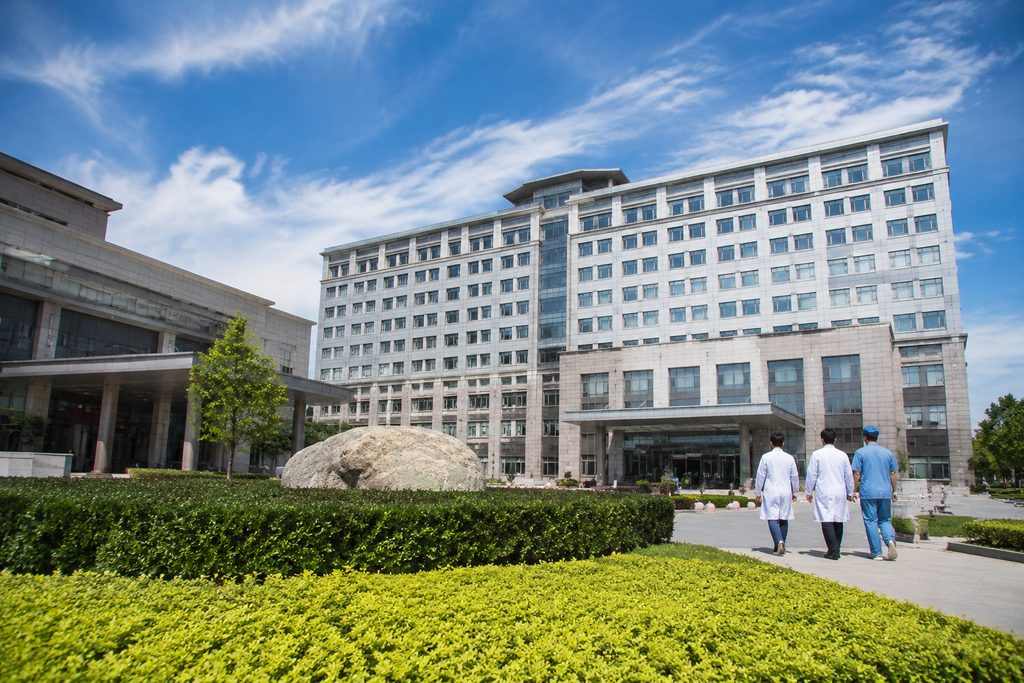
Peking University First Hospital — often abbreviated PKUFH — sits in central Beijing’s Xicheng District. Its urology department is consistently ranked among China’s top 10 for urology in the Fudan hospital rankings, the country’s most authoritative hospital evaluation system. The pediatric urology division handles the full spectrum: hypospadias, cryptorchidism, vesicoureteral reflux, ureteropelvic junction obstruction, posterior urethral valves, and complex genitourinary reconstruction.
What does that mean for a family coming from abroad? Volume. The surgeons here see more pediatric urology cases in a month than many Western centers see in a year. A surgeon performing 200 hypospadias repairs annually develops pattern recognition that no textbook provides. But volume alone is not quality. The hospital also runs a structured fellowship program, participates in international research collaborations, and has published extensively in peer-reviewed journals on hypospadias outcomes and minimally invasive pediatric urology.
For Peking University First Hospital pediatric urology international patients, the practical difference is this: you are accessing a high-volume, research-active center at a fraction of Western cost. But you are also navigating a system designed primarily for domestic patients. That is where preparation and coordination become the deciding factors.
A Realistic Timeline
Here is what the calendar actually looks like, from first contact to completed surgery. Ranges reflect real-world variation, not best-case scenarios.
| Stage | What Happens | Duration |
|---|---|---|
| Week 1–2 | Collect and translate medical records; submit for remote review | 7–14 days |
| Week 3–4 | Specialist reviews file; written second opinion issued | 5–10 business days |
| Week 5–6 | Video consultation if needed; surgical plan and cost estimate confirmed | 1–2 weeks |
| Week 7–8 | S2 visa application with hospital invitation letter | 5–10 business days (varies by embassy) |
| Week 9 | Arrive in Beijing; pre-operative evaluation at hospital | 2–3 days |
| Week 10 | Surgery; inpatient recovery | 3–10 days depending on procedure |
| Week 11–12 | Post-operative follow-up; catheter/stent removal; return home | 5–7 days in Beijing |
The forgotten step is document translation. Families routinely lose two weeks here. Certified medical translation into Chinese is not something you can do casually, and the hospital will not accept poorly translated records. Plan for it from day one.
Another hidden variable: appointment lead time for the international department. The hospital’s standard outpatient clinic operates on same-day queueing for domestic patients — you cannot book weeks ahead through the regular channel. The international or VIP channel allows advance scheduling, but slots fill up. Expect a 2–3 week lead time for a top pediatric urologist through this route.
What Can Go Wrong — and What Happens Then
Let’s be direct about the failure modes, because knowing them in advance is what separates a smooth case from a nightmare.
The records are rejected. The hospital reviews your file and says the imaging is too old, the reports lack critical measurements, or the translation is inadequate. What happens: you redo the imaging at home or plan to do it in Beijing. This adds 1–2 weeks and sometimes means the surgical plan changes once better imaging is available. Not the end of the road. But it feels like a setback if you weren’t expecting it.
The surgeon wants an in-person evaluation before quoting surgery. This is common for revision cases. A child who has had two failed hypospadias repairs cannot be assessed purely from photos and reports. What happens: you travel to Beijing for a consultation visit first, then return home, then come back for surgery. That doubles your travel cost and extends the timeline by 6–8 weeks. Some families choose to stay in Beijing between the evaluation and the surgery to avoid the second trip. That has its own cost implications.
The visa is delayed. Embassy processing times are outside anyone’s control. If your S2 visa takes three weeks instead of one, your carefully planned surgery date slips. The hospital will not hold a surgical slot indefinitely. What happens: you reschedule. The coordination service rebooks the appointment. You may lose a deposit on flights or accommodation. Travel insurance that covers medical trip cancellation is worth considering.
Post-operative complications arise after you return home. A small percentage of pediatric urology cases develop issues weeks after surgery — meatal stenosis after hypospadias repair, recurrent reflux, wound concerns. Your local urologist may be reluctant to manage another surgeon’s work. What happens: the Beijing team typically offers video follow-up consultations. For $100–300, you can speak directly with the operating surgeon’s team, send photos, and get guidance. Your local doctor handles the physical exam. It is not perfect continuity, but it is workable.
Is Pediatric Urology Safe in China? Evaluating the Evidence Honestly
The question is pediatric urology safe in China deserves a straight answer, not reassurance. The honest response: safety depends on where you go, not on the country as a monolith.
China has roughly 35,000 hospitals. The top 5% — those ranked by the Fudan system or accredited by JCI — operate at standards comparable to good Western centers. Peking University First Hospital falls squarely in that tier. Its anesthesia teams handle high volumes of pediatric cases. Its infection control protocols are audited. Its surgeons publish outcome data in international journals.
But the system below that tier is different. A random provincial hospital is not the same as a Fudan-ranked academic center. If you are coming from abroad, the margin for error is not in the surgery itself — it is in the coordination around it. Language barriers during pre-op clearance. Miscommunication about fasting instructions. Confusion at the pharmacy. These are not surgical risks. They are operational risks. And they are manageable with proper support.
Ask the hospital directly for outcome data on your child’s specific procedure. Reputable centers will provide complication rates. If a hospital cannot or will not share this, that is information too.
Practical Considerations: Records, Visa, Payment, and Follow-Up
What genuinely applies to your case depends on your child’s diagnosis and your home country. But these elements come up in nearly every international pediatric urology case we coordinate.
Medical records. Bring everything. Original imaging on CD or USB, not just printed reports. The hospital’s radiologists will want to review the actual DICOM files. Bring vaccination records. Bring the referring physician’s letter with contact information. If your child has had prior surgery, bring the operative note — not just the discharge summary.
Visa. The S2 visa is the applicable category for medical treatment and private affairs. It is not a “medical visa” in the sense of a dedicated category — China does not issue a standalone medical visa for short-term treatment. The S2 covers it. For treatment exceeding 180 days, the S1 category applies. Always confirm current requirements with the Chinese embassy in your country, because documentation requirements shift.
Payment. Public hospitals in China, including their international departments, operate on prepayment. You deposit funds at admission, and the hospital draws down from that deposit. Insurance reimbursement happens afterward — the hospital does not bill your insurer directly in most cases. Private international hospitals like United Family or Jiahui do direct billing, but they are not where you go for complex pediatric urology reconstruction. For that, you need the academic center, which means prepayment and self-claim.
Language. The international department has English-speaking coordinators. The surgical team may or may not speak fluent English. Do not assume. A bilingual medical companion who can translate clinical conversations, read pharmacy instructions, and navigate the hospital’s physical layout removes a significant source of stress. Our team provides this service from $300 per day.
Follow-up at home. Before you leave Beijing, get a written discharge summary in English. Get the surgeon’s contact protocol for post-operative questions. Get a list of what your local pediatrician should monitor and when. The more structured your handoff, the smoother the transition.
How to Book Pediatric Urology Surgery at Peking University First Hospital
It is among the strongest options, but “best” depends on the specific diagnosis. PKUFH excels in hypospadias, complex reconstruction, and neurogenic bladder. Other centers — Beijing Children’s Hospital, Shanghai Children’s Medical Center — also rank highly for pediatric urology. The right choice depends on your child’s condition, the surgeon’s specific experience with that condition, and logistical factors. A specialty-specific hospital comparison is more useful than a blanket ranking.
Not through the standard public channel. Surgery is always scheduled after an in-person evaluation. However, through the international department, you can secure a consultation appointment with a named specialist before you travel, and the surgical plan can be outlined remotely. This reduces — but does not eliminate — the uncertainty. The hospital will not guarantee a specific surgery date until your child has been evaluated in person.
The surgical team at PKUFH typically offers video follow-up consultations for international patients. You send photos and local test results; the team reviews them and advises. Your local pediatric urologist manages the hands-on care. This hybrid model works for most routine follow-up. For complications requiring intervention, you may need to return to Beijing or find a local surgeon willing to take over the case. Discuss this explicitly with the surgical team before you leave.
The international department provides itemized invoices that most international insurers will reimburse. The hospital itself generally does not bill insurers directly — you pay the deposit, receive treatment, and submit the claim yourself. Check with your insurer before traveling to confirm their requirements for overseas treatment claims, including whether they require pre-authorization.
Your Next Step
Choosing where your child has surgery is not a decision anyone makes lightly. The right preparation makes the difference between a stressful ordeal and a well-managed medical journey. We help families navigate the specifics: record translation, hospital communication, appointment coordination through official channels, and on-the-ground bilingual support during the hospital stay. We do not perform medical procedures, and we do not promise outcomes. What we do is make the process legible and manageable.
If you are considering pediatric urology care in Beijing, start with a conversation. Send us your child’s records, and we will help you understand whether Peking University First Hospital is the right fit and what the realistic path looks like. Request a free consultation and we will respond within one business day.
Frequently Asked Questions
Yes. The hospitals used for international patients are JCI-accredited and follow the same international safety standards as top hospitals in the US and Europe. Surgical teams perform high volumes of procedures — often more than their Western counterparts — which studies show leads to better outcomes.
Costs vary by procedure and hospital, but international patients typically save 40-80% compared to US prices — even when factoring in travel and accommodation. A consultation with our team will give you an exact, all-inclusive quote with no hidden fees.
Send us your existing medical reports to get started. We handle everything from hospital selection and appointment scheduling to visa assistance and post-operative recovery planning. Your medical records are reviewed by the specialist before you even book a flight.
For more medical information and treatment options in China, visit chinamedservices.com (China Medical Services).
