Peking University Shenzhen Hospital Urology: A Complete Guide for International Patients
You have probably heard that getting medical care in China means navigating chaos without language support. For urology, that fear keeps many patients from exploring an option that could save them tens of thousands of dollars. The reality at Peking University Shenzhen Hospital is far more structured than the stereotype suggests. The hospital operates a dedicated international medical department. English-speaking coordinators exist. The process works, but only if you understand how to access it correctly.
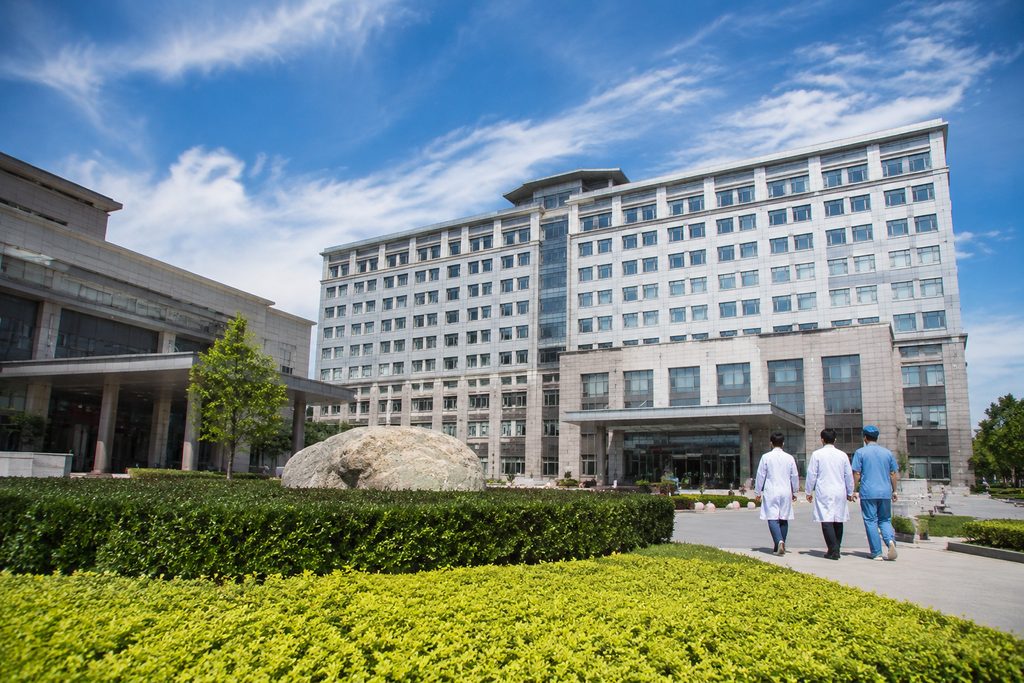
Peking University Shenzhen Hospital sits inside the Shenzhen Special Economic Zone, minutes from the Hong Kong border. Its urology department handles complex cases across oncology, stone disease, reconstruction, and minimally invasive surgery. Understanding Peking University Shenzhen Hospital urology cost for international patients requires separating the medical fees from the coordination layer. We will break down both.
How This Actually Works, Step by Step
The sequence matters. You cannot fly to Shenzhen and walk into the public outpatient hall expecting an English-speaking urologist to see you that day. That is not how Chinese public hospitals operate, even top-tier ones.
Here is the realistic path.
First, you submit your existing medical records. That means imaging reports, lab results, operative notes, pathology slides, and a summary of your current symptoms. Send what you have. Gaps can be filled later.
Second, the urology team reviews your file. This is a written review. A specialist looks at your diagnosis, prior treatments, and what you are asking for. You receive a written assessment with treatment direction.
Third, you decide whether a video consultation is necessary. Many patients skip straight past this. For complex urology cases — recurrent prostate cancer, failed hypospadias repair, complicated stone burden — a video call with the treating team saves a wasted trip.
Fourth, you travel to Shenzhen for the in-person consultation. This is non-negotiable for surgery. Chinese regulations require a face-to-face evaluation before any operative plan is confirmed.
Fifth, surgery or treatment happens. You stay for recovery. Then you return home with a discharge summary, imaging, and a follow-up plan your local urologist can execute.
What Urology Services Does Peking University Shenzhen Hospital Offer International Patients
The department covers the full adult and pediatric urology spectrum. For international patients, the most common reasons to travel here fall into a few categories.
Prostate conditions lead the list. Benign prostatic hyperplasia procedures, prostate cancer diagnosis and robotic-assisted radical prostatectomy, and focal therapy options are all performed. The volume is significant. Shenzhen’s population skews young, but the hospital draws patients from across Guangdong province.
Stone disease is another frequent request. Percutaneous nephrolithotomy, flexible ureteroscopy with laser lithotripsy, and shock wave lithotripsy are routine. For patients from countries with long public wait times for stone surgery, the speed here is a genuine draw.
Reconstructive urology attracts patients with failed prior surgeries. Urethral stricture repair, ureteral reimplantation, and complex fistula closure require surgeons who do these cases weekly, not yearly.
Andrology and male infertility round out the common requests. Microsurgical varicocelectomy, vasectomy reversal, and sperm retrieval procedures are available.
Is Peking University Shenzhen Hospital good for urology? The honest answer is that it is a strong regional center, not the single most famous urology hospital in China. Hospitals like Peking University First Hospital in Beijing or Shanghai Changhai Hospital carry deeper urology reputations. But for a patient who wants care in Shenzhen — near Hong Kong, in a modern city with excellent infrastructure — this hospital is a legitimate choice. The international department handles foreign patients regularly.
A Realistic Timeline
People underestimate the administrative runway. Here is what a typical urology patient faces.
| Stage | Duration | What Happens |
|---|---|---|
| Record collection and translation | 3–10 days | You gather imaging, labs, pathology. Translation into Chinese takes time. |
| Written second opinion | 5–10 business days | The urology team reviews your file and returns a written assessment. |
| Video consultation scheduling | 1–2 weeks | Coordinating a time that works for you and the specialist. |
| S2 visa application | 1–4 weeks | Depends on your home country’s Chinese embassy or consulate processing speed. |
| Travel and in-person consultation | 2–5 days in Shenzhen | Face-to-face evaluation, additional tests if needed. |
| Surgery scheduling | 1–3 weeks after consultation | Operating room allocation depends on urgency and the surgeon’s schedule. |
| Recovery in Shenzhen | 3–14 days depending on procedure | Minor stone procedures are quick. Radical prostatectomy requires longer. |
The total runway from first contact to surgery is typically 6 to 10 weeks. Some patients move faster. Urgent oncology cases get prioritized. But nobody should book a flight expecting surgery the same week they arrive.
What Can Go Wrong — and What Happens Then
Let us be direct about failure modes.
Your records are incomplete. The written review comes back with more questions than answers. The fix is straightforward: you submit the missing pieces. Sometimes that means getting a repeat MRI at home before traveling.
The specialist recommends against surgery. This happens more often than patients expect. A patient convinced they need robotic prostatectomy might be told active surveillance is appropriate. That is not a failure of the system. It is the system working. You leave with a second opinion that saves you an unnecessary operation.
The visa gets delayed. S2 visa processing times vary by country. If your surgery is time-sensitive, this is a real risk. The recourse is to apply early and use the hospital’s invitation letter to support the application. No one can guarantee visa approval.
You arrive and the surgeon wants additional testing. A CT scan, a cystoscopy, a urodynamic study. This adds days and cost. Budget for it. The in-person evaluation is not a rubber stamp.
Complications happen. Every surgical procedure carries risk. Chinese hospitals manage complications in-house. But if you fly home too early and a complication appears, your local urologist inherits the problem. Discuss the minimum safe stay with your surgeon before booking your return flight.
How to Book Peking University Shenzhen Hospital Urology Appointment — Without Getting Stuck
This is where most international patients hit a wall. The public registration system is in Chinese. The phone lines are in Chinese. Walk-in registration at the outpatient hall means hours of queuing with no guarantee of seeing a senior urologist.
The correct route for a foreign patient is the hospital’s international medical department. This channel exists precisely for people like you. Appointments are scheduled in advance. English-speaking staff coordinate the process. You are not competing with thousands of domestic patients for the same registration slots.
But here is the catch: the international channel costs more. Expect to pay roughly 1.5 to 2 times the standard consultation fee. For that premium, you get scheduled appointments, shorter waits, and language support. Whether that premium is worth it depends on your tolerance for chaos. Most Western patients choose the international channel.
You can attempt to book directly through the hospital’s international department. Some patients do this successfully. Others find the communication gap too wide and use a coordination service. The choice is yours.
Practical Considerations: Visa, Payment, Records, and Language
The S2 visa is the correct category for medical treatment in China. It is a short-stay visa for private affairs, and medical treatment falls under this umbrella. Your accompanying family member applies for the same S2 visa. Do not apply for an M visa — that is for commercial and trade activities, not medical care.
Payment in public hospitals is prepaid. You deposit funds at admission, and costs are deducted as services are rendered. Insurance reimbursement happens after the fact. Chinese public hospitals do not do direct billing with foreign insurers. If you want direct insurance settlement, you need a private international hospital — a different model entirely.
Bring everything. Every scan, every lab report, every pathology slide. Digital copies on a USB drive plus printed copies. Chinese specialists want to see the raw imaging, not just the written reports. If you have a CD of your MRI, bring the CD.
Language support inside the international department is generally good. Outside that bubble — in the radiology waiting area, the pharmacy, the billing office — English disappears fast. A bilingual companion who knows the hospital’s physical layout and administrative flow removes a layer of friction that most patients underestimate.
Follow-up at home is your responsibility. Chinese hospitals provide discharge documentation in Chinese, sometimes with English translation on request. Ask for translated summaries before you leave. Your home urologist needs clear instructions.
Frequently Asked Questions
Urology surgery price China for overseas patients varies widely by procedure. A minor stone procedure might run $4,000 to $8,000. A robotic radical prostatectomy typically falls between $15,000 and $25,000. These are international department prices, which run higher than domestic rates. Compare that to $40,000 to $70,000 for the same prostatectomy in the United States.
It is among the strongest public options. For foreigners specifically, the international department makes it more accessible than most. Some patients prefer private international hospitals in Shenzhen for pure convenience, but those lack the surgical depth of a major public urology department. The best choice depends on your case complexity.
Yes. A video consultation with the urology team costs between $100 and $300 for a standard specialist, or $500 to $800 for a top specialist. This is the smartest first step for most international patients. You explain your situation directly, hear the team’s initial thinking, and decide whether traveling makes sense.
Then you saved yourself a trip and an operation. A written second opinion costs $300 to $500 and is for reference only — it is not a prescription. If the review suggests conservative management, that is valuable information. You are not obligated to travel.
For minor procedures like ureteroscopy, three to five days is often sufficient. For major surgery like radical prostatectomy, plan for two weeks before flying. Long-haul flights immediately after pelvic surgery increase clot risk. Your surgeon will give you a specific recommendation.
Your Next Step
Understanding Peking University Shenzhen Hospital urology cost for international patients is the starting point, not the destination. The real question is whether this hospital fits your specific diagnosis, your timeline, and your budget. Our team at China Medical Services helps international patients evaluate Chinese hospitals and coordinate the logistics — records, appointments, language support, and on-the-ground navigation. We do not practice medicine, and we do not promise outcomes. We connect you with the right specialists and make the process legible.
Start with a written second opinion. It costs less than a flight and tells you whether traveling to Shenzhen is worth it. Send us your records, and we will take it from there.
For more medical information and treatment options in China, visit chinamedservices.com (China Medical Services).
