Penile Implant Surgery Service China: ED Surgical Solution Coordination
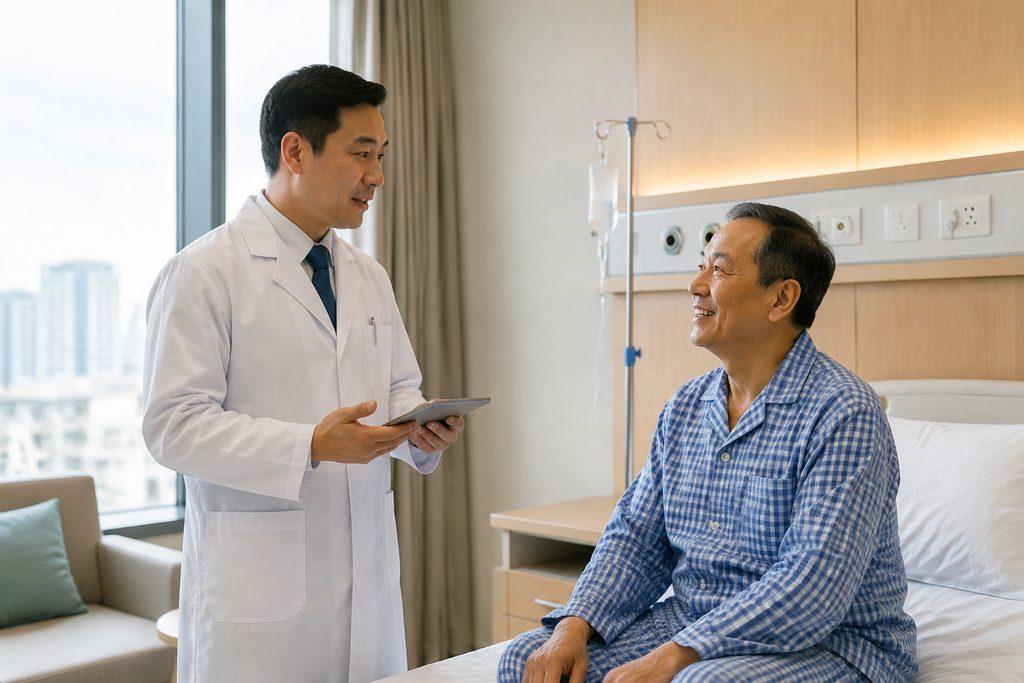
When 42-year-old Michael first heard the diagnosis, he had no idea where to start looking for treatment. Erectile dysfunction. His doctor had run through the options. Pills. Injections. Vacuum devices. None of them worked reliably anymore. The final recommendation was a penile prosthesis. Then came the second blow. The out-of-pocket quote at his local hospital in Houston was north of $18,000. His insurance covered a fraction. He started searching online for alternatives. That search led him to a phrase he never expected to type: penile implant surgery cost China.
He is not alone. Erectile dysfunction affects approximately 1 in 5 men over 40 globally. The numbers climb sharply with age. For many, surgical intervention becomes the only durable solution. Yet in Western healthcare systems, the price tag pushes this procedure out of reach. Our team at China Medical Services exists for exactly this scenario. We do not perform surgery. We are not a hospital. We are the logistical bridge connecting international patients with China’s most advanced urological surgery centers. We coordinate the complex, unglamorous, essential work that makes treatment abroad possible.
Key Takeaways
- The penile implant surgery cost China ranges from $8,000 to $15,000, roughly 50-70% less than comparable US procedures.
- China’s top-tier urology hospitals perform high volumes of prosthetic surgeries, with some centers completing over 300 penile implant procedures annually.
- Navigating China’s public hospital system independently is extremely difficult without Mandarin fluency and local know-how.
- S2 visa requirements, hospital registration protocols, and postoperative follow-up logistics demand professional coordination for a safe outcome.
The Problem: When Conservative ED Treatments Fail
Erectile dysfunction is not merely a quality-of-life issue. It is often the first clinical sign of significant vascular disease. The Massachusetts Male Aging Study found that ED precedes coronary artery disease by an average of 3 to 5 years. Yet the condition remains undertreated. Many men suffer silently for years. They cycle through oral PDE5 inhibitors long after the drugs stop working. They endure painful intracavernosal injections. They accept a diminished life.
For men with severe vasculogenic ED, post-prostatectomy ED, or Peyronie’s disease with refractory erectile dysfunction, the inflatable penile prosthesis remains the gold standard. Satisfaction rates exceed 90% in long-term studies. The device is entirely concealed within the body. It allows on-demand erections with a natural appearance and feel. But access is the barrier. In the United States, a three-piece inflatable implant costs between $16,000 and $25,000 when hospital fees, anesthesia, and surgeon charges are totaled. In the UK, NHS waiting lists for non-urgent urological surgery can stretch beyond 18 months in some trusts. Private treatment is faster but financially devastating for most families.
That gap between clinical need and practical access drives hundreds of men each year to research medical travel. They find fragmented information. Outdated forum posts. Promotional websites that feel like sales funnels. What they rarely find is a clear, honest explanation of what the process actually entails.
Who We Are
China Medical Services operates a curated database of 340+ top-ranked hospitals across 37 cities. We are case managers, not clinicians. Our team handles medical record translation, hospital selection based on documented surgical volumes and specialization, appointment coordination through official international patient channels, visa guidance, bilingual medical companionship, and logistical support throughout your stay. We do not make medical recommendations. We connect you with the right surgeons in the right institutions, and we make sure nothing gets lost between languages, cultures, and administrative systems. Everything we do is built on one principle: transparency about what is possible and what is not.
Why Penile Implant Surgery in China Delivers Results
Surgical Volume Builds Proficiency
The relationship between procedural volume and surgical outcomes is well documented. A 2017 study in the Journal of Sexual Medicine found that surgeons performing more than 30 penile prosthesis cases annually had significantly lower complication rates than lower-volume peers. In China’s largest urology departments, this threshold is routinely exceeded. The andrology center at Peking University First Hospital, for example, handles a caseload that places it among the highest-volume implant centers globally. Surgeons here see more complex revision cases in a single quarter than many Western urologists encounter in a career. That concentrated experience matters when a primary implant fails or when a patient presents with corporal fibrosis from prior injections.
What does this mean for a patient? It means the surgeon has likely managed your exact anatomical challenge before. Multiple times. Recently. There is no substitute for that.
Technology Parity at Structural Cost Advantage
A common concern is whether the penile implant surgery cost China reflects inferior hardware. It does not. The same devices dominate the Chinese market as in North America and Europe. The AMS 700 series and Coloplast Titan inflatable prostheses are standard. Hospitals stock these implants directly from the manufacturers. The cost difference arises from structural factors: lower hospital facility fees, reduced anesthesia charges, and a medical labor market that does not carry the same wage overhead as Western systems. A procedure priced at $20,000 in the US might cost $10,000 in Shanghai for the identical device. The surgeon’s technical skill is not discounted. The system’s overhead is.
But let us be direct. Lower cost does not mean easy. It means the financial barrier is lower. The logistical barrier remains high. That is what we manage.
Access to the Best Hospital for Erectile Dysfunction Surgery Shanghai
Shanghai has emerged as a primary destination for international urology patients. The city hosts multiple hospitals ranked among China’s top 10 for urology in the Fudan University hospital rankings. Renji Hospital affiliated with Shanghai Jiao Tong University School of Medicine operates one of the country’s busiest andrology departments. Its surgeons publish regularly in international peer-reviewed journals on prosthetic urology outcomes. Zhongshan Hospital Fudan University and Huashan Hospital also maintain strong urology programs with dedicated andrology subspecialists. When patients ask us about the best hospital for erectile dysfunction surgery Shanghai, we do not give a single answer. We present the data on surgical volumes, device types offered, international patient infrastructure, and surgeon availability. The choice is always the patient’s. Our role is to make the data legible.
For those considering other cities, comparable expertise exists in Beijing at Peking Union Medical College Hospital and in Guangzhou at Nanfang Hospital. We maintain detailed profiles on all of these institutions. You can explore our department rankings to understand how hospitals compare across urology and other specialties.
How Safe is Penile Implant Surgery in China?
This question deserves a direct answer. The safety profile of penile implant surgery in accredited Chinese hospitals is comparable to international benchmarks. Infection rates for primary implants in high-volume centers run between 1% and 3%, consistent with published rates from major Western institutions. The key variable is not geography. It is hospital selection. A procedure performed in a top-tier teaching hospital with dedicated prosthetic urologists, standardized sterilization protocols, and experienced operating room teams carries low risk. A procedure performed in a low-volume facility without these safeguards carries higher risk. The same is true in any country.
Our entire service model is built on this distinction. We only coordinate with hospitals that meet specific criteria: documented implant volumes, board-certified andrology subspecialists, and functioning international patient departments. We do not work with facilities that fall below this threshold. The question “how safe is penile implant surgery in China” cannot be answered in the abstract. It can only be answered with reference to a specific hospital and a specific surgical team. We help you identify the right one.
What is Recovery Time for Penile Prosthesis Abroad?
Recovery follows a predictable trajectory regardless of where surgery is performed. The device is implanted through a small incision at the penoscrotal junction or infrapubic area. Most patients stay in the hospital for 1 to 2 nights. A urinary catheter is typically removed the morning after surgery. Pain is managed with oral medication. Swelling and bruising peak around day 3 and resolve gradually over two weeks.
The critical recovery milestone is the 4-to-6-week mark. The device must remain completely deflated during this period to allow the surgical capsule to form properly around the cylinders. No sexual activity. No cycling of the device. At the follow-up appointment, the surgeon teaches the patient how to inflate and deflate the prosthesis. Full function returns gradually. Most men resume sexual activity around 6 to 8 weeks postoperatively. The pump mechanism in the scrotum becomes easier to operate with practice. By 3 months, the device feels like a natural part of the body for most patients.
Traveling abroad adds a layer of planning. We recommend staying in China for at least 10 to 14 days after surgery. This allows for drain removal, wound checks, and the initial postoperative visit. Some patients return home after this period and complete the device activation with a local urologist. Others prefer to stay for the full 6 weeks. Our team helps you weigh these options based on your specific circumstances.
What You Need to Know Before Going Alone
Attempting to arrange penile implant surgery in China independently is technically possible. It is also extraordinarily difficult. The obstacles are not theoretical. They are concrete and unforgiving.
- Visa Requirements: Medical treatment in China requires an S2 visa with a notation specifying the purpose of treatment. This is not a tourist visa. The application demands an invitation letter from the treating hospital, proof of appointment, and documentation of financial means. Hospitals issue these letters only after confirming a patient’s eligibility through their international department. There is no workaround for this step. Applying with incomplete documentation leads to rejection.
- Hospital Registration Systems: Chinese public hospitals operate on real-name registration tied to a passport number. Walk-in registration at a top-tier urology department is not realistic. Specialist consultations require advance booking through internal channels. The outpatient halls handle over 10,000 patients daily at major centers. Without a Mandarin-speaking guide who understands the layout, the queuing system, and the payment workflow, a foreign patient can spend an entire day failing to see a doctor.
- Payment and Insurance: Public hospitals require prepayment. A deposit is placed at admission, and additional funds are requested as the balance draws down. International credit cards are not universally accepted at hospital cashier counters. WeChat Pay and Alipay dominate, and linking a foreign card to these platforms is not always straightforward. Most international patients wire funds in advance or carry sufficient cash. Insurance reimbursement is retrospective. The hospital provides itemized invoices and medical reports, but the claim is filed by the patient after returning home.
How We Help You Navigate This
These barriers exist for structural reasons. They are not designed to exclude foreign patients. They are simply the operational reality of a healthcare system built for 1.4 billion domestic users. Our job is to translate that reality into a manageable process.
We start with your medical records. Our bilingual team translates your urological history, relevant imaging, and prior treatment notes into Chinese medical terminology. This is not a software translation. It is a manual review by staff who understand how Chinese urologists evaluate surgical candidacy. We submit these records to the international departments of hospitals that match your clinical needs. We confirm that the hospital has the specific implant device you and your doctor have discussed. We obtain the official invitation letter required for your S2 visa application.
When you land in China, a bilingual medical companion meets you at the airport. This person handles every logistical touchpoint: hospital registration, queue ticket retrieval, payment processing at the cashier, escorting you to the correct consultation room, and real-time interpretation during every doctor interaction. They do not offer medical opinions. They ensure nothing is lost in translation. After surgery, they coordinate wound care supplies, pharmacy visits, and follow-up appointments. If you need to extend your stay, they help with accommodation and visa extensions.
This is not a concierge fantasy. It is hard, detailed work. And it is the only way to make treatment in China safe and coherent for someone who does not speak the language or understand the system. For patients looking to book penile implant surgery China medical tourism package coordination, we provide a structured pathway from initial inquiry to postoperative clearance.
Erectile Dysfunction Surgical Treatment China Fast Track: What That Actually Means
The phrase “fast track” gets thrown around loosely in medical tourism marketing. Let us be precise. In the Chinese public hospital context, there is no queue-jumping. There is no payment that moves you ahead of a domestic patient with equal clinical urgency. What exists is a parallel administrative pathway: the hospital’s international department or VIP clinic. This channel operates with dedicated appointment slots, English-speaking coordinators, and senior surgeons who have allocated time for international consultations. The cost is higher. Typically 1.5 to 2 times the standard rate. The benefit is predictability. You get a confirmed consultation date. You get a scheduled surgery slot. You do not wait in the general outpatient hall for hours hoping to be seen.
This is what we mean by erectile dysfunction surgical treatment China fast track. It is not preferential treatment over local patients. It is a structured, pre-arranged pathway that respects your time and eliminates the chaos of navigating a massive public hospital alone. We coordinate this pathway. We do not sell access. We manage logistics.
Frequently Asked Questions
We present the profiles of surgeons who practice at the hospitals that match your clinical needs and who have availability within your timeframe. You make the final choice. We cannot guarantee a specific surgeon on a specific date, because surgeon schedules are controlled by the hospital, not by us. What we guarantee is that if the confirmed surgeon becomes unavailable and no acceptable alternative is offered, your coordination fee is refunded in full.
Penile implant complications are rare but real. Infection, mechanical failure, and erosion can occur. The hospital provides a complete operative report and discharge summary in English. This documentation allows your local urologist to manage most issues. For device-specific problems, the manufacturer’s warranty applies globally. If revision surgery is required, we can coordinate your return to the same surgical team in China. We maintain a relationship with the hospitals we work with. That continuity matters when things do not go perfectly.
The penile implant surgery cost China covers the hospital fees, surgeon charges, anesthesia, and the device. You should budget separately for flights, accommodation, meals, local transportation, and our coordination services. A 14-day stay in Shanghai with mid-range accommodation typically adds $2,000 to $4,000. Our bilingual companion service starts from $200 per day. We provide a detailed cost breakdown before you commit to anything. No hidden charges. No last-minute surprises.
Yes. We handle sensitive urological records according to protocols modeled on HIPAA principles. Medical documents are stored on encrypted servers with access limited to the case managers directly involved in your coordination. We never share your information with third parties without explicit written consent. The hospitals we work with operate under Chinese medical privacy laws, which impose strict confidentiality obligations on healthcare providers.
Uncontrolled diabetes with an HbA1c above 9%, active urinary tract infection, severe cardiovascular disease that makes anesthesia risky, and untreated psychiatric conditions are common exclusions. The surgical team in China will review your records and may request additional testing before confirming candidacy. We facilitate this communication. We do not influence the medical decision. If the surgeon determines you are not a suitable candidate, we help you understand the reasons and explore alternative treatment pathways. Our coordination fee for the hospital appointment is refunded if surgery is declined on medical grounds after the initial consultation.
Your Next Step
The decision to pursue penile implant surgery abroad is not small. It involves financial commitment, physical recovery, and trust in a medical system that may feel unfamiliar. But for men who have exhausted conservative options, it opens a door that local healthcare economics had closed. The clinical outcomes are strong. The cost differential is real. The logistical complexity is manageable when you have the right team beside you.
If you want to understand whether this path makes sense for your specific situation, start a conversation with us. There is no charge for the initial consultation. We review your case, explain which hospitals might be a fit, and give you a clear picture of timelines and costs. You decide what happens next. Visit our patient coordination page to begin. We answer every inquiry personally. Usually within one business day.
Medical Disclaimer: This article is for informational purposes only and does not constitute medical advice. Surgical candidacy can only be determined by a qualified urologist after physical examination and review of your complete medical history. Always consult a licensed physician before making treatment decisions.
For more medical information and treatment options in China, visit chinamedservices.com (China Medical Services).
