Pituitary Tumor Travel Insurance: Costs, Coverage & China Surgery
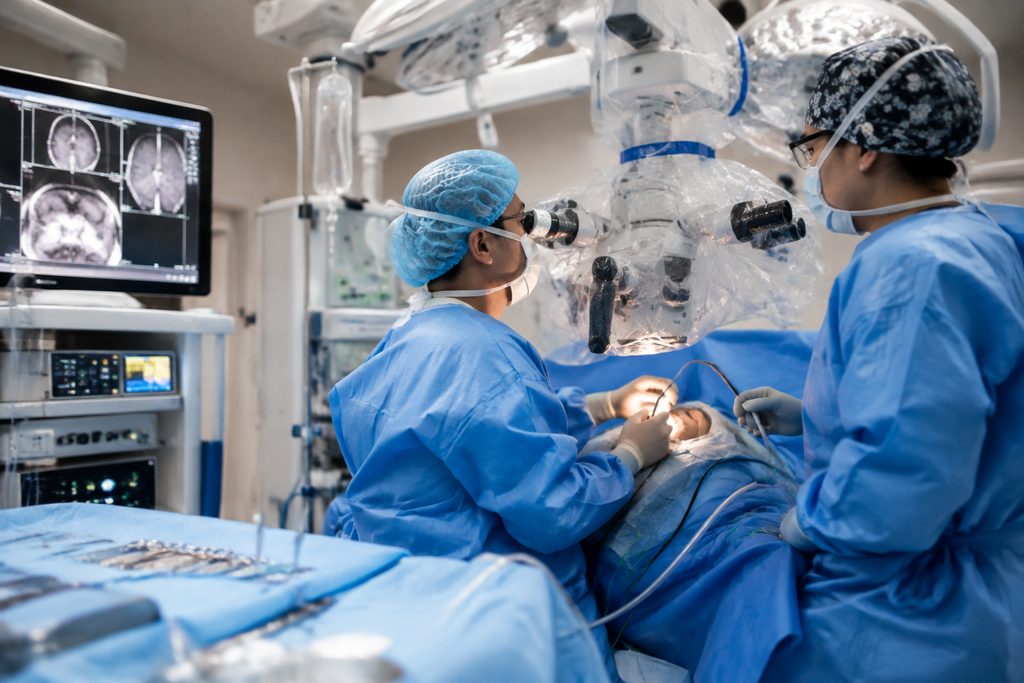
Quick answer: Pituitary tumor surgery cost China typically runs $8,000–$25,000 at top public hospitals, versus $50,000–$150,000 in the United States. Standard travel insurance almost never covers the surgery itself — you need a medical tourism or international health policy, arranged before you fly.
Roughly 1 in 10 adults carries a pituitary adenoma, according to autopsy and imaging series cited in endocrine literature — most never cause symptoms. For the smaller group whose tumors press on the optic chiasm or overproduce hormones, surgery becomes the conversation. And once surgery enters the picture, so does a second question: who pays if something goes wrong 7,000 miles from home?
That is where most patients get stuck. Not on the medicine. On the paperwork.
Pituitary Tumor Travel Insurance and Surgery Cost in China: The Short Answer
China’s top-tier public hospitals perform transsphenoidal pituitary resection for roughly $8,000–$25,000 all-in, depending on hospital tier, tumor size, whether endoscopic or microscopic technique is used, and length of ICU stay. Private international hospitals in Shanghai and Beijing charge more — often $30,000–$60,000 — but bill your insurer directly.
The caveat that complicates every one-liner: your existing travel insurance probably excludes this. Policies sold at airports cover lost luggage and a broken ankle. They classify a pituitary tumor as a pre-existing condition, and pre-existing conditions are the single most common exclusion in the entire travel insurance industry.
Who This Is Right For — and Who It Isn’t
Medical travel for pituitary surgery is not for everyone, and pretending otherwise wastes your money and your time.
Typically a reasonable fit:
- Non-functioning macroadenomas causing visual field loss, where surgery is already recommended and the only question is where
- Prolactinomas that failed or could not tolerate dopamine agonists
- Cushing’s disease from an ACTH-secreting adenoma confirmed on biochemical testing
- Patients paying out of pocket or facing a deductible above $20,000 at home
- Acromegaly cases where an experienced high-volume center matters
Probably not a fit:
- Anyone whose tumor is stable, asymptomatic, and being watched with annual MRI — no surgery, no travel
- Patients with active cardiac or pulmonary disease that makes long-haul flight risky
- Emergencies. Pituitary apoplexy with sudden vision loss is a same-day surgical problem. Do not board a plane.
- Anyone who cannot arrange follow-up endocrine care at home. Post-op cortisol and sodium monitoring is not optional.
The Options, Compared
Here is how the real alternatives stack up. Prices are typical ranges in USD and vary by hospital and case complexity.
| Route | Typical Cost | Wait Time | Insurance Handling | Language |
|---|---|---|---|---|
| US academic center | $50,000–$150,000 | 3–8 weeks | In-network, direct billing | English |
| China public top-tier hospital | $8,000–$25,000 | Days to 2 weeks | Prepay, then claim | Chinese; interpreter needed |
| China private international hospital | $30,000–$60,000 | 1–3 weeks | Direct billing with some insurers | English-speaking staff |
| Turkey or India | $6,000–$18,000 | 1–3 weeks | Varies widely | English common |
| Home country, public system | $0–$15,000 | 3–12 months | Covered, but slow | Native |
Which column suits you? If your insurance is comprehensive and your wait is short, stay home. If you are self-funding and your surgeon says “weeks matter,” the China public route is the value play. The private international route splits the difference — you pay for English and direct billing.
Is Pituitary Tumor Surgery Safe in China?
This is the question patients ask quietly, after the cost question. It deserves a straight answer.
Endoscopic transsphenoidal resection is a mature technique worldwide, and China’s largest neurosurgery departments perform it in high volume. The relevant benchmark is not a country — it is the individual surgeon’s annual case count. A center doing 200+ pituitary resections a year has seen every variant of the anatomy.
What China does not offer is the same safety net Western patients expect. Malpractice frameworks differ. Consent conversations happen through an interpreter. Ward rounds are fast and crowded. If you need a private room and a nurse who speaks English, you book the international department or a private hospital — and pay 1.5 to 2 times the standard rate for it.
China’s national hospital system spans more than 35,000 institutions. The Fudan-ranked top hospitals sit in the top 5% of that pool, and pituitary surgery is concentrated in neurosurgery departments at comprehensive tertiary centers. Volume is real. Hand-holding is not automatic.
Best Hospitals for Pituitary Tumor in Shanghai
Shanghai is the most common entry point for international pituitary patients, and for good reason — the city pairs neurosurgery depth with the largest concentration of English-capable private hospitals in mainland China.
Huashan Hospital, affiliated with Fudan University, is widely recognized for neurosurgery and appears among China’s top-ranked departments in that specialty on the Fudan Hospital Rankings. Zhongshan Hospital and Ruijin Hospital, both Fudan-affiliated, are comprehensive tertiary centers with strong endocrine and neurosurgical services. For patients who prioritize English-language care and direct insurance billing, Shanghai’s private international hospitals — United Family, Jiahui, and Parkway — offer Western-style facilities, though complex pituitary cases are often still referred into the public tertiary system.
Beijing concentrates the largest share of Fudan Top 100 hospitals in China — 21 of them — with Peking Union Medical College Hospital being the most frequently named for complex endocrine disease. If your case is hormonally unusual, Beijing is worth the extra logistics.
You can browse specialty-level rankings on our departments page and compare hospital-by-hospital profiles before committing.
Travel Insurance for Pituitary Tumor Treatment Abroad: What Actually Covers You
Read your policy’s definition of “pre-existing condition” before anything else. Most insurers define it as any condition for which you received advice, diagnosis, or treatment in a look-back window — commonly 60 to 180 days before purchase. A pituitary adenoma found on MRI eight months ago will almost certainly be excluded.
What can work:
- International health insurance (Cigna Global, Allianz Care, GeoBlue and similar) — these are major medical plans, not travel policies, and some cover planned treatment abroad with prior authorization
- Medical tourism policies — a niche product; a handful of carriers offer complication-only coverage for planned overseas procedures
- Employer or expatriate group plans — occasionally include overseas treatment with pre-approval
- Complication-only riders — cover a post-op bleed or infection, not the scheduled surgery
Buying a travel policy after your diagnosis and hoping the insurer does not ask is not a strategy. It is grounds for claim denial and, in some jurisdictions, rescission of the policy.
Can travel insurance cover pituitary tumor surgery in China? Occasionally — but only through a major medical or international plan with explicit overseas planned-treatment benefits and written pre-authorization. Get that authorization in writing before you book a flight.
What It Costs, and What Drives the Variance
At a top public hospital, budget $8,000–$25,000 for the surgical episode. That range reflects real variables:
- Endoscopic versus microscopic approach
- Whether a craniotomy is needed (rare, but it changes everything)
- ICU days — a smooth transsphenoidal case may skip ICU entirely
- Length of stay, typically 4–8 days
- Pre-op endocrine workup and post-op hormone replacement
- Hospital tier and whether you use the standard or international channel
Not included: flights, accommodation for a companion, interpreter fees, and follow-up imaging after you return home. Add 15–25% to your budget for those.
Private international hospitals in Shanghai quote higher — $30,000–$60,000 — and the premium buys English-speaking staff, JCI accreditation, and direct insurer billing. Some patients consider that worth it. Others do not.
Practical Considerations: Records, Visa, Payment, Follow-Up
Records. You will need your MRI or CT on disc, full endocrine panel results, visual field testing, and a medication history. Send these ahead so a Chinese neurosurgery team can review them before you commit to travel.
Visa. Foreign patients coming to China for medical treatment apply for the S2 visa with a medical-treatment annotation. Stays beyond 180 days use S1. Accompanying family members apply for S2 as well. The M visa is a commercial and trade category and has nothing to do with medical care — do not let anyone tell you otherwise. Requirements shift, so confirm current documentation with the nearest Chinese embassy or consulate.
Payment. Chinese public hospitals require prepayment; you claim reimbursement afterward. Private international hospitals frequently bill insurers directly. Bring a card that works internationally and confirm your daily transaction limit before admission.
Appointments. Standard public outpatient registration cannot be reserved from overseas in advance — you queue on the day. Surgery follows an in-person consultation. The workaround is the hospital’s international or VIP channel, which allows earlier scheduling at roughly 1.5–2 times the standard fee.
Follow-up. This is the part patients underestimate. After transsphenoidal resection you need cortisol monitoring, sodium checks, and a repeat MRI at 3 months. Line up an endocrinologist at home before you travel.
Frequently Asked Questions
Almost certainly not. Standard travel policies exclude pre-existing conditions, and a diagnosed pituitary adenoma is exactly that. You need an international major medical plan or a specialized medical tourism policy with written pre-authorization. Check the look-back window in your policy — it is usually 60 to 180 days.
At high-volume tertiary neurosurgery centers, endoscopic transsphenoidal resection is performed routinely with outcomes broadly comparable to Western centers. The variable that matters most is your surgeon’s annual case volume, not the country. What differs is the service environment — consent, ward communication, and privacy are handled differently, and English support is not guaranteed outside international departments.
Start with a remote review. Send your imaging and hormone panels to a Chinese neurosurgery team for a written opinion, then a video consultation if the case looks surgical. Only after that should you book travel. Public hospital outpatient slots cannot be reserved from abroad; the international department channel is the practical route for scheduling ahead.
Call 120 for an ambulance. Major cities have international clinics and 24-hour emergency departments at tertiary hospitals, but English capability varies by facility and hour. Carry a written summary of your diagnosis and medications in both English and Chinese. This is also the scenario where a complication-only insurance rider earns its premium.
Your Next Step
The cost gap between China and the US is real — often a factor of five or more — but it only matters if the clinical fit is right and the logistics are handled. Most patients who struggle do so on paperwork, not on surgery.
We are China Medical Services, a coordination team, not a hospital and not a provider of medical advice. We help international patients obtain written second opinions, arrange video consultations with Chinese specialty teams, coordinate hospital appointments through official international departments, and provide bilingual medical companions on the ground. We do not diagnose, and we do not promise outcomes.
If you are weighing pituitary surgery abroad, start with a records review. It costs far less than a flight, and it tells you whether the trip is worth taking. Reach out through our consultation page — no pressure, just a clear picture of your options.
This article is for general information only and is not medical advice. Treatment decisions should be made with a qualified physician who has reviewed your individual case. Costs and visa rules change; confirm current details with the hospital and the relevant Chinese embassy or consulate.
For more medical information and treatment options in China, visit chinamedservices.com (China Medical Services).
