Post-Surgery Emotional Recovery in China: Coping with Pain, Fatigue, and Dependency
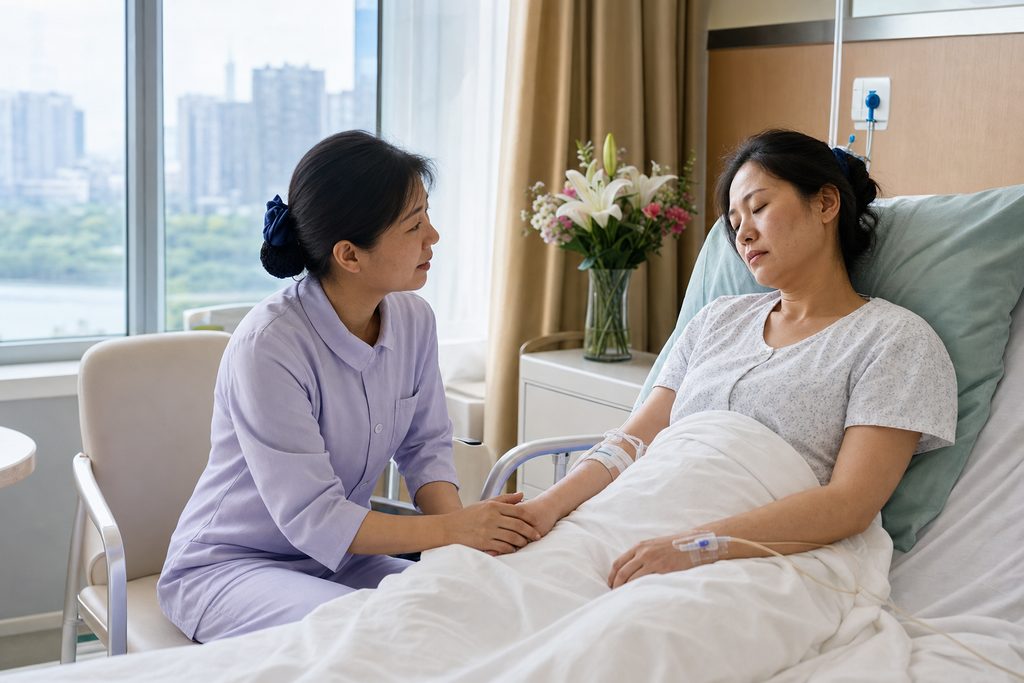
When 42-year-old Michael woke up in his Shanghai hospital room three days after a complex spinal fusion, the surgical pain was exactly what his surgeon had described. Sharp. Manageable with medication. What caught him off guard was the wave of helplessness that arrived with it. He could not tie his own gown. He needed a nurse to adjust his pillow. The fatigue was not just physical — it was a thick mental fog that made reading a single email feel impossible. His wife was back at the hotel, exhausted herself. And for the first time since he had researched China’s top orthopedic hospitals, a quiet, unwelcome thought surfaced: *Was coming here a mistake?*
That thought is not a sign of a bad decision. It is a near-universal part of the surgical journey. Research published in the *Journal of the American College of Surgeons* indicates that approximately 20-30% of patients experience significant emotional distress in the weeks following major surgery, with symptoms ranging from anxiety to situational depression. The physical pain is real. So is the fatigue. What many international patients do not anticipate is how the dependency — needing someone to translate a menu, to hail a car, to explain why you are wincing — can wear down your sense of self.
Yet here is what the data also shows: patients who receive structured emotional and psychological support during recovery report measurably better outcomes. Lower pain scores. Faster mobilization. Shorter hospital stays. The question is not whether emotional recovery matters. The question is how to get that support when you are thousands of miles from home, navigating a healthcare system in a language you do not speak.
Key Takeaways
- Post-surgical emotional distress affects roughly 1 in 4 patients and can directly slow physical healing — addressing it is not a luxury, it is part of clinical recovery.
- China’s top-tier hospitals increasingly integrate psychological support, TCM-based recovery modalities, and structured rehabilitation into post-operative care packages.
- Language barriers and cultural differences in expressing pain can prevent international patients from receiving adequate emotional support unless a bilingual advocate is present.
- Planning for emotional recovery before you travel — understanding what support is available, what it costs, and how to access it — is as important as planning for the surgery itself.
The Problem: Surgical Recovery Is Not Just Physical
The standard surgical consent form covers infection risk, bleeding, and anesthesia complications. It rarely mentions the emotional crash that can hit around day four or five post-op. But ask any surgical nurse, and they will describe it precisely: the moment the adrenaline of the procedure wears off, when the patient realizes healing will be measured in weeks and months, not days.
A 2022 meta-analysis in The Lancet Psychiatry examined over 50 studies and found that post-operative depression rates vary by procedure but cluster between 10% and 40%. Cardiac surgery patients sit at the higher end. Major orthopedic procedures are not far behind. The mechanism is not purely psychological. Surgical trauma triggers systemic inflammation, and inflammatory cytokines cross the blood-brain barrier. Pain disrupts sleep. Opioid medications can dampen mood. Immobility breeds frustration. These factors compound each other, and for an international patient, the isolation multiplies everything.
You cannot call your regular therapist back home because of the time difference. Your partner is doing their best, but they are also navigating a foreign city, worried about you, and running on little sleep. The hospital staff is competent and kind, but their English may be limited to clinical terms. You are surrounded by care and yet feel profoundly alone. This is not a failure of the Chinese healthcare system. It is a gap that exists in surgical recovery everywhere. The difference is whether that gap gets acknowledged and bridged, or whether you fall into it silently.
Who We Are
We are not a hospital. We are not doctors, and we do not provide medical treatment or psychological therapy. What we do is close the distance between you and the support you need. Our team at China Medical Services functions as your logistical architects — we match you with the right hospital from our network of 340+ top-ranked institutions across 37 cities, coordinate your appointments, provide bilingual medical companions who stay by your side through consultations and recovery, and connect you with the psychological and rehabilitative resources that exist within China’s best hospitals. We do not promise miracles. We promise that you will not have to figure this out alone.
Why Emotional Recovery After Surgery in China Is More Supported Than You Might Expect
Integrated Recovery Pathways That Include Psychological Care
China’s top-tier hospitals — those ranked in the Fudan University Hospital Rankings, representing the top 5% of the country’s 35,000+ hospitals — have increasingly adopted what international accreditation bodies call enhanced recovery after surgery protocols. These protocols are not just about early mobilization and nutrition. They include structured psychological support.
At hospitals like Peking Union Medical College Hospital in Beijing and Huashan Hospital in Shanghai, post-operative wards often have access to clinical psychologists who consult on cases where patients show signs of distress. In some departments, particularly oncology and cardiac surgery, psychological screening is built into the standard post-op workflow. This is not universal. A smaller provincial hospital may not offer this. But within the network we work with, emotional recovery after surgery in China is treated as a legitimate clinical concern, not an afterthought.
The integration runs deeper in some institutions. Traditional Chinese Medicine departments within these hospitals offer acupuncture specifically for post-surgical pain and anxiety, with sessions often available on an inpatient basis. A 2021 randomized controlled trial published in JAMA Surgery found that post-operative acupuncture reduced opioid consumption by approximately 30% in joint replacement patients, with secondary benefits including lower self-reported anxiety scores. This is not alternative medicine operating on the fringes. It is an integrated part of the recovery pathway in hospitals that house both Western surgical suites and TCM wings under one roof.
How to Cope with Post Surgery Fatigue and Depression Abroad: Practical Infrastructure
The fatigue that follows major surgery is not something you can will yourself out of. It is physiological. Your body is diverting enormous metabolic resources toward tissue repair. But the environment in which you recover can either accelerate your return to baseline or prolong the exhaustion.
China’s leading private international hospitals — United Family Healthcare, Jiahui International Hospital, Parkway Shanghai — have designed their inpatient recovery environments with this in mind. Private rooms with space for a family member to stay overnight. Menus that accommodate dietary restrictions without requiring you to explain yourself in a second language. Nursing ratios that allow for more attentive care. These hospitals are JCI-accredited and employ English-speaking staff as a standard, not an exception. The cost of post operative care package China options at these facilities is higher than at public hospitals, but still substantially below equivalent private care in the United States or Europe.
What does this infrastructure mean in practice? It means that when you press the call button at 3 a.m. because pain has broken through your medication schedule, the nurse who arrives can understand you. It means that the physiotherapist who comes to get you walking on day two can explain exactly what you should feel and what should concern you. It means that the small dignities of recovery — being able to order food you actually want to eat, being able to ask for an extra blanket without miming — are preserved. Those small dignities add up. They are the difference between feeling like a patient and feeling like a person.
Medical Tourism China Surgery Aftercare Services: The Role of the Bilingual Companion
Even in hospitals with English-speaking staff, there are moments when communication breaks down. A nurse on a busy shift may default to Mandarin. A specialist may use a term that does not translate cleanly. A pharmacy instruction may be written entirely in Chinese characters. For a patient in the fog of post-surgical fatigue, these moments are not minor inconveniences. They are barriers to understanding your own care.
This is where the role of a bilingual medical companion becomes central to emotional recovery. Not a translator who pops in for ten minutes. A companion who stays with you through the pre-op consultations so they understand your case history, who is present when the surgeon explains what to expect in recovery, who can advocate for you when you are too exhausted to advocate for yourself. Our companions typically spend 4 to 8 hours per day with patients during the acute recovery phase, handling everything from pharmacy runs to pain-scale translations to simply sitting with you when the emotional weight of the experience needs to land somewhere.
Can I get psychological support after surgery in Shanghai? Yes. But accessing it often requires someone who can call the psychology department, explain your situation, and schedule the consultation. It requires someone who knows which hospitals offer this service and which do not. The resource exists. The pathway to it is what we provide.
What You Need to Know Before Going Alone
Honesty matters here. Coming to China for surgery and attempting to manage recovery independently carries real challenges that no amount of determination can fully overcome. Some of these are logistical. Some are systemic. All of them are worth understanding before you book a flight.
- Language Barriers in Vulnerable Moments: You may be able to order dinner in a restaurant using a translation app. That same app will struggle when you are trying to describe the quality of your pain — is it sharp, dull, burning, radiating? — to a nurse who needs to decide whether to call the attending physician. Pain descriptors are culturally and linguistically nuanced. A mistranslation can lead to under-treatment or unnecessary escalation.
- Payment and Administrative Complexity: Public hospitals in China operate on a prepaid deposit system. You load funds onto a hospital card, and services are deducted as you go. Refilling the balance, understanding itemized charges, and processing insurance claims for reimbursement all require navigating systems designed for Chinese citizens. Private international hospitals offer direct billing with some insurers, but verifying coverage before admission requires persistent coordination.
- Post-Discharge Isolation: Once you leave the hospital, you are in a hotel room or a short-term apartment. The structured support of the ward disappears. If a complication arises — a fever, unexpected drainage, pain that suddenly escalates — you need to know which emergency department to visit, how to communicate your surgical history, and how to reach your original surgeon. Without a local advocate, this can become a crisis.
How We Help You Navigate This
These barriers exist for structural reasons. They are not signs that the Chinese healthcare system is broken. They are signs that it was built for a domestic patient population and has not yet fully adapted to international patients outside of designated international departments. Our role is to bridge that gap — not by changing the system, but by guiding you through it with local expertise.
Before you travel, we handle hospital matching based on your specific procedure and recovery needs. We coordinate with the hospital’s international department to schedule consultations and confirm that psychological support services are available if you want them. We help you understand exactly what the cost of post operative care package China will look like — not a vague estimate, but a line-by-line breakdown based on the hospital’s actual fee schedule.
During your hospital stay, a bilingual companion is with you daily. They translate not just words but context. They know when a doctor’s brief bedside manner is cultural, not clinical. They know which questions to ask about pain management, discharge planning, and follow-up care. They are your voice when you are too tired to speak clearly for yourself.
After discharge, we remain connected. We coordinate follow-up appointments. We arrange for any rehabilitation services — physiotherapy, acupuncture, psychological consultation — that your recovery plan requires. We make sure that when you fly home, you have a complete medical record in English, a clear medication schedule, and a direct line to your surgical team for any questions that arise in the weeks ahead.
The goal is not to eliminate the difficulty of recovery. Surgery is difficult. Healing takes time. The goal is to remove the unnecessary suffering — the suffering that comes not from the procedure itself, but from navigating a complex system alone in a language you do not speak.
Frequently Asked Questions
There is no single timeline, and anyone who promises one is being dishonest. The acute emotional distress — the tearfulness, the frustration, the sense of dependency — often peaks in the first week after surgery and begins to ease as physical mobility returns. But for major procedures, a full return to emotional baseline can take six to twelve weeks. The key variable is support. Patients who have someone to talk to, who feel understood and advocated for, consistently recover faster than those who suffer in silence. If distress persists beyond a few weeks or interferes with your ability to engage in rehabilitation, that is a signal to seek formal psychological support — which is available at many of the best hospitals in China for surgery recovery support.
You do not necessarily need one. The most critical window for companion support is the first three to five days post-surgery, when pain is most intense, communication with medical staff is most frequent, and your own energy for self-advocacy is lowest. Many patients use a companion for this acute phase and then transition to periodic check-ins during the remainder of their stay. Our companions can also train a family member — show them how to navigate the hospital system, what to watch for, who to call — so that the family member can take over after the initial period. The service is flexible because recovery is not linear.
Yes, but with an important caveat. The psychologists and psychiatrists affiliated with Shanghai’s top hospitals — Ruijin Hospital, Huashan Hospital, Zhongshan Hospital — are highly trained clinicians. However, not all of them are fluent in English. Accessing English-language psychological support typically requires going through the hospital’s international department or VIP wing, where English-speaking staff are concentrated. A bilingual companion can facilitate this connection and ensure that the psychologist you see is comfortable conducting sessions in English. At private international hospitals like Jiahui or United Family in Shanghai, English-language psychological support is a standard offering, though it should be confirmed during the pre-admission coordination process.
This varies significantly by hospital and by package. At public hospitals, psychological consultation is typically billed separately and may need to be specifically requested. At private international hospitals, some comprehensive surgical packages include an initial psychological screening and a set number of counseling sessions. When we help patients evaluate the cost of post operative care package China options, we explicitly ask about psychological support inclusions so there are no surprises. The cost for standalone psychological consultation in Shanghai or Beijing typically ranges from $100 to $300 per session at international hospitals, with packages often reducing the per-session rate.
Your Next Step
Emotional recovery after surgery is not a footnote to the surgical process. It is central to it. The research is clear: patients who feel supported, who can communicate their pain, who have someone advocating for their needs, heal faster and more completely. China’s best hospitals have the clinical expertise and increasingly the psychological infrastructure to support international patients through this journey. The challenge is not the quality of care. The challenge is access — knowing which hospitals offer what, navigating the language barrier, and having someone in your corner when you are too exhausted to fight for yourself.
That is the problem we solve. If you are considering surgery in China, or if you are already scheduled and worried about the recovery ahead, we invite you to start a conversation with our team. There is no cost for the initial consultation, and no pressure to commit to anything. Sometimes the most important step in recovery is simply saying: I cannot do this alone, and I do not have to. Learn more about how we support international patients through every stage of their medical journey in China.
For more medical information and treatment options in China, visit chinamedservices.com (China Medical Services).
