Precision Oncology in China: Huashan Neuro-Oncology Guide
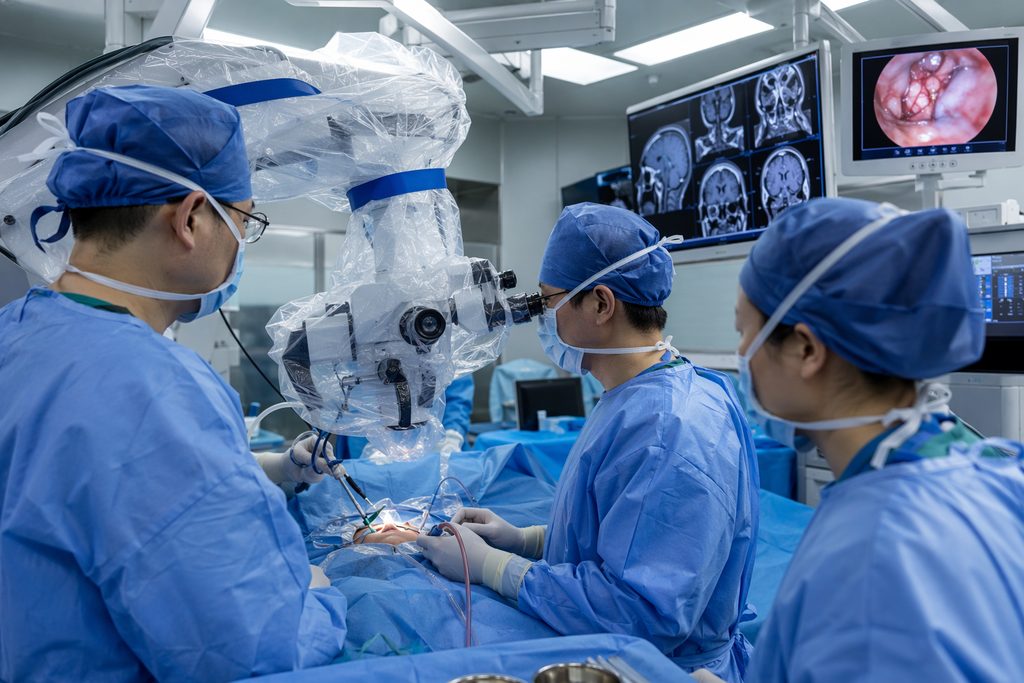
When 47-year-old Daniel from Toronto was told his recurrent glioblastoma had “limited options left,” his wife Sarah did what any engineer would do: she started researching. She found herself on Chinese hospital websites at 2 a.m., trying to decode whether a neuro-oncology department in Shanghai could offer something Toronto could not. That is where most international patients land — overwhelmed, staring at a system that is world-class but almost impossible to navigate from abroad.
Precision Oncology in China: Huashan Neuro-Oncology represents one of the most concentrated pockets of brain tumor expertise in the world. But knowing it exists and actually getting in front of that team are two very different things. This guide explains what precision oncology means at a place like Huashan, who it genuinely helps, what it costs, and how foreign patients realistically access it.
Precision Oncology in China: Huashan Neuro-Oncology — The Short Answer
Huashan Hospital, affiliated with Fudan University in Shanghai, is consistently ranked among China’s top hospitals for neurosurgery and neurology, and its neuro-oncology work sits at the center of that reputation. Precision oncology there means molecular profiling of tumor tissue, targeted therapy selection, and multidisciplinary review — not a single magic treatment.
Here is the caveat that matters. Chinese public hospitals, even elite ones, do not let overseas patients book a specialist appointment from a foreign laptop. You cannot simply email a department and lock in surgery. That structural reality shapes everything that follows.
Who This Is Right For — and Who It Isn’t
Precision oncology is not for everyone, and being honest about that is the only way this conversation is useful.
Typically a good fit:
- Patients with a confirmed brain tumor diagnosis (glioma, meningioma, metastasis) whose tumor tissue can be profiled
- People who have exhausted or plateaued on standard protocols at home and want a second molecular read
- Families seeking a written second opinion or MDT review before committing to a major decision
- Patients stable enough to travel, or willing to start with remote consultation
Probably not the right path:
- Anyone in an acute neurological emergency — that belongs at the nearest hospital, now
- Patients seeking a guaranteed cure. No center anywhere offers that for high-grade gliomas
- Those who cannot obtain pathology slides or imaging for review — precision medicine runs on data
The Options, Compared
What does a Chinese neuro-oncology pathway actually look like next to the alternatives international patients weigh? The table below compares the realistic routes.
| Route | Typical Access | Indicative Cost (USD) | Language Support | Best For |
|---|---|---|---|---|
| Home-country academic center | Insurance-dependent, weeks to months | Varies; often $0–$30,000+ out-of-pocket | Native | Standard-of-care first line |
| Huashan neuro-oncology (public channel) | In-person registration, same-day queue | Lower, but hard to pre-book | Limited English | Patients already in China |
| Huashan international/VIP channel | Coordinated, English service | Roughly 1.5–2x public fees | English available | Overseas patients needing structure |
| Written second opinion (remote) | Send records, receive report | From $300–$500 | Translated report | Deciding whether to travel |
| Multidisciplinary team (MDT) video review | Online with specialty panel | $1,500–$2,000 | Interpreter included | Complex or recurrent cases |
Which column fits you? If you are still deciding whether to travel at all, the remote rows are the sensible starting point. Patients already committed to coming tend to move toward the international channel, because that is the only realistic way to pre-arrange anything.
How International Patients Actually Reach a Huashan Neuro-Oncology Team
This is the part most articles skip, and it is the part that decides whether your trip happens.
China’s elite public hospitals run enormous daily outpatient volumes — some see tens of thousands of patients per day. Standard registration happens on-site, on the day. Surgery is scheduled only after an in-person consultation. There is no overseas phone line that bypasses this. The workable route for foreign patients is the hospital’s international or VIP department, which offers senior specialists and English-language service at roughly 1.5 to 2 times the standard fee.
That is where a structured, staged approach pays off. A written second opinion or video consultation lets a Chinese specialty team review your pathology and imaging before you buy a plane ticket. If the plan looks feasible and you agree, arrival support and hospital communication can be coordinated. Admission itself always remains subject to hospital rules — no service can promise it.
What It Costs and How Long It Takes
Costs vary by hospital and case complexity, so treat every figure as a range, not a quote.
On the coordination side, our published reference prices run from $300 for a bilingual medical companion day, $300–$500 for a written second opinion from a top-hospital specialist, $500–$800 for a top-specialist video consultation, and $1,500–$2,000 for a multidisciplinary team review. In-person specialist consultation coordination runs $800–$1,200. Any consultation fee is credited in full toward on-the-ground coordination if you upgrade within 90 days.
Hospital treatment charges are separate and set by the hospital. For context, complex neurosurgical procedures in China’s top public hospitals commonly cost a fraction of U.S. equivalents, though we never quote a surgical total before a Chinese team has reviewed your case.
Timeline-wise, expect roughly one to two weeks to assemble records and receive a written opinion, another week or two to arrange a video consultation, and then several weeks for visa processing and travel logistics if you proceed.
Practical Considerations for Brain Tumor Patients
Records come first. You will need pathology slides or blocks, molecular test results, and DICOM imaging. Missing pathology is the single most common delay.
On visas: medical travel to China uses the S2 visa, annotated for medical treatment, with S1 for stays over 180 days. Accompanying family members apply for S2 as well. The M visa is for commercial and trade activity and has nothing to do with medical care — a mistake that costs people weeks. Always confirm current requirements with the nearest Chinese embassy or consulate.
Payment matters too. Public hospitals generally require prepayment, with insurance reimbursed afterward. Private international hospitals often bill insurers directly. If you hold Western insurance, assume you will pay upfront and claim later.
And plan for follow-up. Imaging and labs done in China should be exported in a format your home oncologist can read. Ask for it before you leave.
Frequently Asked Questions
Not through the standard public channel — registration there is on-site and same-day. The realistic route is the hospital’s international or VIP department, usually arranged through a coordination service, or by starting with a remote written second opinion.
For many procedures, yes — top public hospital costs often run well below U.S. equivalents. But “cheaper” depends on the specific intervention, length of stay, and whether complications arise. Get a case-specific estimate before assuming anything.
High-grade brain tumors are hard to treat everywhere, and no center guarantees outcomes. Chinese hospitals follow their own protocols and consent processes, and complication management is part of that. This is exactly why a remote second opinion first — before travel — is the lower-risk way to test whether a China pathway makes sense for you.
Your Next Step
The core message is simple: precision oncology in China, including at Huashan’s neuro-oncology program, is genuinely world-class — but access is a logistics problem, not a medical one. Solving the logistics is what turns a 2 a.m. research spiral into an actual plan.
We are China Medical Services, a coordination team, not a hospital. We do not diagnose or treat anyone. We help you get records reviewed, arrange consultations, and — if you decide to travel — handle hospital communication, bilingual accompaniment, and visa guidance. A good first move is a free consultation through our patient support page, where you can ask questions before committing to anything.
For more medical information and treatment options in China, visit chinamedservices.com (China Medical Services).
