Prostate Shrinking Without Surgery: China’s Non-Invasive Options and Costs
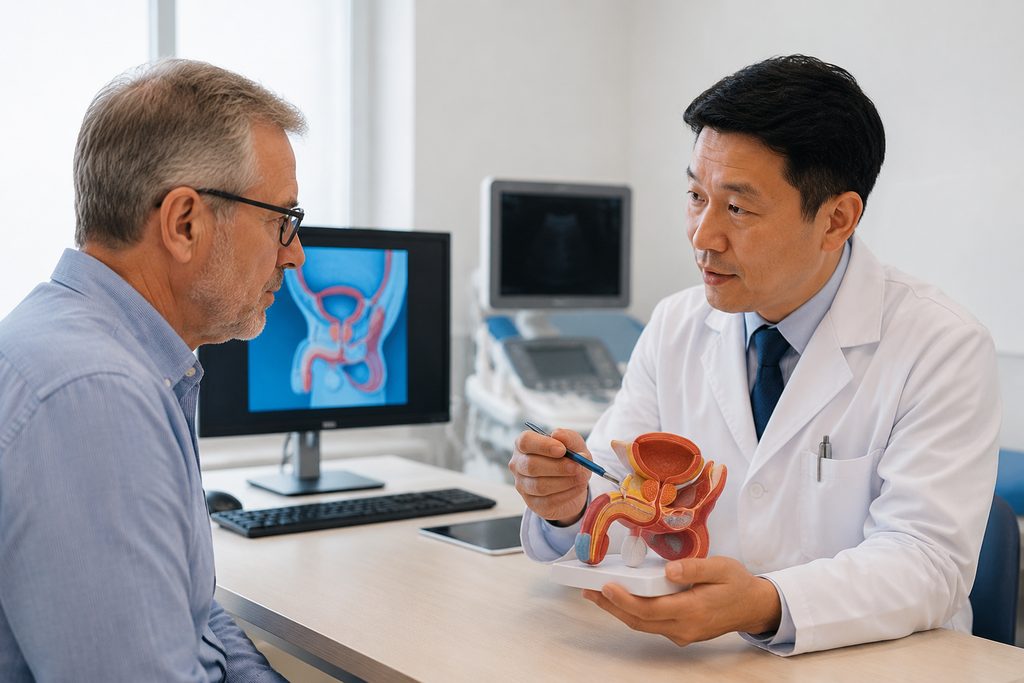
Prostate Shrinking Without Surgery: China’s Non-Invasive Options and Real Costs
You’ve probably heard that an enlarged prostate means either living with the symptoms or going under the knife. The reality in 2026 is far more nuanced. Prostate shrinking treatment cost China ranges from $8,000 to $18,000 for minimally invasive procedures that require no incisions, no overnight hospital stay in many cases, and a recovery measured in days rather than weeks. That is the direct answer. The more complicated truth is that “without surgery” covers a spectrum of techniques — some truly non-invasive, others minimally invasive — and choosing the wrong one for your specific prostate anatomy can leave you back where you started.
Men fly to Shanghai and Beijing every month for procedures like prostate artery embolization (PAE), holmium laser enucleation (HoLEP), and water vapor thermal therapy (Rezum). They come because the wait times are short, the technology is current, and the out-of-pocket price is typically one-fifth to one-third of what the same procedure costs in the United States. But not every enlarged prostate responds the same way. Let’s walk through who actually benefits.
Can the Prostate Be Shrunk Without Surgery in China: The Short Answer
Yes. The question “can prostate be shrunk without surgery in China” has a clear answer: multiple catheter-based and endoscopic techniques reduce prostate volume without a single external incision. Prostate artery embolization blocks blood flow to the prostate’s core, causing it to shrink by 30% to 40% over three to six months. HoLEP uses a laser to enucleate — essentially shell out — the obstructive tissue through the urethra. Rezum injects steam into the prostate to destroy excess cells. None of these involve cutting through the abdomen. That distinction matters more than the word “surgery” suggests, because the risks, recovery, and durability differ sharply between techniques.
Here’s the caveat most international patients miss. A procedure can be non-incisional yet still require spinal or general anesthesia. HoLEP, for instance, is often called “minimally invasive,” but it removes tissue aggressively and typically requires an overnight stay with a catheter. PAE, by contrast, is done through a pinhole in the groin or wrist under local sedation, and most men go home the same day. The right choice depends on prostate size, symptom severity, and whether you want the fastest recovery or the most durable result.
Who This Is Right For — and Who It Isn’t
Non-surgical prostate reduction works best for a specific profile. If you see yourself in the first list, the options in China are genuinely compelling. If you’re in the second list, you should think twice before booking a flight.
Good candidates:
- Men with moderate to severe lower urinary tract symptoms (LUTS) — frequent nighttime urination, weak stream, incomplete emptying — who have failed or plateaued on medication like tamsulosin or finasteride
- Prostate volumes between 40 and 100 grams, where PAE and Rezum show the strongest evidence
- Men who want to preserve ejaculatory function; PAE and Rezum carry a far lower risk of retrograde ejaculation than TURP or HoLEP
- Patients who cannot safely undergo general anesthesia due to cardiac or pulmonary comorbidities
- International patients who want a defined, upfront cost and a procedure scheduled within two to four weeks
Who should not pursue this:
- Men with prostate volumes over 120 grams — HoLEP remains the standard, and even that is a surgical procedure despite its minimally invasive label
- Anyone with a confirmed or suspected prostate cancer; shrinking treatments address benign prostatic hyperplasia (BPH), not malignancy, and delaying a biopsy would be dangerous
- Men with active urinary tract infections, untreated bladder stones, or neurogenic bladder, which can mimic BPH symptoms but won’t improve with prostate reduction
- Patients with severe bleeding disorders who cannot tolerate even catheter-based interventions
- Men whose primary concern is cost and who have good insurance coverage at home; the travel and logistics add complexity that may not justify the savings for everyone
The Options, Compared
| Technique | How It Works | Prostate Size Range | Hospital Stay | China Price Range (USD) | Key Trade-off |
|---|---|---|---|---|---|
| Prostate Artery Embolization (PAE) | Microspheres block blood supply to prostate core | 40–100 g | Same day or 1 night | $8,000–$14,000 | Slowest symptom relief (3–6 months) |
| Water Vapor Therapy (Rezum) | Steam injections destroy excess prostate tissue | 30–80 g | Same day | $7,000–$11,000 | Less durable for very large prostates |
| Holmium Laser Enucleation (HoLEP) | Laser shells out obstructive tissue via urethra | 80–200 g | 1–2 nights | $12,000–$18,000 | Highest retrograde ejaculation risk |
| Transurethral Resection (TURP) | Electrical loop cuts away prostate tissue | 30–80 g | 1–2 nights | $9,000–$15,000 | Gold standard but more invasive |
If you want the gentlest recovery and are willing to wait a few months for full symptom relief, PAE is the column to focus on. If your prostate is enormous and you want one definitive treatment, HoLEP wins despite the longer catheter time. Rezum sits in the middle — fast, simple, but best for prostates under 80 grams. The price ranges reflect what we see across top-tier public hospital international departments in Shanghai, Beijing, and Guangzhou, and they vary by hospital and case complexity.
Non Surgical Prostate Reduction Shanghai Price: What Actually Drives the Number
The non surgical prostate reduction Shanghai price you’ll see quoted depends on four factors that have nothing to do with the procedure itself. First, the hospital tier. A Fudan-ranked public hospital’s international department charges more than a standard private clinic but less than a Western-branded international hospital like United Family or Jiahui. Second, the interventional radiologist’s or urologist’s seniority. Third, whether you need additional diagnostics — a prostate MRI, uroflowmetry, or urodynamic study adds $500 to $1,500. Fourth, the length of stay and level of nursing care.
What’s typically included: the procedure fee, anesthesia, one to two nights of hospitalization if required, basic medications, and post-procedure imaging. What’s typically excluded: international travel, visa fees, accommodation, translator services, and follow-up consultations after you return home. Budget $300 to $500 per day for a bilingual medical companion if you’re navigating a Chinese public hospital alone — and you will need one. The outpatient volume at top hospitals exceeds 10,000 patients daily, and without Chinese language ability, even finding the right building is a challenge.
Is Prostate Artery Embolization Available in Beijing: Access and Reality
Yes — is prostate artery embolization available in Beijing is one of the most common questions we field, and the answer is an unambiguous yes. Several Fudan-ranked hospitals in Beijing perform PAE regularly, with interventional radiology departments that handle hundreds of embolization procedures annually across multiple organ systems. The technique requires a skilled interventional radiologist who can catheterize the prostatic arteries, which are small and variable in anatomy. Beijing’s concentration of top-tier teaching hospitals means that expertise is concentrated there.
But access works differently than in the West. You cannot simply email a hospital and book a PAE slot. Public hospitals in China operate on a same-day registration system for standard outpatient visits. To lock in a procedure date before you fly, you need to go through the hospital’s international department or VIP channel, which costs roughly 1.5 to 2 times the standard rate. That premium buys you English-speaking coordination, a scheduled consultation with the specialist, and a defined treatment timeline. It does not buy you a guarantee of a specific doctor on a specific date — anyone who promises that is overpromising. Our team coordinates these arrangements through official hospital channels, not backdoor access.
Best Hospital for Enlarged Prostate Treatment Abroad: How to Evaluate
Most US and European insurers reimburse out-of-network international care at 50% to 80% of “usual and customary” rates, which are often far below the actual charge. You’ll need to submit itemized bills, procedure codes, and a letter of medical necessity. Some insurers require pre-authorization before you travel. Private international hospitals in China with JCI accreditation are more likely to have direct billing arrangements with major insurers, but their procedure fees are 30% to 50% higher than public hospital international departments. Check with your insurer before booking anything.
PAE fails to improve symptoms in roughly 10% to 15% of men, usually due to unfavorable prostate artery anatomy or incomplete embolization. If that happens, the options are a repeat embolization (sometimes possible if a different artery branch was missed), medication, or a definitive procedure like HoLEP or TURP. A failed PAE does not make later surgery more difficult. But it does mean you’ve spent time and money without symptom relief, which is why patient selection matters more than the technique itself. A good interventional radiologist will review your imaging and tell you honestly if your anatomy makes PAE a poor bet.
Most men can fly 3 to 5 days after PAE. The main risks in the first week are post-embolization syndrome — low-grade fever, pelvic discomfort, urinary frequency — which peaks around day 3 and resolves on its own. Long-haul flights increase the risk of urinary retention if you’re still catheterized, so the catheter typically comes out before you leave. HoLEP requires a longer stay, usually 7 to 10 days before flying, because the catheter stays in longer and the risk of bleeding or infection is higher in the first two weeks.
Your Next Step
The question “can my prostate be shrunk without surgery” has a real answer: yes, through techniques that didn’t exist in mainstream practice 15 years ago. Whether the prostate shrinking treatment cost China makes sense for you depends on your prostate size, your symptom burden, and how you weigh durability against recovery speed. We’re not a hospital, and we don’t diagnose or treat anything. What we do is connect international patients with China’s top-ranked urology and interventional radiology departments, handle the documentation and scheduling, and put a bilingual companion beside you on the day of your procedure. If you want to know whether a specific hospital in Shanghai or Beijing is a fit for your case, request a free consultation and we’ll walk through the options with you.
Frequently Asked Questions
Yes. The hospitals used for international patients are JCI-accredited and follow the same international safety standards as top hospitals in the US and Europe. Surgical teams perform high volumes of procedures — often more than their Western counterparts — which studies show leads to better outcomes.
Costs vary by procedure and hospital, but international patients typically save 40-80% compared to US prices — even when factoring in travel and accommodation. A consultation with our team will give you an exact, all-inclusive quote with no hidden fees.
Send us your existing medical reports to get started. We handle everything from hospital selection and appointment scheduling to visa assistance and post-operative recovery planning. Your medical records are reviewed by the specialist before you even book a flight.
For more medical information and treatment options in China, visit chinamedservices.com (China Medical Services).
