PUMCH Beijing Gastroenterology: China’s Number One Digestive Disease Center for International Patients
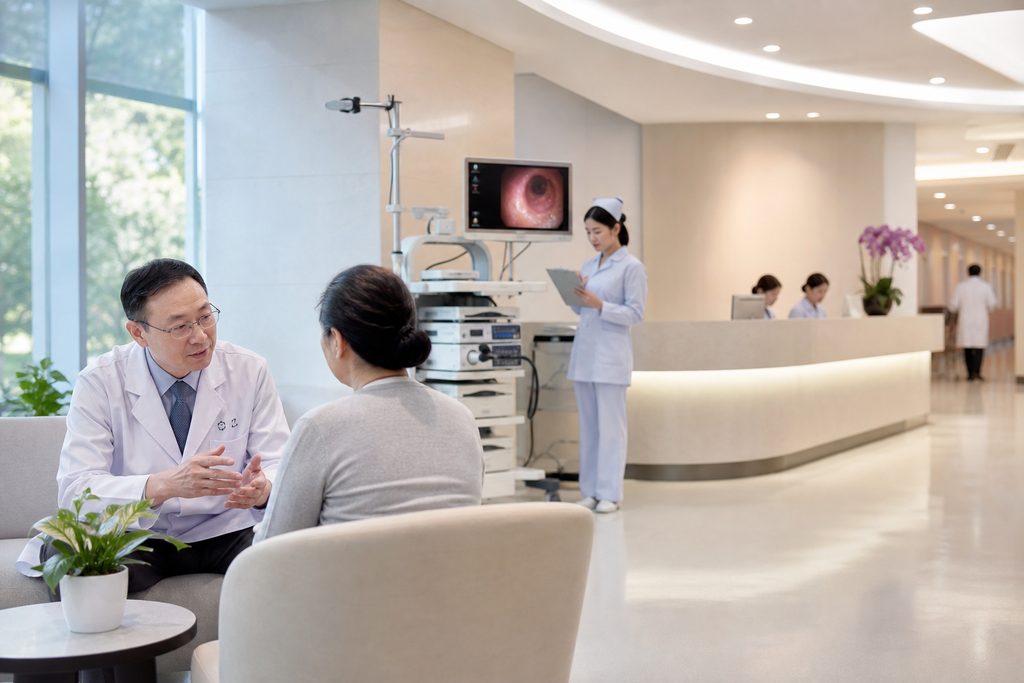
You have probably heard that seeking medical care in China means gambling with quality. The data tells a different story. Peking Union Medical College Hospital, known widely as PUMCH, has held the number one position in China’s gastroenterology specialty rankings for years. Not number two. Not “among the best.” The top spot. For Western patients facing six-month wait times or six-figure treatment bills at home, understanding the PUMCH gastroenterology cost for foreigners opens a door that many assume is closed.
Our team has guided patients from over 30 countries through the process of accessing care at this institution. We are not doctors. We do not provide medical treatment or clinical diagnoses. We are your logistical architects, bridging the gap between you and China’s most elite digestive disease expertise. The numbers are compelling. Wait times measured in days, not months. Costs that run 70-80% below US benchmarks. And clinical outcomes that rival or exceed what you would find at any major Western academic medical center.
Key Takeaways
- PUMCH’s gastroenterology department has ranked first in China’s national specialty evaluations for multiple consecutive years, handling over 120,000 outpatient digestive disease visits annually.
- Total treatment costs for foreign patients typically range from 60-80% below equivalent US care, with a colonoscopy priced between $400-800 versus $2,000-4,000 in America.
- Access for international patients requires navigating a specific pathway — the hospital’s International Medical Services department, not standard outpatient registration — and attempting this alone without Mandarin fluency creates real barriers.
- Understanding the cost structure before you travel eliminates surprises. Consultation fees, procedure charges, and coordination services each follow distinct pricing models that we explain in full below.
The Problem: Digestive Disease Diagnosis Takes Too Long and Costs Too Much
Approximately 1 in 5 Americans suffers from a chronic digestive disorder. That is over 60 million people. For many, the path from symptoms to diagnosis stretches across months of waiting. A gastroenterology appointment in London averages 12-14 weeks for non-urgent cases. In Canada, the median wait time for a colonoscopy after referral sits at roughly 3 months. Patients live with pain, uncertainty, and anxiety while the system processes them.
Then comes the bill. A diagnostic upper endoscopy in the United States averages $2,500 to $4,500 without complications. Add biopsies, pathology, and facility fees, and a single diagnostic workup can exceed $7,000. For patients without comprehensive insurance, or those on high-deductible plans, these numbers are devastating. Some delay care entirely. That decision carries its own risks — early-stage gastrointestinal cancers have five-year survival rates above 90%. Late-stage detection drops those numbers below 20%.
What if there were a path that cut both the wait and the cost by more than half?
Who We Are
We are China Medical Services, a medical concierge organization that connects international patients with China’s top-tier hospitals. Our database covers 340+ top-ranked hospitals across 37 cities — representing the top 5% of China’s 35,000+ medical institutions, ranked by the authoritative Fudan University hospital evaluations and JCI accreditation standards. We handle hospital matching, appointment coordination, bilingual medical companionship, visa guidance, and logistical support. We do not practice medicine. We make it possible for you to access those who do, without the friction that stops most foreigners at the gate.
Why PUMCH Gastroenterology Delivers Results
Peking Union Medical College Hospital was founded in 1921 by the Rockefeller Foundation. Its original mission was to bring Johns Hopkins-level medical education and clinical standards to China. A century later, it remains the institution that Chinese doctors themselves would choose for complex care. When evaluating is PUMCH good for digestive disorders, the evidence is unambiguous.
Clinical Volume That Drives Diagnostic Precision
The gastroenterology department at PUMCH handles a patient volume that most Western specialists would find staggering. Over 120,000 outpatient visits annually. More than 25,000 endoscopic procedures each year. This is not assembly-line medicine. It is pattern recognition at scale. A specialist who sees 500 cases of inflammatory bowel disease annually develops an intuitive grasp of subtle presentations that a clinician seeing 50 cases simply cannot match. Volume matters. The data proves it. Studies published in The New England Journal of Medicine and Gastroenterology have repeatedly demonstrated that higher procedural volumes correlate directly with lower complication rates and more accurate diagnoses.
PUMCH physicians routinely manage the cases that other hospitals refer upward — the atypical presentations, the treatment-resistant conditions, the patients who have already been through multiple rounds of inconclusive testing elsewhere. That is precisely the expertise international patients need when they have been cycling through their local healthcare system without answers.
Technology and Multidisciplinary Integration
The department operates one of China’s most advanced endoscopy centers. Confocal laser endomicroscopy. Narrow-band imaging. Endoscopic ultrasound with fine-needle aspiration. Capsule endoscopy for small bowel visualization. These are not niche research tools used occasionally. They are integrated into daily clinical workflows.
But the real structural advantage is how PUMCH organizes complex care. A patient with suspected pancreatic disease does not bounce between gastroenterology, surgery, oncology, and radiology as separate appointments spread across weeks. The hospital runs formal multidisciplinary team consultations where specialists from all relevant departments review the case together. For international patients, this compressed timeline means arriving on a Monday and having a comprehensive treatment plan by Friday. That speed changes outcomes.
Cost Structure: Why Lower Price Does Not Mean Lower Quality
Let us address the obvious question directly. If care is so good, why does the PUMCH gastroenterology cost for foreigners run so far below Western prices? The answer lies in structural economics, not quality compromises.
China’s top public hospitals operate on nonprofit models with government-subsidized infrastructure. Physician salaries are not tied to procedure volume in the fee-for-service spiral that drives American healthcare inflation. Malpractice insurance costs are a fraction of US levels. Pharmaceutical pricing is negotiated nationally. The result: a colonoscopy at PUMCH’s international department costs between $400 and $800. The same procedure averages $2,000 to $4,000 in the United States. A complex endoscopic retrograde cholangiopancreatography, or ERCP, might run $2,000 to $4,000 at PUMCH versus $10,000 to $20,000 in America.
| Procedure | PUMCH International Dept (USD) | US Average (USD) | UK Private (USD) |
|---|---|---|---|
| Diagnostic Colonoscopy | $400 – $800 | $2,000 – $4,000 | $1,800 – $2,800 |
| Upper Endoscopy (EGD) | $350 – $700 | $2,500 – $4,500 | $1,500 – $2,500 |
| ERCP | $2,000 – $4,000 | $10,000 – $20,000 | $7,000 – $12,000 |
| Specialist Consultation | $150 – $300 | $350 – $600 | $250 – $450 |
| Capsule Endoscopy | $600 – $1,000 | $2,500 – $4,000 | $2,000 – $3,500 |
These figures reflect the international department pricing — not the standard public rates that Chinese citizens access. That distinction matters. Foreign patients cannot use the standard public registration system. The international pathway costs more than local rates but includes English-speaking coordination, priority scheduling, and facilities designed for non-Chinese speakers. Even at these prices, the savings are dramatic.
When people ask what is the top gastroenterology center in China, the answer is consistently PUMCH. The Fudan University Hospital Rankings, China’s most authoritative hospital evaluation system, has placed PUMCH’s gastroenterology department at the top of its specialty reputation rankings year after year. This is not marketing language. It is public, verifiable data that Chinese medical professionals use to make their own referral decisions.
What You Need to Know Before Going Alone
The clinical excellence is real. So are the barriers. We tell every prospective patient the same thing: PUMCH is an extraordinary hospital, but accessing it without local expertise is genuinely difficult. Here is what stands between you and treatment.
- Registration System: PUMCH’s standard outpatient clinics cannot be booked from overseas. The hospital uses a real-name registration system tied to Chinese identification documents. Foreign patients without a Chinese ID number cannot use the online or self-service kiosk systems. Walk-in registration for popular specialists means arriving at 5 AM and still potentially failing to secure a slot. The International Medical Services department is the only viable pathway for overseas patients — and even that requires in-country coordination.
- Payment Reality: China’s top public hospitals operate on a prepayment model. You deposit funds before admission. You settle the balance before discharge. Credit cards are accepted at the international department, but international insurance is almost never directly billed. You pay first. You seek reimbursement from your insurer afterward. Some patients find this cash-flow requirement surprising. Plan for it.
- Language and Navigation: PUMCH’s main campus is enormous. The daily outpatient volume exceeds 10,000 patients. Signage in English exists but is inconsistent. Lab results, pharmacy instructions, and discharge summaries are overwhelmingly in Chinese. A specialist may speak some English during the consultation, but the nurses, technicians, pharmacists, and administrative staff who surround that 15-minute consultation generally do not. Without a bilingual companion, you will miss critical information.
How We Help You Navigate This
These barriers are structural, not personal. They exist because China’s hospital system was built for China’s population. Our role is to create a bridge that did not previously exist.
Before you travel, we handle the hospital matching process. We review your medical records, translate them into clinical Chinese, and submit them through the International Medical Services department for preliminary review. This step alone saves weeks of back-and-forth. We confirm which specialists are available, what documentation they require, and what the estimated costs will be. If you need a written second opinion before committing to travel, we can arrange that remotely — PUMCH gastroenterology cost for foreigners includes remote consultation options starting from $300 for a written second opinion, with the fee fully credited toward any subsequent in-person coordination service within 90 days.
During your treatment, our bilingual medical companions handle every logistical detail. Registration. Queue management. Payment processing. Translation during consultations. Clarifying discharge instructions. Collecting prescriptions. Scheduling follow-up appointments. You focus on your health. We handle everything else.
After you return home, we coordinate follow-up communication with your PUMCH specialist, translate medical records and recommendations, and ensure continuity of care with your local physician. The relationship does not end when you board your flight.
What the Appointment Process Actually Looks Like
Patients researching how to book appointment PUMCH Beijing digestive center often expect an online booking platform. That is not how this works. The process follows a specific sequence.
First, medical records are submitted for review. The international department assesses whether your case is appropriate for their specialists. Some conditions require specific documentation — pathology slides, imaging on CD, detailed referral letters. Missing items cause delays. We compile everything before submission.
Second, once the department accepts the case, an appointment is scheduled. This typically takes 3-7 business days for non-emergency consultations. The specialist reviews your records before you arrive. Your first consultation is not a blank-slate intake — it is a focused discussion with a physician who already understands your history.
Third, diagnostic procedures are scheduled. Endoscopies, imaging, lab work — these happen in the days following your initial consultation. Results typically return within 24-48 hours for standard pathology.
Fourth, the treatment plan is finalized. If surgery is required, it is scheduled after face-to-face evaluation. This is non-negotiable. No reputable surgeon at PUMCH will schedule a procedure without first examining you in person. Plan for a stay of at least 7-10 days if procedures are likely.
Frequently Asked Questions
The total cost breaks into three categories: consultation fees ($150-300 per specialist visit), procedure charges (varies by complexity, from $350 for a basic endoscopy to $4,000+ for advanced interventions), and hospital coordination fees. Our coordination service starts from $300 for appointment arrangement, with comprehensive bilingual companion support from $200 per day. These figures exclude travel and accommodation. Every case receives a customized cost estimate after medical record review — we never quote without understanding your specific needs first.
By the metrics that matter for clinical outcomes, yes. The Fudan University Hospital Rankings, China’s equivalent of the US News hospital rankings, consistently place PUMCH first in gastroenterology specialty reputation. The department handles the highest volume of complex referrals in the country. Its endoscopy center performs over 25,000 procedures annually with complication rates that match international benchmarks. For foreign patients specifically, the combination of clinical excellence and established international patient services makes PUMCH the most practical choice among China’s elite gastroenterology centers. Other strong options exist — our team can discuss alternatives if your specific condition warrants a different subspecialty focus — but PUMCH is the reference standard.
This is the question every patient should ask. PUMCH is a tertiary referral center with full emergency and critical care capabilities on site. Complication management protocols follow international guidelines. The hospital carries accreditation recognized by international insurers. That said, medical care anywhere carries inherent risk. We strongly recommend that all international patients carry comprehensive medical travel insurance that includes emergency evacuation coverage. Our team maintains relationships with international assistance companies and can facilitate emergency coordination if needed. We also ensure that your complete medical records, including procedural details and pathology reports, are translated and provided to you for continuity of care with your home physician.
Patients often ask about medical tourism China gastroenterology packages that blend treatment with sightseeing. The honest answer is that recovery should take priority. A diagnostic endoscopy with sedation requires 24 hours of rest. More invasive procedures demand longer recovery periods. Beijing’s air quality, traffic, and summer heat can stress a recovering body. We recommend scheduling any tourism before your procedures, not after. If your treatment plan allows, arriving 2-3 days early for light exploration is reasonable. But plan your itinerary around your medical schedule, not the reverse.
Your Next Step
Digestive symptoms that persist without answers drain more than your energy. They drain your peace of mind. The combination of PUMCH’s clinical authority and China’s structural cost advantages creates an option that most Western patients never realize exists. You do not need to accept year-long waits or financially devastating bills as inevitable.
If you want to understand whether PUMCH is the right fit for your specific situation, start with a conversation. Our team reviews your medical history, explains what the process would look like for your case, and provides transparent cost estimates before you commit to anything. No pressure. No obligation. Just clarity about an option that might change your outcome. Request a free consultation and we will walk you through what is possible.
For more medical information and treatment options in China, visit chinamedservices.com (China Medical Services).
