Peking Union Medical College Hospital ENT: A Guide for International Patients
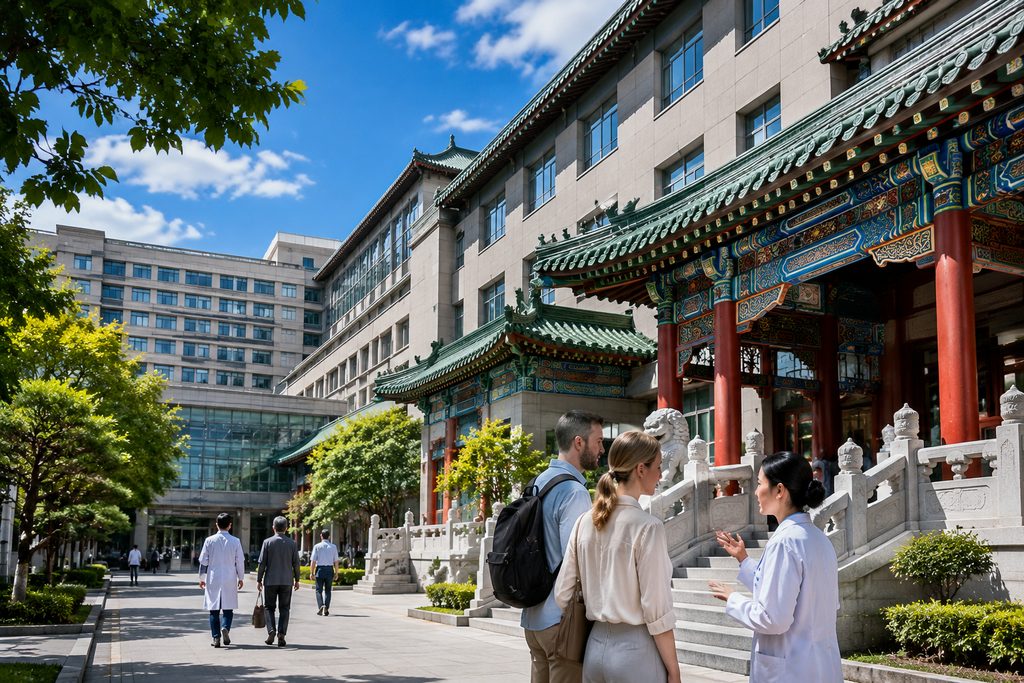
Peking Union Medical College Hospital ENT for International Patients: Costs, Booking, and What to Expect
Key Takeaways
- Peking Union Medical College Hospital (PUMCH) operates one of China’s most respected ENT departments, with a history stretching back to 1921 and a reputation built on complex case referrals from across Asia.
- Foreign patients cannot simply walk in and book surgery. The standard public outpatient route requires an in-person visit first, while the international medical services department offers a more streamlined path at roughly 1.5 to 2 times standard pricing.
- Expect to pay between $300 and $500 for a written second opinion from a PUMCH ENT specialist, and from $500 to $800 for a video consultation with a top specialist — both of which can be credited toward later on-site coordination.
- Language is the single biggest barrier. PUMCH sees over 10,000 outpatient visits daily across all departments, and without Chinese proficiency or a bilingual companion, navigating registration, testing, and payment becomes extremely difficult.
While a patient in the United Kingdom might wait 18 weeks for an NHS ENT referral and an American patient could face a $45,000 bill for functional endoscopic sinus surgery, the same procedure at Peking Union Medical College Hospital typically costs between $6,000 and $12,000. That gap explains why more international patients are asking about the Peking Union Medical College Hospital ENT price for foreigners. But cost is only one part of the equation. Understanding how to actually access this hospital — and whether its ENT department is the right fit for your specific condition — matters just as much.
The Problem: ENT Care in Western Systems Is Slow, Expensive, or Both
Ear, nose, and throat disorders affect approximately 1 in 8 people globally, yet access to timely surgical intervention varies wildly by country. In Canada, the median wait time between general practitioner referral and ENT specialist consultation reached 29.4 weeks in 2023, according to the Fraser Institute’s annual survey of specialist physicians. Patients with chronic rhinosinusitis, vocal cord lesions, or cholesteatoma often wait half a year just to sit in a specialist’s office.
In the United States, the problem flips. Access is faster for insured patients, but the financial burden is punishing. A septoplasty with turbinate reduction averages $8,000 to $15,000 depending on the facility and region. Functional endoscopic sinus surgery with image guidance can exceed $40,000 at major academic centers. For uninsured patients or those with high-deductible plans, these numbers are simply out of reach.
And then there is the middle ground: expatriates living in China. If you are an American, British, or Australian professional working in Beijing or Shanghai, you have likely discovered that private international hospitals like United Family or Jiahui offer excellent English-language care but at prices approaching Western levels. The public top-tier hospitals offer world-class surgical volume at a fraction of the cost — but the language barrier and administrative complexity keep most foreigners out.
That is the gap this article addresses.
Why Peking Union Medical College Hospital ENT Stands Out
Clinical Volume and Complex Case Experience
PUMCH was founded by the Rockefeller Foundation in 1921 and has maintained a reputation as China’s premier referral hospital ever since. Its ENT department — officially the Department of Otolaryngology–Head and Neck Surgery — handles a caseload that most Western departments would struggle to match. The hospital as a whole records over 3.5 million outpatient visits annually across all specialties, and the ENT department is one of the busiest in northern China.
Volume matters in ENT surgery. Studies published in The Laryngoscope and Otolaryngology–Head and Neck Surgery have repeatedly shown that higher surgical volume correlates with lower complication rates in procedures like thyroidectomy, parotidectomy, and endoscopic skull base surgery. A surgeon who performs 200 sinus surgeries per year simply has more intraoperative pattern recognition than one who performs 30.
PUMCH is also the hospital where other Chinese hospitals send their difficult cases. Complex head and neck tumors, recurrent cholesteatoma, cerebrospinal fluid leaks, and rare otologic pathologies get referred here from across the country. For an international patient with a complicated or failed prior surgery, this referral pattern is worth paying attention to.
Research and Subspecialty Depth
The department is not a single monolithic unit. It is organized into subspecialty groups covering otology and neurotology, rhinology and skull base surgery, laryngology and voice disorders, head and neck surgical oncology, and pediatric ENT. Each group has faculty who publish in international journals and attend major conferences like the AAO-HNS and the IFOS World Congress.
For patients asking “is Peking Union Medical College Hospital good for sinus surgery,” the answer requires nuance. The rhinology group performs a high volume of functional endoscopic sinus surgery, including revision cases and frontal sinus procedures that many community ENT surgeons decline. But the department’s strongest international reputation is arguably in head and neck oncology and complex otologic surgery. If you have a straightforward deviated septum, there are many capable hospitals in Beijing. If you have a recurrent juvenile nasopharyngeal angiofibroma or a glomus jugulare tumor, PUMCH is one of very few hospitals in Asia with the depth to manage it.
Cost Structure: Why Prices Are Lower Without Quality Sacrifice
The Peking Union Medical College Hospital ENT price for foreigners is not a single fixed number. It depends on which pathway you use, what procedure you need, and whether you require international department services. But the structural reasons for the cost difference are consistent across all cases.
Chinese physician salaries are lower than Western counterparts, but that is not the primary driver. The bigger factors are hospital efficiency, lower administrative overhead, and the absence of the malpractice insurance burden that adds an estimated 10% to US healthcare costs. Chinese public hospitals also operate on thin margins by design — they are government-affiliated institutions, not profit-maximizing corporations.
Here is a realistic cost comparison for common ENT procedures:
| Procedure | PUMCH (International Dept.) | US Average | UK Private |
|---|---|---|---|
| Functional Endoscopic Sinus Surgery | $6,000 – $12,000 | $25,000 – $45,000 | $12,000 – $20,000 |
| Septoplasty with Turbinate Reduction | $3,500 – $6,500 | $8,000 – $15,000 | $6,000 – $10,000 |
| Tympanoplasty (Eardrum Repair) | $4,000 – $8,000 | $12,000 – $22,000 | $9,000 – $15,000 |
| Thyroidectomy (Partial/Total) | $5,000 – $10,000 | $15,000 – $35,000 | $11,000 – $18,000 |
| UPPP for Sleep Apnea | $4,500 – $9,000 | $10,000 – $25,000 | $8,000 – $14,000 |
These figures are ranges, not quotes. Final pricing varies by hospital and case complexity, the specific surgeon’s seniority, and whether you go through the standard public route or the international department. But the pattern is consistent: expect to pay roughly one-fifth to one-third of US prices for comparable surgical care.
How to Book ENT Surgery at Peking Union Medical College Hospital: The Real Pathway
If you search for “how to book ENT surgery at Peking Union Medical College Hospital,” you will find a mix of outdated forum posts and vague advice. Here is what actually happens in 2025, based on the hospital’s current administrative structure.
Step 1: You Cannot Book Surgery Remotely Through the Public Route
This is the single most important thing to understand. PUMCH’s standard public outpatient clinic does not accept advance bookings from overseas patients for surgery. The rule is universal across Chinese public hospitals: you must first attend an in-person outpatient consultation, a doctor must evaluate you and issue an admission order, and only then can surgery be scheduled.
For a foreign patient, this creates a chicken-and-egg problem. You need to fly to Beijing to see a doctor, but you do not know if the doctor will agree to operate, what the wait time will be, or whether your case is suitable for treatment in China at all.
This is where the international medical services department changes the equation. PUMCH operates a dedicated international outpatient clinic with English-speaking coordination staff. Through this channel, you can submit your medical records in advance — CT scans, MRI reports, audiograms, biopsy results, prior surgical notes — and have them reviewed by an ENT specialist before you travel. The hospital will tell you whether your case is appropriate for treatment at PUMCH and provide a preliminary opinion on the surgical approach.
Step 2: Remote Consultation as a Screening Tool
Before committing to international travel, most patients benefit from a structured remote consultation. At PUMCH, this typically takes one of two forms: a written second opinion based on your submitted records, or a live video consultation with the ENT team.
A written second opinion from a PUMCH ENT specialist costs between $300 and $500. You receive a formal written analysis of your condition, treatment options, and whether surgery at PUMCH is recommended. This is for reference only — it is not a prescription and does not guarantee admission.
A video consultation with a top ENT specialist runs $500 to $800. You speak directly with the physician, describe your symptoms and goals, and hear their assessment in real time. For complex cases, a multidisciplinary team video consultation is available at $1,500 to $2,000, bringing together ENT, radiology, and oncology specialists as needed.
Practical note: Any consultation fee you pay can be credited in full toward on-the-ground coordination services if you proceed to treatment in China within 90 days. The credit applies to coordination fees only — never to hospital treatment charges themselves.
Step 3: The In-Person Visit and Surgical Scheduling
Once remote evaluation confirms that PUMCH is a viable option, you travel to Beijing for the in-person consultation. Bring all original imaging on CD or USB, plus printed reports. The international clinic will arrange your registration, and a bilingual coordinator can accompany you through the visit.
If the ENT specialist recommends surgery, the hospital will issue an admission order and schedule your procedure. Wait times vary by surgeon and urgency, but for non-emergency cases, expect anywhere from a few days to several weeks. The international department generally offers faster scheduling than the public route because it operates on a separate, higher-fee track.
After surgery, you will need to remain in Beijing for follow-up. Most ENT procedures require 1 to 3 post-operative visits within the first month. Some patients return home and complete follow-up with a local ENT, but PUMCH surgeons generally prefer to see their own patients for at least the first post-operative check.
Who Should Consider PUMCH for ENT Treatment — and Who Should Not
PUMCH is not the right answer for every international ENT patient. Being honest about this saves you time, money, and frustration.
Strong candidates for PUMCH ENT include:
- Patients with complex or revision cases — failed prior sinus surgery, recurrent cholesteatoma, skull base tumors, or head and neck malignancies requiring multidisciplinary care.
- Patients who need high-volume surgical expertise at a fraction of Western private costs.
- Expatriates already living in China who want top-tier public hospital care without the language barrier.
- Patients from regions with long public wait times who can afford private care but prefer not to pay US or UK private prices.
Poor candidates include:
- Patients with straightforward conditions (simple septoplasty, uncomplicated tonsillectomy) who could be treated competently at home for a similar total cost once travel and accommodation are factored in.
- Patients who need immediate emergency surgery. If you have an active infection, airway compromise, or rapidly progressing malignancy, do not fly to China. Seek care locally first.
- Patients who expect a fully Western-style hospital experience. PUMCH is a Chinese public hospital. Even the international department has cultural and operational differences from a US or European private facility.
- Patients who cannot stay in China for at least 2 to 4 weeks post-operatively. Early complications, while uncommon, are best managed by the operating team.
For patients weighing “best ENT hospital in Beijing for international patients,” the comparison is not just about PUMCH versus other public hospitals. Beijing Tongren Hospital has a legendary ENT reputation, particularly in otology and airway surgery. The Chinese PLA General Hospital (301 Hospital) runs an enormous ENT department with strong subspecialty coverage. And for patients who prioritize English-language service and Western-style administration above all else, private international hospitals like Beijing United Family Hospital offer JCI-accredited care with direct insurance billing — at a price point closer to Western levels.
The right choice depends on your condition, your budget, and your tolerance for administrative complexity. You can explore the full range of options across China’s top-ranked ENT departments to see how PUMCH compares.
Practical Considerations: Visas, Payment, and Medical Records
If you are considering ENT treatment at PUMCH, several practical matters need your attention before you book a flight.
Visa Requirements
Foreign nationals traveling to China for medical treatment apply for an S2 visa, which is the short-stay category used for private affairs including medical care. The S2 visa is typically issued for stays up to 180 days. If your treatment and recovery will require more than 180 days in China, you would apply for an S1 visa instead. Accompanying family members also apply for S2 visas. You will need supporting documents from the hospital — usually an invitation letter or treatment confirmation from the international medical services department — to submit with your visa application. Requirements vary by embassy and consulate, so check with the Chinese diplomatic mission in your country before applying.
Important: The M visa is for commercial and trade activities only. It is not the correct visa for medical treatment. Applying under the wrong category can result in denial or complications at the border.
Payment Structure
Chinese public hospitals, including PUMCH’s international department, operate on a prepayment model. You will be asked to deposit an estimated treatment amount before admission, and the hospital draws down from that deposit as services are rendered. Any surplus is refunded at discharge; any shortfall must be topped up. Credit cards are accepted at the international department, but large deposits may require a bank transfer or UnionPay card. Insurance is handled on a reimbursement basis — the hospital does not bill Western insurers directly in most cases, so you pay upfront and claim reimbursement from your insurer afterward.
Medical Records and Translation
Bring complete, organized medical records. This means all imaging studies (CT, MRI, PET-CT) on original media, pathology slides and reports if applicable, prior surgical notes, and a current medication list. Have key documents translated into Chinese or English before you arrive. The international department can assist with translation, but doing this in advance speeds up the consultation significantly.
Language and Navigation
Even within the international department, not every staff member speaks fluent English. The moment you step outside the international clinic into the main hospital corridors for imaging, lab work, or pharmacy pickup, signage is predominantly Chinese and the crowds are considerable. A bilingual medical companion — someone who handles registration, queueing, payment, and translation — transforms this experience. The service costs from $300 per day and is available through coordination providers like China Medical Services.
Frequently Asked Questions
There is no single published price list. For the international department, expect consultation fees from $100 to $300 per visit, written second opinions from $300 to $500, and surgical procedures ranging from $3,500 for minor cases to $12,000 or more for complex operations. The standard public route is cheaper but requires Chinese language ability and in-person registration. All prices vary by hospital and case complexity, and you should request a formal quote after your records have been reviewed.
Not through the standard public route. You must attend an in-person consultation first. However, through the international medical services department, you can submit your records for remote review and receive a preliminary assessment before traveling. This does not guarantee surgery, but it tells you whether the trip is worth making. For patients who want a binding commitment before travel, no Chinese public hospital — including PUMCH — will provide one. Anyone claiming otherwise is not being straight with you.
Is P
For more medical information and treatment options in China, visit chinamedservices.com (China Medical Services).
