PUMCH International Services: How We Help Foreign Patients
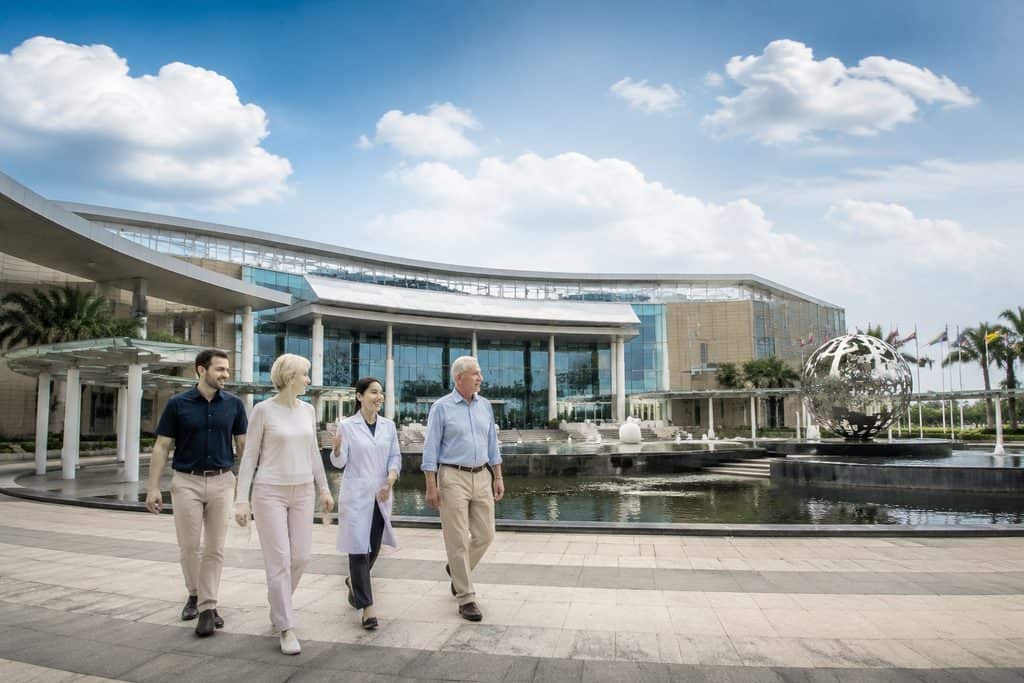
When researchers surveyed international patient offices across China’s top-tier hospitals, one name came up more than any other in patient inquiries from abroad: Peking Union Medical College Hospital. Commonly shortened to PUMCH, and known in Chinese as Xiehe, this 100-year-old institution sits in Beijing’s Dongcheng district and consistently holds an A++++ tier ranking on the Fudan Hospital Rankings — the highest bracket, awarded to a handful of hospitals nationwide. For a Western patient staring at a rare diagnosis and a six-month wait at home, the name carries real weight.
It also carries real confusion. PUMCH international patient services are not a single help desk you email and forget. They are a layered system — a dedicated international department, a separate VIP and special-needs track, and the ordinary public outpatient flow that most first-time foreign visitors accidentally walk into. Knowing which layer you’re dealing with determines whether your trip takes three days or three weeks.
This guide explains how the system actually works, what it costs, and where a coordinator earns their keep.
PUMCH International Patient Services: The Short Answer
PUMCH does accept international patients, and it does have an international department that handles registration, interpretation support, and coordination for foreign visitors. What it does not have is a system where you email a doctor in Ohio, pick a surgery date, and show up. That is not how any major Chinese public hospital operates.
The realistic path runs through an initial consultation — in person, or increasingly through a written second opinion or video consultation arranged in advance. Only after a specialist reviews your records and sees you does surgical scheduling become a conversation. Anyone promising you a confirmed operating room slot before a face-to-face evaluation is selling something that doesn’t exist.
Who This Is Right For — and Who It Isn’t
PUMCH draws patients with complex, ambiguous, or rare conditions — the kind where three doctors at home have given three different answers. Its reputation rests on internal medicine, endocrinology, rheumatology, and difficult diagnostic cases. If your problem is “nobody can tell me what I have,” this is a reasonable place to bring it.
Typically a good fit:
- Patients with a complex or undiagnosed condition who have exhausted local options
- Those seeking a written second opinion before committing to major surgery
- Patients whose treatment plan is clear but whose home-country cost or wait time is prohibitive
- Families who can travel together and stay in Beijing for two to four weeks
Probably not the right choice:
- Anyone with an acute emergency — go to the nearest hospital, not a flight to Beijing
- Patients expecting Western-style hotel amenities and single-room privacy throughout
- People who cannot tolerate a large, busy public hospital environment, even on the VIP track
- Travelers seeking a quick cosmetic procedure — this is not that kind of institution
Being honest about the last list matters more than the first. PUMCH is a working public hospital seeing enormous daily volumes. The international and VIP tracks soften that experience considerably. They don’t erase it.
The Options, Compared
Foreign patients at PUMCH generally choose between three access routes. They differ far more in logistics than in medical quality — the same senior specialists consult across tracks.
| Access Route | Can Be Arranged From Overseas? | English Support | Typical Cost Multiplier | Best For |
|---|---|---|---|---|
| General Public Outpatient | No — same-day queue registration only | Limited; you arrange your own interpreter | Baseline (1x) | Local residents, repeat patients who know the system |
| International Department | Partly — registration and coordination can be pre-arranged | Yes, staff and interpreter support | Roughly 1.5–2x baseline | First-time foreign patients needing navigation |
| VIP / Special-Needs Track | Yes — advance coordination through official channels | Yes, dedicated service staff | Roughly 1.5–2x baseline | Patients prioritizing speed, privacy, and senior specialists |
Which column fits you? If you’re already in Beijing and speak Mandarin, the public route is cheapest and perfectly functional. If you’re booking from abroad and need an English-speaking specialist to review records before you fly, the international or VIP track is the practical answer. The premium buys coordination and language, not better medicine.
How to Book an Appointment at PUMCH as a Foreigner
This is where most overseas patients get stuck, so let’s walk it properly. The question “how to book an appointment at PUMCH as a foreigner” has a different answer depending on whether you’re already in China.
If you are overseas: you cannot simply reserve a general outpatient slot. What you can do is submit your existing examination reports — imaging, lab work, pathology, discharge summaries — for a written second opinion from the relevant specialty. A Chinese specialty team reviews the file and returns written analysis and treatment direction. From there, a video consultation lets you speak with the team directly and hear their recommendations. Only after that does an in-person visit make sense.
If you are in Beijing: registration for the general queue happens on the day, often very early. The international department can assist with registration and medical card creation. Bring your passport, your records, and a translated summary if you have one.
If you want a specific department or specialist named in advance: a proxy consultation service can register on your behalf, create the hospital medical card, and conduct an in-person proxy visit using your materials. Any later admission still follows hospital rules — nobody can guarantee it in advance.
What It Costs
Peking Union Medical College Hospital cost for international patients varies widely by department and case complexity, so treat any single number with suspicion. What can be said with confidence: China’s top public hospitals typically run one-fifth to one-tenth of equivalent US surgical costs. Coronary artery bypass grafting, for example, commonly falls in the $12,000–$20,000 range at a top Chinese public hospital, against $120,000 and up in the United States.
For the coordination layer specifically, here’s what our own services run:
- Written second opinion from a top-hospital specialist: $300–500
- Video consultation with a standard international department: $100–300
- Video consultation with a top specialist: $500–800
- Multidisciplinary team (MDT) video consultation: $1,500–2,000
- In-person top-specialist consultation coordination: $800–1,200
- Hospital appointment coordination: from $300
- Bilingual medical companion: from $300 per day
Any consultation fee is credited in full toward on-the-ground coordination if you travel to China within 90 days. That’s a one-time credit applied to the coordination fee only — never to hospital treatment charges. Final pricing always depends on the hospital and your case complexity.
One clarification we insist on: we are not an access fee. We do not buy queue positions or sell introductions to named surgeons. What we provide is case management — record translation, appointment coordination through official international and special-needs channels, and bilingual accompaniment. If we can’t secure the appointment shown in your order, the coordination fee is refunded in full.
Practical Considerations: Visa, Payment, and Language
Foreign patients traveling to China for medical treatment use the S2 visa, annotated for medical purposes. Stays beyond 180 days fall under S1. Accompanying family members apply for S2 as well. The M visa is for commercial and trade activity and has nothing to do with medical travel — if anyone tells you otherwise, they’re mistaken.
On the visa invitation letter question: hospitals can issue supporting documentation for visa applications, and requirements shift with embassy and consulate guidance. Confirm current requirements with the relevant Chinese embassy before applying. No legitimate service can guarantee visa approval.
Payment at public hospitals is typically upfront, with insurance reimbursement handled afterward in your home country. Private international hospitals in China often bill insurers directly. Bring a payment method that works internationally, and expect to settle major charges before discharge.
Language is the quiet obstacle. A hospital seeing tens of thousands of outpatients daily is not navigable without Chinese. Bilingual accompaniment covers registration, queuing, payment, wayfinding, and translation — unglamorous work that determines whether your day goes smoothly or disastrously.
Frequently Asked Questions
For complex diagnostics and internal medicine, its reputation is genuinely top-tier — it holds the highest Fudan ranking bracket. For amenities and privacy, it is a busy public hospital. The international and VIP tracks close much of that gap, but set expectations accordingly.
Hospitals can provide supporting documentation for S2 visa applications, but policies and required documents change. Always verify current requirements with your local Chinese embassy. No service can promise visa approval.
The department can be reached directly, though response times from overseas vary and English capacity fluctuates. Many patients route initial contact through a coordinator who handles record translation and follow-up — it reduces the back-and-forth considerably. You can also browse our directory of top-ranked Chinese hospitals by city to compare options.
This is a real concern and deserves a straight answer. Complex conditions sometimes don’t resolve, and follow-up across time zones is genuinely difficult. Ask your Chinese specialist for a written summary and imaging that your home physician can act on. Build the handoff into your plan before you fly, not after.
Your Next Step
The takeaway: PUMCH is a serious institution with a real international pathway, but that pathway runs through records review and evaluation first — not through a booking button. Understanding the sequence saves money and disappointment.
We are China Medical Services, a coordination service, not a hospital. We don’t diagnose or treat. We translate records, arrange consultations through official channels, and accompany patients through a system that’s genuinely hard to navigate alone. If you’d like to talk through whether PUMCH fits your situation, start with a free consultation — no obligation, and no pressure to commit to anything.
This article is for general information only and is not medical advice. Treatment decisions should be made with a qualified physician who has reviewed your individual case.
For more medical information and treatment options in China, visit chinamedservices.com (China Medical Services).
