Qatari Patient Medical Service China: Premium Care Coordination for Doha Residents
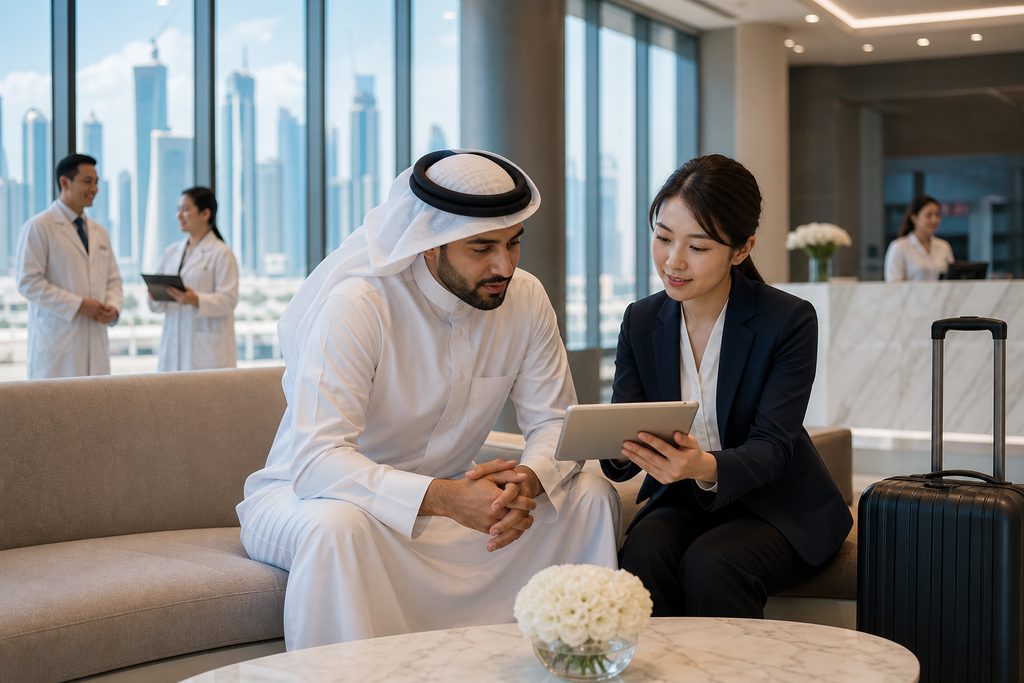
Qatari Patient Medical Services China: Premium Care Coordination for Doha Residents
While a patient in London might wait 18 weeks for a cardiac evaluation under the NHS, a surgeon at Fuwai Hospital in Beijing performs over 14,000 cardiac operations annually — with outcomes that consistently rank among the world’s best. For Qatari citizens accustomed to premium healthcare at home, the question is not whether Chinese medicine can match their standards. It is how to access it without the friction that makes international medical travel exhausting. Our team has spent years building that bridge for Doha residents, and the pathway is more direct than most people assume.
Key Takeaways
- China’s top 5% of hospitals — 340+ institutions across 37 cities — deliver clinical outcomes comparable to Western centers at 60-80% lower cost for major procedures, making qatari patient medical services China a financially compelling option for self-funded care.
- Arabic-speaking coordination is not a luxury add-on. It is the difference between a smooth treatment journey and a stressful one, particularly when navigating China’s hospital registration systems that have no Arabic interface.
- China’s public hospital system was not designed for international patients. Without a coordinator, you face same-day queue-based registration, Mandarin-only signage, and payment systems that reject foreign cards — barriers that can delay treatment by weeks.
- Any international patient considering surgery in China should understand this before booking a flight: the VIP pathway exists, it works, and it requires an experienced local partner to unlock.
The Problem: Premium Care at Home Does Not Always Mean Complete Care
Qatar’s healthcare system ranks among the finest in the Middle East. Hamad Medical Corporation and Sidra Medicine provide world-class services that most nations envy. But specialized care — particularly in oncology subspecialties, complex orthopedics, and certain cardiac interventions — sometimes requires looking beyond Doha’s borders. The traditional route leads to London, Munich, or Houston. Excellent hospitals. Eye-watering bills. A cardiac bypass at a top US center runs $120,000 to $180,000. At a top-tier Chinese public hospital, the same procedure costs $12,000 to $20,000. That is not a typo.
Cost is not the only driver. Some patients seek treatment modalities that are simply more developed in China. Minimally invasive tumor ablation techniques. Certain stem cell protocols for orthopedic repair. Traditional Chinese Medicine integrated with oncology recovery. These are areas where Chinese hospitals have accumulated case volumes that no Western center can match — simply because of population scale. A liver cancer surgeon at Zhongshan Hospital in Shanghai may handle more complex resections in a single year than a European counterpart sees in a decade.
The challenge for Doha residents has never been identifying that China offers excellent care. It has been everything else. The language barrier. The visa process. Knowing which hospital genuinely excels in a specific condition versus which one merely has a prestigious name. This is where qatari patient medical services China becomes not just helpful but essential.
Who We Are
We are not a hospital. We do not provide medical treatment, clinical diagnoses, or therapeutic recommendations. Our team functions as logistical architects for international patients — we bridge the gap between you and China’s 340+ top-ranked hospitals. We handle case management, hospital matching based on your specific condition, appointment coordination through official international departments, and bilingual medical companionship throughout your stay. Think of us as the operational layer that makes Chinese healthcare accessible to Arabic-speaking patients. We have been doing this long enough to know what breaks, what frustrates, and what makes the difference between a successful treatment journey and a stressful one.
Why China Delivers Results for Middle Eastern Patients
Clinical Volume Creates Expertise No Amount of Training Can Replace
There is a hard truth in surgery: outcomes improve with repetition. A study published in the New England Journal of Medicine demonstrated that hospitals performing more than 50 pancreatic resections annually had mortality rates nearly half those of low-volume centers. Now consider this: a top Chinese hepatobiliary surgeon may perform 300 to 400 complex liver resections per year. The average American surgeon performs fewer than 30. This volume differential exists across nearly every surgical specialty — orthopedics, cardiac surgery, neurosurgery, oncology. For Qatari patients considering a VIP health package China for Doha residents, this translates to a surgeon whose hands have done your procedure more times than most Western surgeons will see in a career.
Chinese hospitals do not just treat more patients. They treat more complex patients. By the time many cases reach a top-tier center like Peking Union Medical College Hospital or West China Hospital, they have already been through multiple rounds of treatment elsewhere. The clinical teams develop pattern recognition for rare presentations and complications that simply does not exist in lower-volume environments.
Technology Deployed at a Scale That Changes Economics
Walk into the radiology department at Ruijin Hospital in Shanghai. You will find PET-CT scanners, 3T MRI machines, and robotic surgical systems — the same equipment you would see at Mayo Clinic or Charité in Berlin. The difference is throughput. These machines run longer hours, serve more patients, and amortize their cost across a vastly larger patient base. That structural efficiency is why a PET-CT scan that costs $3,000 to $5,000 in the United States runs $400 to $800 in China.
This is not a discount for lower quality. Chinese hospitals on the Fudan University top-100 ranking list are subject to rigorous quality control. Many hold JCI accreditation. Their labs participate in the same international proficiency testing programs as Western hospitals. The equipment is the same. The protocols are the same. The economics are different — and that difference flows directly to the patient’s bill.
Cost Advantage Without Quality Compromise
Let us address the elephant in the room directly. Lower cost often signals lower quality in healthcare. That assumption is reasonable — and in this case, it is wrong. The cost differential between Chinese and Western hospitals is not driven by inferior care. It is driven by labor economics, hospital operational efficiency, and the absence of the administrative bloat that inflates American healthcare costs in particular.
A detailed breakdown makes this clear. When a Qatari patient asks us about medical treatment China price for Qatari citizens, we provide transparent ranges. A total hip replacement: $8,000 to $15,000. Cardiac bypass: $12,000 to $20,000. Complex spinal fusion: $15,000 to $25,000. These are all-in figures covering the surgeon’s fee, hospital stay, implant costs, and operating theater charges. Compare that to $40,000 to $80,000 for the same procedures in Western Europe or $60,000 to $200,000 in the United States. The savings are structural, not cosmetic.
| Procedure | China (Top Public Hospital) | Western Europe | United States |
|---|---|---|---|
| Cardiac Bypass (CABG) | $12,000 – $20,000 | $35,000 – $55,000 | $120,000 – $180,000 |
| Total Hip Replacement | $8,000 – $15,000 | $18,000 – $30,000 | $40,000 – $65,000 |
| Complex Spinal Fusion | $15,000 – $25,000 | $35,000 – $50,000 | $80,000 – $150,000 |
| PET-CT Scan | $400 – $800 | $1,500 – $2,500 | $3,000 – $5,000 |
Prices vary by hospital and case complexity. The international department or VIP pathway at public hospitals typically charges 1.5 to 2 times the standard rate — still dramatically below Western pricing. For Doha residents accustomed to premium service, this VIP tier is the natural choice. It includes English-speaking coordination, expedited scheduling, and private inpatient rooms that meet the expectations of patients accustomed to five-star hospitality.
What You Need to Know Before Going Alone
China’s healthcare system is extraordinary. It is also extraordinarily difficult to navigate without local expertise. We tell every prospective patient the same thing: the medicine is world-class, the logistics are not designed for you. Here is what you will face if you attempt to arrange treatment independently.
- Visa Requirements: Medical treatment in China requires an S2 visa with a specific medical purpose annotation. This is not a tourist visa. You need an official invitation letter from the treating hospital — and hospitals will not issue this letter until you have a confirmed appointment. It is a circular dependency that can take weeks to resolve without an intermediary who understands the workflow on both sides. Family members accompanying you also need S2 visas. The M visa is for commercial business only and cannot be used for medical treatment.
- Registration and Appointments: China’s public hospitals operate on a same-day queue system for standard outpatient visits. You cannot book a specialist appointment months in advance through a website or phone call if you are an international patient without a Chinese ID. The hospital’s international department or VIP wing is the only pathway for pre-arranged specialist consultations — and these departments handle their own scheduling, separate from the main hospital system.
- Payment Systems: Chinese public hospitals require upfront payment. They do not accept international credit cards at standard registration counters. Alipay and WeChat Pay dominate the payment ecosystem — platforms that require a Chinese bank account to fully activate. International patients without local payment infrastructure can find themselves unable to pay for consultations, tests, or medications at the point of service.
- Language Barrier in Clinical Settings: Even in hospitals that advertise English-speaking staff, the depth of English proficiency varies enormously. A nurse may handle basic communication. A detailed discussion of surgical risks, post-operative protocols, and medication instructions requires a level of fluency that is uncommon outside dedicated international departments. Arabic-speaking staff are essentially nonexistent in Chinese public hospitals.
How We Help You Navigate This
These barriers exist for structural reasons, not because anyone intends to make international care difficult. China’s hospital system serves 1.4 billion domestic patients. International patients represent a tiny fraction of total volume. The system optimizes for domestic efficiency — and that optimization creates friction for anyone outside it. Our role is to absorb that friction so you experience only the clinical excellence.
The process begins before you book a flight. When a Doha resident contacts us, we start with a detailed intake: your diagnosis, your medical records, your treatment goals. Our team translates these records into clinical Chinese — not just linguistically, but in the format and terminology that Chinese specialists expect. A radiology report written for a Qatari physician looks different from one prepared for a Chinese surgical team. We bridge that gap.
We then match your case to the right hospital. This is not about picking the most famous name. It is about matching your specific condition to the department that genuinely leads in that subspecialty. The Fudan University specialty rankings — which rank China’s top 10 hospitals across 45 clinical departments — guide this process. For oncology, it might be Fudan University Shanghai Cancer Center. For orthopedics, Beijing Jishuitan Hospital. For cardiac surgery, Fuwai Hospital. The right match depends on your specific diagnosis, not general reputation.
Once we identify the optimal hospital, we coordinate through its official international department to secure a confirmed appointment with the appropriate specialist. This is the pathway that solves the circular visa problem: the hospital issues an invitation letter based on the confirmed appointment, and that letter supports your S2 visa application. We handle the paperwork on both sides.
When you arrive in China, a bilingual medical companion meets you. This person handles registration, payment processing, queue management, and clinical translation during consultations. They ensure your questions are asked and the answers are understood. They accompany you through diagnostic tests, explain preparation requirements, and manage the flow of your hospital visit so you are not stranded in a corridor wondering which room comes next. For Arabic-speaking patients, we arrange coordinators who speak your language — because discussing a cancer diagnosis through a third language neither party speaks fluently is a recipe for misunderstanding.
After your consultation, we coordinate any recommended procedures, hospital admission, and post-operative follow-up. We handle discharge paperwork, medication instructions in Arabic, and the logistical details of your recovery period — whether that happens in China or back in Doha. The goal is continuity. Your Qatari physician should receive a complete treatment summary in English, not a stack of Chinese documents that require independent translation.
How Do Qatari Patients Arrange Surgery in China?
The question we hear most often from Doha is practical and direct: how do Qatari patients arrange surgery in China? The answer depends on whether you are working through a coordinator or attempting it independently. With coordination, the pathway follows a clear sequence. First, we submit your medical records for specialist review — this typically takes 3 to 5 business days. The specialist confirms whether your case is appropriate for treatment at their center and provides a preliminary treatment plan. Second, we secure a confirmed appointment and the hospital’s invitation letter. Third, you apply for your S2 visa with that letter. Fourth, you travel to China for your initial consultation and pre-operative assessment. Fifth, surgery is scheduled — typically within 1 to 3 weeks of your consultation, depending on the surgeon’s schedule and your medical readiness.
Without coordination, step one alone — getting your records in front of the right specialist — can take weeks of emails, phone calls in Mandarin, and uncertainty about whether your case has even reached the right person. The difference is not theoretical. It is the difference between a 6-week process and a 6-month process.
Best Hospitals in Shanghai for Middle Eastern Patients
Shanghai has become a natural hub for Middle Eastern patients seeking care in China. The city’s international connectivity — direct flights from Doha on Qatar Airways — makes it logistically straightforward. Its hospital infrastructure matches anything in the world. When patients ask us about the best hospitals in Shanghai for Middle Eastern patients, we point to several centers that have developed genuine expertise in serving international patients.
Zhongshan Hospital, affiliated with Fudan University, stands out for cardiology, cardiac surgery, and liver surgery. Its international department has treated patients from across the Gulf region and understands the expectations of Middle Eastern families regarding privacy, hospitality, and communication. Ruijin Hospital, affiliated with Shanghai Jiao Tong University, excels in endocrinology, hematology, and complex general surgery. Huashan Hospital is the reference center for neurosurgery and dermatology. Each of these hospitals appears on the Fudan University top-100 ranking and maintains dedicated international patient pathways.
Shanghai’s private international hospitals — Jiahui, United Family, Parkway — offer an alternative for patients who prioritize a fully Western-style experience with English-speaking staff, direct insurance billing, and hotel-like amenities. These hospitals are JCI-accredited and provide a level of service familiarity that many Middle Eastern patients appreciate. The trade-off is that for highly complex procedures, the public academic hospitals still concentrate the deepest subspecialty expertise.
International Patient Coordinator China Arabic Speaking
Language is not a convenience issue. It is a clinical safety issue. When a patient cannot describe their symptoms precisely or understand their medication instructions clearly, the risk of adverse events rises. This is why we invest heavily in international patient coordinator China Arabic speaking capabilities. Our Arabic-speaking coordinators are not just translators — they are trained in medical terminology and familiar with the workflows of Chinese hospitals. They understand both the clinical vocabulary and the cultural context that shapes a Middle Eastern patient’s expectations.
This matters in ways that are not obvious until you experience the alternative. A Chinese physician may communicate directly and concisely — a style that can feel brusque to patients accustomed to more elaborate doctor-patient conversations. An Arabic-speaking coordinator bridges that cultural gap, ensuring the patient feels heard while also ensuring the physician receives the clinical information they need. It is a subtle skill. It makes a measurable difference in patient satisfaction and treatment adherence.
Frequently Asked Questions
Can I use my Qatari health insurance at Chinese hospitals?
Most Chinese public hospitals — including their international departments — operate on a fee-for-service, upfront payment model. They do not directly bill international insurance carriers. You pay for treatment and then submit claims to your insurer for reimbursement. Some private international hospitals in China, such as United Family and Jiahui, do offer direct billing arrangements with major international insurers. We recommend confirming coverage with your insurer before travel and obtaining pre-authorization for planned procedures. We can provide the documentation your insurer requires, but the relationship is between you
For more medical information and treatment options in China, visit chinamedservices.com (China Medical Services).
