Qigong and Tai Chi in China: Your Companion for Wellness Practice
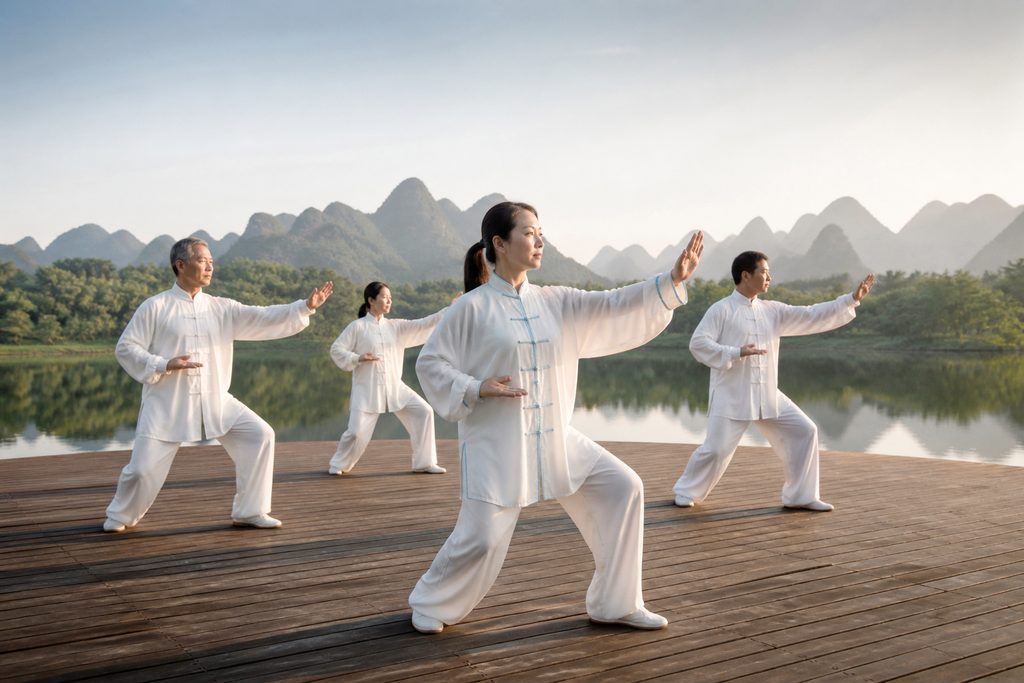
Have you ever wondered whether a few weeks of slow, deliberate movement and breathwork could do more for your chronic pain or stress than another prescription? You are not alone in that thought. Every year, thousands of people from Europe, North America, and the Middle East look toward China not for surgery or scans, but for something older and quieter: qigong and tai chi. And the first question they ask us is almost always about the qigong retreat cost China programs actually charge.
Our team at China Medical Services has spent years helping international visitors understand how wellness practice, medical treatment, and travel logistics fit together in this country. We are not doctors. We are the bridge between patients, practitioners, and the hospitals and retreat centers that serve them. This article lays out what a qigong or tai chi wellness journey in China actually involves, what it costs, where to go, and what can go wrong if you plan it blind.
How This Actually Works, Step by Step
You do not just land in Beijing and wander into a park expecting a structured wellness retreat to materialize. The process is more deliberate than that, though far less complicated than arranging hospital surgery. Here is the sequence we walk clients through.
First, you define what you are after. Is it gentle rehabilitation after a cardiac event? Chronic lower back pain that has not responded to physiotherapy? Or simply a reset from burnout? Your goal determines whether you need a clinical qigong program inside a hospital’s rehabilitation department, a private retreat center, or a combination of both.
Second, we identify programs that accept foreign participants. Not every qigong master or tai chi school in China is set up for international visitors. Language, accommodation, insurance, and scheduling all matter. Many reputable programs operate through university-affiliated TCM hospitals or dedicated wellness centers in cities like Beijing, Shanghai, and Hangzhou.
Third, you submit a health summary. This is not a hospital admission file. It is a simple document describing your current condition, medications, mobility limitations, and what you hope to achieve. The program director reviews it and confirms whether their curriculum fits your situation. Some programs will decline participants with certain cardiac or balance issues unless a physician clears them first.
Fourth, you handle the practical items: visa, accommodation, payment, and arrival logistics. We cover visa specifics later in this article. What matters now is understanding that a structured qigong retreat is a planned program, not a drop-in class at a public park. The planning takes two to six weeks depending on the program’s intake schedule.
What Is Medical Qigong Therapy in China, and Is It Different from a Retreat?
This is the question that separates casual wellness tourists from people seeking genuine therapeutic benefit. What is medical qigong therapy in China? In short, it is a structured clinical application of qigong principles, typically delivered or supervised by a practitioner trained in traditional Chinese medicine, often within a hospital or clinic setting.
Medical qigong involves prescribed movement sequences, breathing patterns, and sometimes vocalization or visualization, all tailored to a specific diagnosis. A patient recovering from breast cancer surgery, for example, might be taught a sequence designed to address fatigue, lymphedema risk, and sleep disruption. Someone with hypertension might practice a slower, more internally focused form.
The difference from a general retreat matters. A retreat is educational and experiential. Medical qigong is therapeutic and often integrated with acupuncture, tuina massage, and herbal medicine. In China, you can find medical qigong departments in several TCM hospitals. Some of these are listed in our traditional Chinese medicine hospital directory.
The cost also differs. A general qigong retreat might run $800 to $1,800 for two weeks, including simple accommodation and group instruction. A medical qigong program inside a hospital, with individualized assessment and daily supervised sessions, can run $2,500 to $4,500 for a similar duration. Both are dramatically less expensive than comparable integrative wellness programs in Switzerland or the United States, where a single week can exceed $3,000 before travel.
A Realistic Timeline
People underestimate the lead time. Here is what a typical qigong or tai chi wellness journey looks like from first inquiry to returning home.
| Stage | What Happens | Duration |
|---|---|---|
| Week 1 | Initial inquiry, goal clarification, program shortlist | 2–4 days |
| Week 2 | Health summary submitted, program reviews your case | 3–7 days |
| Week 2–3 | Program confirms acceptance, issues invitation letter | 3–5 days |
| Week 3–4 | S2 visa application at Chinese embassy or consulate | 5–10 business days |
| Week 4–5 | Flights, accommodation booking, payment to program | Varies |
| Week 5–6 | Arrival, orientation, program begins | Day 1 |
| Weeks 6–10 | Program duration (2–4 weeks typical) | 14–28 days |
| After return | Follow-up practice plan, optional video check-ins | Ongoing |
The visa step catches people off guard. You cannot apply for an M visa for this trip. Medical treatment and wellness programs fall under the S2 visa category, which covers short-term private affairs including medical treatment. The program or hospital must provide supporting documentation. Processing times vary by country, so budget at least two weeks. Some embassies take longer during peak seasons.
And yes, how long is a qigong wellness retreat in Beijing? Most structured programs run 7, 14, or 21 days. A 14-day program is the most common sweet spot. It is long enough to learn a full sequence and feel physiological changes, but short enough to fit into annual leave. Some centers offer 30-day residential programs for people managing chronic conditions or recovering from cancer treatment.
What Can Go Wrong — and What Happens Then
Let us be direct about the failure modes, because we have seen them all.
The program is not what the brochure promised. A glossy website showing serene gardens and smiling instructors can mask a cramped apartment room with a part-time teacher. Recourse: request a video tour before paying. Ask for the names and credentials of the lead instructors. A legitimate program will have no problem providing this. If they refuse, walk away.
Your health condition flares up mid-program. Chronic pain patients sometimes push too hard in the first week. Qigong is gentle, but standing for 45 minutes when you have not stood for 10 in months can trigger a flare. Recourse: medical qigong programs inside hospitals have physicians on call. Standalone retreats may not. Check this before booking. If you have a pre-existing condition, choose a program with clinical oversight or one physically connected to a hospital.
Language barrier erodes the experience. A tai chi master who has taught for 40 years may speak no English. Group classes in Chinese are common. Recourse: book a program that provides a translator, or arrange a bilingual companion through a service like ours. We provide bilingual medical companions from $300 per day, who handle translation, logistics, and communication with instructors.
You arrive and realize the program is in a remote location with no pharmacy nearby. This happens more than you would think. Some retreat centers are in scenic mountain areas, beautiful but isolated. Recourse: bring a two-week supply of all regular medications. Confirm the nearest hospital and pharmacy before booking. Ask whether the center has a vehicle for emergencies.
Is Tai Chi Good for Chronic Pain Recovery? What the Evidence Shows
This is not a question we answer with anecdotes. Is tai chi good for chronic pain recovery? The short answer is yes, for specific conditions, with real but modest effect sizes. The longer answer requires nuance.
A 2018 meta-analysis published in the journal Medicine reviewed 18 randomized controlled trials and found that tai chi significantly reduced pain and improved physical function in patients with chronic low back pain compared to usual care. A separate 2016 review in BMJ Open examined tai chi for knee osteoarthritis and reported clinically meaningful reductions in pain and stiffness, comparable to standard physical therapy.
For fibromyalgia, the evidence is stronger. A landmark 2010 trial in the New England Journal of Medicine randomized 66 patients with fibromyalgia to either tai chi or wellness education and stretching. The tai chi group showed significantly greater improvement in the Fibromyalgia Impact Questionnaire score at 12 weeks, and the benefits persisted at 24 weeks.
The mechanism is not mystical. Tai chi combines slow, weighted movement with balance training, proprioceptive feedback, and diaphragmatic breathing. For chronic pain, this addresses several drivers simultaneously: muscle guarding, fear of movement, poor sleep, and autonomic nervous system dysregulation. It is not a cure. It is a tool, and like any tool, it works best when used consistently and taught well.
China’s advantage is not that tai chi is somehow more effective here. It is that you can learn from instructors who have practiced for decades, in an environment where the practice is embedded in daily life. The teaching lineage matters. A good teacher corrects your alignment in ways a YouTube video cannot.
Practical Considerations: Visas, Payment, Language, and Follow-Up
Planning a qigong or tai chi journey to China involves more than choosing a program. The practical layer is where trips fall apart.
Visa category. You need an S2 visa for short-term private affairs, which includes medical treatment and wellness programs. Your program or the hosting hospital must issue an invitation letter. Family members accompanying you also apply for S2 visas. We never guarantee visa approval. We do help you assemble the correct documentation and explain what each embassy typically requires.
Payment. Most retreat centers and hospital international departments require a deposit to hold your spot, with the balance due before or on arrival. Wire transfers are standard. Some larger centers accept international credit cards. Budget for currency conversion fees. Our coordination fee for hospital or program booking starts from $300, and we refund it in full if we cannot secure the booking we promised.
Language. Outside of major international hospitals, English is rare. Even in Beijing and Shanghai, a tai chi instructor in a park or a small clinic will likely speak only Mandarin. A bilingual companion changes the experience. We charge from $300 per day for a full-day companion who handles translation, navigation, and communication with instructors and staff.
Follow-up at home. The real test is whether you keep practicing after you leave. A good program provides a take-home sequence, written instructions, and ideally a video recording of you performing the movements with corrections. Some offer monthly video check-ins for an additional fee. Ask about this before booking. Without a follow-up plan, most people stop practicing within eight weeks.
Frequently Asked Questions
A two-week structured qigong retreat in China typically costs $800 to $1,800, excluding flights. Comparable programs in Europe or North America run $2,500 to $5,000 for the same duration. Qigong healing programs price abroad reflects higher labor, facility, and liability costs. In China, the cost advantage is real, though you should factor in international airfare.
Shanghai has several reputable centers that accept international participants, including programs affiliated with Shanghai University of Traditional Chinese Medicine and private wellness studios in the former French Concession. The best tai chi wellness center Shanghai depends on your goals: clinical rehabilitation versus general wellness. University-affiliated programs offer more clinical oversight. Private studios often provide more flexible scheduling and smaller classes. We help you match based on your health summary.
Generally yes, but with medical clearance. Qigong is low-impact and adaptable. However, certain breathing techniques can affect blood pressure, and standing sequences may be challenging after recent abdominal or orthopedic surgery. A medical qigong program inside a hospital will assess you before starting. A standalone retreat may not. If you have a cardiac history, choose a program with clinical supervision.
Yes, and this is a common arrangement. A patient might spend two weeks undergoing evaluation or treatment at a hospital in Beijing, then transition to a two-week qigong program for recovery and rehabilitation. We coordinate both pieces. The key is sequencing: hospital first, retreat second, so your medical team can clear you for physical activity.
Cancellation policies vary widely. Some retreat centers refund deposits minus a small administrative fee if you cancel 30 days before arrival. Others keep the deposit entirely. Read the policy before paying. We recommend travel insurance that covers trip cancellation for medical reasons. We do not process refunds for program fees directly; those are between you and the program.
Your Next Step
Qigong and tai chi in China are not magic. They are disciplined practices with a growing evidence base for chronic pain, stress, and rehabilitation. What China offers is depth of instruction, lower cost, and an environment where the practice is woven into daily life. What China does not offer is a simple, standardized booking process for international visitors.
That is where we come in. China Medical Services helps you identify legitimate programs, confirm clinical oversight where needed, handle visa documentation, and arrange bilingual support on the ground. We do not teach qigong. We do not diagnose or treat. We make sure you land in the right place, with the right people, and without the logistical chaos that ruins a wellness journey.
If you are considering a qigong or tai chi program in China, start with a conversation. Tell us your health situation and what you hope to achieve. We will tell you honestly whether this makes sense for you, and what it would take to make it happen. Request a free consultation and we will map out your options.
For more medical information and treatment options in China, visit chinamedservices.com (China Medical Services).
