Rare Blood Type Surgery in China: Full Blood Bank and Transfusion Support
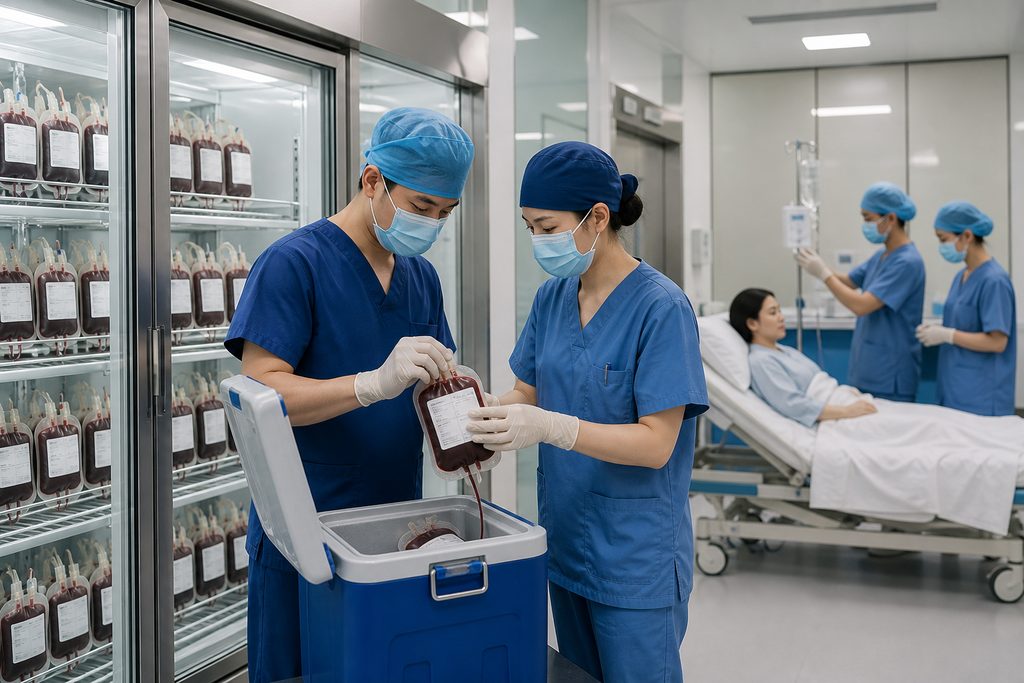
Have you ever been told your blood type makes elective surgery too risky to schedule? For patients with rare phenotypes—the Rh null “golden blood,” the Bombay group, or combinations like Fy(a-b-) in the Duffy system—the fear isn’t the surgeon’s skill. It’s whether the blood bank can back you up if something goes wrong. Our team has coordinated surgical pathways for international patients carrying some of the rarest blood phenotypes on record. The answer isn’t simple. But it’s more achievable than most Western hematologists assume.
China’s transfusion medicine infrastructure operates at a scale that changes the math for rare-blood surgery. A national rare blood donor database maintained by the Chinese Society of Blood Transfusion (CSBT) connects provincial blood centers across 31 provinces. When a Shanghai hospital needs two units of Fy(a-b-) for a patient from the UK, the search doesn’t stop at the city border. It goes national. And the donor pool is 1.4 billion people. That’s not a guarantee. It’s a probability shift worth understanding before you rule out surgery.
This article walks through what actually happens when an international patient with a rare blood type needs surgery in China—the blood bank protocols, the costs, the timeline, the things that can go wrong, and how to evaluate whether this path fits your situation. No marketing. Just the operational reality we’ve navigated for patients before you.
How This Actually Works, Step by Step
The sequence matters. Patients sometimes imagine arriving in Beijing and walking into surgery the next week. That’s not how it works with a rare blood type. Here’s the real flow.
Step one: you send us your complete hematology workup. Not just your blood type card. We need the full phenotype—extended antigen profile, antibody screen, transfusion history if you’ve had reactions before. Chinese blood banks don’t type for just ABO and Rh(D). Major centers phenotype for Rh(C,c,E,e), Kell, Duffy, Kidd, MNS, and other clinically significant systems. Your records must match that level of detail or the bank can’t begin a search.
Step two: the hospital’s transfusion medicine department runs a compatibility forecast. They cross-reference your phenotype against the national rare donor registry and their own frozen rare blood inventory. Some provinces—Shanghai, Beijing, Guangdong—maintain frozen rare blood reserves at -80°C using glycerol cryopreservation, viable for up to 10 years. If compatible units exist frozen, that’s the fastest path. If not, the search goes live to provincial blood centers.
Step three: the surgical team and the transfusion specialist jointly determine the perioperative blood order schedule. For a patient with anti-U antibodies, for example, they might require four units crossmatched and reserved before the first incision. That determines the timeline. Finding one compatible donor is a win. Finding four who can donate within a window of weeks is a logistics challenge. The hospital gives us a realistic estimate. We give it to you straight.
Step four: you decide whether to proceed. If the blood bank confirms sufficient compatible units are secured, we coordinate your S2 visa application, hospital admission, and on-ground support. If the search comes back insufficient, we tell you that too—and discuss alternatives, including autologous blood donation if your procedure and hemoglobin levels allow it.
How Do Hospitals in China Handle Rare Blood Types for Surgery
The mechanism is different from what most Western patients expect. In the US or UK, a hospital blood bank typically serves that facility. In China, the blood supply is organized at the provincial level by government-authorized blood centers. Hospitals don’t collect blood. They order it from the provincial center, which coordinates donor recruitment, collection, testing, and distribution.
For rare blood types, this centralized model becomes an advantage. When Peking Union Medical College Hospital needs Bombay phenotype blood, the Beijing Red Cross Blood Center doesn’t just check its own donor rolls. It queries the national network. The CSBT rare blood donor database—formally the Chinese Rare Blood Donor Registry—contains over 50,000 registered donors with characterized rare phenotypes as of 2023. That’s a deep well. Not infinite. But deep.
Here’s what the hospital transfusion service actually does when your case lands on their desk:
- Antigen typing confirmation: they re-test any sample you provide against their own reagent panels. No one takes a foreign lab report at face value for transfusion decisions.
- Antibody identification: if you have alloantibodies from prior transfusion or pregnancy, they identify the specificity. This is where things get hard. Anti-U, anti-Jk3, anti-Lub—these antibodies mean you need antigen-negative blood, and the donor pool shrinks dramatically.
- Inventory check: frozen rare units first, then fresh donor recruitment. Frozen units take 2-3 hours to deglycerolize and wash. Fresh donations take days to weeks depending on donor availability.
- Compatibility testing: every unit gets a full crossmatch—immediate spin, indirect antiglobulin, and in some centers, electronic crossmatch if your antibody screen is negative and your phenotype is fully characterized.
The bottleneck is never the technology. It’s donor availability for your specific phenotype. And that’s what the timeline section below addresses honestly.
Can I Get Surgery in China with Rh Null Blood Type
Rh null—fewer than 50 known individuals worldwide—is the hardest case. If this is your phenotype, you already know the math. Every transfusion requires Rh null blood, and there are perhaps 9 active donors across the entire global network of rare blood registries.
China has identified Rh null individuals through its national donor screening programs. The exact number is not publicly disclosed, but our team has confirmed with transfusion medicine directors at multiple top-tier hospitals that Rh null donors exist within the Chinese registry. The question isn’t whether they exist. It’s whether they are eligible to donate (age, health, recent donation interval) and willing to donate for a scheduled surgery.
For an Rh null patient, the surgical plan changes fundamentally. Elective procedures get scheduled around donor availability, not patient convenience. The hospital may require autologous preoperative donation if your condition permits—storing your own blood weeks before surgery. Intraoperative cell salvage becomes mandatory, not optional. The surgical team uses meticulous hemostasis protocols to minimize blood loss. And the blood bank may coordinate with the International Rare Donor Panel through the World Health Organization’s network, though this adds weeks to the timeline.
This is not a path for urgent surgery. It is a path for planned, elective procedures where the months-long coordination effort is feasible. Our team has navigated this for rare phenotype patients. We won’t tell you it’s easy. We will tell you whether it’s possible for your specific case, based on a real blood bank search, not a brochure.
A Realistic Timeline
Timelines vary enormously by phenotype rarity. Here’s a realistic range based on cases we’ve coordinated, broken down by blood type category.
| Stage | Common Rare (e.g., Rh(D) negative in Asia, Fy(a-b-)) | Very Rare (e.g., Bombay, U-negative, Jk3-negative) | Extremely Rare (e.g., Rh null, p phenotype) |
|---|---|---|---|
| Document translation & phenotype verification | 3-5 days | 3-5 days | 5-7 days |
| Blood bank search & compatibility forecast | 1-2 weeks | 3-6 weeks | 2-4 months |
| Donor recruitment & unit collection | 1-3 weeks | 4-8 weeks | 8-16 weeks |
| Surgical scheduling (post blood confirmation) | 2-4 weeks | 4-8 weeks | 6-12 weeks |
| S2 visa processing | 2-4 weeks | 2-4 weeks | 2-4 weeks |
| Total from first contact to surgery | 8-16 weeks | 16-26 weeks | 24-40+ weeks |
These are ranges, not promises. A Bombay patient might get lucky with a frozen unit available on day one. An Rh null search might take a year. The table reflects what we tell patients during initial consultation: plan for the right column, hope for the left.
One timing factor patients overlook: Chinese hospital surgical schedules fill weeks in advance for senior surgeons. Even after blood is secured, you’re waiting for an operating room slot. Top-tier surgeons at hospitals like Ruijin Hospital or West China Hospital perform thousands of procedures annually. Their schedules are dense. The blood bank timeline and the surgeon’s calendar must align. That coordination is part of what our service handles.
What Can Go Wrong — and What Happens Then
Let’s be direct. Things fail. Here are the real failure modes and the actual recourse.
The donor doesn’t show. A compatible donor is identified in the registry, contacted, and agrees to donate. On the scheduled date, they have a fever, or their hemoglobin is low, or they simply don’t come. This happens. The blood center then goes to the next match on the list. If there is no next match, the search restarts. Your surgery gets postponed. We’ve seen this delay cases by 4-6 weeks.
The antibody screen reveals something unexpected. Your records say one thing. The Chinese lab’s extended panel finds an additional alloantibody—anti-Fya when you thought you only had anti-E. The compatible donor pool just shrank by 80%. The search parameters change. The timeline extends. This is actually a good catch (preventing a hemolytic transfusion reaction), but it feels like a setback. It is one. And it’s why we insist on a fresh antibody screen at the treating hospital, not just historical records.
The frozen unit degrades on thawing. Rare frozen units stored for years sometimes show unacceptable hemolysis after deglycerolization. The unit is discarded. If it was the only compatible unit in frozen inventory, you’re back to fresh donor recruitment. For extremely rare phenotypes, this can mean months of additional waiting.
Intraoperative bleeding exceeds the planned order. The surgical team reserved four units. You bleed through six. The blood bank has no additional compatible units on site. Now you’re in an emergency release situation. The hospital initiates a massive transfusion protocol with the closest compatible blood available—which may mean group O, Rh(D) negative, but not matched for your minor antigens. This carries a risk of delayed hemolytic reaction. It’s the clinical reality when the alternative is exsanguination. We don’t sugarcoat this. Surgeons and transfusion specialists plan to avoid it. It still happens in a small percentage of complex cases.
For each of these scenarios, the recourse is built into the hospital’s standard operating procedures. Chinese tertiary hospitals with JCI accreditation or Fudan ranking have transfusion reaction protocols, emergency blood release algorithms, and hematology consult services on call. The system isn’t fragile. But it’s not instantaneous either. The key is having a bilingual coordinator on the ground who can communicate between you, your family, the surgical team, and the blood bank in real time when things deviate from plan.
Rare Blood Type Surgery Cost China: What the Numbers Look Like
Surgery costs in China for international patients using hospital international departments or VIP channels run approximately 1.5 to 2 times the domestic rate. That still places most procedures at one-fifth to one-tenth of US cash-pay prices. But rare blood type cases add line items that routine surgeries don’t carry.
The surgery itself—the surgeon’s fee, operating room, anesthesia, implants if applicable—is priced comparably to any international patient case. A complex orthopedic procedure might run $15,000-25,000. A major abdominal surgery, $12,000-20,000. These are ballpark figures for top-tier public hospitals in Beijing or Shanghai. They vary by hospital and case complexity.
The blood bank costs are separate. Here’s what adds up:
- Extended phenotype and antibody identification: $200-500
- Rare donor search and coordination fee: $500-1,500 (covers the blood center’s administrative and testing costs for recruiting specific donors)
- Per-unit rare blood cost: $300-800 per unit (compared to $50-100 for standard packed red cells; the premium covers donor recruitment, extended infectious disease testing, and in some cases donor travel reimbursement)
- Frozen unit deglycerolization and washing: $200-400 per unit
- Intraoperative cell salvage setup and disposables: $500-1,000
For a surgery requiring four rare units, blood bank costs alone might range from $2,500 to $6,000. That’s on top of the surgical package. It’s not trivial. It’s also not the $15,000-20,000 per unit that some US blood banks have charged for importing rare blood from overseas registries.
One cost factor patients miss: the extended stay. If the blood bank needs four weeks to secure units after your initial workup, and you’ve already arrived in China, you’re paying for accommodation and living expenses during the wait. Our team recommends completing the blood bank search remotely before booking flights. The written second opinion and blood bank compatibility forecast can be done from your home country. You travel when the blood is confirmed and the surgery is scheduled. That sequencing saves thousands in unnecessary on-ground costs.
International Patient Blood Transfusion Support China Hospital: What to Look For
Not every Chinese hospital is equipped for rare-blood international patients. Here’s how to evaluate a center before committing.
Transfusion medicine department autonomy. The hospital should have a dedicated transfusion medicine department—not just a blood bank tucked inside the laboratory medicine division. This matters because a standalone department has the authority to coordinate directly with provincial blood centers and the national rare donor registry. It also has transfusion medicine specialists who do nothing but manage complex serological problems. Hospitals with this structure include Peking Union Medical College Hospital, Ruijin Hospital, and West China Hospital.
Frozen blood storage capability. Ask whether the hospital maintains its own frozen rare blood inventory or relies entirely on the provincial blood center. In-house frozen storage means faster access to deglycerolized units. It also means the hospital has invested in the glycerolization and washing equipment—a signal that they handle rare cases regularly, not occasionally.
Experience with your specific phenotype. A hospital that has managed one Bombay patient is not the same as one that has managed twenty. Ask for case volumes. The transfusion medicine director won’t give you patient names, but they can tell you how many cases of your phenotype they’ve handled in the past five years. If the answer is zero, that doesn’t mean they can’t do it. It means you’re a first, and everything takes longer when you’re a first.
International patient coordination infrastructure. The hospital should have an international medical center or VIP department with English-speaking staff who understand that foreign patients need different documentation than domestic ones. They should be able to issue the invitation letter required for your S2 visa application. They should accept your foreign medical records without requiring you to redo every diagnostic test from scratch—though some retesting is standard and appropriate.
Cell salvage capability. For any surgery with significant bleeding risk and a rare blood type, intraoperative cell salvage is non-negotiable. The hospital should have a cell salvage machine in the operating theater and a perfusionist or anesthesiologist trained to run it. This recovers your own red cells from the surgical field, washes them, and returns them to your circulation. It reduces allogeneic transfusion requirements by 30-50% in appropriate cases. For a rare-blood patient, that reduction matters enormously.
Practical Considerations: Records, Visa, and Follow-Up
Medical records. You’ll need your complete transfusion history: phenotype reports, antibody identification panels, transfusion reaction investigations if any, and a current complete blood count. These must be translated into Chinese by a certified medical translator—not Google Translate. The blood bank will review both the original and the translation. Discrepancies cause delays. Our team handles this translation as part of case preparation.
Visa category. Medical treatment in China requires an S2 visa, endorsed for medical purposes. The hospital’s international department issues an invitation letter confirming your admission and treatment plan. Processing takes 2-4 weeks at most Chinese embassies and consulates. Your accompanying family members apply for S2 visas as well. Do not apply for an M visa. M visas are for commercial and trade activities, not medical treatment. An M visa application for medical purposes will be rejected.
Payment. Chinese public hospitals require prepayment for international patients. You deposit an estimated amount before admission, and the hospital draws against it. Final settlement happens at discharge. Cash, major credit cards, and wire transfers are accepted. International health insurance is typically reimbursement-based—you pay the hospital, then claim from your insurer. Private international hospitals in China like United Family or
Frequently Asked Questions
Yes. The hospitals used for international patients are JCI-accredited and follow the same international safety standards as top hospitals in the US and Europe. Surgical teams perform high volumes of procedures — often more than their Western counterparts — which studies show leads to better outcomes.
Costs vary by procedure and hospital, but international patients typically save 40-80% compared to US prices — even when factoring in travel and accommodation. A consultation with our team will give you an exact, all-inclusive quote with no hidden fees.
Send us your existing medical reports to get started. We handle everything from hospital selection and appointment scheduling to visa assistance and post-operative recovery planning. Your medical records are reviewed by the specialist before you even book a flight.
For more medical information and treatment options in China, visit chinamedservices.com (China Medical Services).
