Rare Disease Second Opinion in China: Cost, Top Hospitals, and How to Start
Rare Disease Second Opinion in China: What It Costs and How It Works
Roughly 1 in 10 people worldwide lives with a rare disease — and for a large share of them, the diagnostic odyssey stretches past five years and multiple specialists. A 2023 review in the Orphanet Journal of Rare Diseases found that patients with rare conditions often wait 4.8 years on average for a correct diagnosis, seeing more than seven doctors along the way. When the answers at home run out, families start searching globally. That is where the question of a rare disease second opinion in China cost, access, and feasibility usually begins.
China may not be the first country that comes to mind for rare disease care. It should be on the list. With 35,000+ hospitals nationwide and a national rare disease catalog that has expanded to cover more than 200 conditions, the country has built genuine depth in genetics, pediatric neurology, hematology, and inherited metabolic disorders. The trick is knowing which hospitals actually do this work — and how to reach them from abroad.
Why China Belongs on Your Shortlist
China’s rare disease infrastructure has matured quickly. The National Health Commission published its first rare disease catalog in 2018 and has added to it since. A national rare disease diagnosis and treatment network now links regional centers to a handful of national hubs, mostly in Beijing, Shanghai, and Guangzhou.
The scale matters. A single top-tier hospital like Peking Union Medical College Hospital sees rare and undiagnosed cases from across the country, which builds pattern recognition no smaller center can match. West China Hospital in Chengdu and Ruijin Hospital in Shanghai run dedicated genetics and inherited disease programs. For pediatric rare disease, Beijing Children’s Hospital and Shanghai Children’s Medical Center are frequently named among the strongest in Asia.
Cost is the other factor. A written second opinion from a senior specialist at a top Chinese hospital typically runs $300–500 through our coordination service. The same exercise at a major U.S. academic center often exceeds $1,500 once records review and administrative fees are tallied. That gap is why so many families now ask us how to get a second opinion for a rare disease in China before committing to anything larger.
How This Actually Works, Step by Step
The process is more straightforward than most people expect. Here is the real sequence.
Step one — you send records. Not everything. A discharge summary, genetic test reports, key imaging (on disc or as DICOM files), pathology slides if relevant, and a short written summary of the case in English. Our team translates the material into Chinese and formats it the way Chinese specialists expect to see it. Poorly organized records are the single biggest reason second opinions come back vague.
Step two — a specialty reviews it. We route the file to the department that actually handles your condition — not a general internist. For a suspected mitochondrial disorder, that means a metabolic genetics team. For a rare sarcoma, an orthopedic oncology group. The specialist reviews the records and writes back.
Step three — you receive a written opinion. Expect analysis of the existing diagnosis, treatment suggestions, and a clear statement of whether coming to China would add anything. Sometimes the answer is no. We say so.
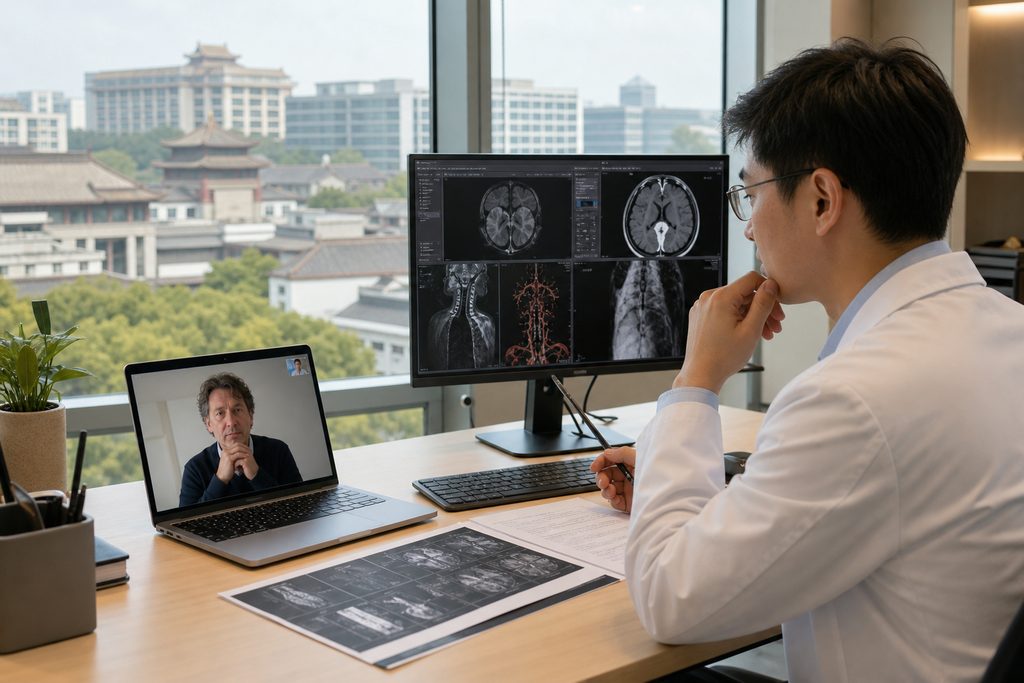
Step four — optional video consultation. If the written opinion raises questions, you can speak directly with the specialty team online. This is where you explain symptoms, ask about experimental options, and hear recommendations in real time.
Step five — decide what comes next. That might mean staying home, seeking a different specialist, or planning a trip. No pressure at any stage.
What a Rare Disease Second Opinion in China Cost Actually Looks Like
Yes. The written second opinion and video consultation services exist precisely for patients who cannot or do not want to travel immediately. You send records, a specialist reviews them, and you receive a written analysis. Travel only becomes relevant if the opinion identifies something worth pursuing in person.
A written second opinion runs $300–500. A video consultation with a senior specialist runs $500–800, and an MDT session $1,500–2,000. Comparable services at major U.S. academic centers typically cost two to four times more. Surgical costs, if travel becomes relevant, are generally one-fifth to one-tenth of U.S. prices for equivalent procedures — though rare disease treatment rarely follows standard pricing.
That is a real possibility and one of the main reasons to seek a second opinion. The written report will explain the reasoning. Bring it to your treating physician at home and discuss it. A second opinion is not a replacement for your care team — it is additional input.
Be skeptical of anything marketed as an all-inclusive package for a rare disease. Rare conditions do not fit fixed bundles. What works is staged: consultation first, then a decision about travel, then coordination if you go. Anyone selling a package before reviewing your records is selling the wrong thing.
Your Next Step
A rare disease second opinion in China is more accessible and more affordable than most international patients assume — but it works best when you start with records review rather than booking flights. China Medical Services connects international patients with 340+ top-ranked hospitals across 37 cities, handling record translation, specialty matching, appointment coordination, and bilingual accompaniment. We are not physicians and we do not provide medical advice or guarantee outcomes. When you are ready, a free consultation at our patient services page is the lowest-commitment way to find out whether a Chinese specialist has anything to add to your case.
This article is for informational purposes only and does not constitute medical advice. Always consult a qualified physician about your individual condition before making treatment decisions.
Frequently Asked Questions
Yes. The hospitals used for international patients are JCI-accredited and follow the same international safety standards as top hospitals in the US and Europe. Surgical teams perform high volumes of procedures — often more than their Western counterparts — which studies show leads to better outcomes.
Costs vary by procedure and hospital, but international patients typically save 40-80% compared to US prices — even when factoring in travel and accommodation. A consultation with our team will give you an exact, all-inclusive quote with no hidden fees.
Send us your existing medical reports to get started. We handle everything from hospital selection and appointment scheduling to visa assistance and post-operative recovery planning. Your medical records are reviewed by the specialist before you even book a flight.
For more medical information and treatment options in China, visit chinamedservices.com (China Medical Services).
